
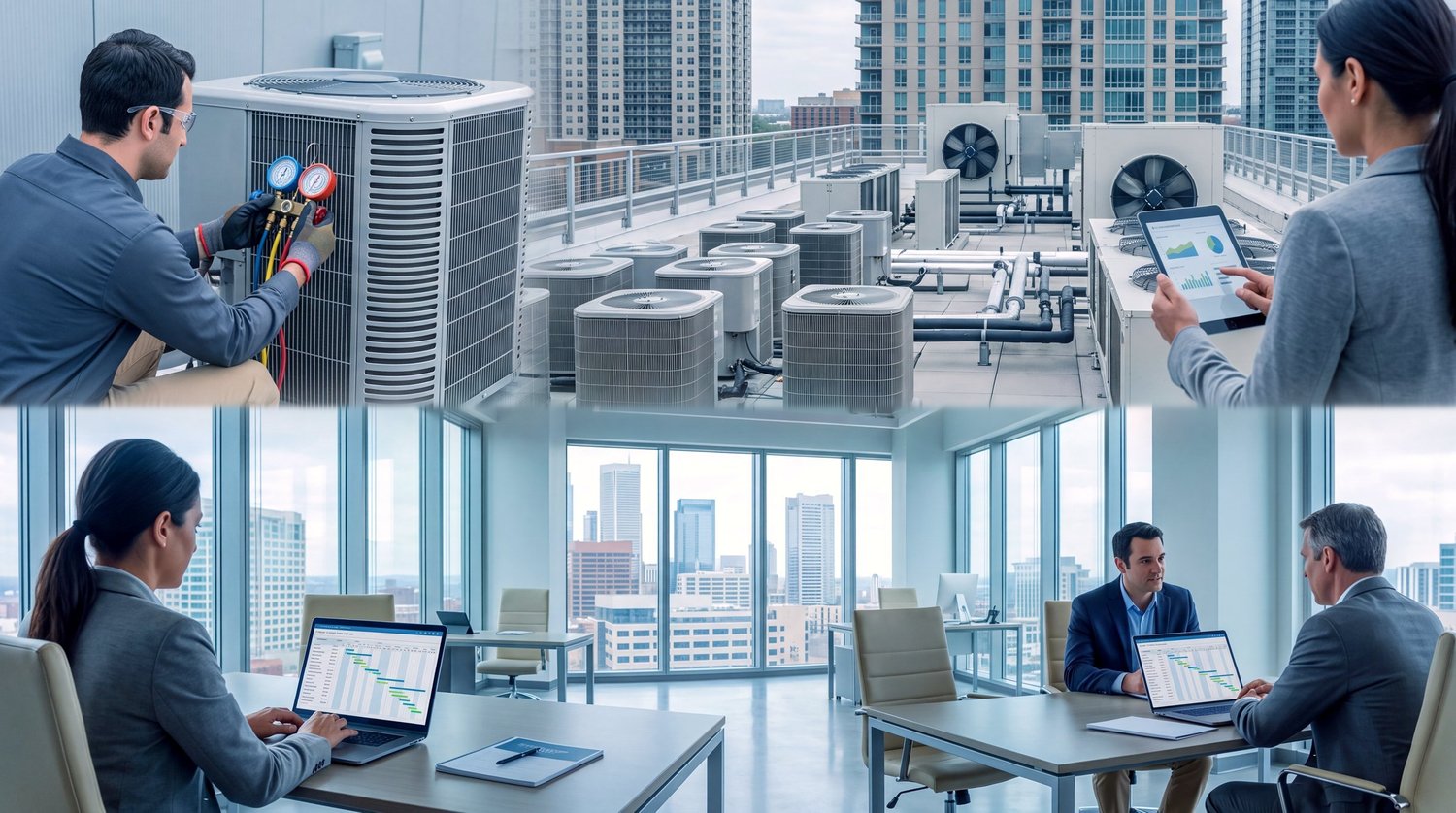

Two numbers drive a residential property: occupancy and how fast a vacant unit is ready again. Behind them sit resident requests that can become habitability issues and inspections that, on assisted housing, tie to funding. Facilities Logix's multifamily playbook covers apartments, affordable and public housing and other residential communities. It runs the unit roster and make-ready pipeline, triages resident service requests, keeps the inspection schedule, builds the property capital plan, and carries the U.S. Department of Housing and Urban Development (HUD), lead-safety, fire and pool obligations that apply to the property.
HUD, Lead Safety, Alarms, Pools and Balconies
Under Inspections & Compliance, the obligations from the compliance library sit beside your own inspection schedule. Facts such as year built, HUD assistance, a public housing agency, a pool or a garage decide which rows apply. Anything the property's records cannot answer is asked once in the Compliance Calendar's questions.
HUD Physical Inspection (NSPIRE, 24 CFR 5.705)
- For HUD-assisted properties: every 3 years with a score of 90 or more, every 2 years at 80-89, every year below 80
- NSPIRE replaces the older REAC/UPCS protocol and sets correction timeframes by defect severity
NSPIRE Self-Inspection (24 CFR 5.707)
- Public housing agencies, and properties under a HUD assistance contract, self-inspect the whole property, every unit, every year, and keep the results 3 years
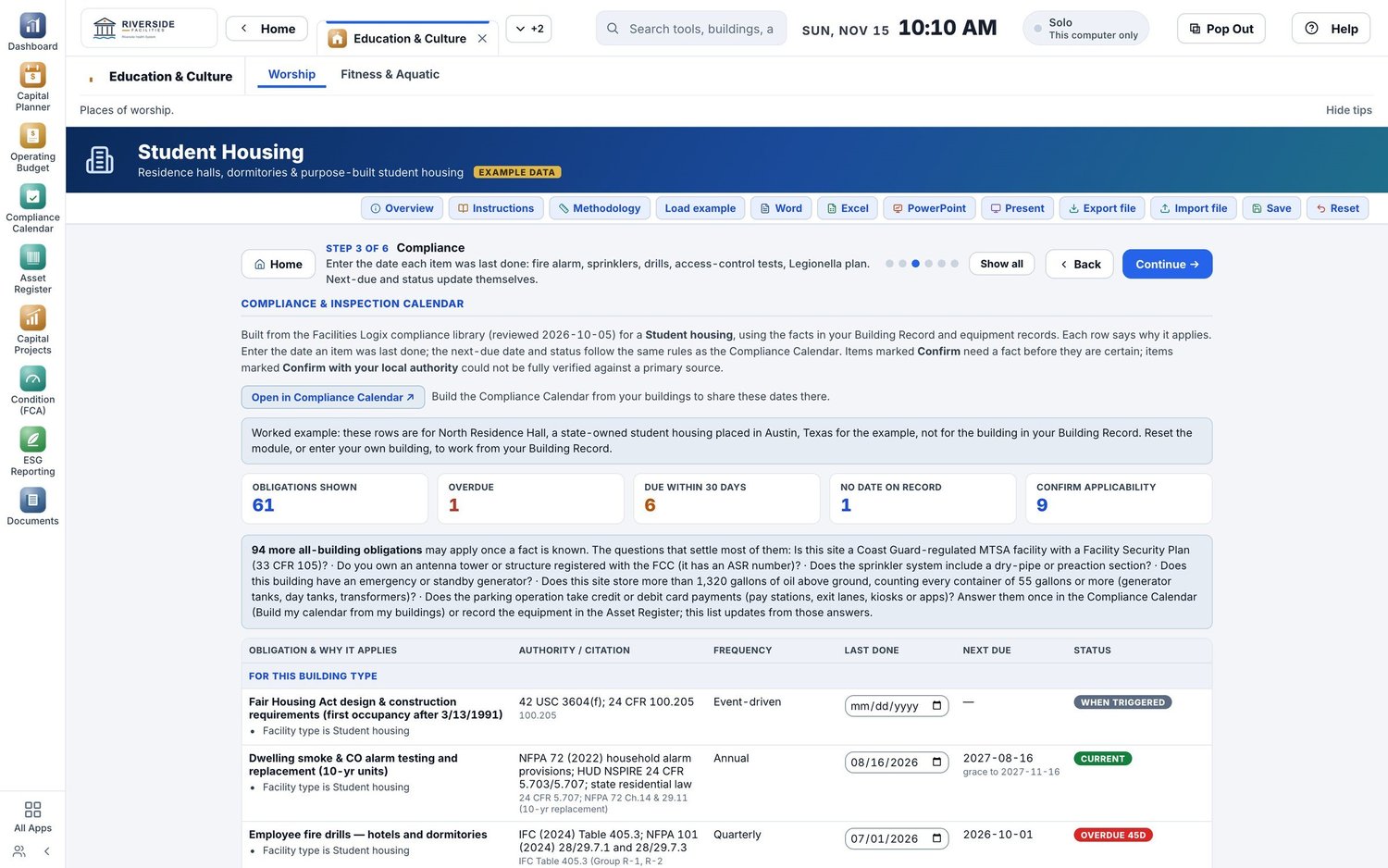
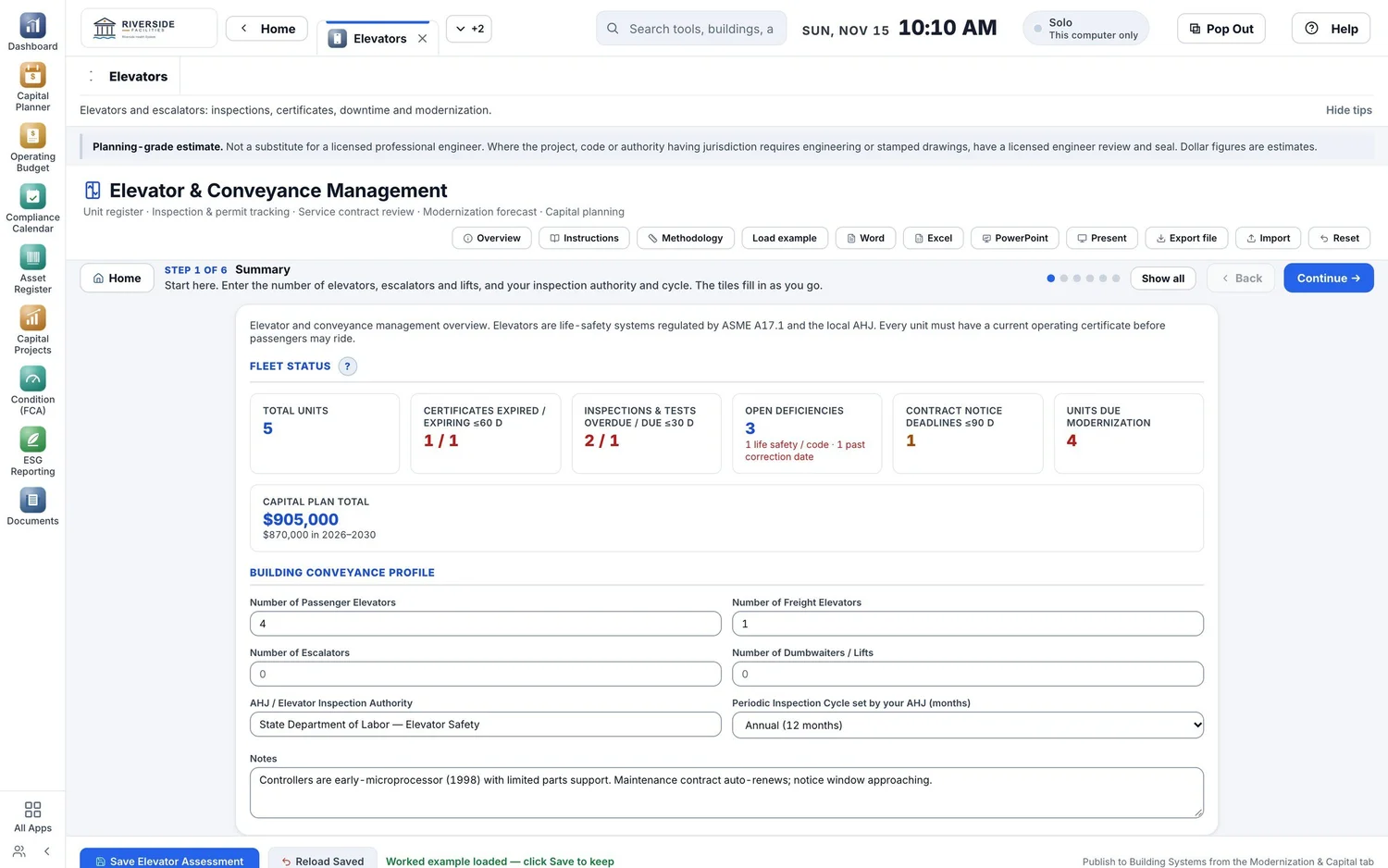
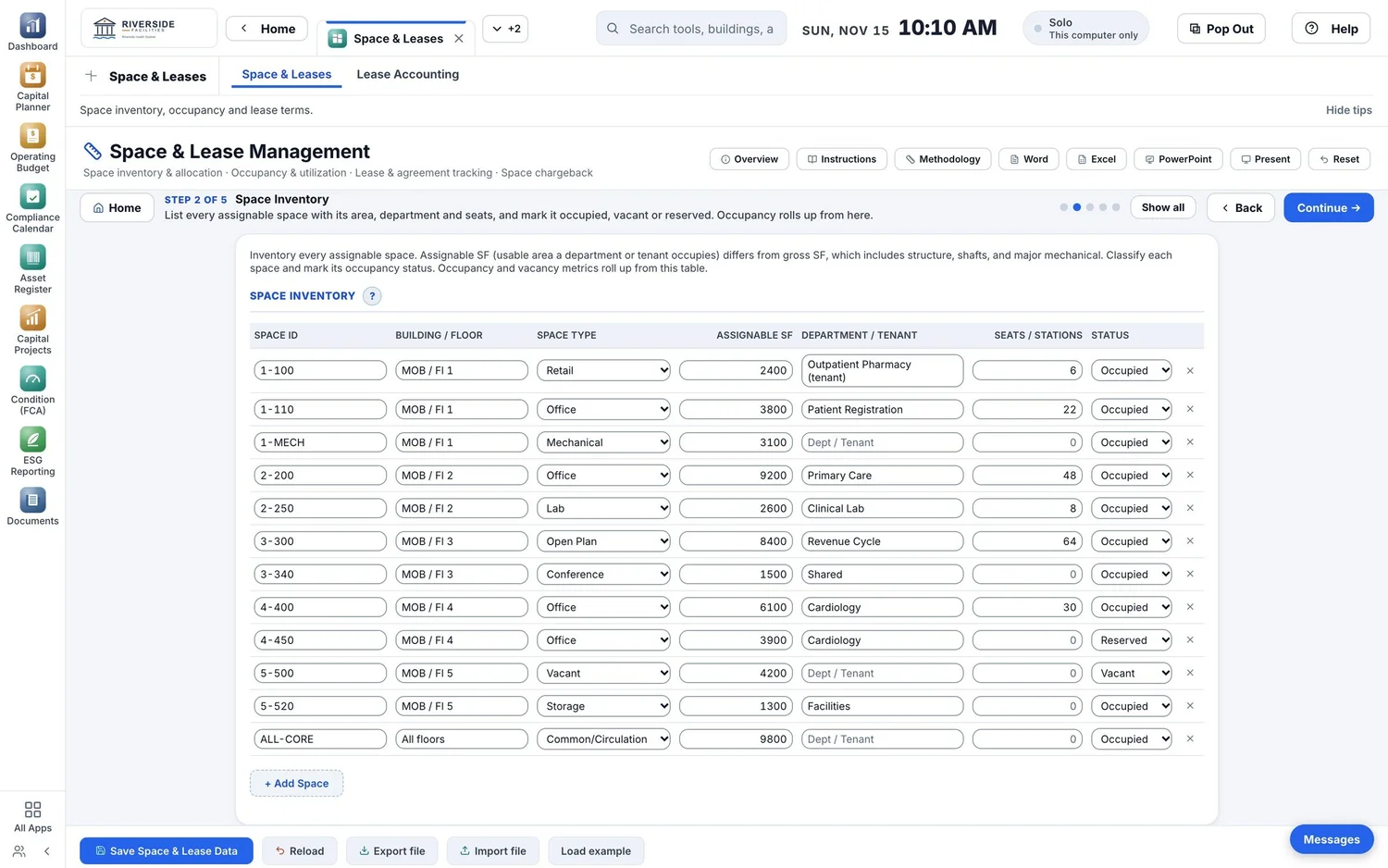
Compliance in Student Housing: enter the date each item was last done: fire alarm, sprinklers, drills, access-control tests, Legionella plan. Next-due and status update themselves.
Public Housing (24 CFR 965)
- An energy audit of each agency-owned project at least once every 5 years
- Utility allowances reviewed at least every year, and revised between reviews when rates move 10 percent or more
Lead Safety (Pre-1978 Housing)
- Lead paint disclosure and the EPA pamphlet before a tenant is bound by a lease, with the signed disclosure kept 3 years (40 CFR 745, 24 CFR 35)
- On HUD-assisted housing, a visual assessment at each unit turnover and every 12 months, with reported deteriorated paint stabilized within 30 days (Lead Safe Housing Rule)
- Paid renovation in pre-1978 housing done under the EPA Renovation, Repair and Painting rule's firm and renovator requirements
Smoke and Carbon Monoxide Alarms
- Every unit's smoke and CO alarms tested at the annual unit inspection and at each move-in
- Smoke alarms replaced 10 years from manufacture (NFPA 72), CO alarms at end-of-life signal or the maker's interval
Fair Housing Act Design
- Covered buildings of 4 or more units first occupied after March 13, 1991 meet the accessible design requirements (24 CFR 100.205)
- The playbook reminds your team to apply inspections, service and enforcement consistently to every resident
Pools, Spas and Playgrounds
- Pool water chemistry tested before opening and every 2 hours on manual feed or every 4 on an automated controller (CDC Model Aquatic Health Code), with logs kept
- Anti-entrapment drain covers verified every year and replaced at cover expiration (Virginia Graeme Baker Act)
- A trained pool operator credential kept current; the operating permit, set locally, is marked Confirm
- Playgrounds: routine monthly and comprehensive annual inspection (CPSC handbook, ASTM F1487)
Balconies, Decks and Garages
- California exterior elevated elements: apartment buildings of 3 or more units inspected by January 1, 2026 and every 6 years after, condominiums every 9 years
- Garages and decks get the parking-structure rows: New York City Local Law 126, the ACI annual walk-through, Florida milestone inspections for condominium and cooperative buildings
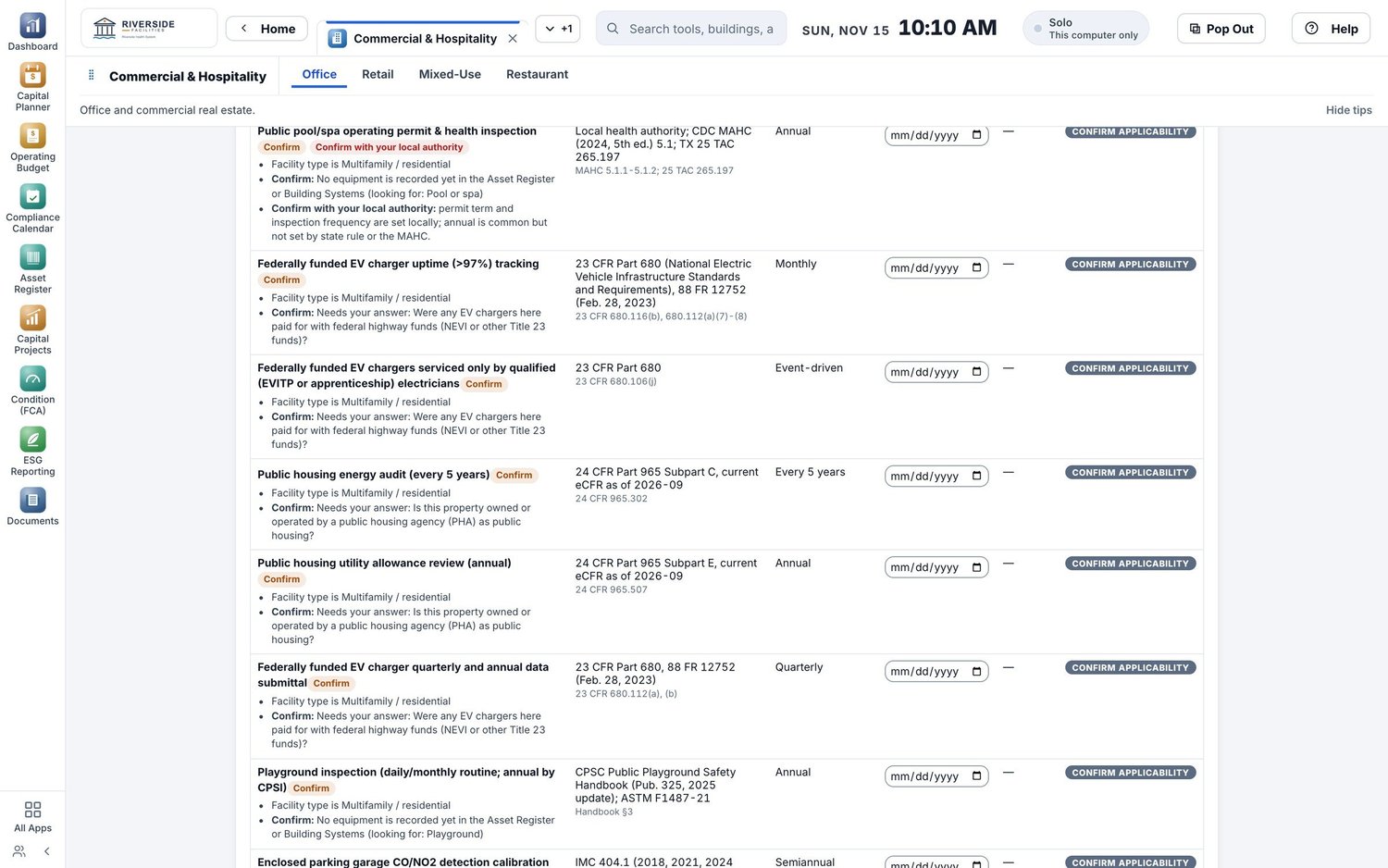
Inspections & Compliance in Multifamily & Residential: enter the date each inspection was last done, from unit inspections to NSPIRE, pool and boiler. Next-due and status update themselves.

Residential rules depend on the property's facts, so each obligation explains why it applies and when it is due.
Units, Requests, Inspections and Capital
Property Profile
Community name, total units, number of buildings and year built, with notes for ownership and program participation such as LIHTC, Section 8 or HUD.
Learn MoreShow Less
Total units anchors every per-unit number, so turn cost, open requests and capital are measured against the right base and owners compare properties fairly.
- Physical occupancy counts residents on notice as occupied
- A roster of only vacant and turning units still works; unlisted units count as occupied
- The summary says when it made that assumption
- Capital plan total shown per unit as well as in dollars
Unit Roster
Each unit's type (studio to 4 bedrooms), square footage and status: Occupied, Vacant-Ready, Vacant-Not Ready or Notice.
Learn MoreShow Less
Knowing which vacant units are leasable today and which are still in make-ready shows where rent is waiting on maintenance.
- Vacant-Ready units can be leased now; Vacant-Not Ready units are still in turn
- Notice units show the next turns coming before keys come back
- A chart of units by status states vacancy and occupancy in one line
- The roster table exports with type, area, status, turn days and turn cost
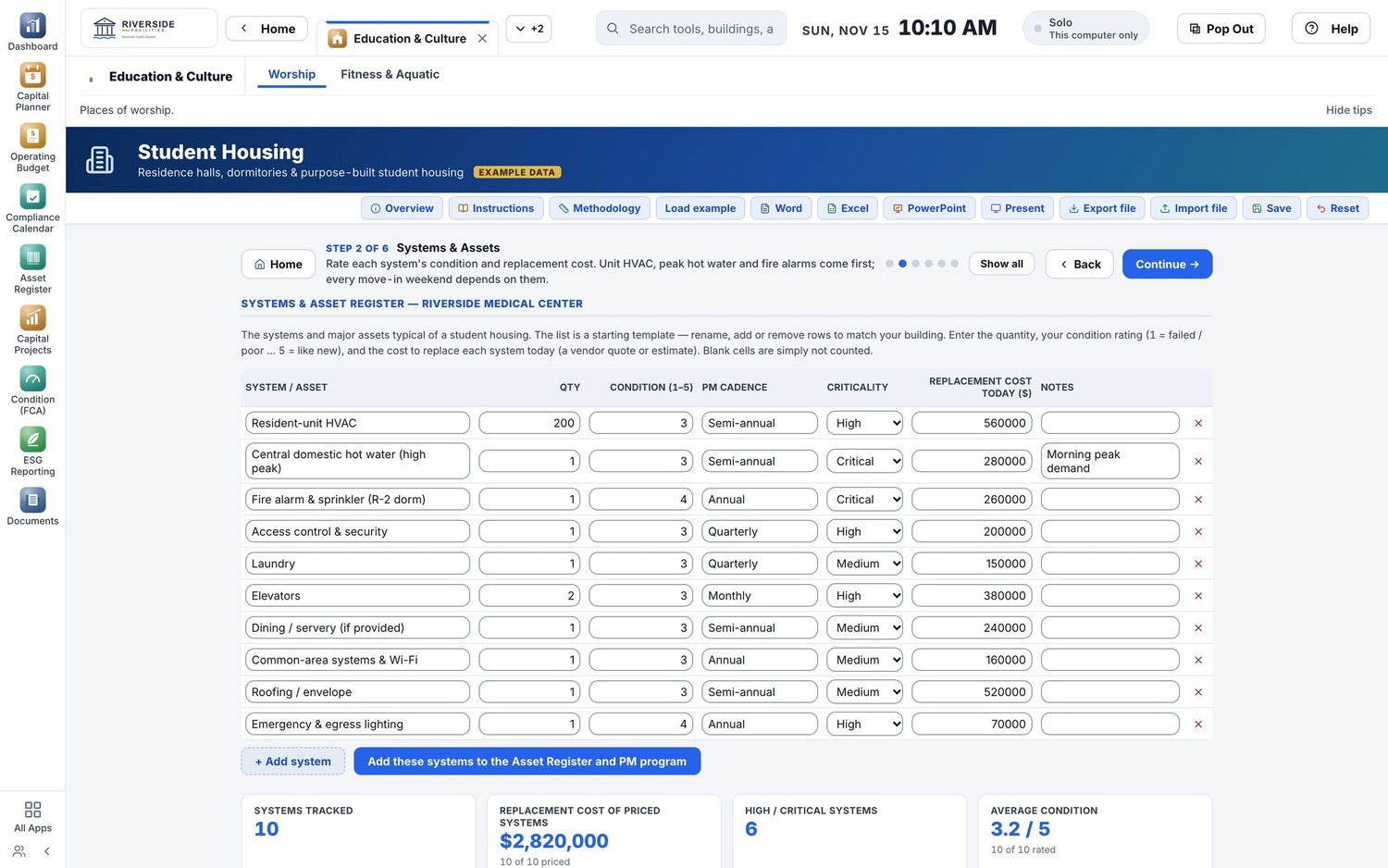
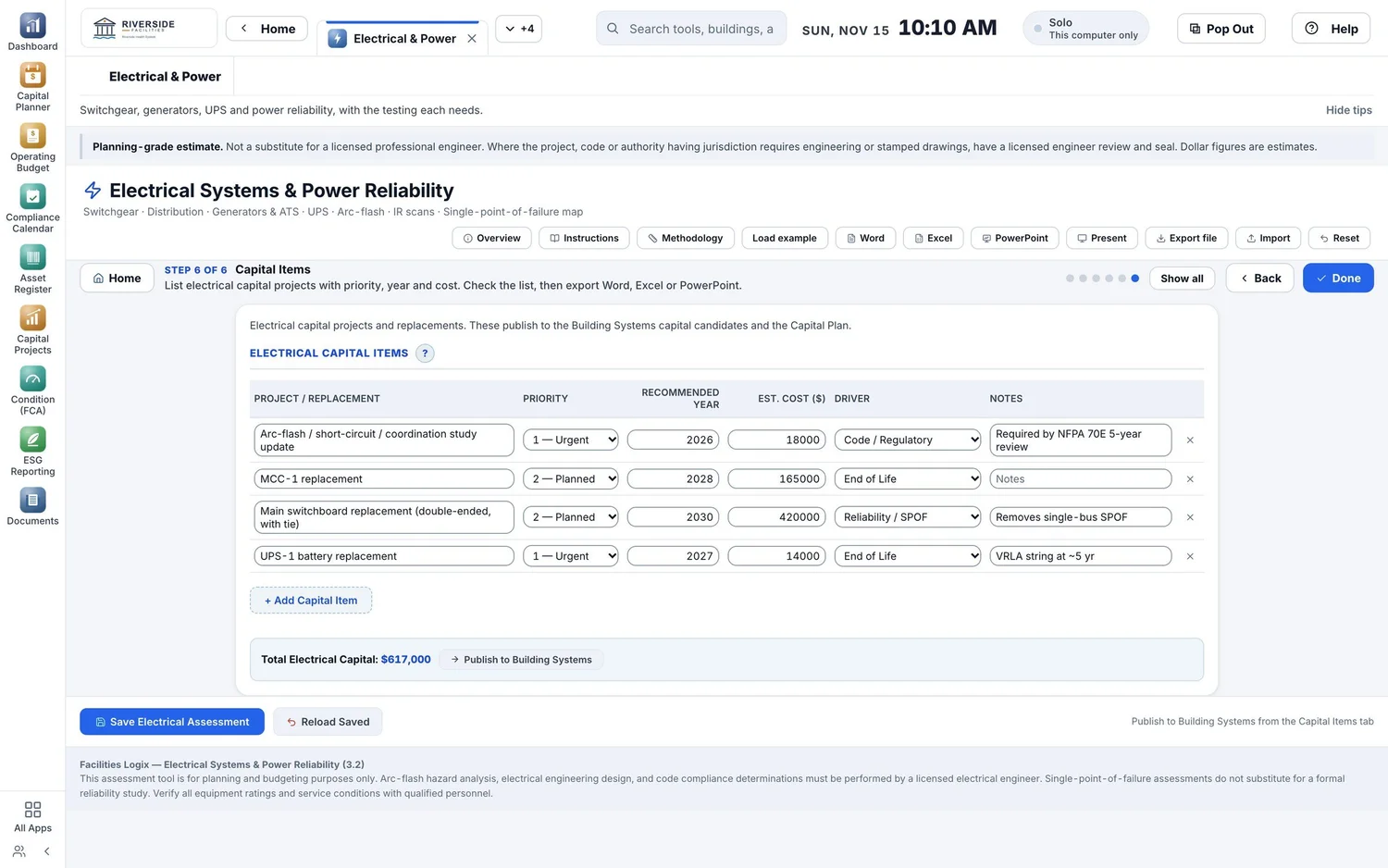
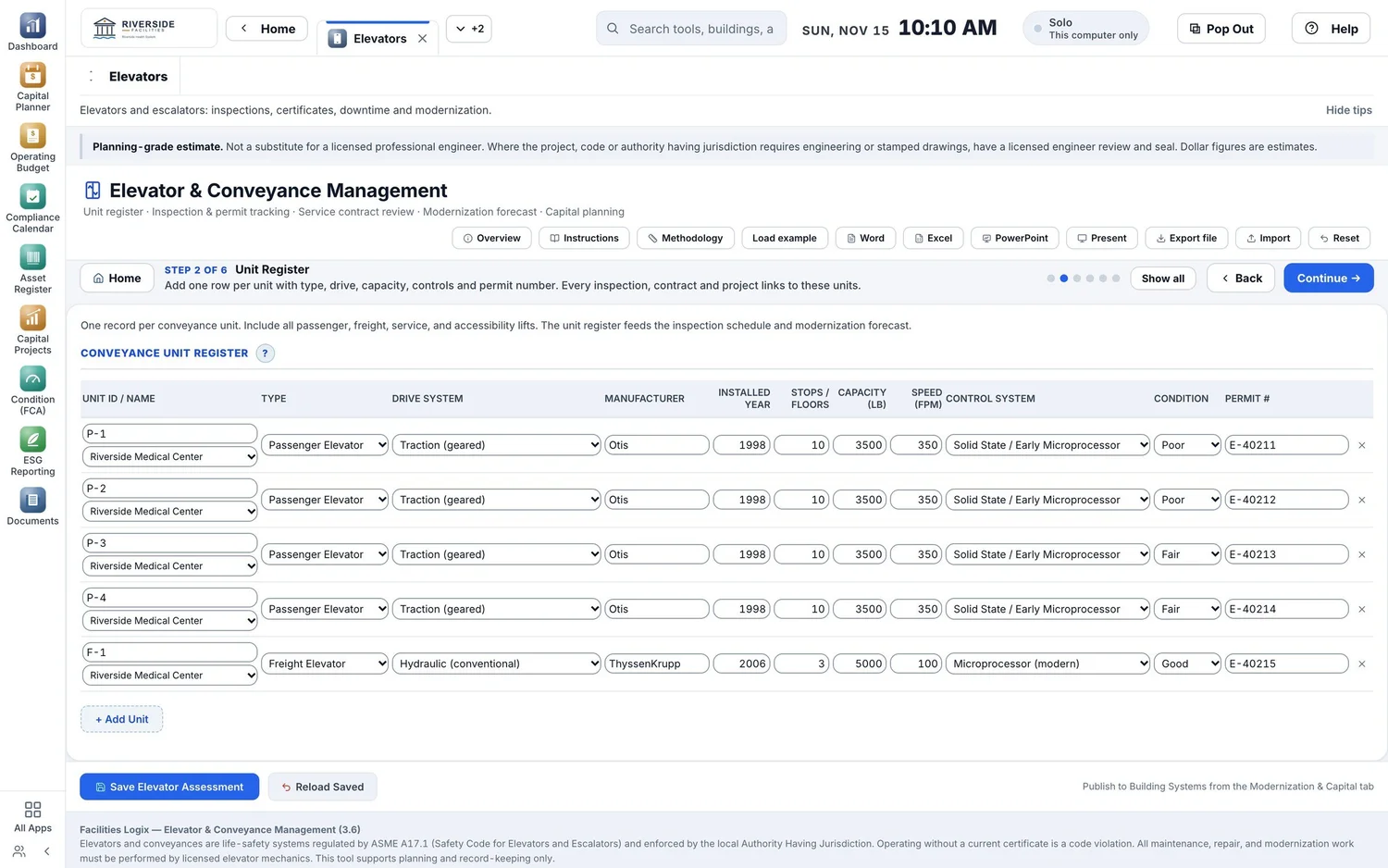
Systems & Assets in Student Housing: rate each system's condition and replacement cost. Unit HVAC, peak hot water and fire alarms come first; every move-in weekend depends on them.
Make-Ready Pipeline
Units in a turn move from Move-out to Make-ready to Ready, with turn days and turn cost for each.
Learn MoreShow Less
Every turn day is vacancy loss. Average turn days and cost show whether the make-ready program is costing rent.
- Averages count only units with a turn status and a value entered
- Open turns = units at Move-out or Make-ready, not yet Ready
- A turn-time chart by unit names the slowest turn
- The briefing's first line asks to turn the vacant units, with the average days
Resident Service Requests
Request number, date, unit, category (plumbing, HVAC, electrical, appliance, pest, door and lock, water leak, common area), priority (Emergency, Urgent, Routine) and status.
Learn MoreShow Less
A leak fixed the day it is reported limits damage to one unit. Clear priority rules send the crew to what costs the most first.
- Emergency: no heat in cold weather, active leak, sewage, gas odor, no power: respond immediately
- Also Emergency: lockouts and fire or CO alarms
- Urgent: no hot water, refrigerator out, HVAC out in extreme weather: about 24 hours
- Routine: dripping faucet, cabinet hardware, minor drywall, in the normal queue
- Open requests reported per 100 units
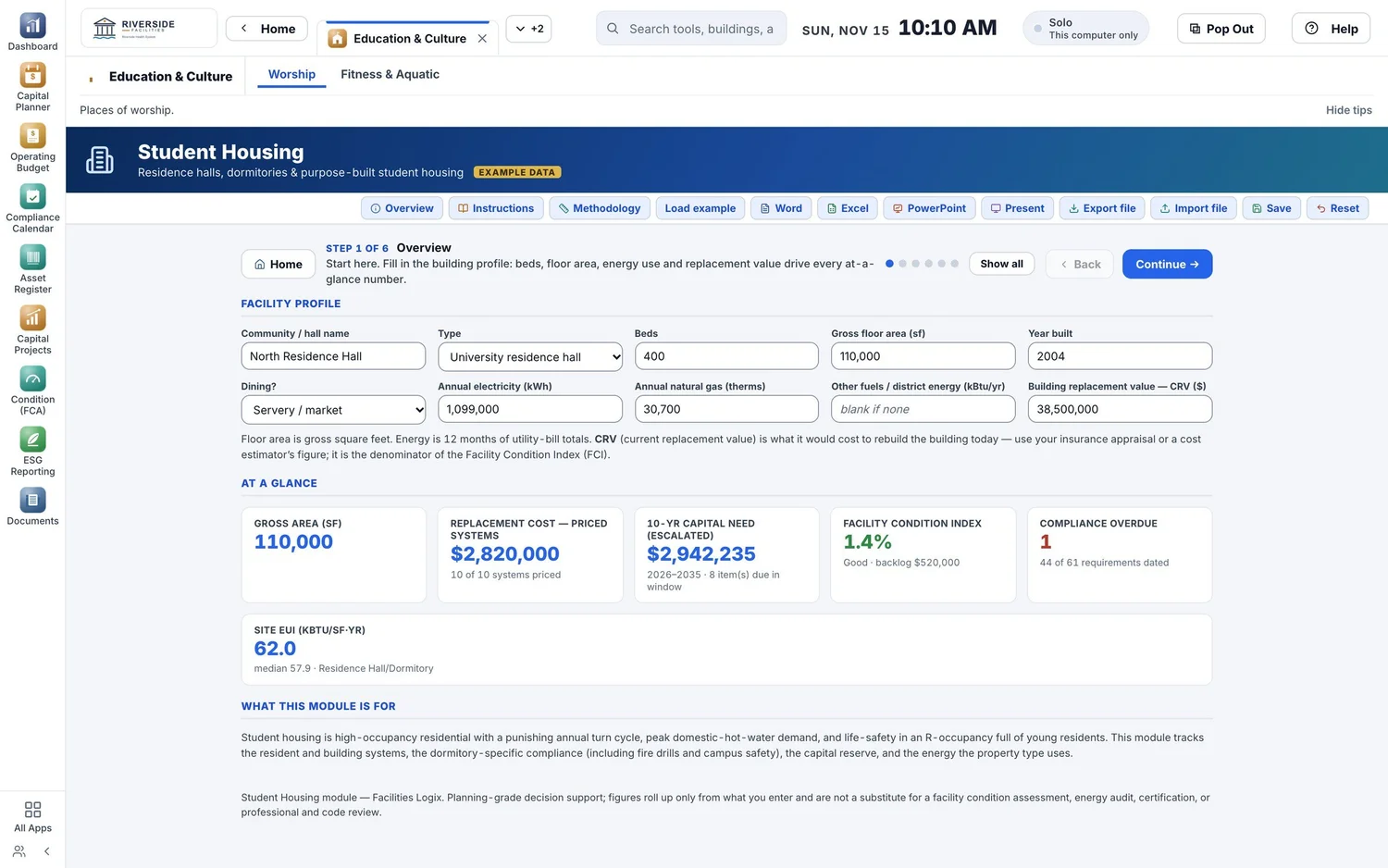
Overview in Student Housing: start here. Fill in the building profile: beds, floor area, energy use and replacement value drive every at-a-glance number.
Inspection Schedule
Move-in and move-out, annual unit, HUD NSPIRE, fire and life safety, pool, playground, boiler and elevator inspections, from per turn to every 3 years, with result: pass, pass with deficiencies or fail.
Learn MoreShow Less
An overdue boiler, elevator or HUD inspection can bring fines or a lower score. Every inspection carries its own date and result.
- Frequencies from per turn and monthly to biennial and triennial
- Results: pass, pass with deficiencies, fail or not yet done
- NSPIRE sets correction timeframes by severity; life-threatening defects come first
- Apply inspections the same way to every resident, as fair housing requires
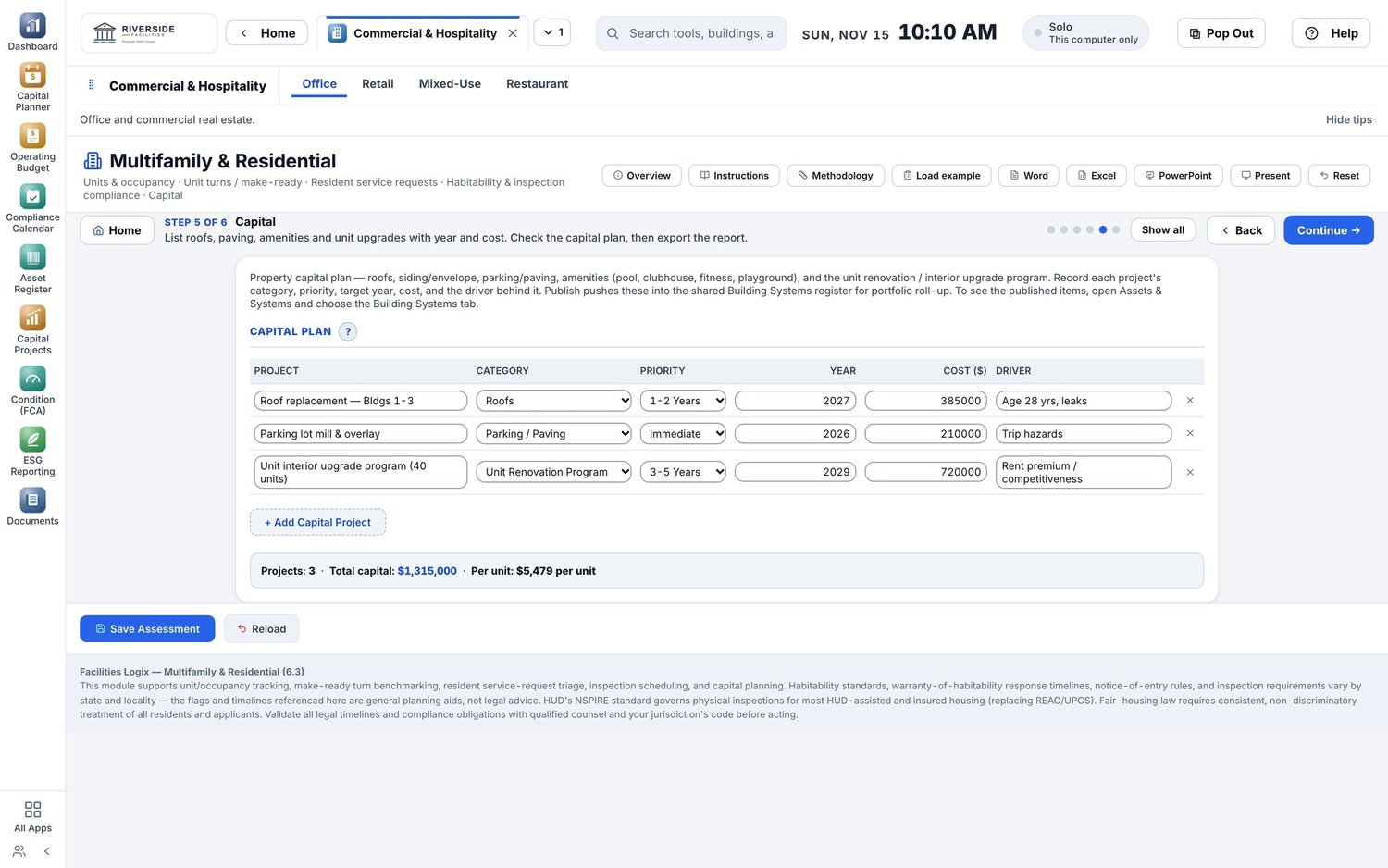
Capital Plan
Roofs, siding and envelope, parking and paving, amenities, the unit renovation program, mechanical and site work, with priority bands of immediate, 1-2, 3-5 and 6-10 years. Publish to Building Systems rolls them up to the portfolio.
Learn More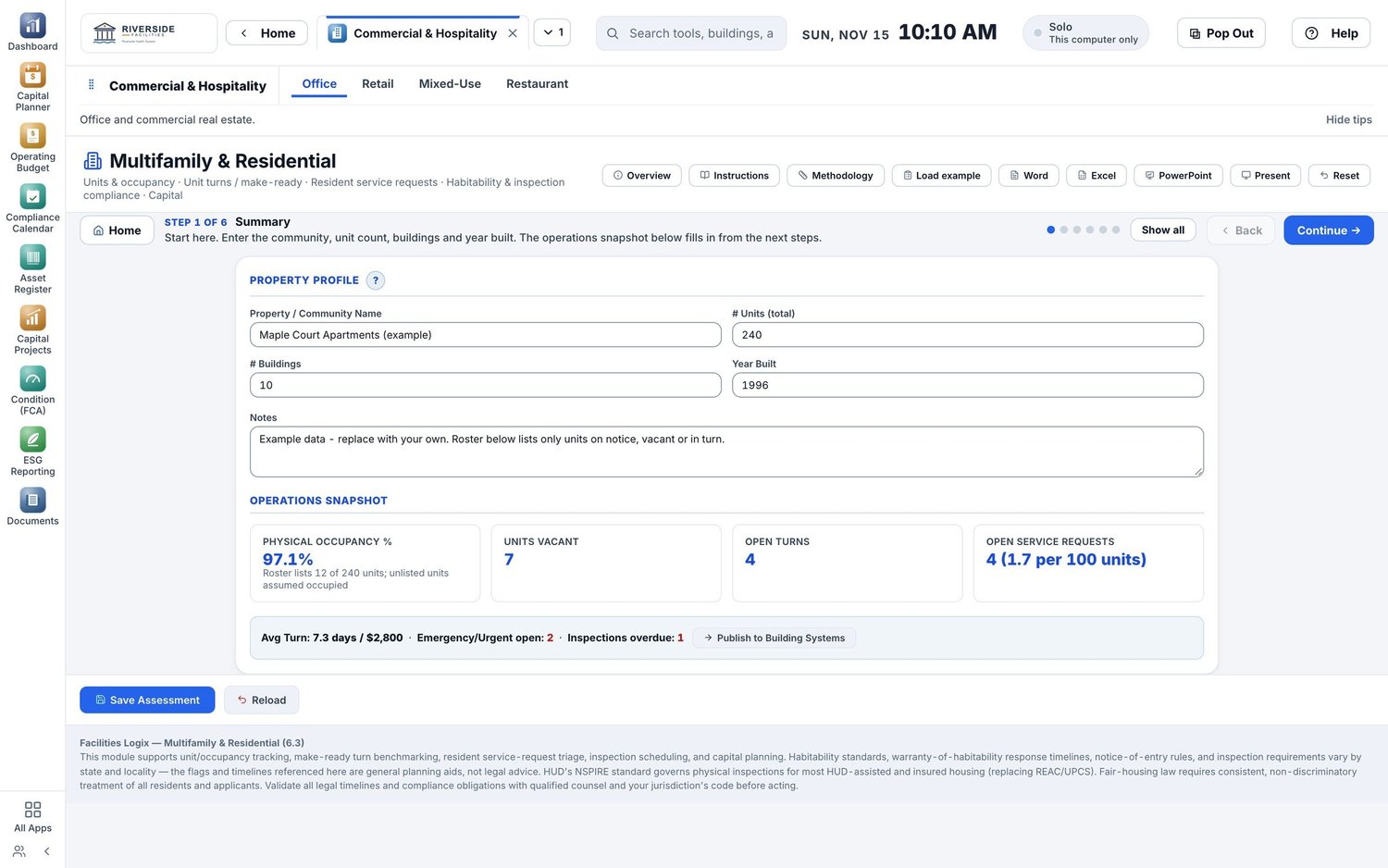
Summary in Multifamily & Residential: start here. Enter the community, unit count, buildings and year built. The operations snapshot below fills in from the next steps.
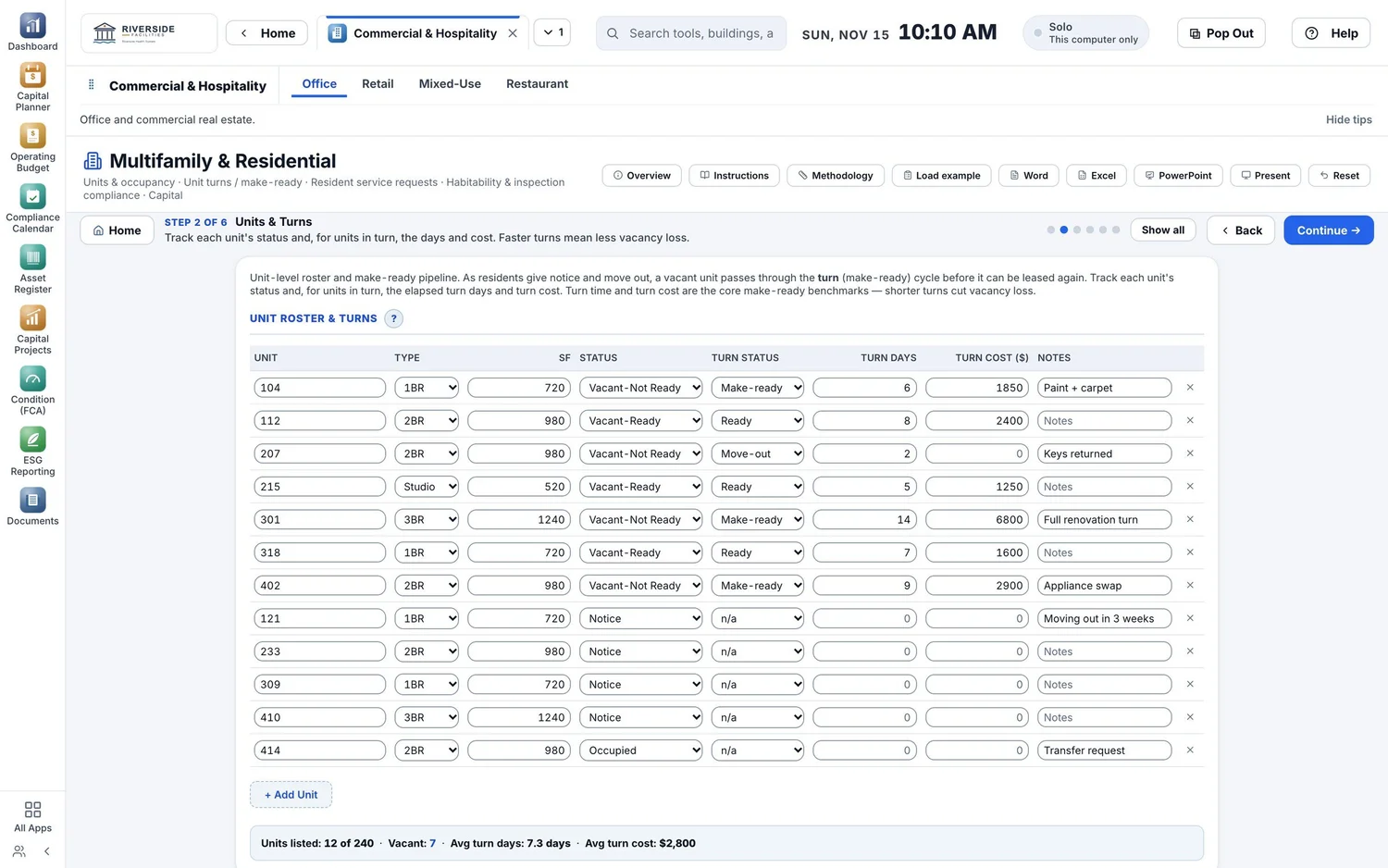
Slow turns cost rent every day a unit sits empty, so units and turns are tracked one by one.
Requests Triaged and Inspections Never Overdue by Surprise
Habitability Triage
- Emergency and Urgent requests highlighted
- A Water Leak category, or a description that mentions no heat, no hot water, no water, sewage, a gas smell, flooding, no power or mold, is counted as a possible habitability item
- Response timelines vary by state and locality; the playbook flags the request and your team confirms the rule for its jurisdiction
Inspection Due Dates
- Enter the last done date and frequency; a blank next due date is worked out from them
- Anything past due is flagged and counted on the Summary
Fire and Building Rows from the Library
- Fire alarm, sprinkler, extinguisher, emergency lighting, elevator and boiler rows come from the building's equipment records, with their NFPA, ASME and state intervals
Ready for the Inspector and the Asset Review
Operations Snapshot
Physical occupancy, vacant units, open turns, open service requests, average turn days, emergency and urgent items open and inspections overdue.
Learn MoreShow Less
Occupancy and turn speed drive residential income. The snapshot shows both without waiting for a month-end report.
- The briefing opens with what to do: resolve habitability requests, finish overdue inspections, turn units
- Open requests shown per 100 units, with emergency, urgent and habitability counts
- Turn days and turn cost averaged across units in a turn
- Inspections overdue counted against all scheduled
Word, Excel, PowerPoint and Present
The roster, requests, inspections and capital plan export to Word, Excel and PowerPoint, or show full screen with Present.
Learn MoreShow Less
A briefing with the decision on page one gets owners and lenders acting on what costs rent, not reading spreadsheets.
- Tables: open service requests, unit roster and turns, inspections, and the capital plan with total
- Charts: units by status, turn time by unit, capital by year
- Present shows the same pages full screen for an asset review
- Exports from the worked example carry a SAMPLE watermark
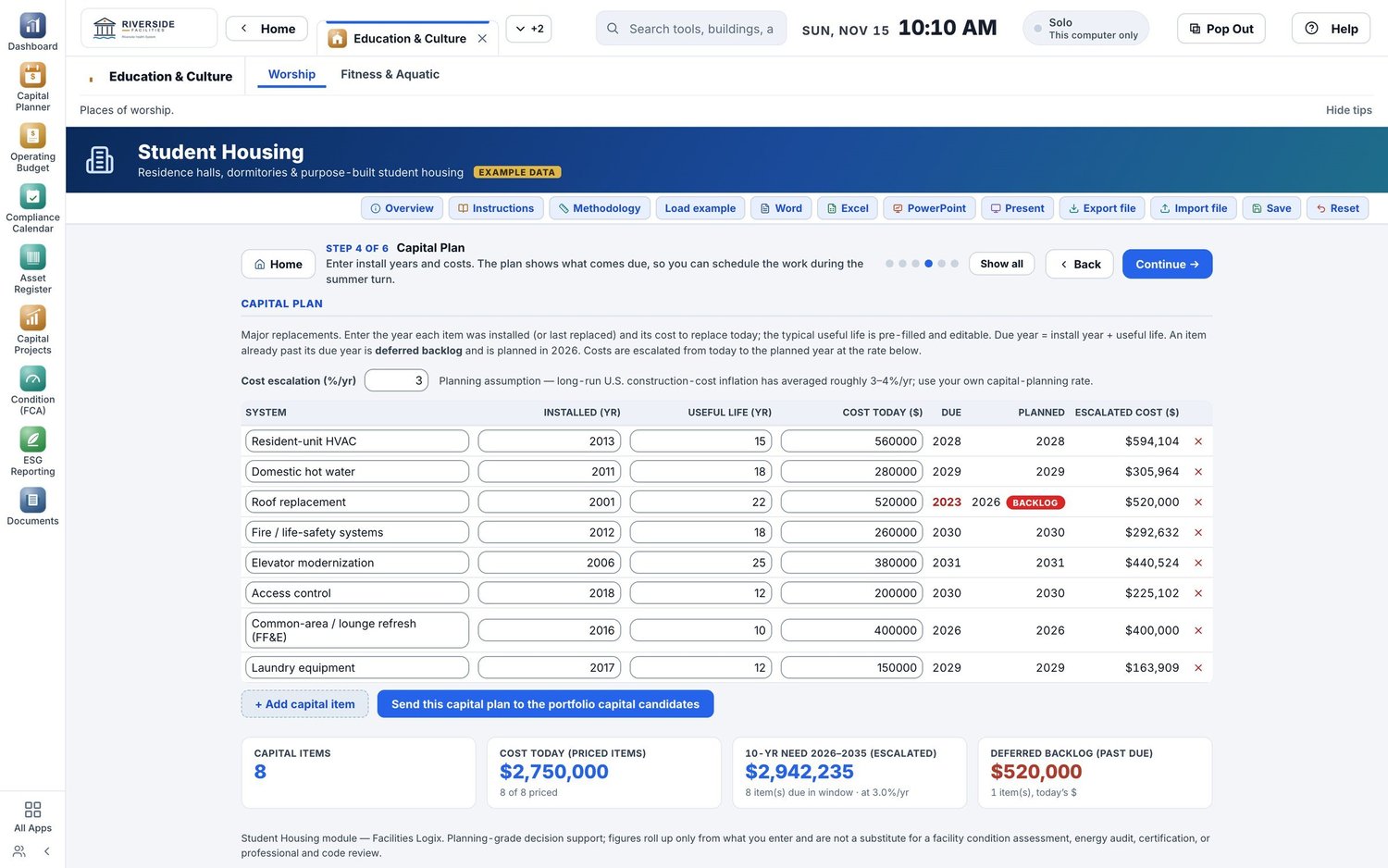
Capital Plan in Student Housing: enter install years and costs. The plan shows what comes due, so you can schedule the work during the summer turn.
ENERGY STAR Tab
Multifamily housing gets a 1-100 ENERGY STAR score and, with 20 or more units, EPA's 1-100 water score, from the bills, with the benchmarking laws that apply.
Learn MoreShow Less
On owner-paid utilities, energy above the median is money spent every month; the score shows whether the building wastes it.
- Multifamily median: 59.6 kBtu per square foot site, 118.1 source; water 45.15 gallons
- Certification: score of 75 or higher on 12 months, verified on site by a PE or RA
- Energy comes from Utility Bill Manager's latest 12 months
- Benchmarking and performance-standard laws that apply, with projected fines
Compliance Calendar
The library rows share their dates with the Compliance Calendar and its Word and Excel reports, across every property.
Learn More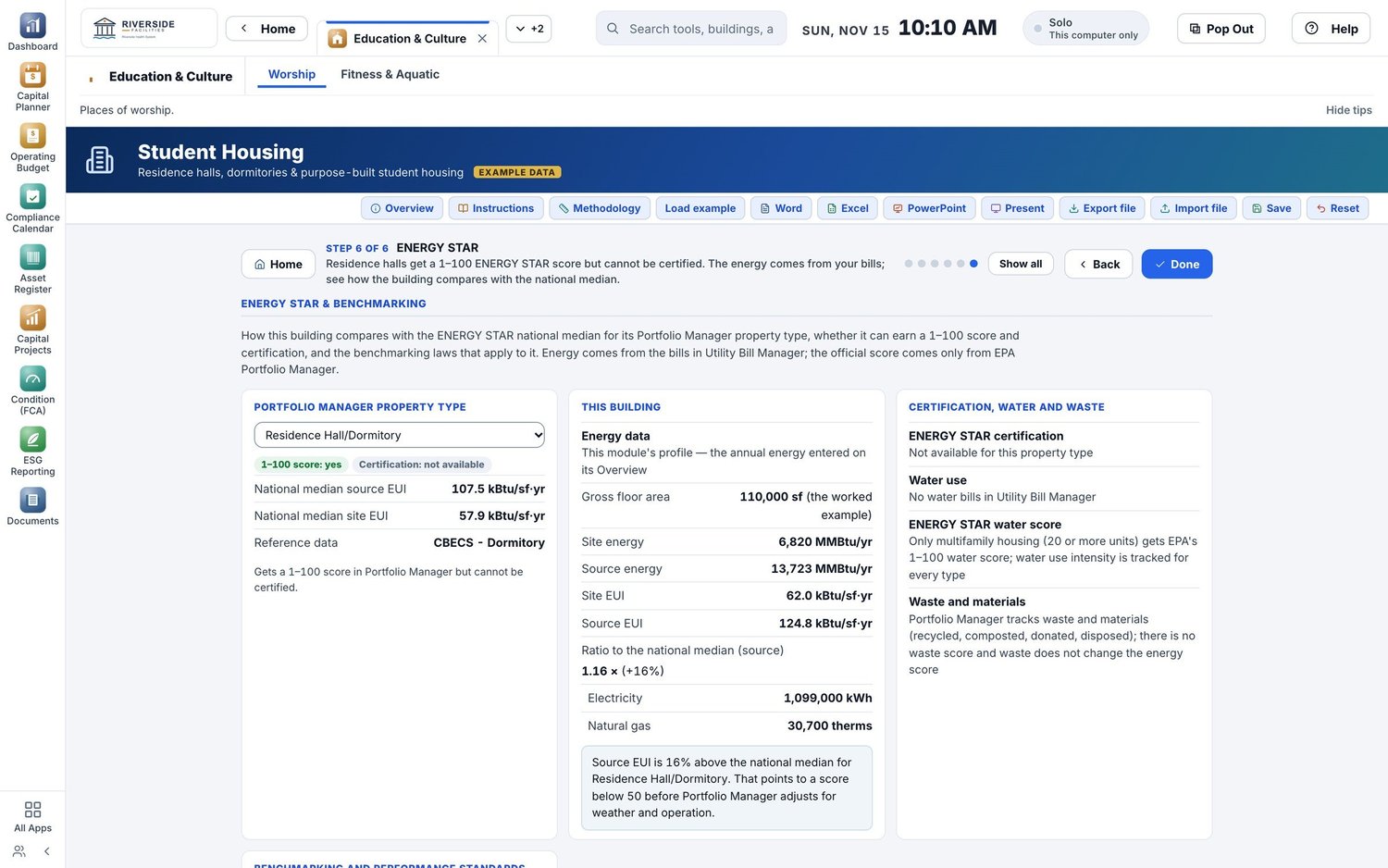
ENERGY STAR in Student Housing: residence halls get a 1–100 ENERGY STAR score but cannot be certified. The energy comes from your bills; see how the building compares with the national median.
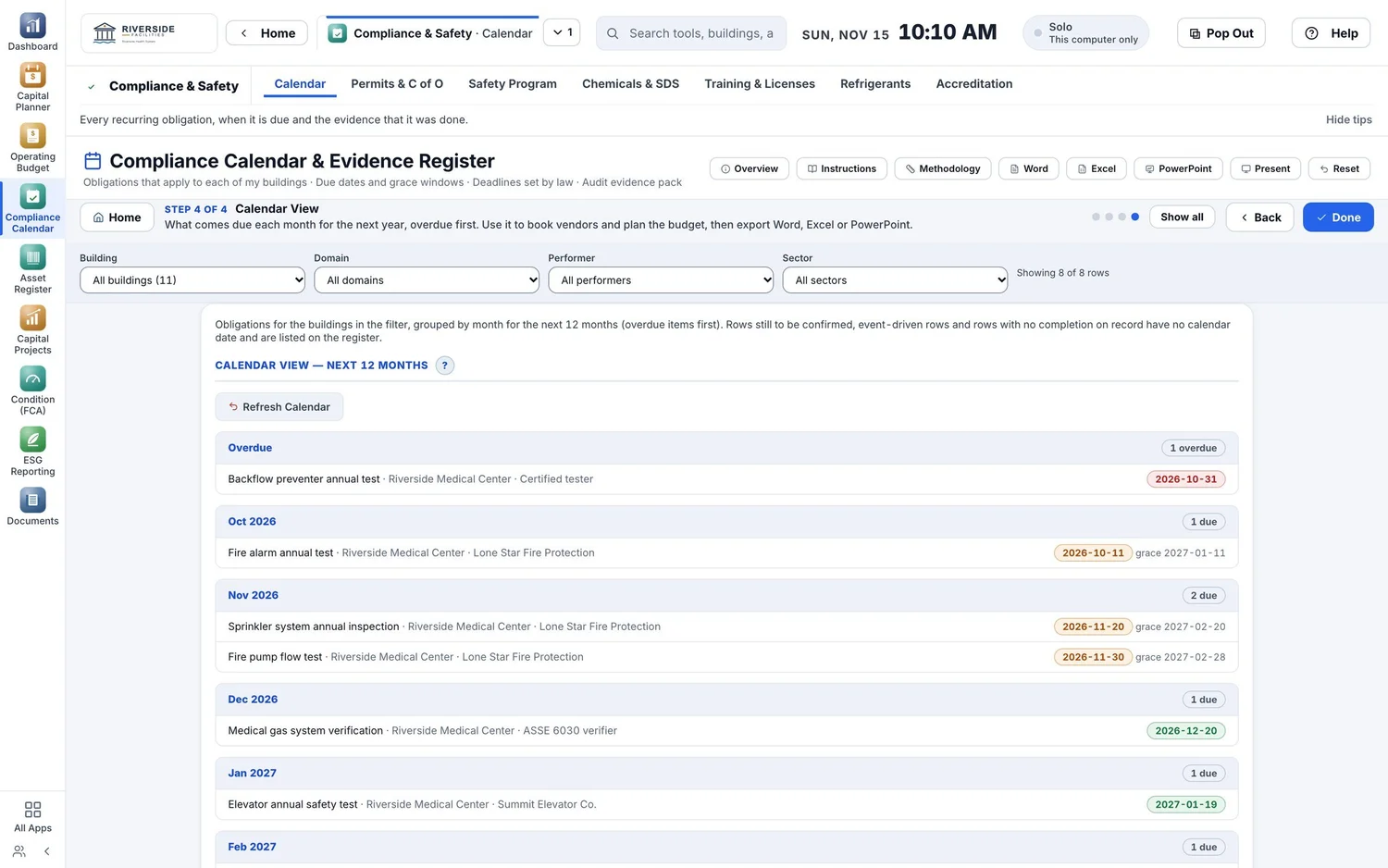
The twelve-month compliance calendar with due and overdue items.
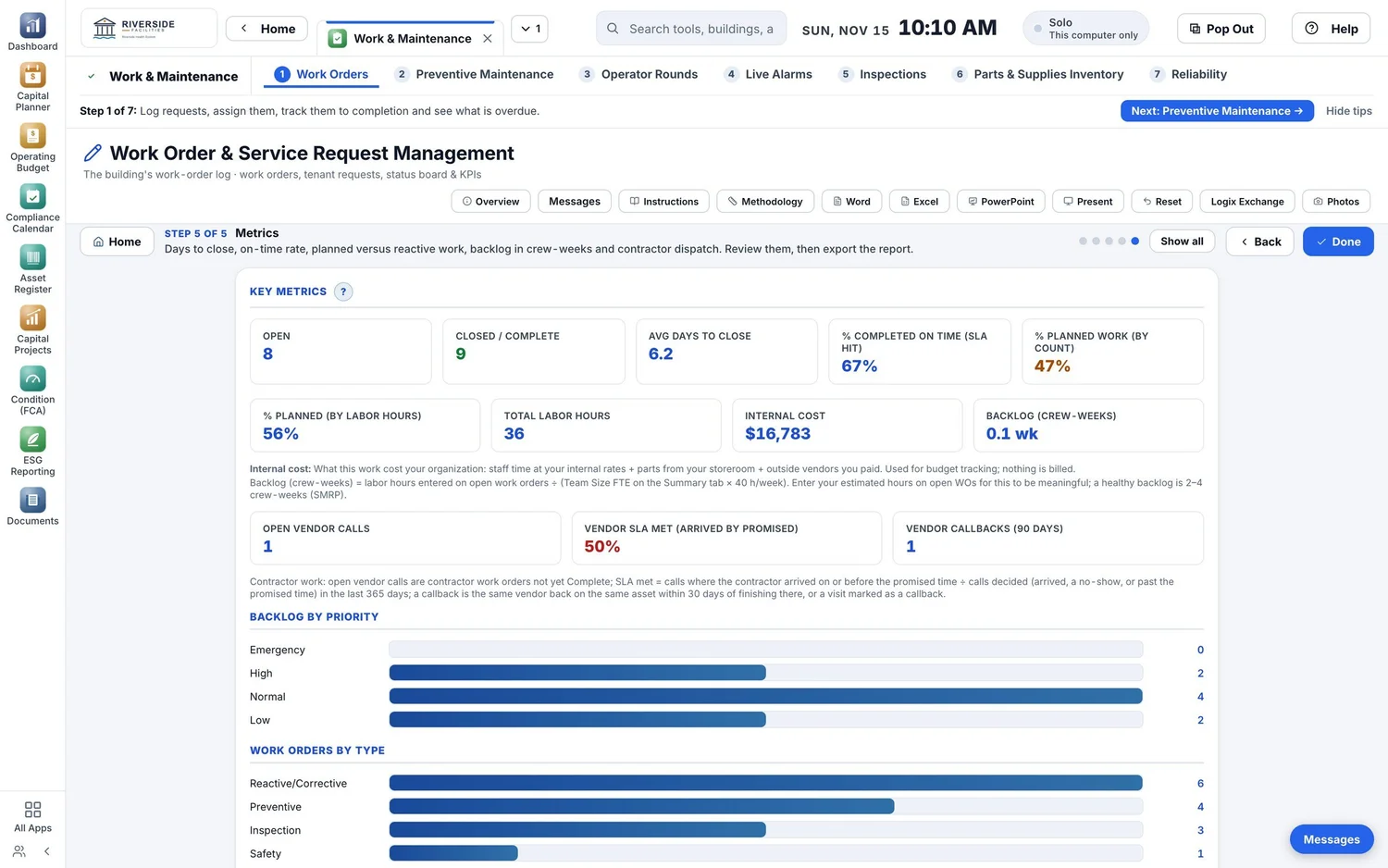
The Numbers Behind Residential Income
From the Playbook
- Occupancy = occupied units (including residents on notice) ÷ total units
- Average turn days and turn cost across units in a turn, against a common 5-10 day target for a standard turn
- Open requests, emergency and urgent items open, and possible habitability items open
- Inspections scheduled and overdue
- Total capital and capital per unit
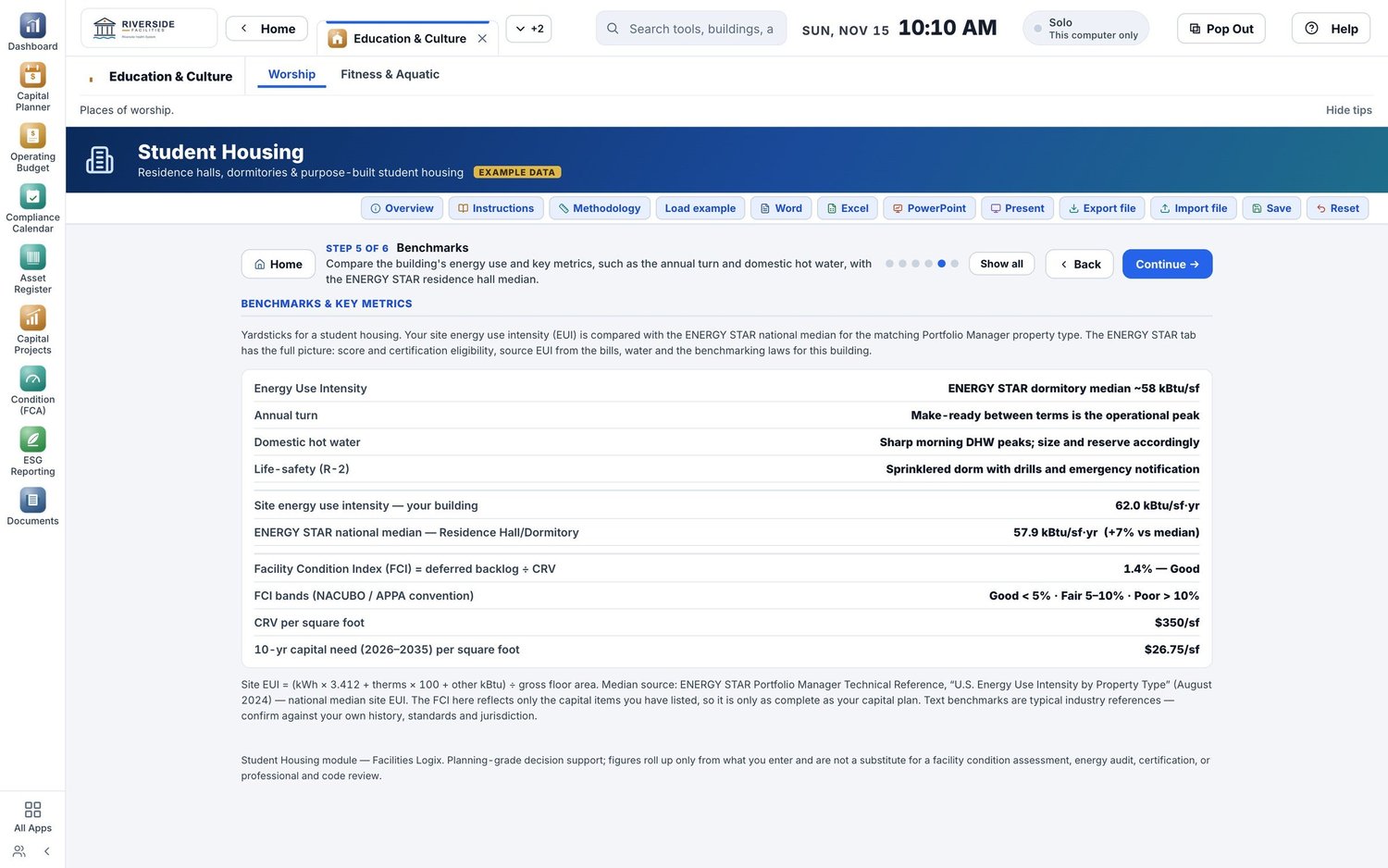
Benchmarks in Student Housing: compare the building's energy use and key metrics, such as the annual turn and domestic hot water, with the ENERGY STAR residence hall median.
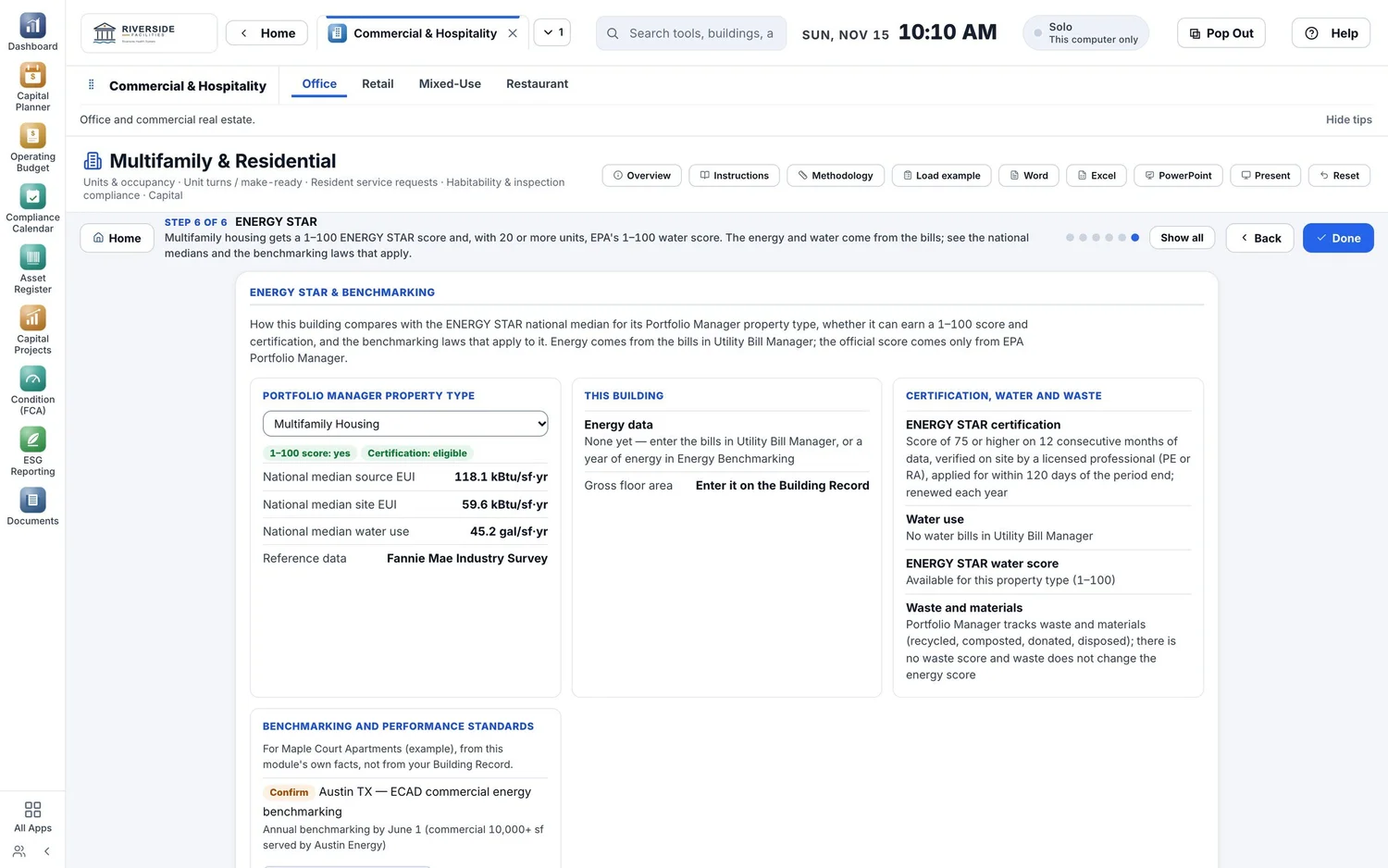
Residential energy use is hard to judge alone, so the property is compared with its national peers.
Less Vacancy Loss, Fewer Findings
Faster Turns
Turn days and cost tracked unit by unit show where make-ready drifts, and every day saved is a day of rent.
Learn MoreShow Less
Make-ready drift shows up as lost rent and turns over budget. Seeing days and cost per unit shows which one to fix.
- Turn cost sits beside turn days, so a fast but costly turn stands out
- Vacant-Not Ready units counted apart from rent-ready vacancies
- The turn chart names the slowest unit so the cause can be found
- The unit renovation program has its own capital category, year and priority
Habitability Items Never Lost
No heat, no hot water and active leaks stand out in the queue instead of waiting behind routine requests.
Learn MoreShow Less
Unresolved habitability items can bring rent withholding, repair-and-deduct, code enforcement or damages. Flagging them early keeps that cost off the property.
- The briefing names the units with open habitability requests to resolve today
- Habitability counts sit beside emergency and urgent counts
- The open-request table marks each habitability item
- Your team confirms the response timeline for its state and locality
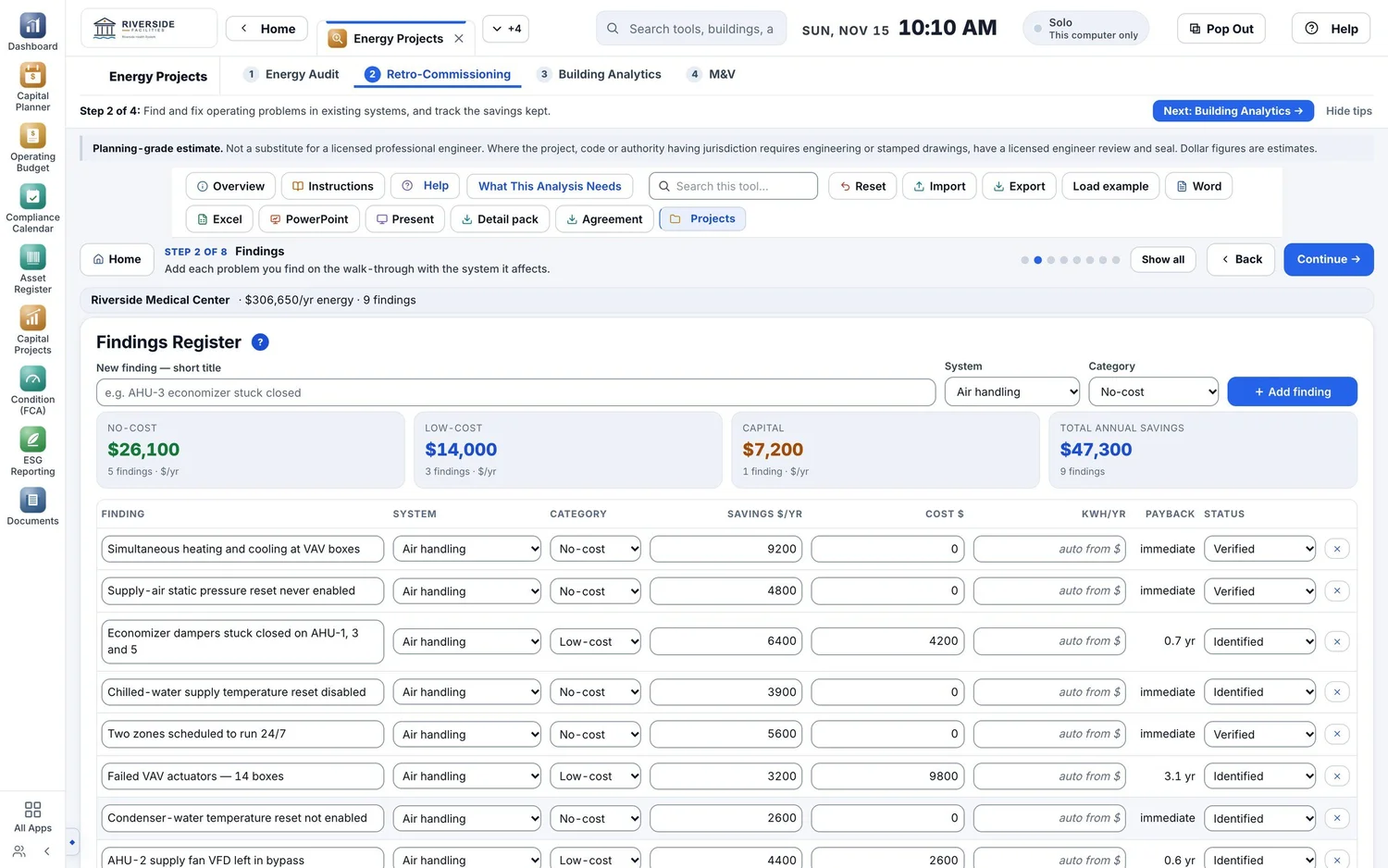
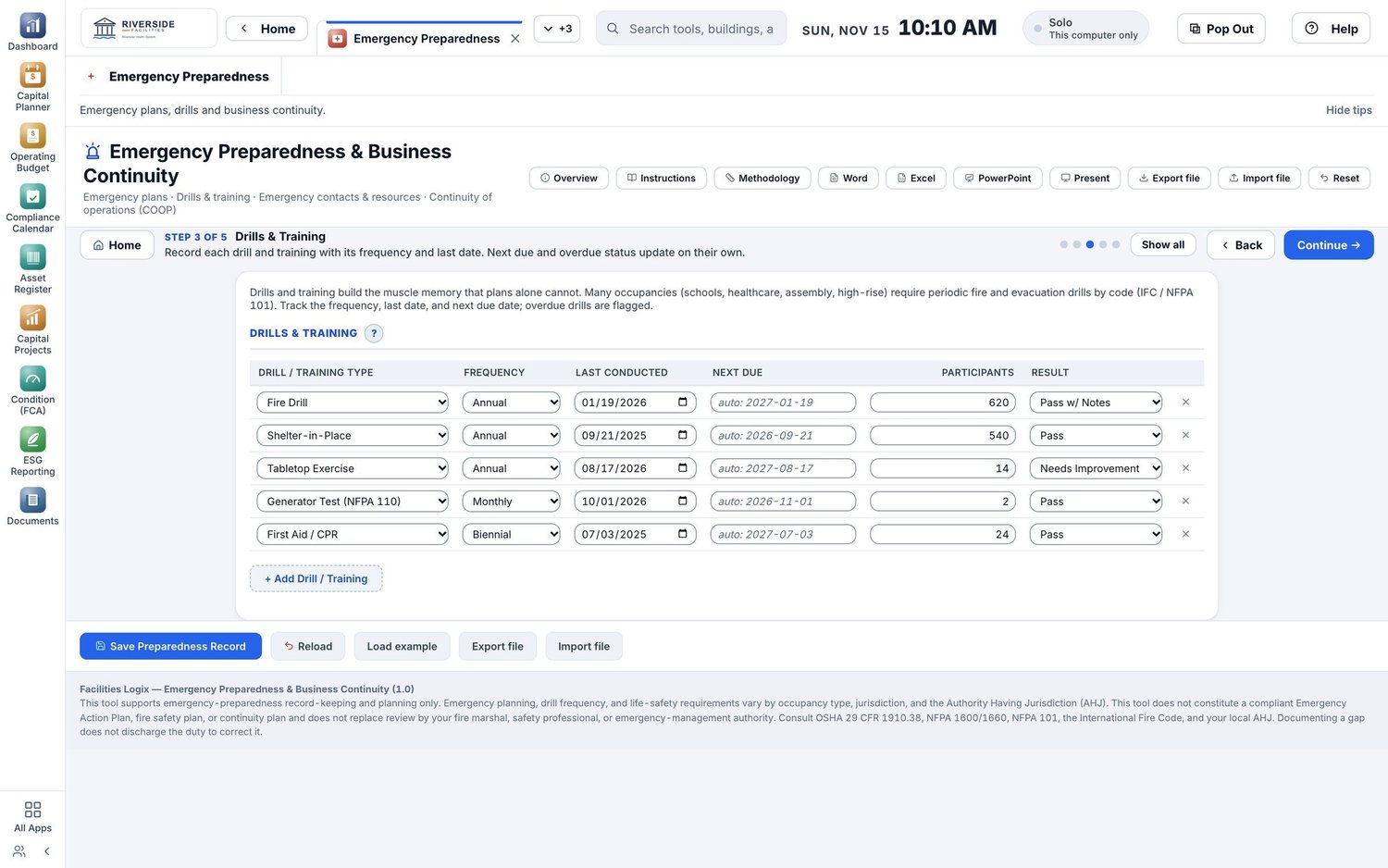
Findings in Retro-Commissioning: add each problem you find on the walk-through with the system it affects.
Inspection Readiness
NSPIRE, self-inspection, lead-safe and alarm dates sit on one schedule, so a missed inspection is visible before it affects a score or funding.
Learn MoreShow Less
A strong NSPIRE score means HUD returns less often: every 3 years at 90 or more. Fewer inspections means less staff time and less risk to funding.
- Evidence per row: the NSPIRE report and lead visual assessment records
- The Calendar marks evidence on file as yes, no or partial
- Each Calendar row holds the document, date, signer and expiry
- Facts such as HUD assistance are asked once and switch rows on
One Record, Not Binders
Units, requests, inspections and capital live in one place that rolls up to the portfolio.
Learn MoreShow Less
Capital and inspection records that roll up let an owner fund the property with the greatest need first, instead of guessing.
- Publish sends capital projects into Assets & Systems, tagged to the property
- Capital categories: roofs, envelope, paving, amenities, unit renovation, mechanical, site
- Each project records the driver behind it
- Save keeps everything on this computer
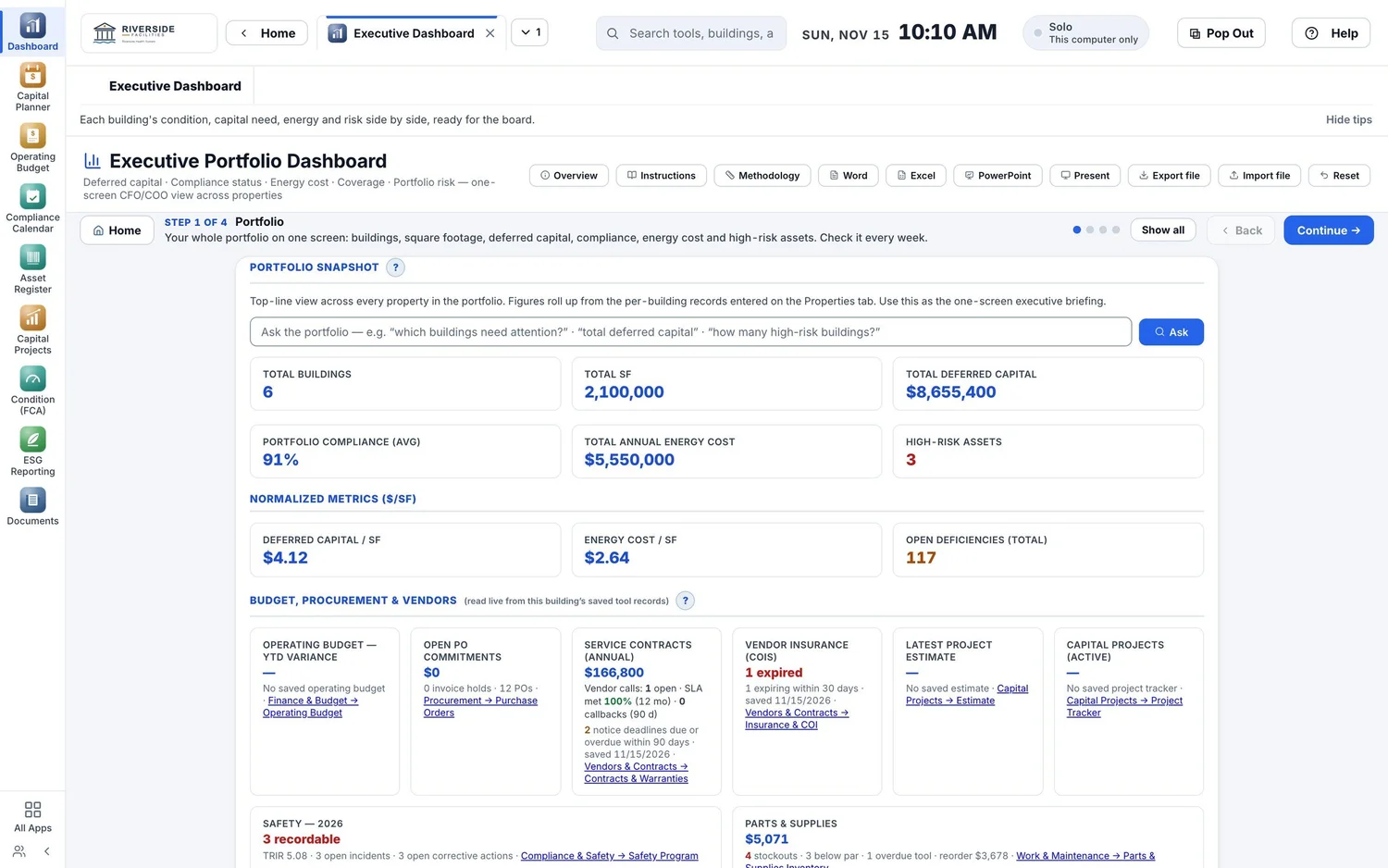
Portfolio in Executive Portfolio Dashboard: your whole portfolio on one screen: buildings, square footage, deferred capital, compliance, energy cost and high-risk assets. Check it every week.
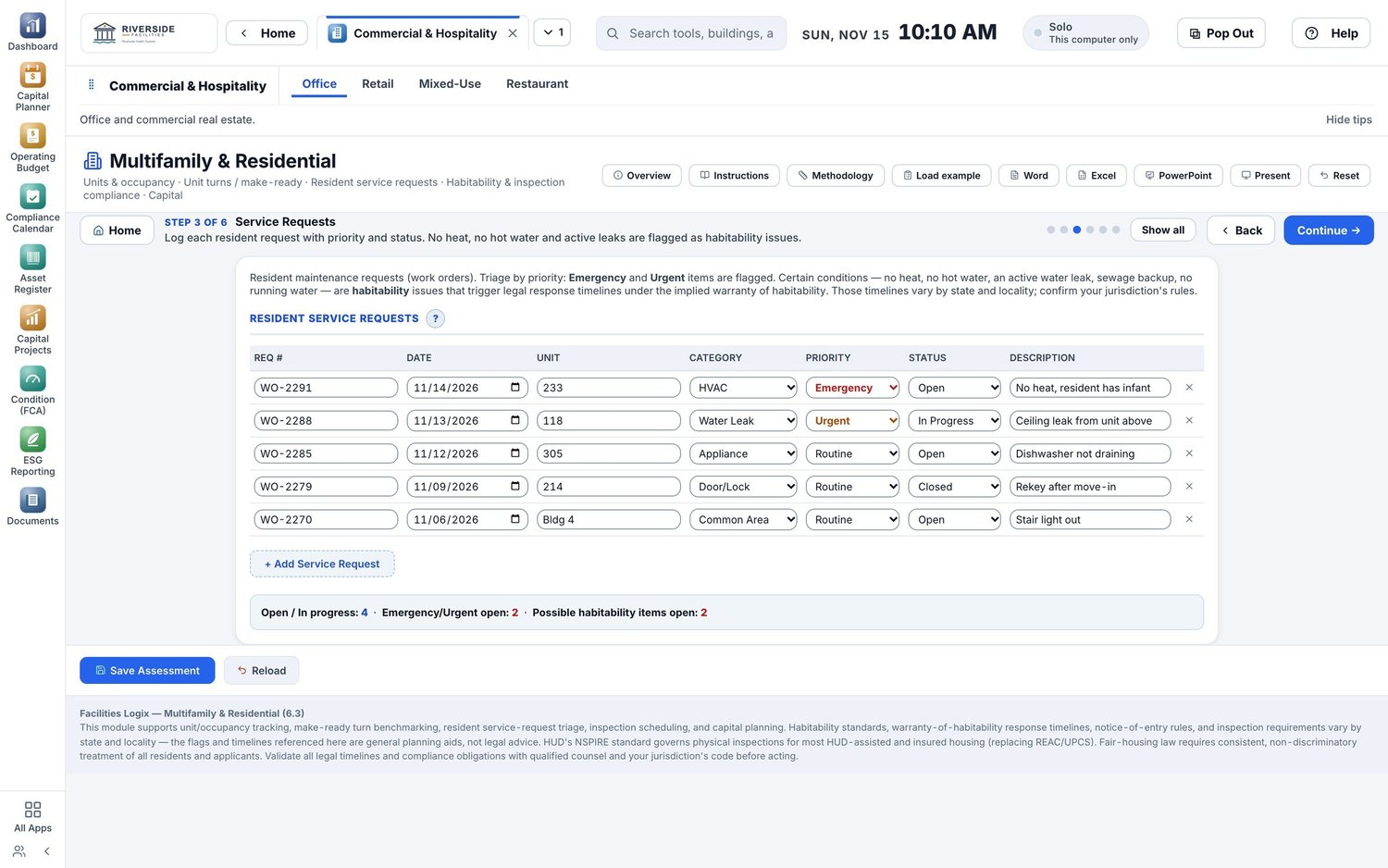
Service Requests in Multifamily & Residential: log each resident request with priority and status. No heat, no hot water and active leaks are flagged as habitability issues.
Frequently Asked Questions
Does Facilities Logix tell us our state's repair deadlines for habitability issues?
How often is the NSPIRE inspection due?
Does it handle public housing?
Is the water score available for every apartment building?
Be First When Facilities Logix Opens
Stop chasing building records across spreadsheets and binders. Join the list and we will tell you the day downloads open, with setup guides ready.
Launching early 2027 for Facilities Logix. Nothing to buy today, and no sales calls.
