
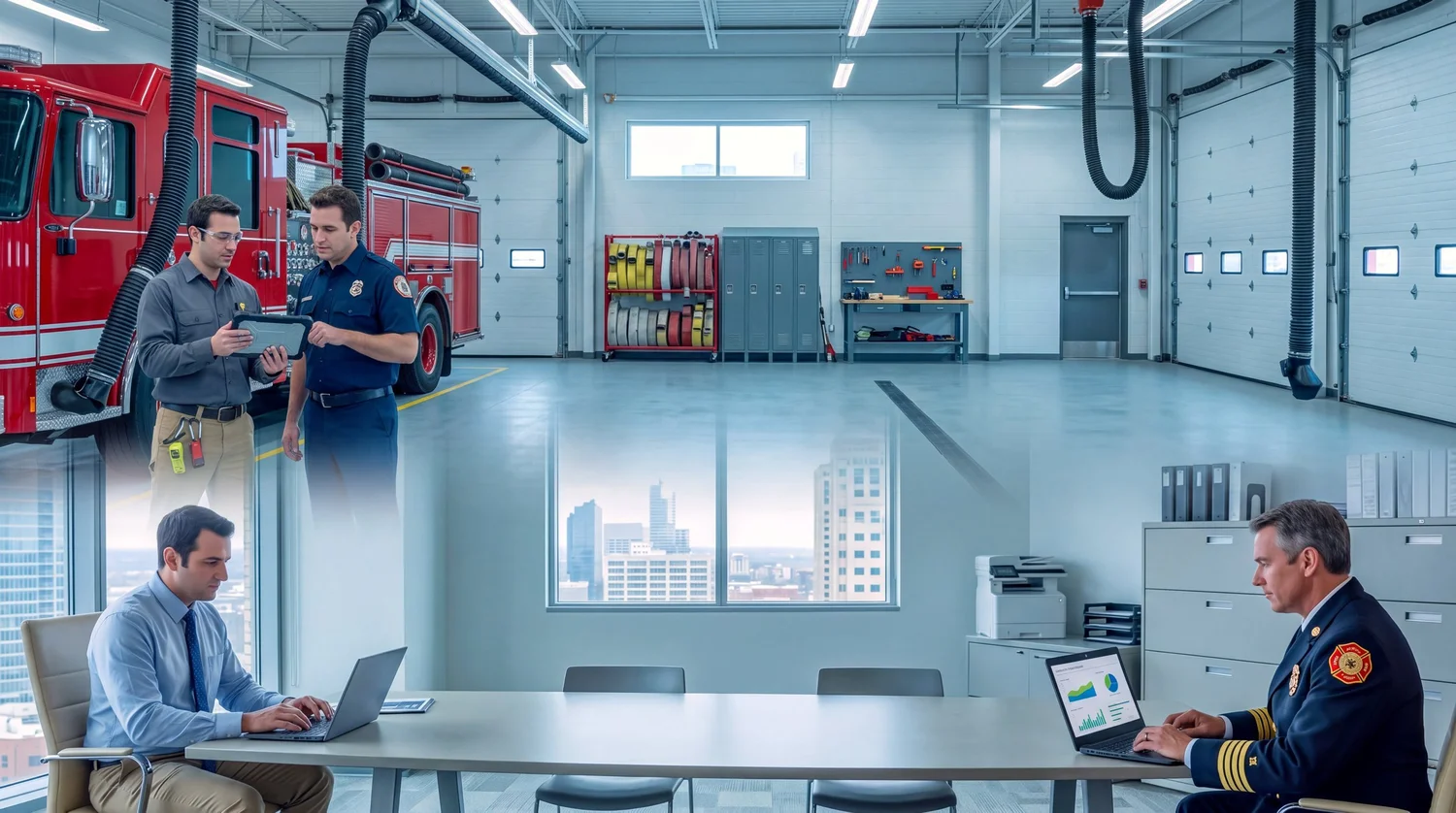

Stations That Cannot Close, and the Checks That Keep Them Ready.
Launching Early 2027 · Join the Early-Access List
Fire stations, police and sheriff's stations, EMS stations, 911 emergency communications centers and emergency operations centers run around the clock. Crews live in them, apparatus must roll in seconds and dispatch floors need power, cooling and radio that never drop. Pick the facility type, and Facilities Logix applies the rules for that type and tracks the systems that keep response ready.
What the Facility Type Turns On
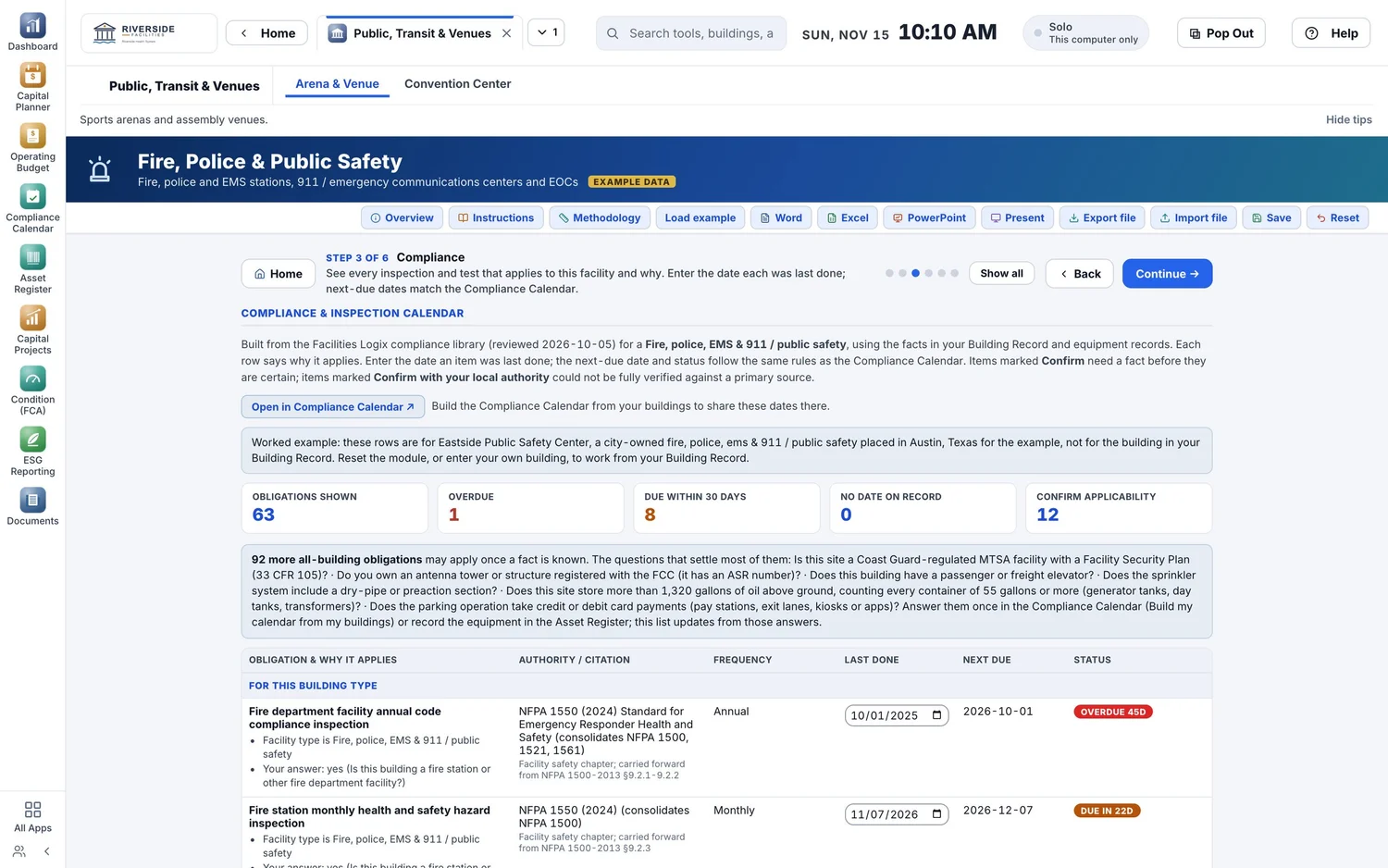
The type you pick decides the rows. A fire station gets the fire department facility rules, a 911 center gets the communications center tests, and a combined building gets both fire and police rows. Each row carries its standard, frequency and next due date, shared with the Compliance Calendar.
Fire Station Facility Safety (NFPA 1550)
- An annual code compliance inspection of every fire department facility
- A monthly health and safety hazard inspection, with a way to correct what is found promptly
- Apparatus-bay exhaust capture kept working, so diesel exhaust stays out of living and sleeping areas (flagged Confirm)
Breathing Air and Protective Gear
- Breathing air from the SCBA compressor or fill station sampled and tested by an accredited lab at least every quarter (NFPA 1989)
- Turnout gear advanced cleaning at least twice a year and whenever it is contaminated (NFPA 1850)
- Turnout gear advanced inspection every 12 months, and SCBA annual inspection and flow test with cylinder requalification, both flagged Confirm
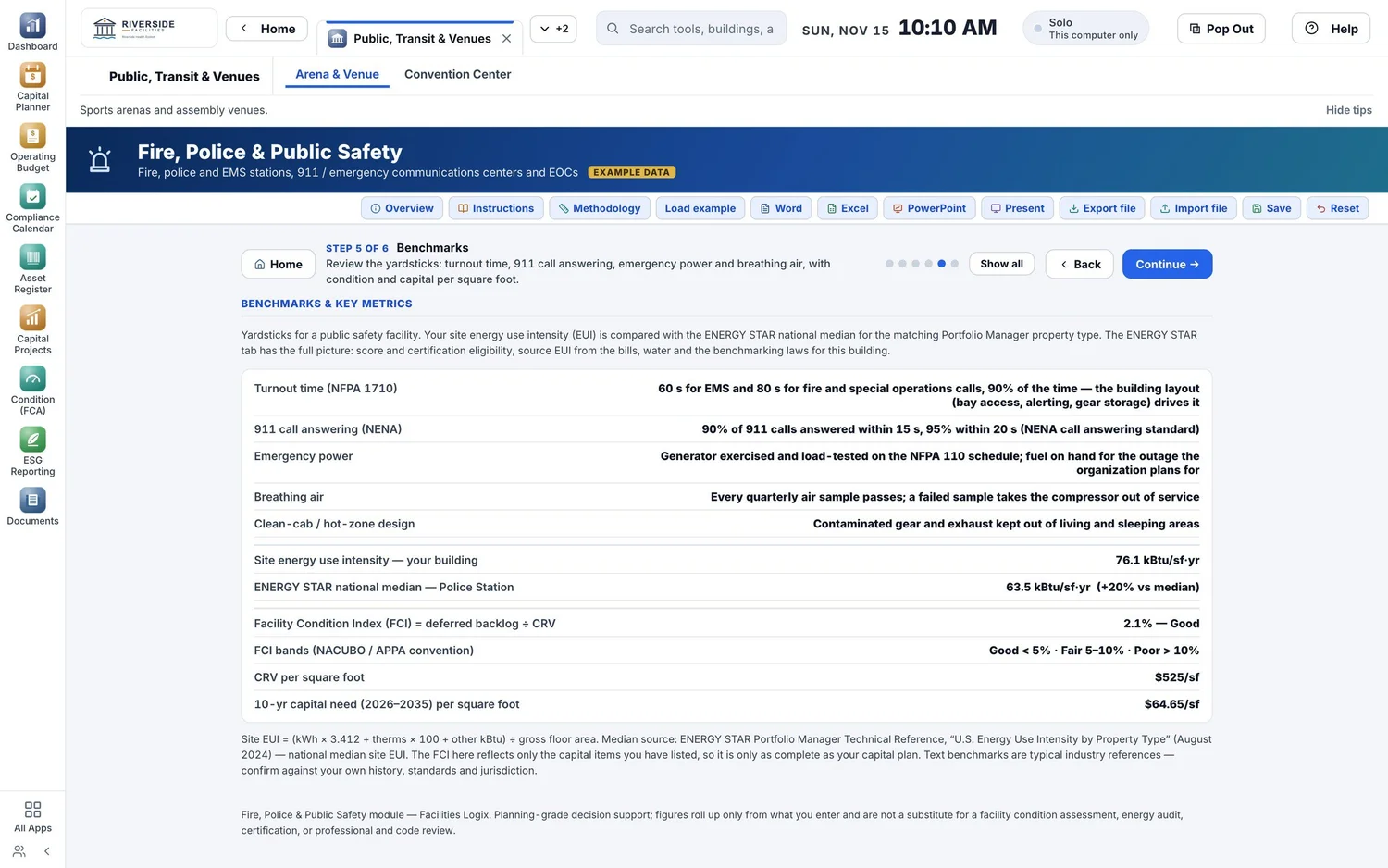
Benchmarks in Fire, Police & Public Safety: review the yardsticks: turnout time, 911 call answering, emergency power and breathing air, with condition and capital per square foot.
Fire Apparatus (NFPA 1910)
- Each in-service apparatus inspected at least once a year, with its pump service test and aerial test
Indoor Firing Ranges (29 CFR 1910.1025)
- Airborne lead exposure monitoring, repeated at least every 6 months when exposure is at or above the action level
- Medical surveillance with blood lead tests at least every 6 months for exposed employees
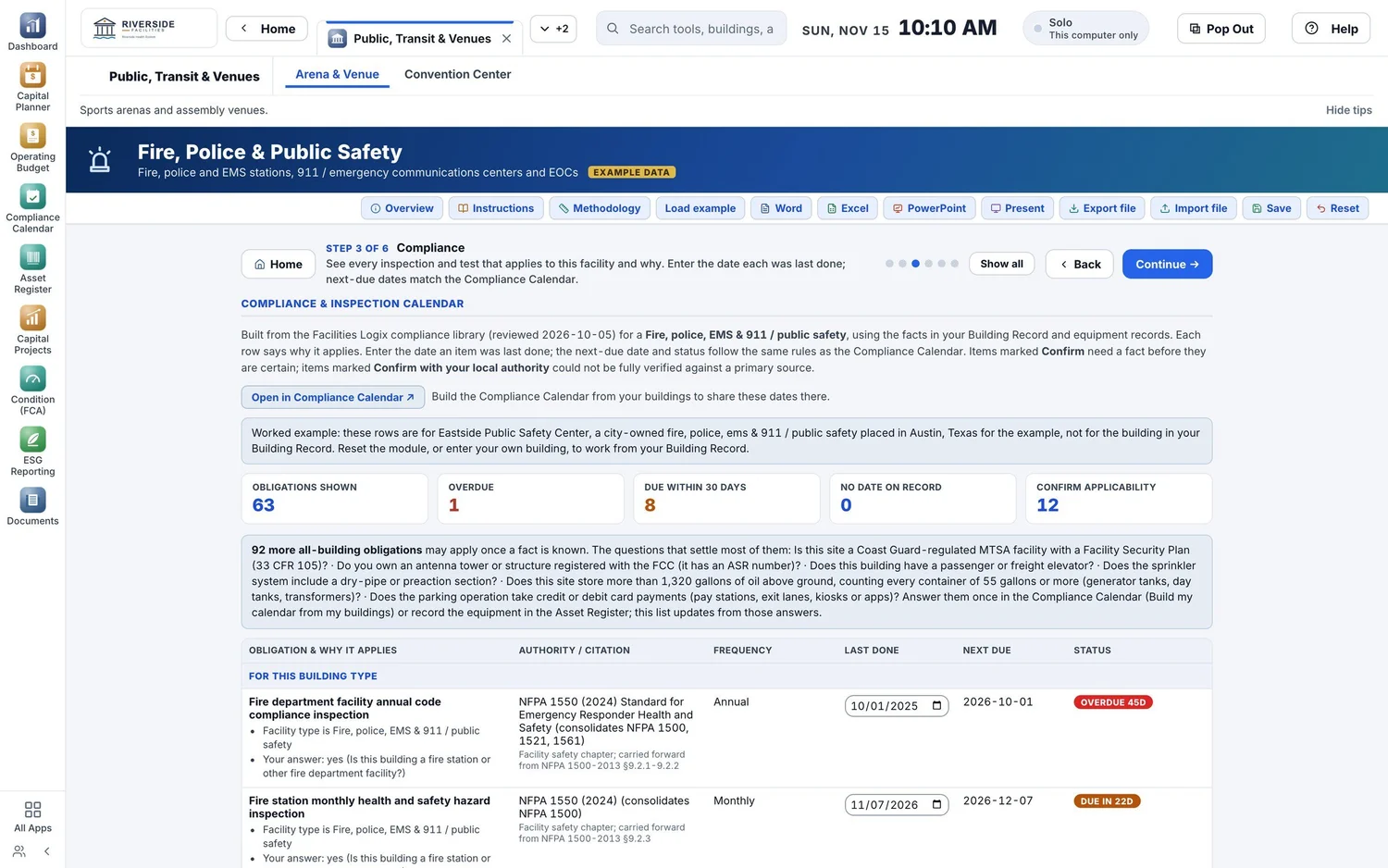
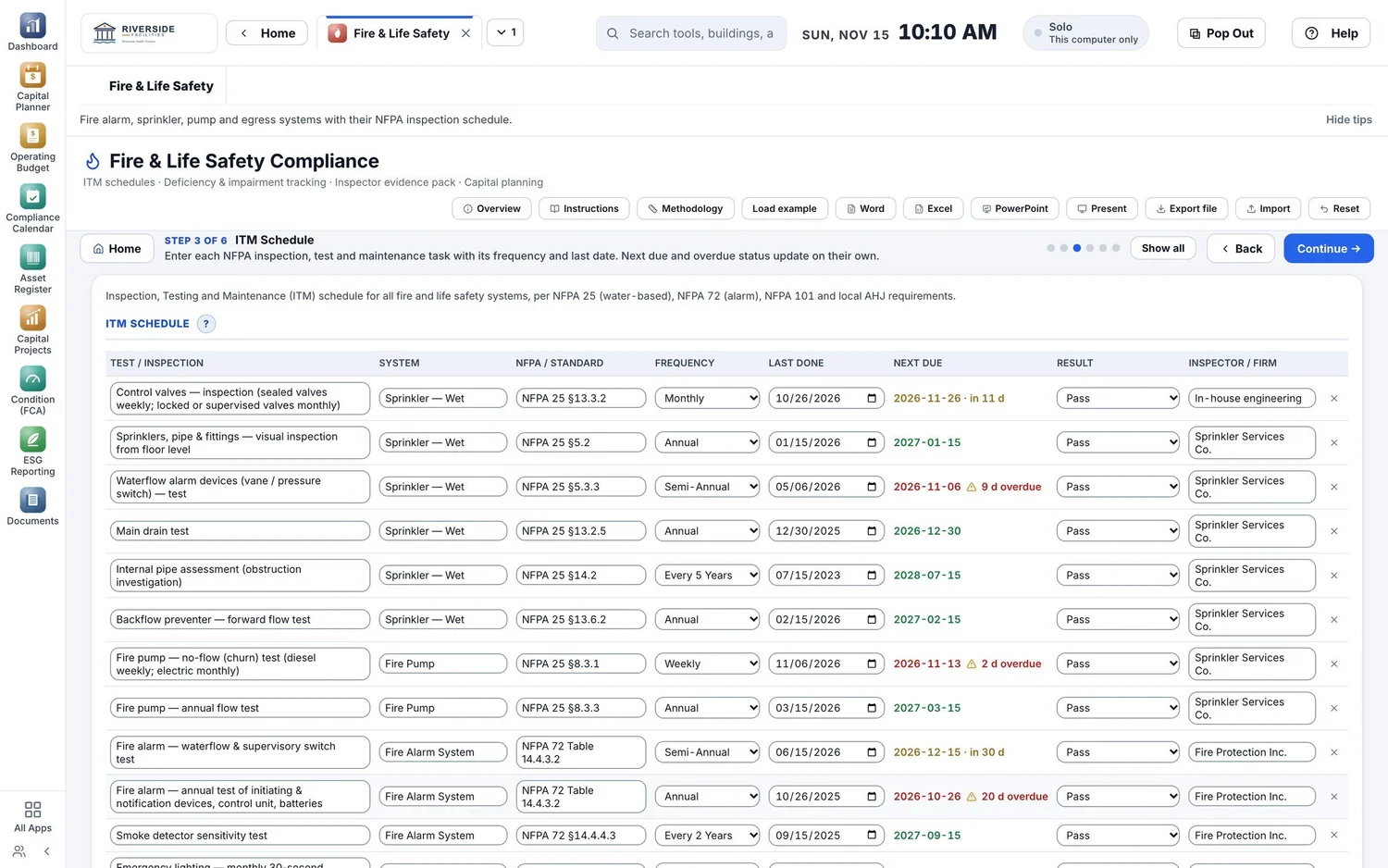
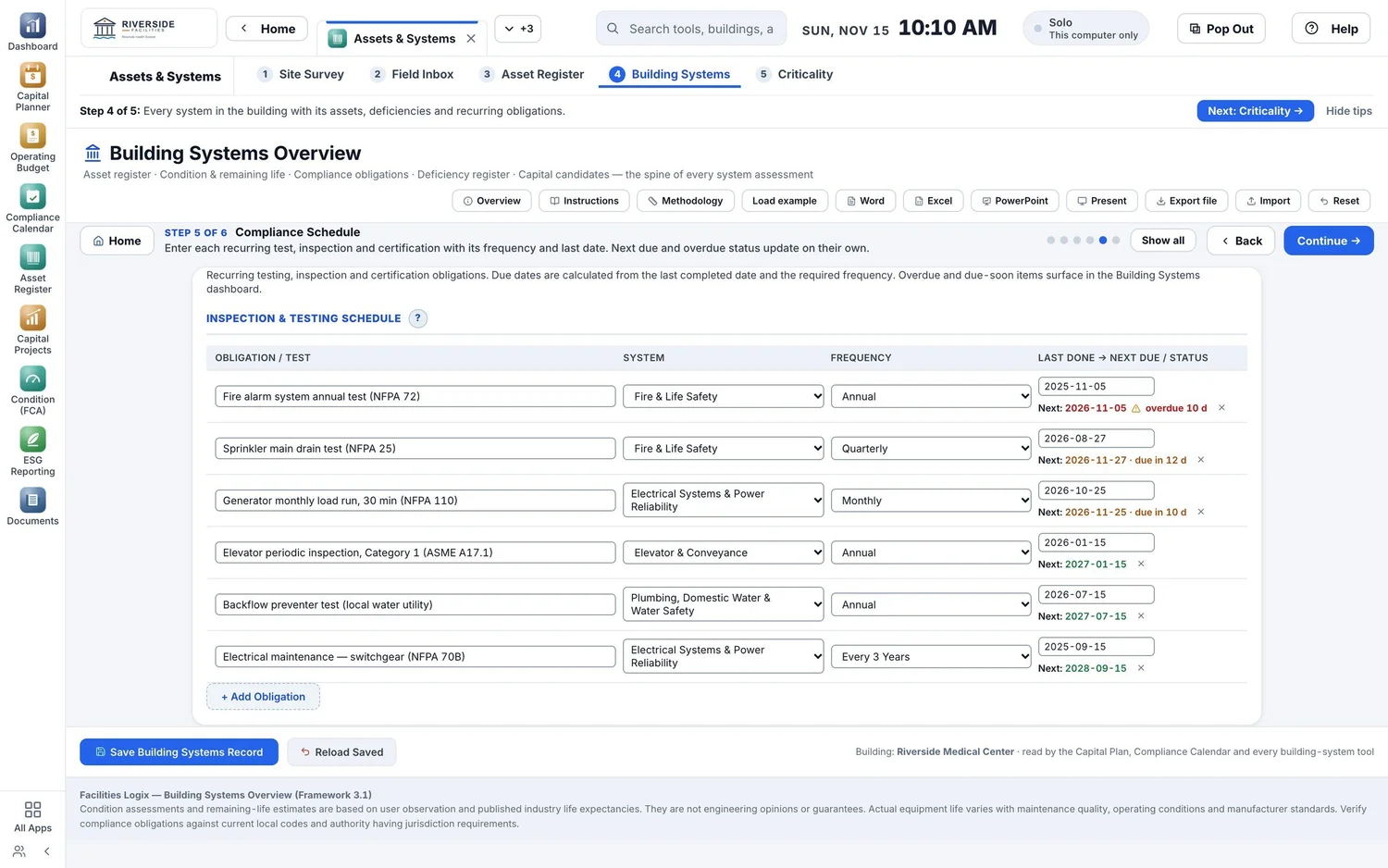
Compliance in Fire, Police & Public Safety: see every inspection and test that applies to this facility and why. Enter the date each was last done; next-due dates match the Compliance Calendar.
Emergency Communications Centers (NFPA 1225)
- Standby power (UPS and generator transfer under load), redundant HVAC and fire protection tests for the 911 center (flagged Confirm)
Systems Every Station Has
- Generator weekly inspection, monthly load test and annual load bank when monthly tests run light (NFPA 110)
- Fire alarm and sprinkler inspection and testing (NFPA 72, NFPA 25)
- Underground fuel tank rows, emergency responder radio coverage and the other all-building rows wherever your equipment records show the equipment
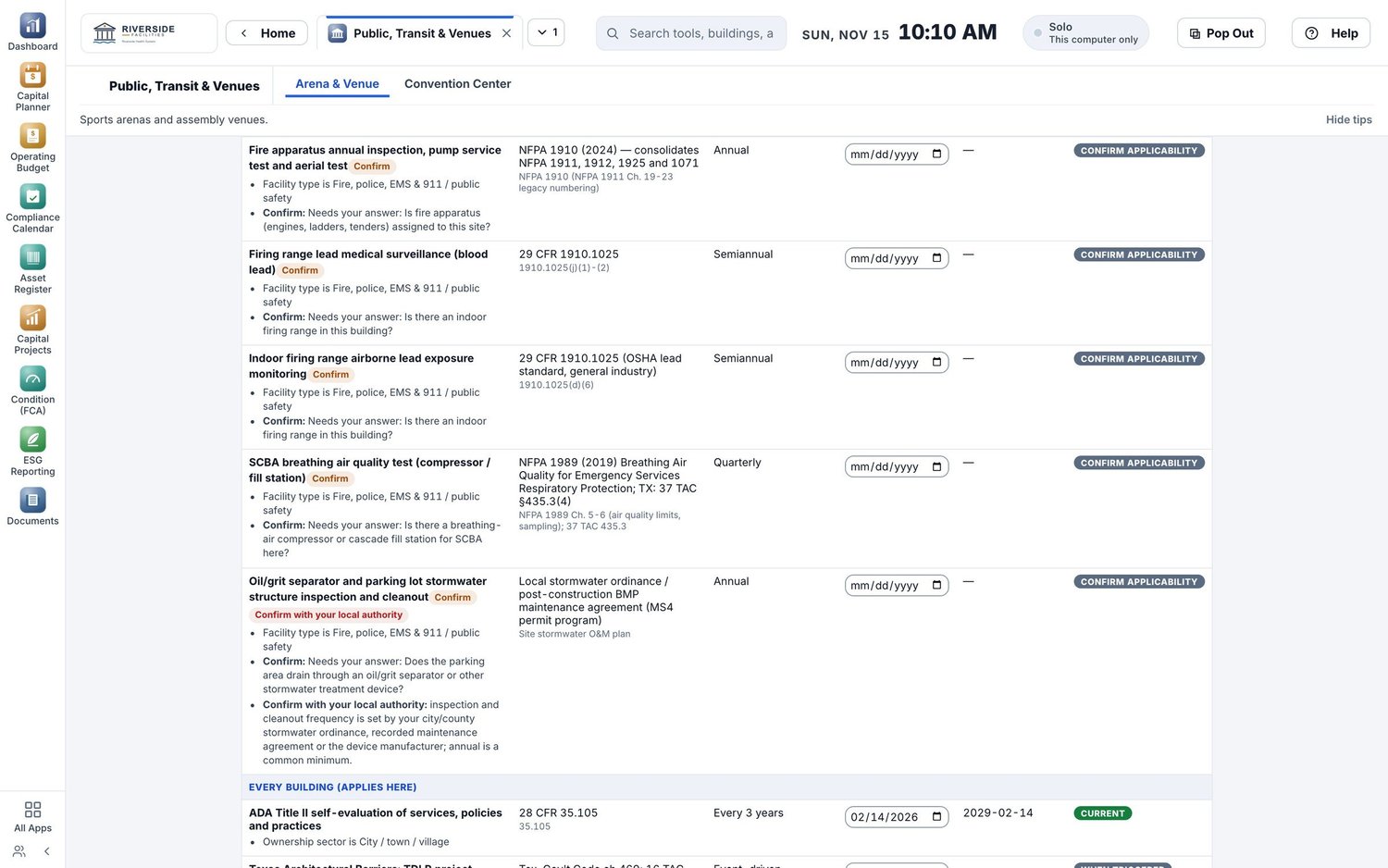
Compliance in Fire, Police & Public Safety: see every inspection and test that applies to this facility and why. Enter the date each was last done; next-due dates match the Compliance Calendar.
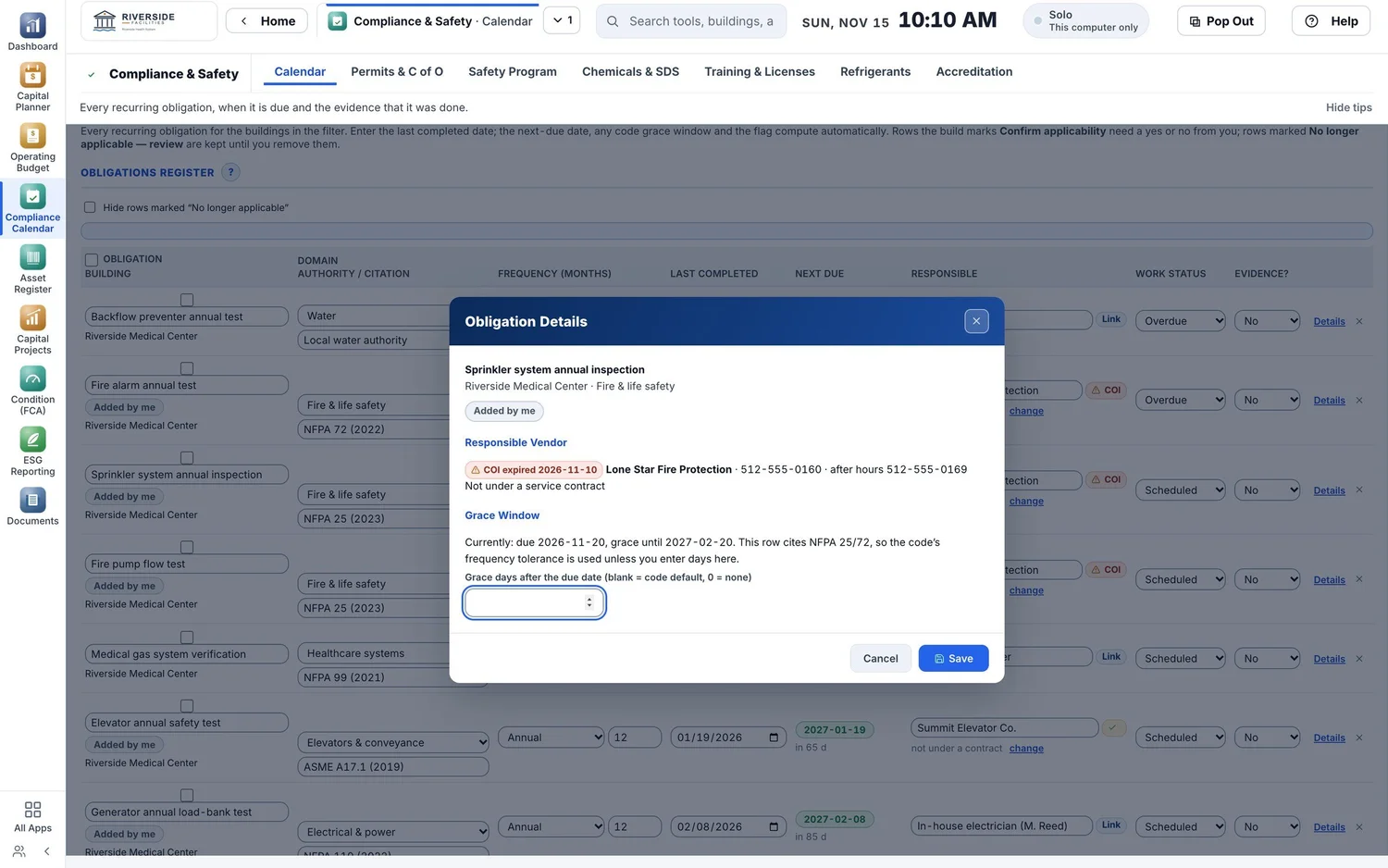
Fire stations and dispatch centers follow different rules, so each obligation explains why it applies.
Sixteen Station Systems with PM Cadence
Response and Power
- Emergency generator and transfer switch, weekly, Critical
- UPS for dispatch, radio and station alerting, quarterly, Critical, with batteries on a 4-5 year cycle
- Station alerting system, monthly, Critical
- Dispatch-floor HVAC (redundant), quarterly, Critical, for 24/7 cooling of consoles and equipment
- Radio tower, antennas and grounding, annual
Apparatus Bay and Crew Health
- Apparatus bay vehicle exhaust capture, semiannual, with diesel exhaust captured at the source
- Apparatus bay doors and safety sensors, quarterly
- SCBA breathing-air compressor and cascade, quarterly, with air quality sampling
- Turnout gear extractor and drying cabinet, semiannual
- Decontamination, laundry and hot zone separation, annual
- Fuel station with tank, dispenser and leak detection, monthly
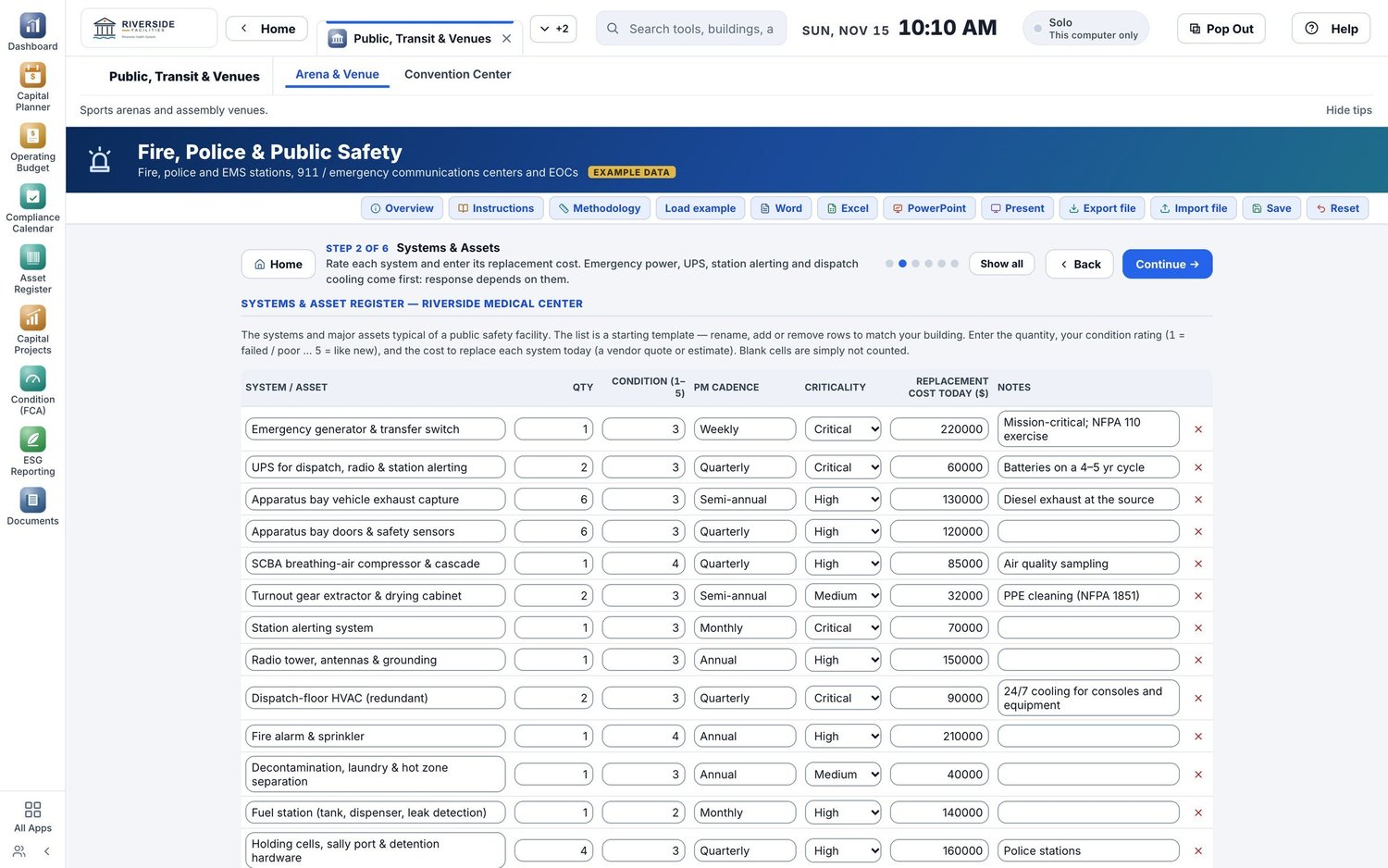
Systems & Assets in Fire, Police & Public Safety: rate each system and enter its replacement cost. Emergency power, UPS, station alerting and dispatch cooling come first: response depends on them.
Police and Security
- Holding cells, sally port and detention hardware, quarterly
- Indoor firing range ventilation and bullet trap, semiannual, for lead exposure control
- Evidence and property room security and environment, quarterly
- Access control, CCTV and ballistic glazing, quarterly
- Fire alarm and sprinkler, annual
Facility Types and Profile
- Fire station, police station, EMS or ambulance station, combined public safety building, 911 emergency communications center, emergency operations center, or training center with burn building or range
- Apparatus bays, floor area, year built, staffing (24/7 with or without sleeping quarters, business hours or volunteer) and a year of energy
- The capital plan starts with the generator, UPS and its batteries, exhaust capture, bay doors, station alerting, dispatch consoles and radio, HVAC, roof, SCBA compressor and fuel tank
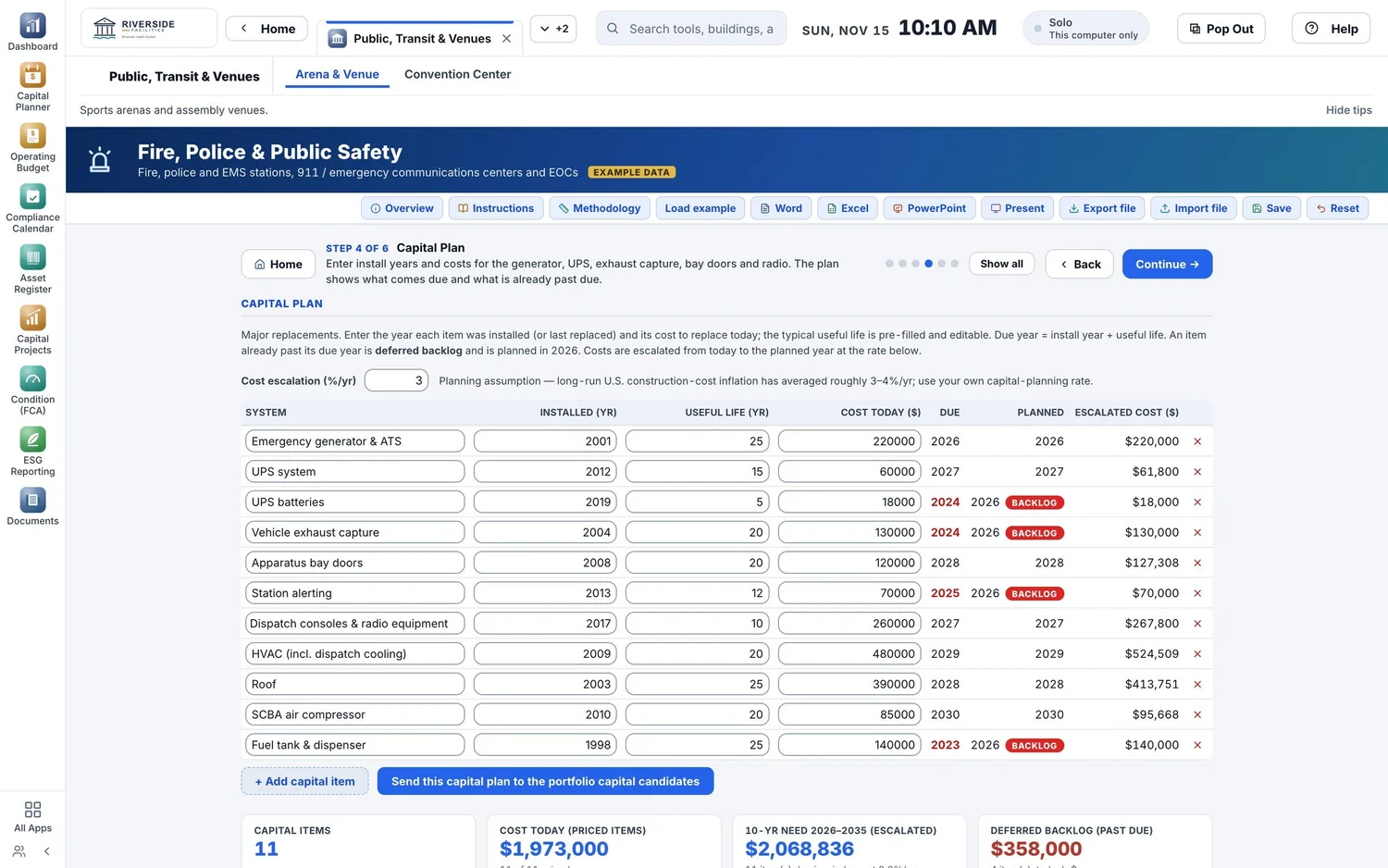
Capital Plan in Fire, Police & Public Safety: enter install years and costs for the generator, UPS, exhaust capture, bay doors and radio. The plan shows what comes due and what is already past due.
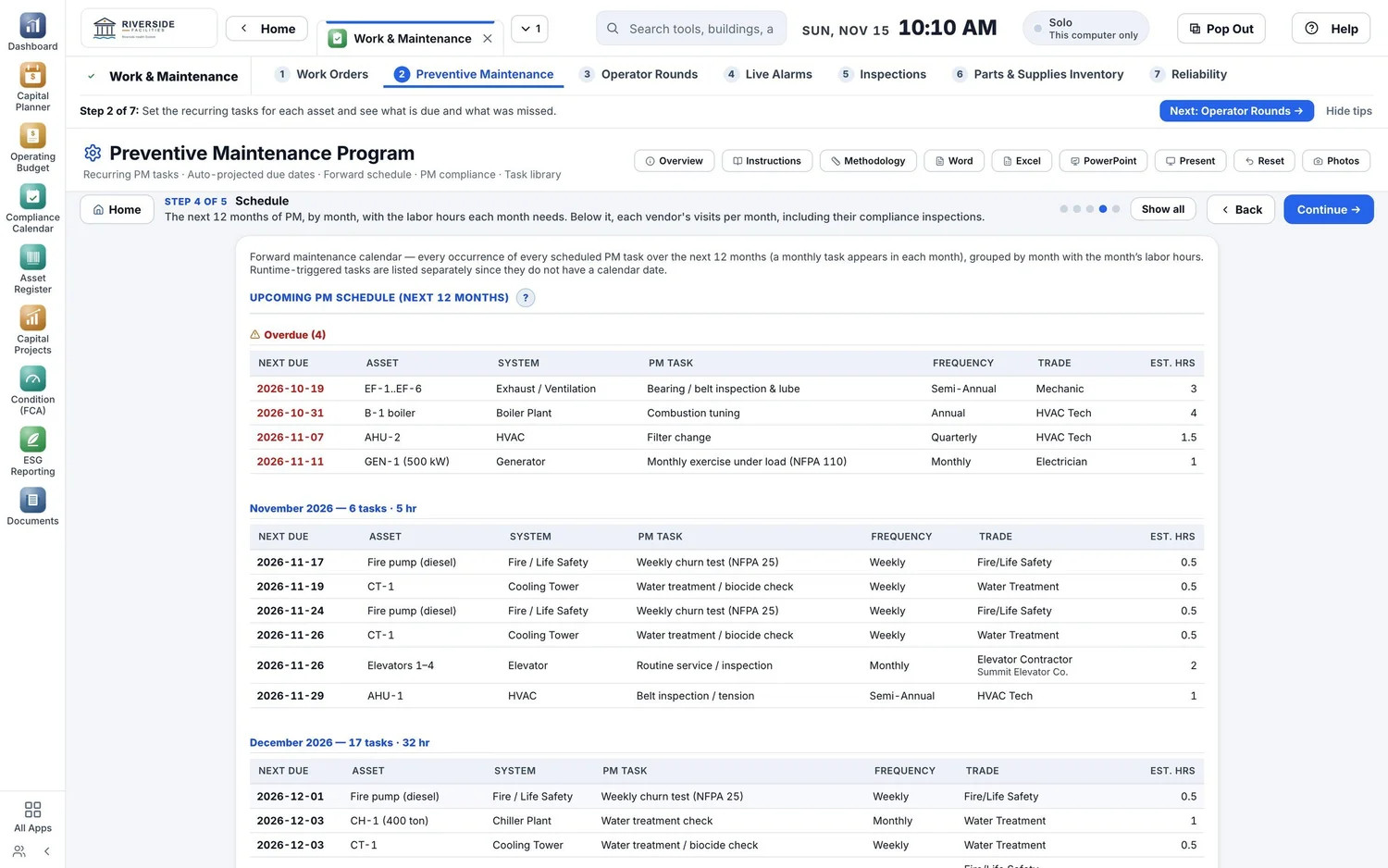
Schedule in Preventive Maintenance Program: the next 12 months of PM, by month, with the labor hours each month needs. Below it, each vendor's visits per month, including their compliance inspections.
Daily Readiness, Written Down
Compliance Tab
Every inspection and test that applies to this facility and why. Enter the date each was last done, and the next due date matches the Compliance Calendar.
Learn MoreSystems Tab
Rate each system and track its PM cadence. Emergency power, UPS, station alerting and dispatch cooling come first, because response depends on them.
Learn MoreShow Less
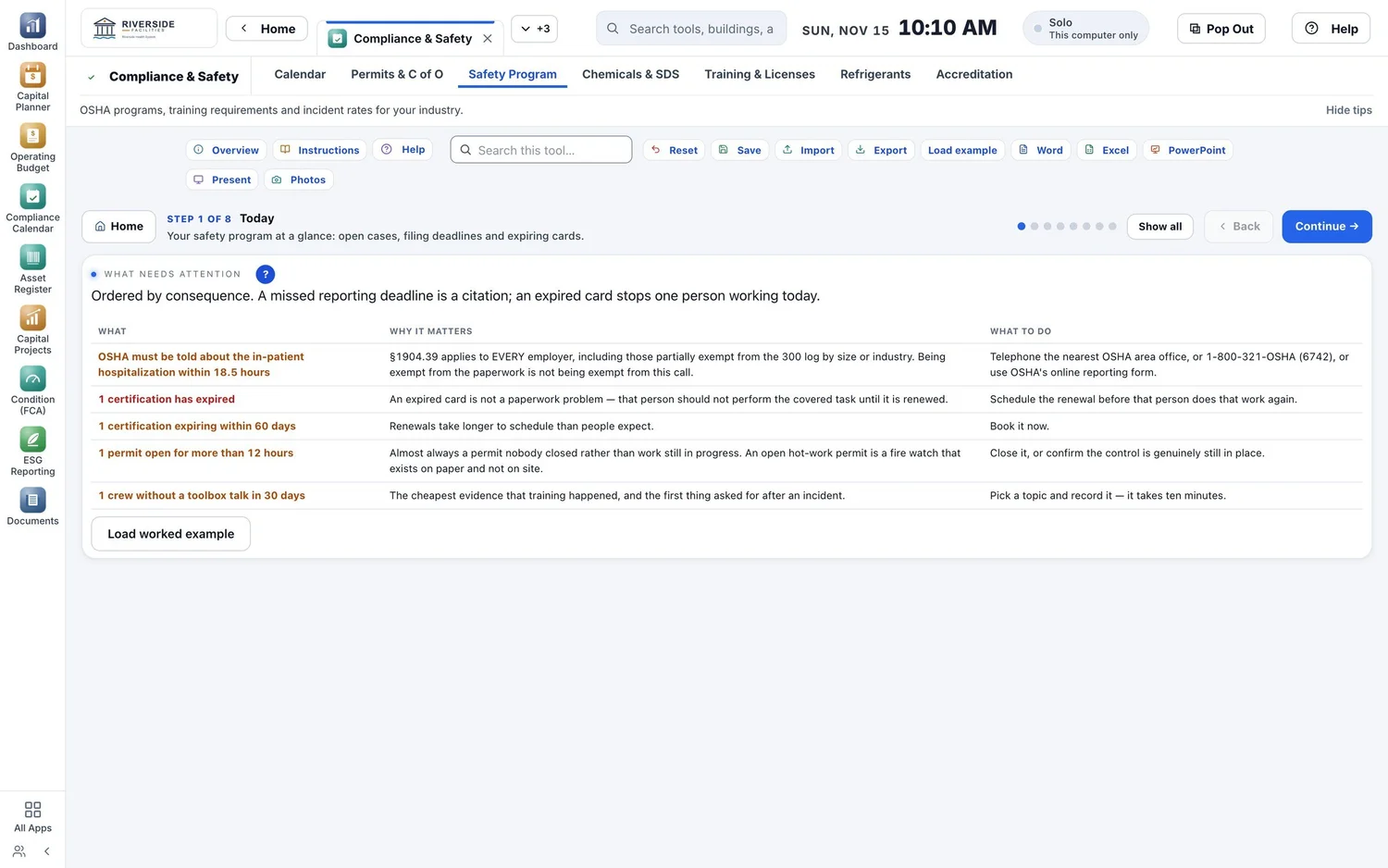
A generator or alerting failure during a call costs far more than its PM. Each station system carries its interval and criticality, so maintenance time goes first to what response depends on.
- Four Critical systems: generator and transfer switch, UPS, station alerting and dispatch-floor HVAC
- Weekly generator PM, the shortest interval on the list
- Condition and replacement cost feed the deferred backlog and the capital plan
- Publish to Building Systems puts the systems with work orders and PM
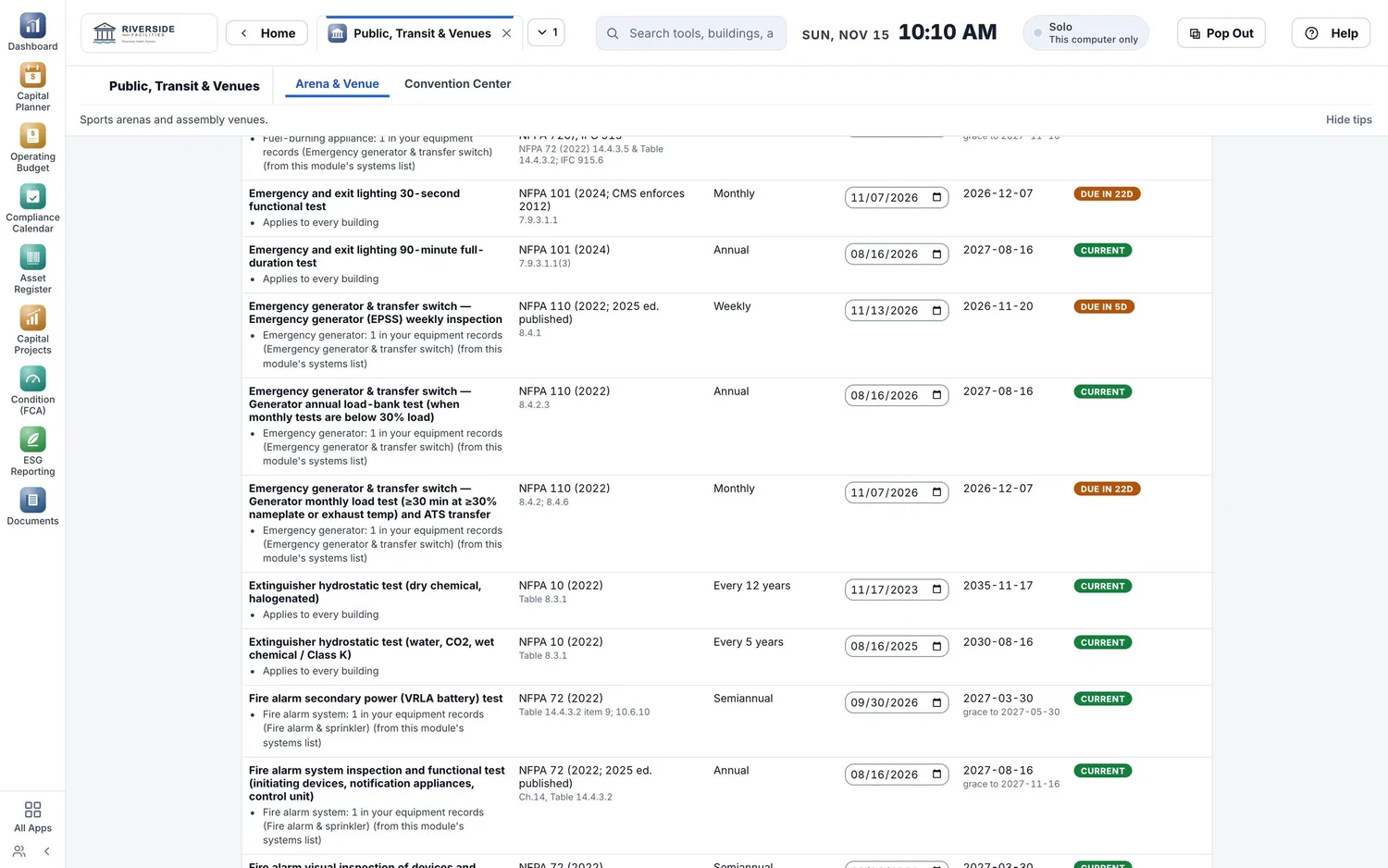
Compliance in Fire, Police & Public Safety: see every inspection and test that applies to this facility and why. Enter the date each was last done; next-due dates match the Compliance Calendar.
A Starting List You Edit
The systems and capital lines are a starting list. Dates, quantities and condition start blank, and your team adds, removes and renames to match the station.
Learn MoreShow Less
Tracking equipment a station does not have wastes time, and missing what it does have hides costs. The starting list is a draft: keep what fits, delete the rest and add what is missing.
- Remove holding cells at a fire station, or the firing range where there is none
- Capital lines start with design lives, such as UPS batteries at 5 years and the generator at 25
- Install years stay empty until you enter them, so nothing is assumed due
- Sample figures appear only in the worked example, marked SAMPLE
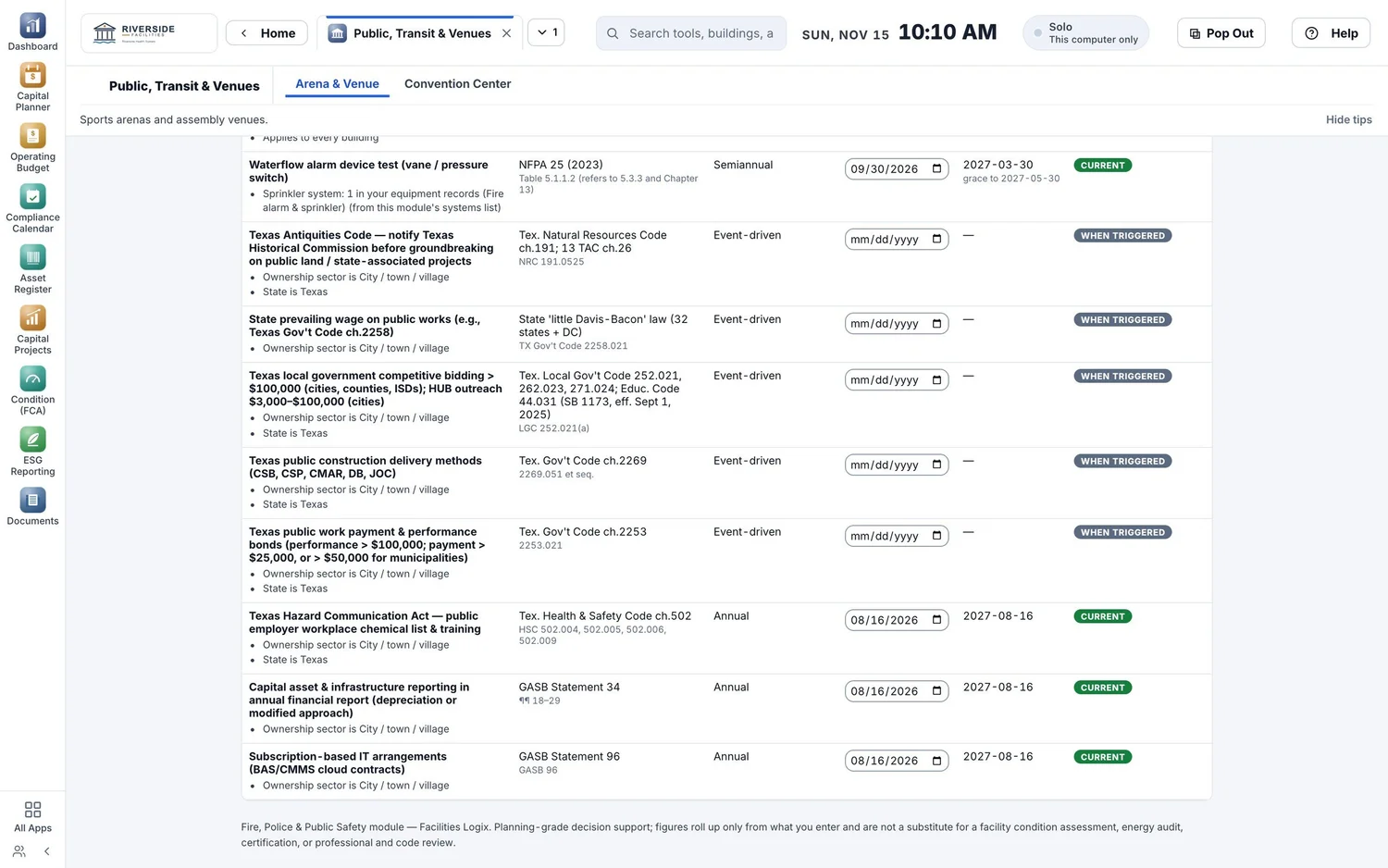
Compliance in Fire, Police & Public Safety: see every inspection and test that applies to this facility and why. Enter the date each was last done; next-due dates match the Compliance Calendar.
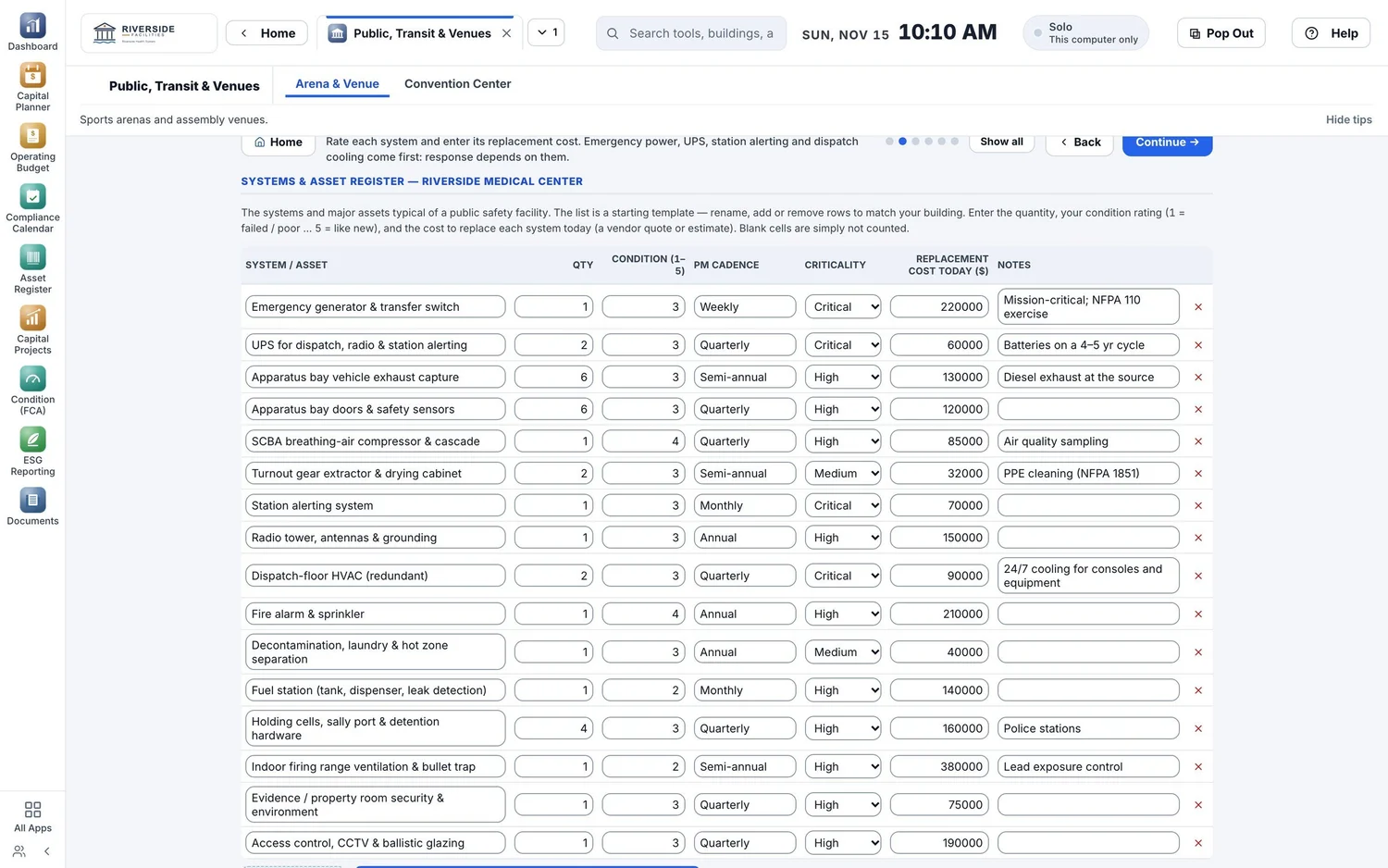
Systems & Assets in Fire, Police & Public Safety: rate each system and enter its replacement cost. Emergency power, UPS, station alerting and dispatch cooling come first: response depends on them.
Ready for the Fire Marshal and the Budget Hearing
Word, Excel, PowerPoint and Present
The systems, the obligations with their status, the capital plan and the benchmarks in one report.
Learn MoreShow Less
A council funds a station generator or roof sooner when the backlog and the cost of waiting are on one page. The report leads with a decision summary and key figures, then the station's own charts and tables.
- Benchmarks: NFPA 1710 turnout time and the NENA 911 call answering standard
- Charts: capital need by year, backlog by system and compliance status
- Overdue breathing-air, generator and fuel tank rows listed with their dates
- The same report shown page by page in Present mode
ENERGY STAR
Fire and police stations compare with their ENERGY STAR national median (124.9 kBtu/sf source), with energy from your bills and the benchmarking laws that apply.
Learn MoreShow Less
A 24/7 station pays for energy every hour of the year, so a building far above the median is a standing cost. The tab turns your bills into EUI and shows the gap.
- Fire and police stations get no 1-100 score or certification; the median comparison still applies
- EMS stations compare as fire stations; combined buildings as police stations
- 911 centers, EOCs and training centers compare as Other - Public Services (source median 89.3)
- Site median 63.5 kBtu/sf for both station types
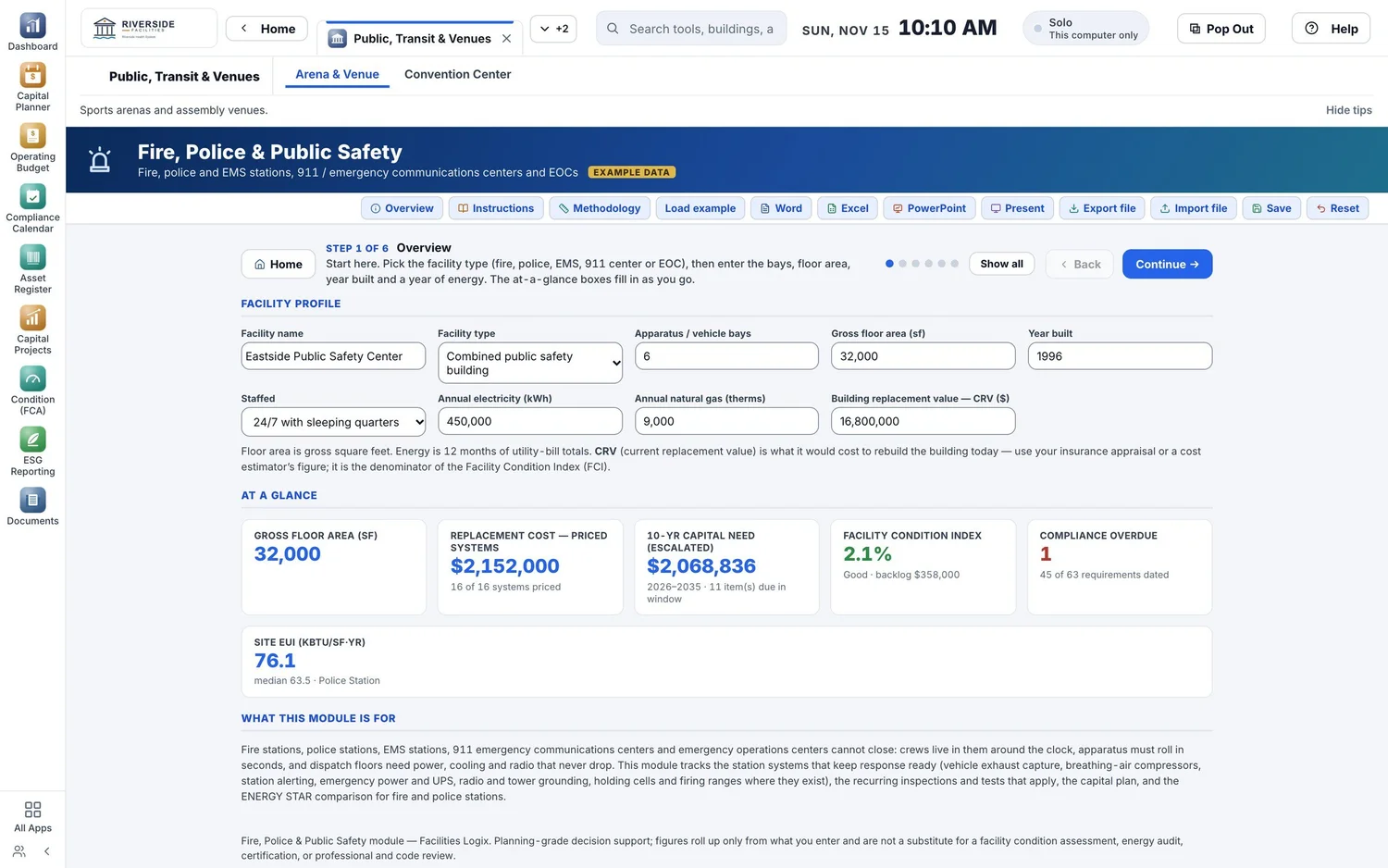
Overview in Fire, Police & Public Safety: start here. Pick the facility type (fire, police, EMS, 911 center or EOC), then enter the bays, floor area, year built and a year of energy. The at-a-glance boxes fill in as you go.
Capital Plan
Install years and costs for the generator, UPS, exhaust capture, bay doors and radio show what comes due and what is already past due.
Learn More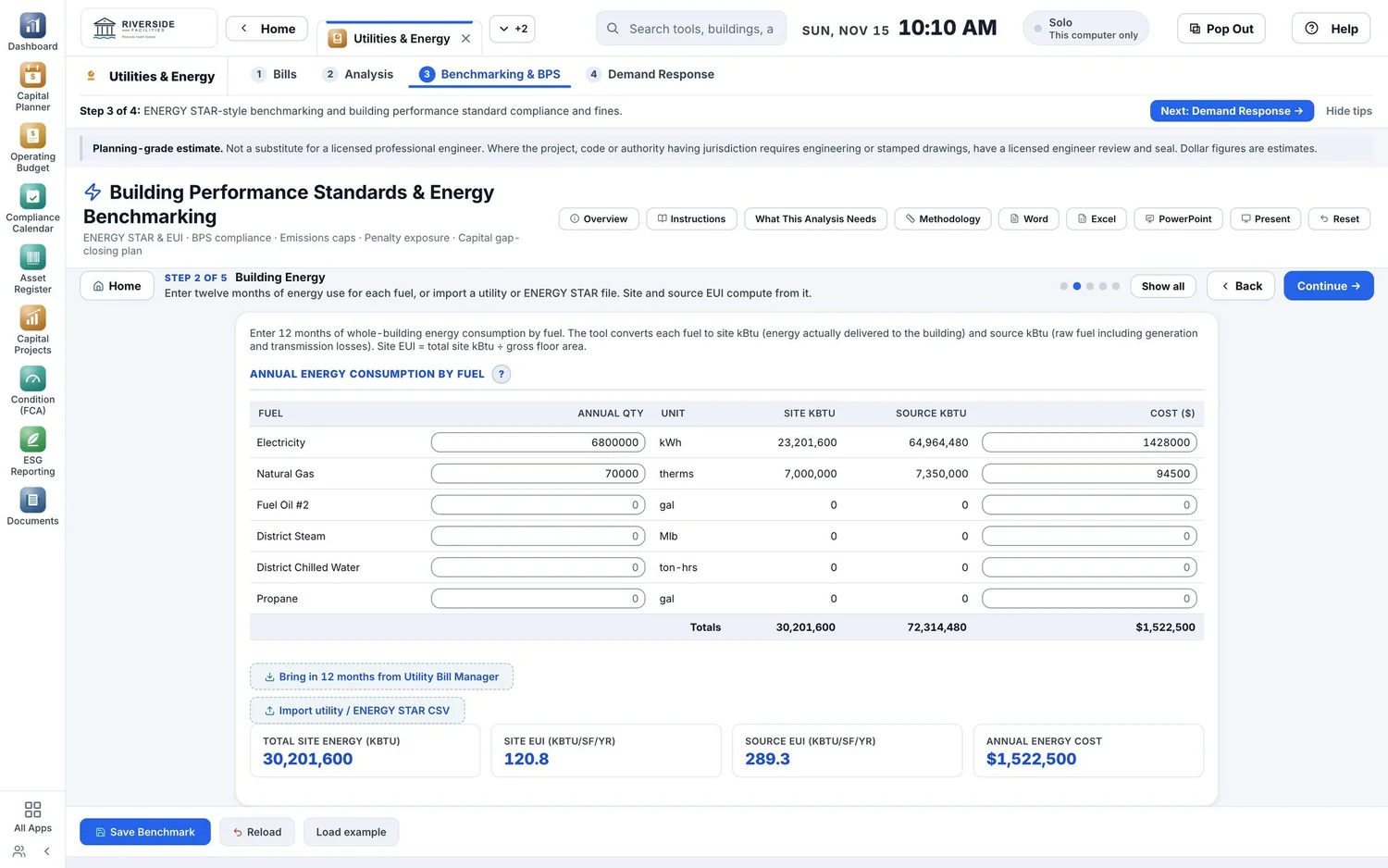
The Yardsticks on the Benchmarks Tab
Benchmarks
- Turnout time (NFPA 1710): 60 seconds for EMS and 80 seconds for fire and special operations calls, 90% of the time. The building layout, from bay access to alerting and gear storage, drives it
- 911 call answering: 90% of calls answered within 15 seconds and 95% within 20 seconds, the National Emergency Number Association (NENA) standard
- Emergency power: the generator exercised and load-tested on the NFPA 110 schedule, with fuel on hand for the outage your organization plans for
- Breathing air: every quarterly sample passes, and a failed sample takes the compressor out of service
- Clean cab and hot zone design: contaminated gear and exhaust kept out of living and sleeping areas
- Condition and capital per square foot
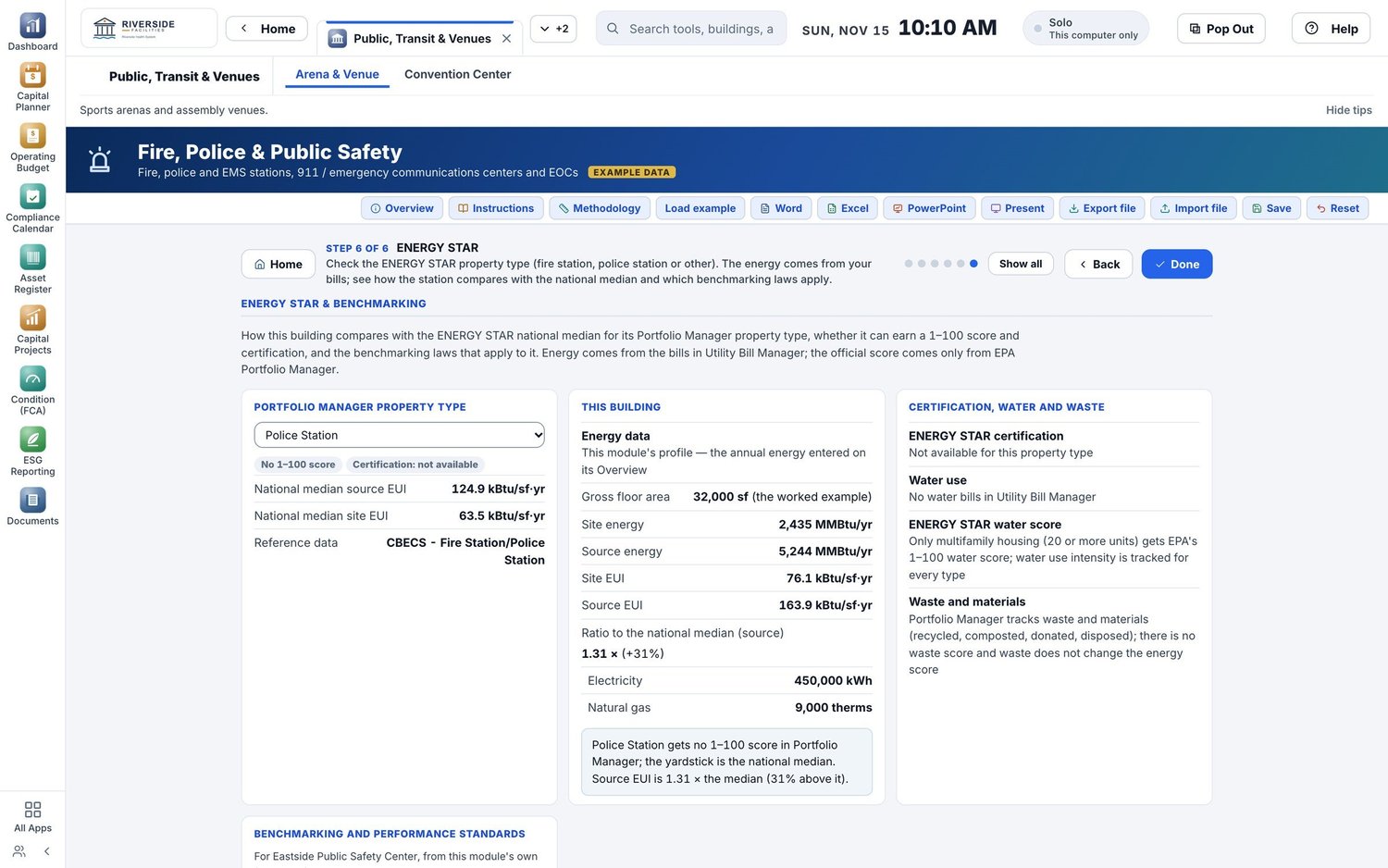
ENERGY STAR in Fire, Police & Public Safety: check the ENERGY STAR property type (fire station, police station or other). The energy comes from your bills; see how the station compares with the national median and which benchmarking laws apply.
Crews Protected, Response Ready
Health Checks That Happen
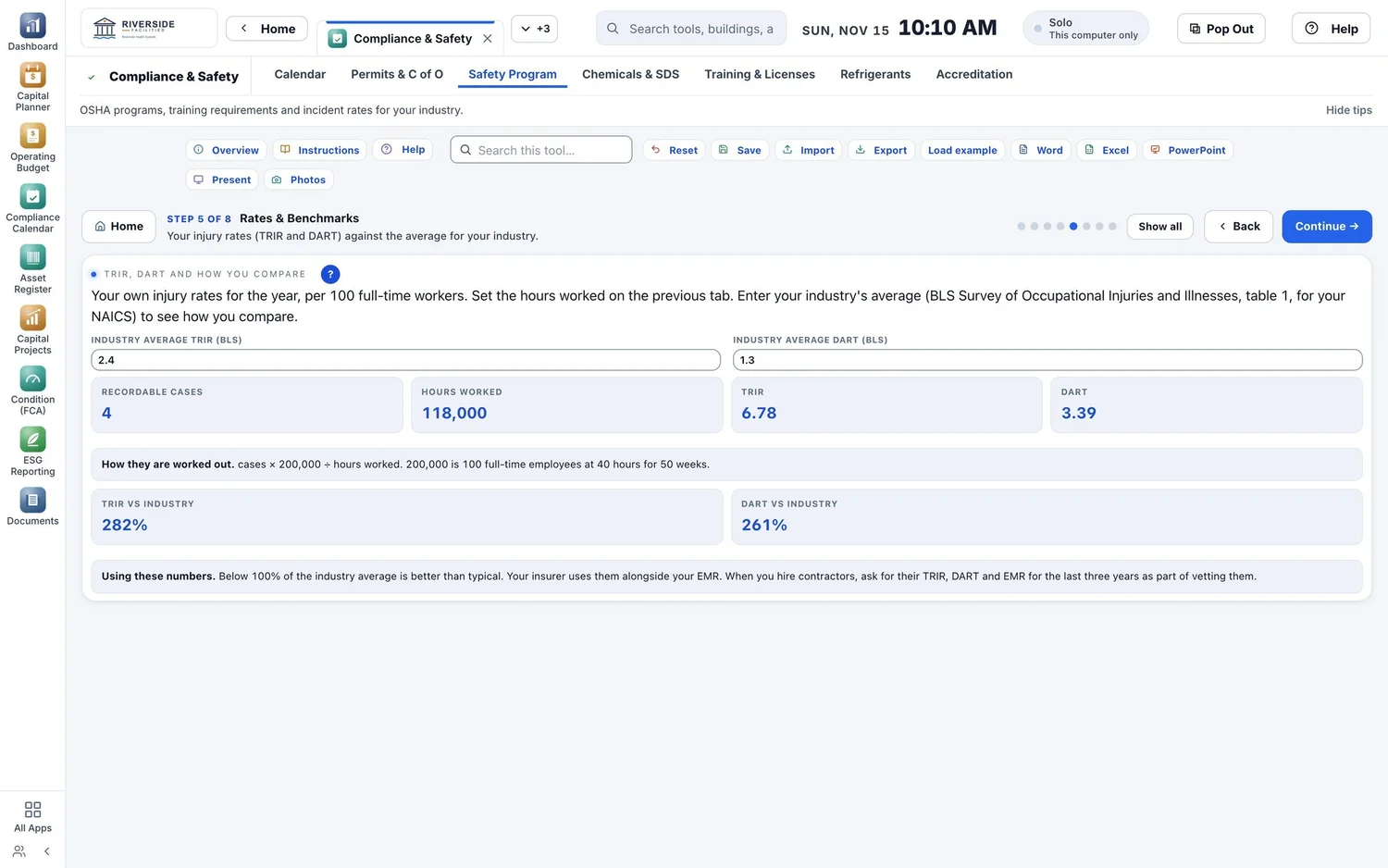
Breathing-air samples, gear cleaning, exhaust capture and range lead monitoring protect crews, and each has a due date that is seen in time.
Learn MoreShow Less
A failed breathing-air sample takes the compressor out of service, and lead or diesel exposure is a crew health cost no department wants. Each health check has its own row, citation and next date.
- Each row names the expected performer and evidence
- Lab reports and certificates are kept with the row, with date, expiry and vendor
- Status counts put overdue rows in front
- Benchmark: every quarterly air sample passes
No Binders at Inspection Time
The fire marshal's questions are answered from one screen, with each test's last date and the evidence on file.
Learn MoreShow Less
Inspection prep takes staff time away from response. Each row keeps its last date, who did it and the certificate or report file, so the answer is one screen away.
- Evidence on file marked Yes, No or Partial
- Certificate files stored with date, expiry, signer and vendor
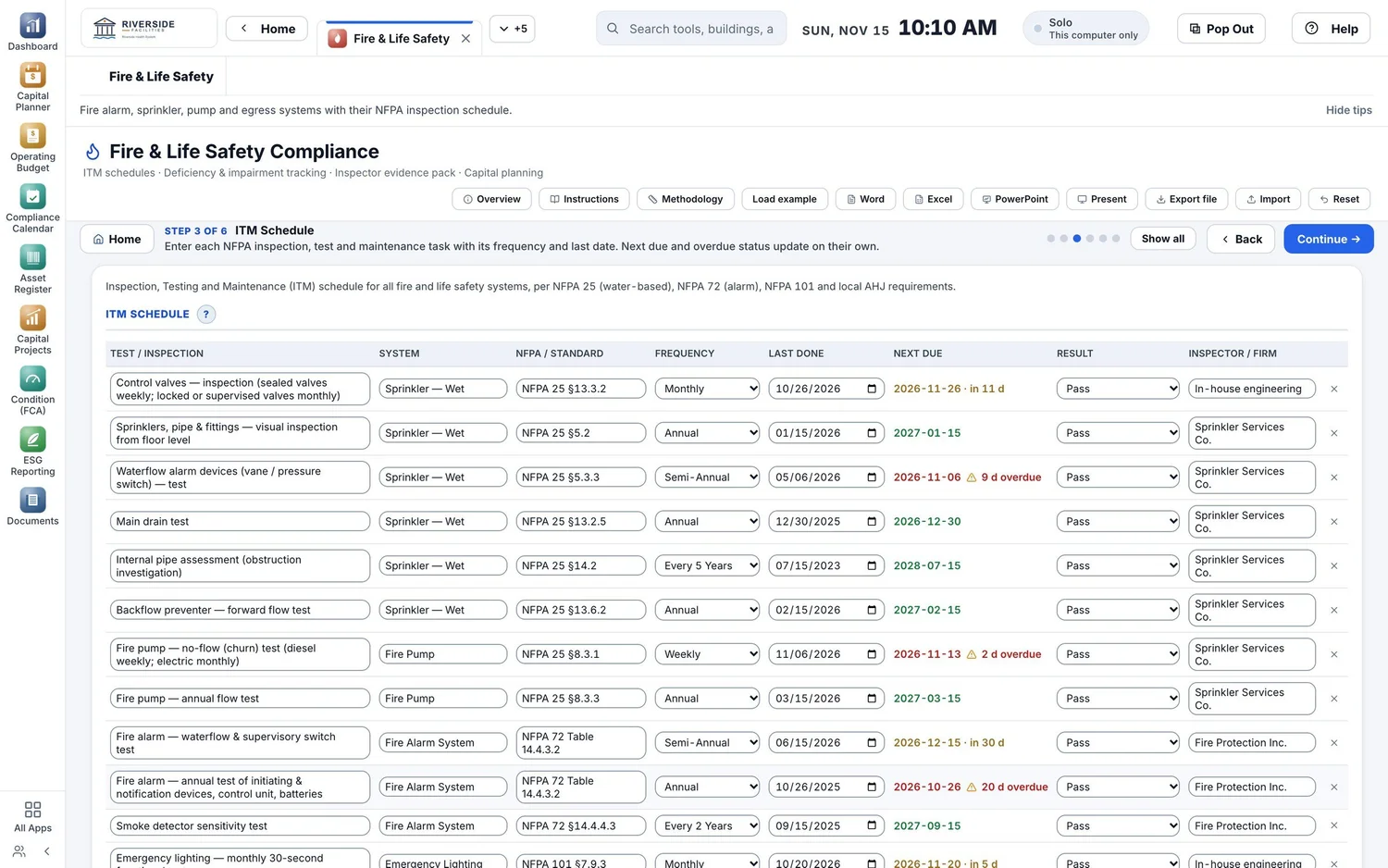
- NFPA 25 and NFPA 72 rows stay current through the code's grace window
- Why each row applies, in plain sentences
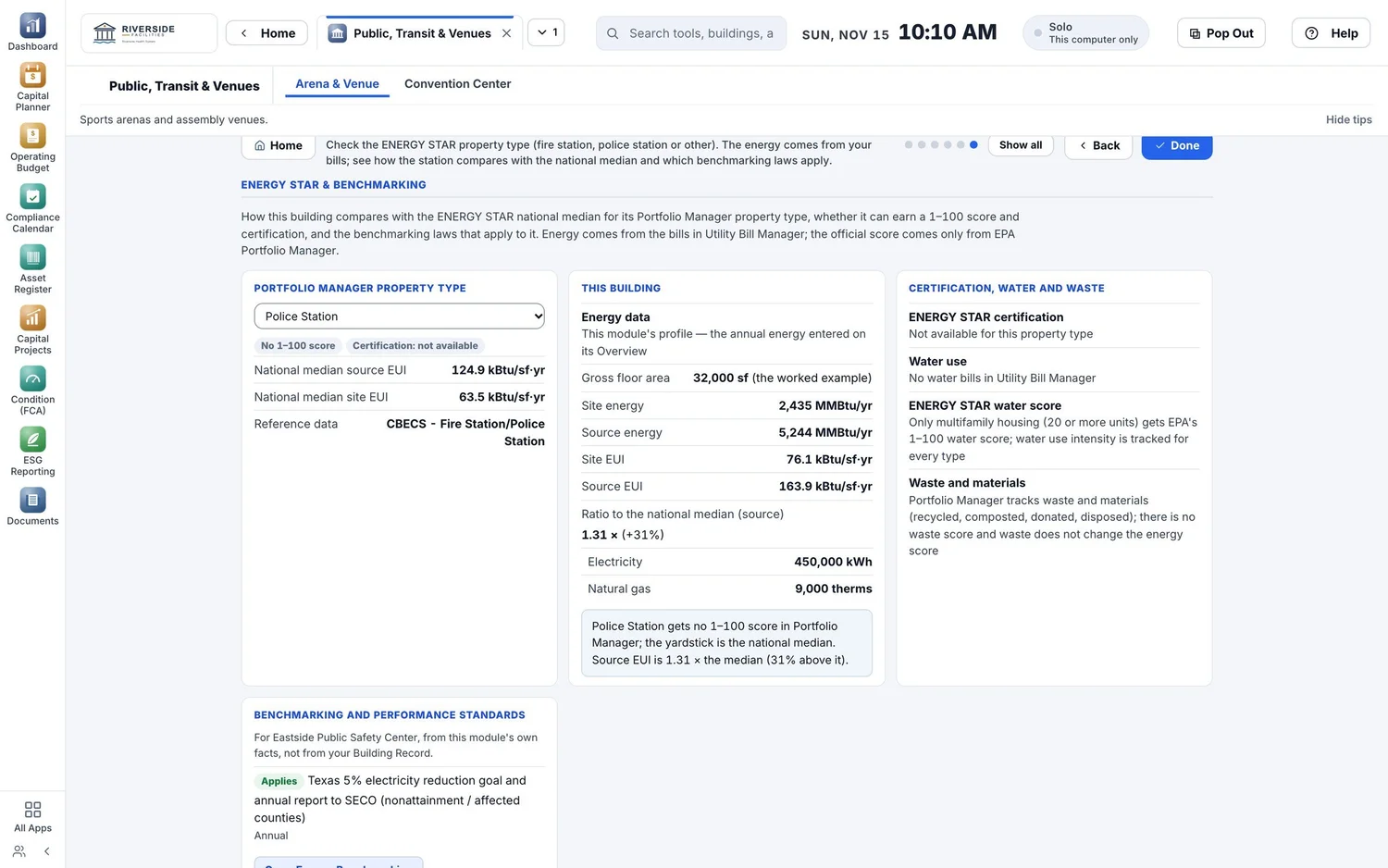
ENERGY STAR in Fire, Police & Public Safety: check the ENERGY STAR property type (fire station, police station or other). The energy comes from your bills; see how the station compares with the national median and which benchmarking laws apply.
Power and Cooling Watched
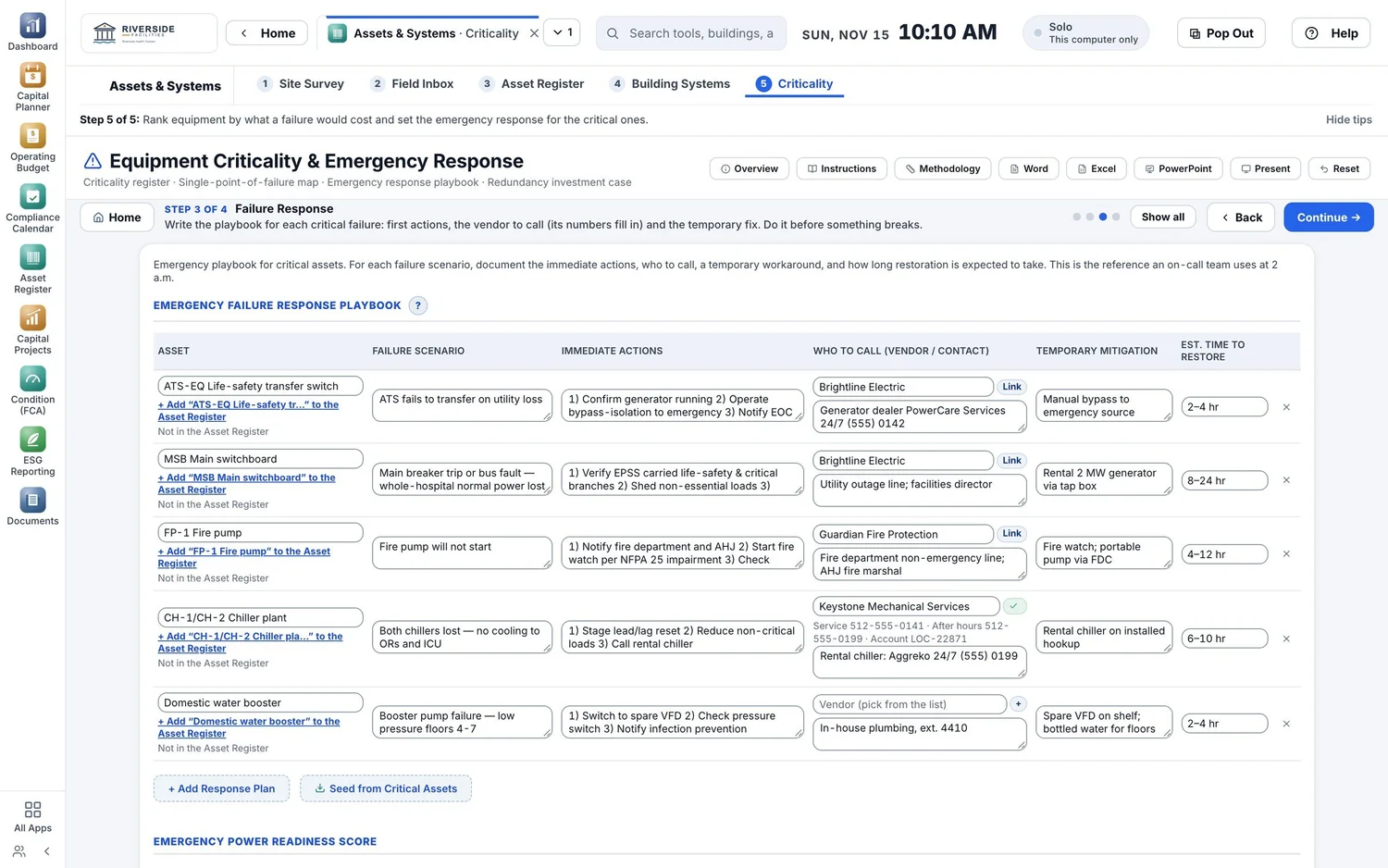
The generator, UPS and dispatch cooling that a 911 floor depends on are tracked first, with their tests on the calendar.
Learn MoreShow Less
A 911 floor that loses power or cooling stops answering calls, and an emergency repair costs more than a scheduled one. These systems are tracked first.
- NFPA 110 generator exercise and load test every month
- UPS batteries carried on a 5-year life, ahead of the 15-year UPS
- Redundant dispatch-floor HVAC rated Critical, with quarterly PM
- NENA yardstick: 90% of 911 calls answered within 15 seconds
A Capital Case for Stations
Aging generators, bay doors and radio equipment show up in the capital plan before they fail on a call.
Learn MoreShow Less
Replacing a generator, bay door or radio console in an emergency costs more and can take a unit out of service. The plan compares each install year with its design life, so the replacement is budgeted first.
- Starting lives: dispatch consoles and radio 10 years, station alerting 12, bay doors 20
- Past-due items roll into the deferred backlog at today's cost
- The 10-year need is escalated at your rate to each target year
- FCI = deferred backlog divided by replacement value
Frequently Asked Questions
Does a combined police and fire building get both sets of rules?
Does it replace our apparatus or SCBA service vendor?
Why are some rows marked Confirm?
Be First When Facilities Logix Opens
Stop chasing building records across spreadsheets and binders. Join the list and we will tell you the day downloads open, with setup guides ready.
Launching early 2027 for Facilities Logix. Nothing to buy today, and no sales calls.
