
Public Facilities, from City Hall to the Control Tower and the Pier.
Launching Early 2027 · Join the Early-Access List
Public organizations answer to more rules than anyone: who holds the building, whose money pays and what the facility does all change what applies. Ten playbooks cover government buildings, justice and public safety facilities, military and federal installations, transit, airports, ships and public-assembly venues, and the platform selects the purchasing, accessibility and accounting rule sets that match each Building Record.
Pick Your Facility Type
Each facility type has its own page: the rules it answers to, the assets and systems it runs, real screens and answers to common questions.
Government Buildings
City halls, county, state and federal buildings: ADA Title II, public purchasing rules, GASB lease accounting, prevailing wage, FRPP and EISA, from each record.
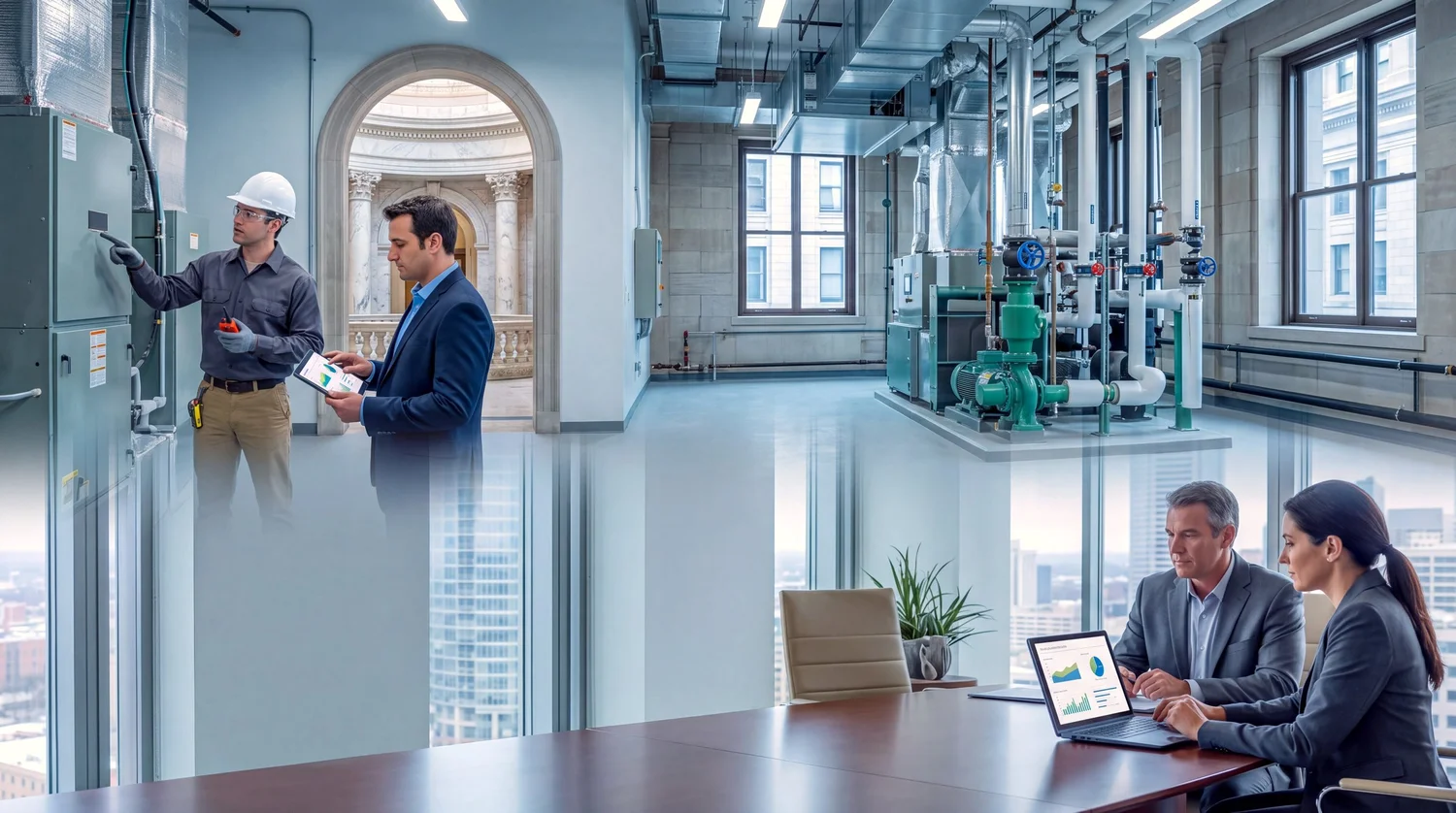
Courthouses and Corrections
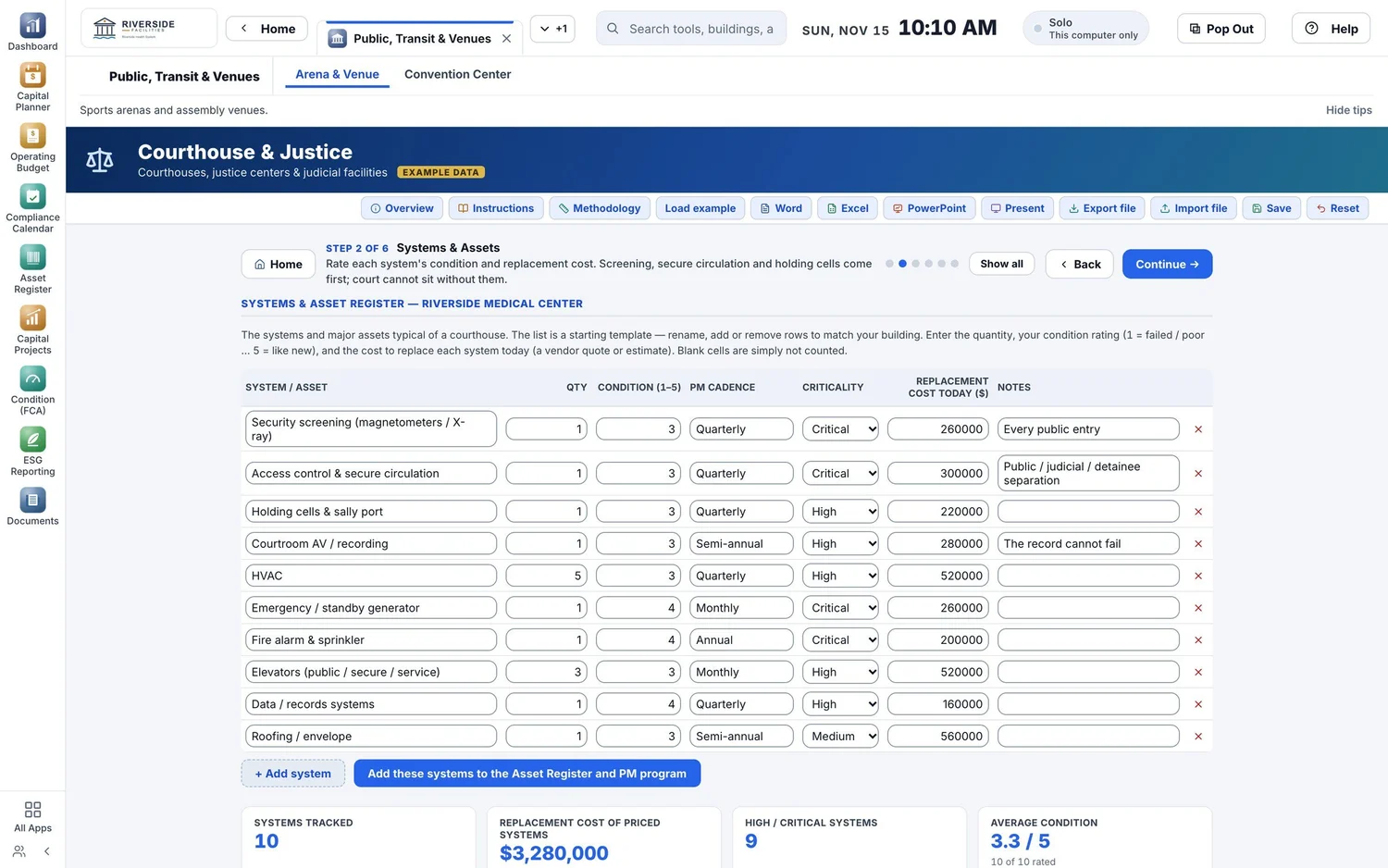
Courthouses, federal courthouses, jails and prisons: secure circulation, screening, door control, standby power, detention drills, PREA audits and court rules.
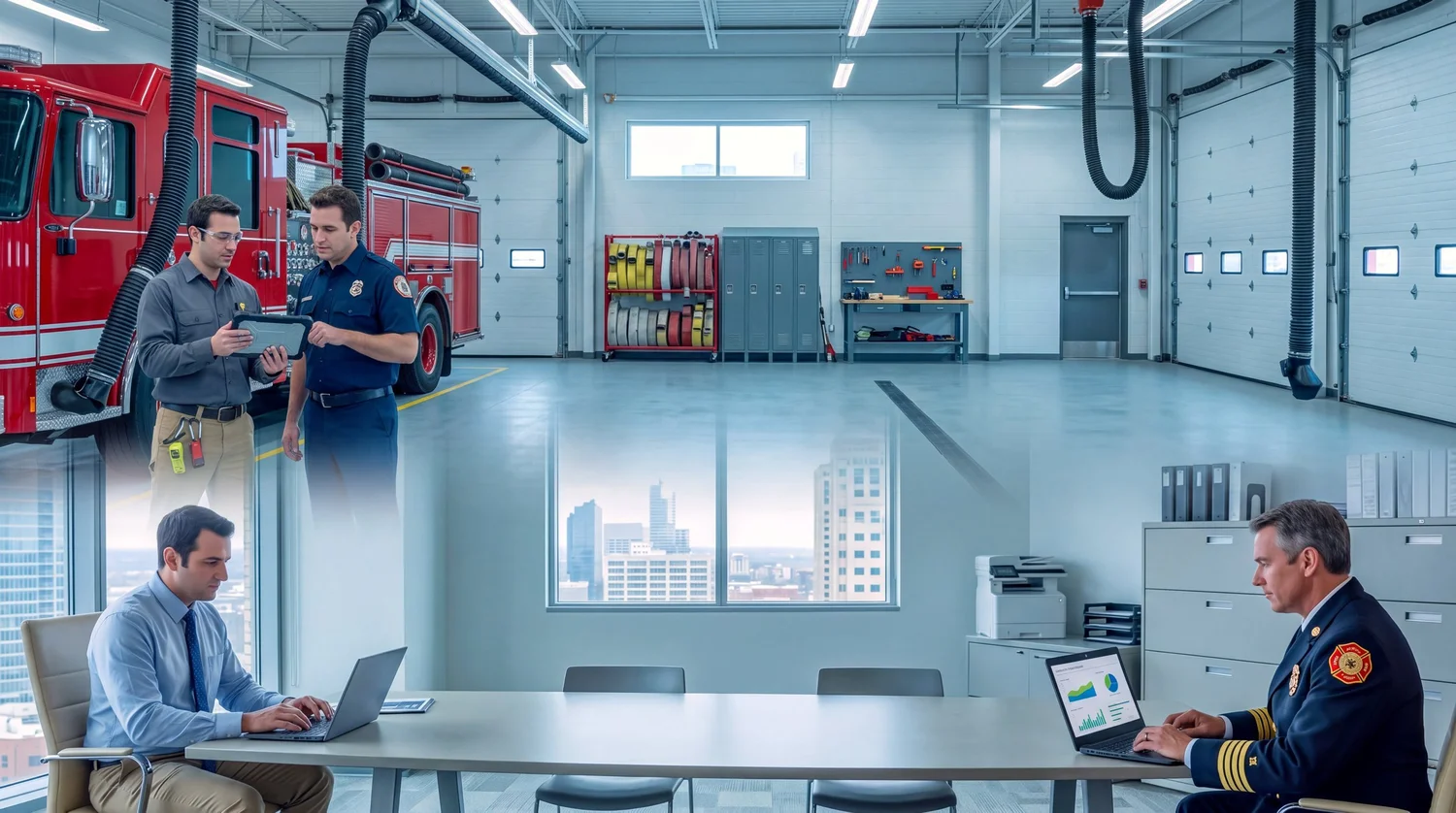
Fire, Police and EMS
Station hazard inspections, breathing-air tests, turnout gear, apparatus, exhaust capture, range lead monitoring and 911 center systems, each with its due date.
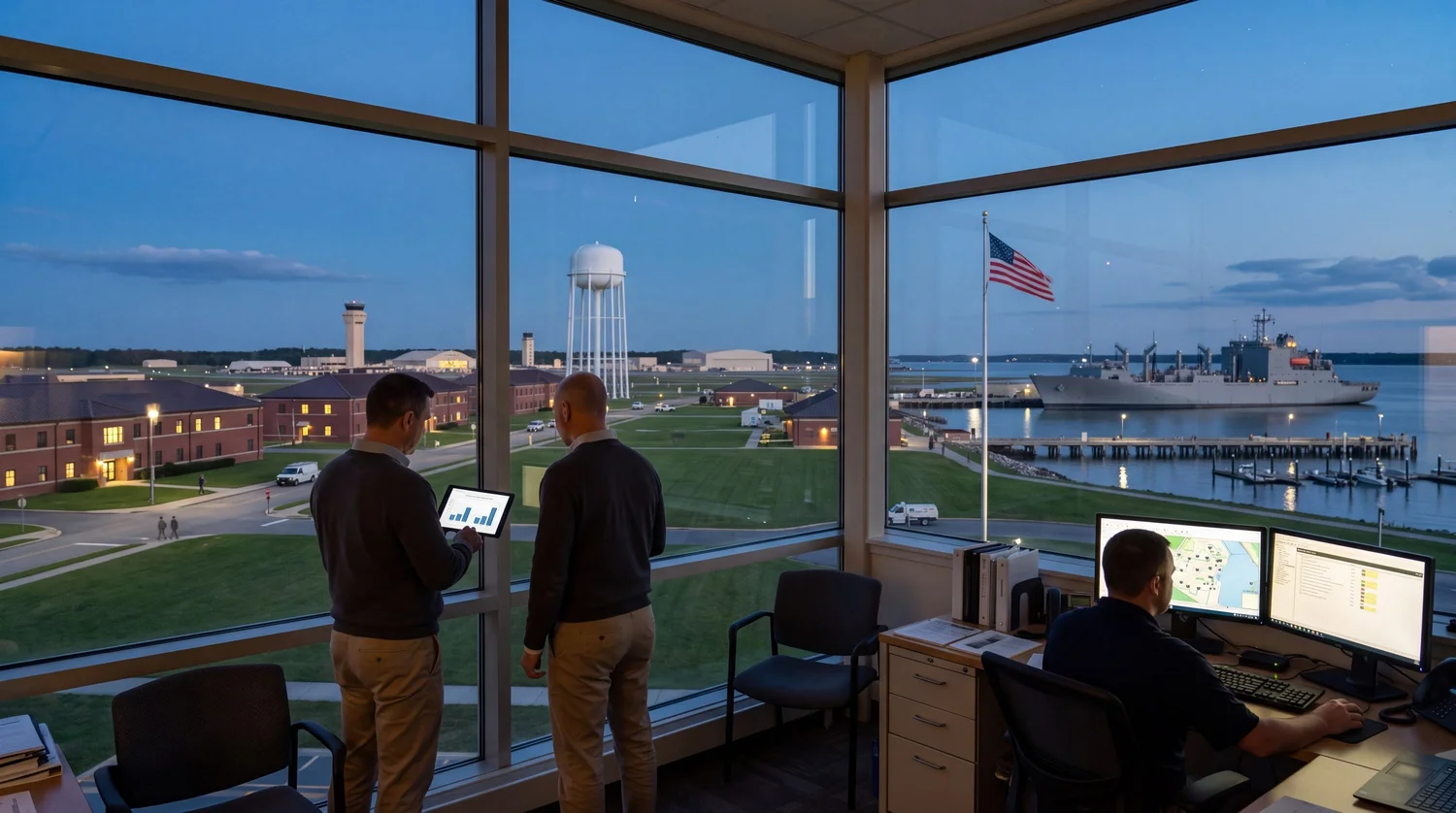
Military and Federal
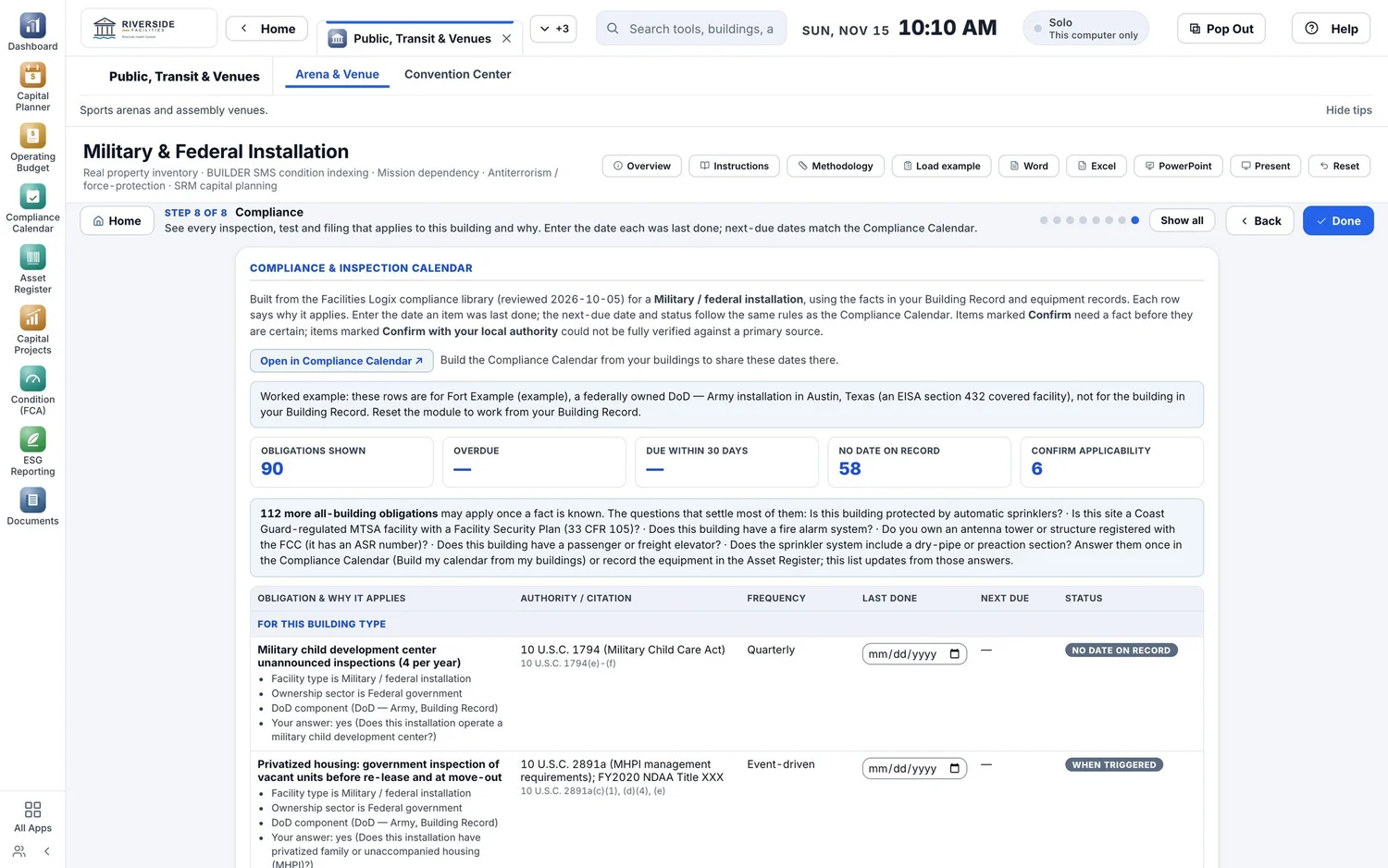
DoD Unified Facilities Criteria, explosives safety, waterfront and dry docks, Coast Guard and National Guard rows, FRPP data and 29 CFR 1960, by installation.
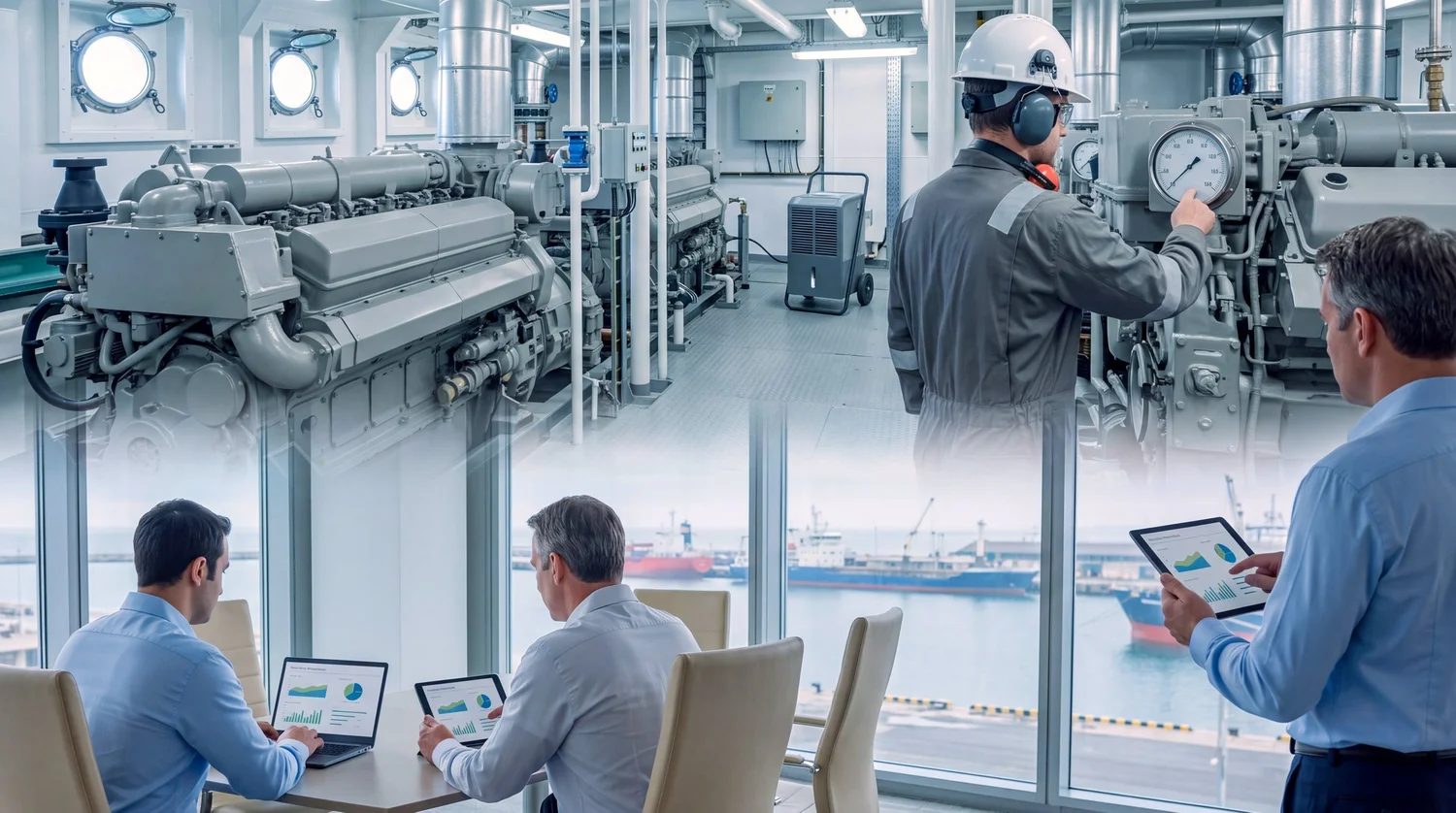
Ships and Vessels
Ships kept like buildings: NSTM 050 lay-up, humidity by space, dehumidifier sizing, cathodic protection, drydock intervals, marine compliance and could it sail.
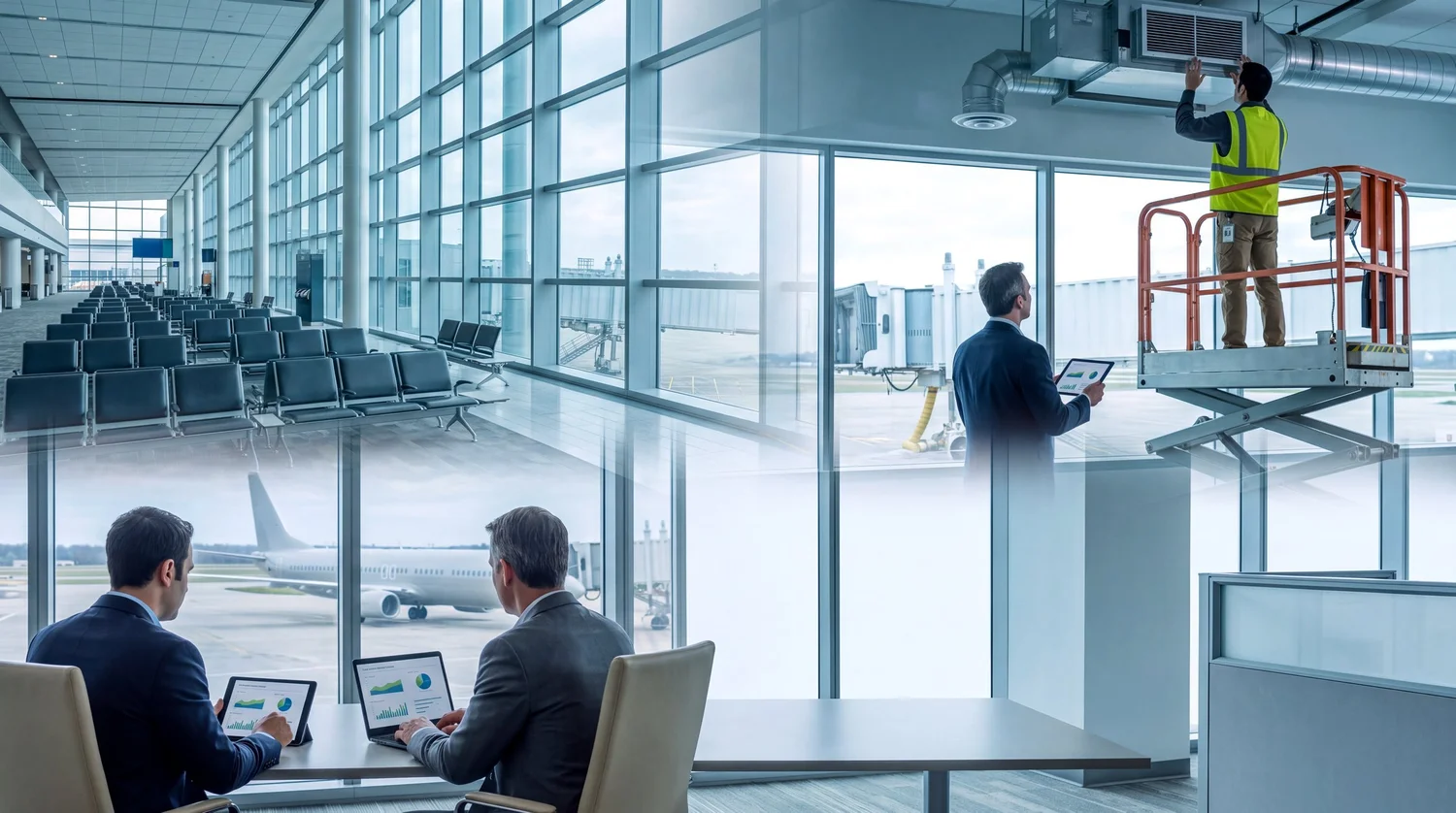
Airports and Aviation
Part 139 self-inspection, ARFF, fueling, snow and ice, wildlife, SMS, NAVAIDs, pavement PCI, tower duties, deicing, TSA and grant reports, tracked in one place.
Transit and Stations
Rail and bus stations, transit hubs, ferry terminals, rail yards and marinas: FTA asset and safety plans, rail oversight, escalators and station energy.
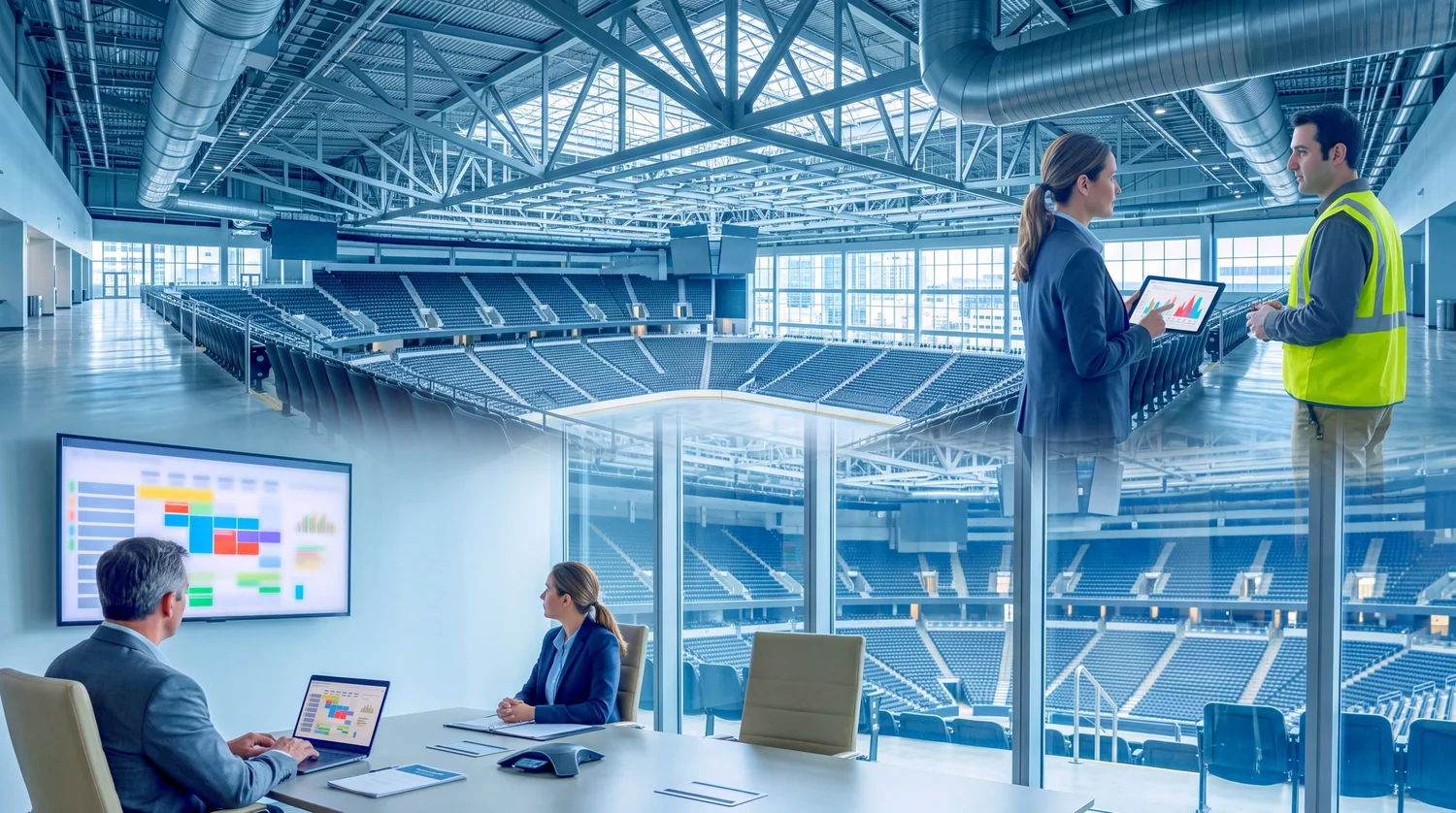
Arenas, Stadiums & Convention Centers
Assembly life safety and egress, a per-event readiness checklist, crowd managers, rigging and bleacher checks for arenas, stadiums and convention centers.
Every Kind of Public Facility
Facilities Logix is configured for the kinds of buildings your organization runs. A portfolio that spans many markets gets every playbook it needs.
Government
City halls and civic buildings: systems, a compliance calendar, a capital plan and benchmarks to public-sector standards.
Learn More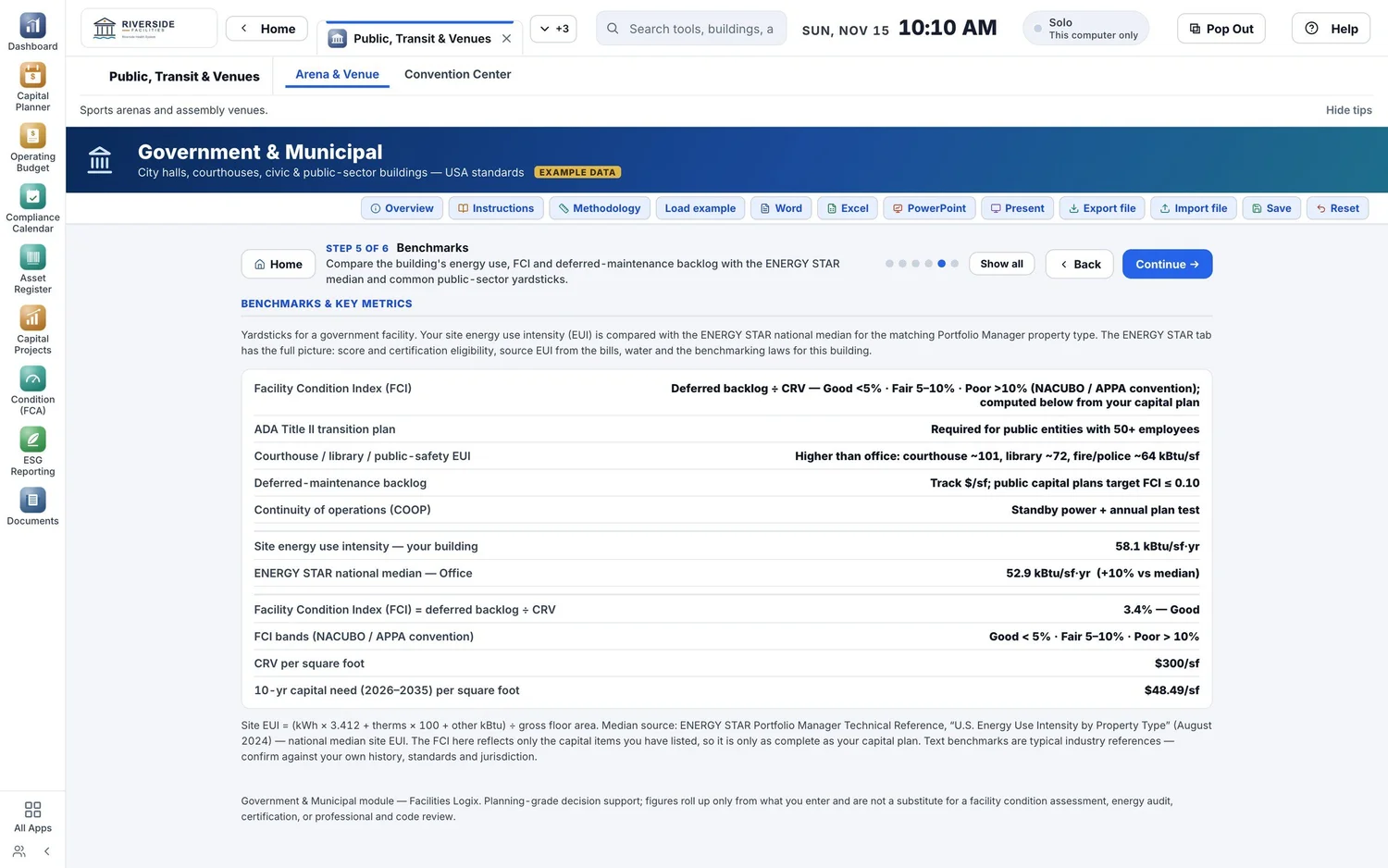
Benchmarks in Government & Municipal: compare the building's energy use, FCI and deferred-maintenance backlog with the ENERGY STAR median and common public-sector yardsticks.
Public Safety
Fire, police and EMS stations, 911 centers and emergency operations centers.
Learn More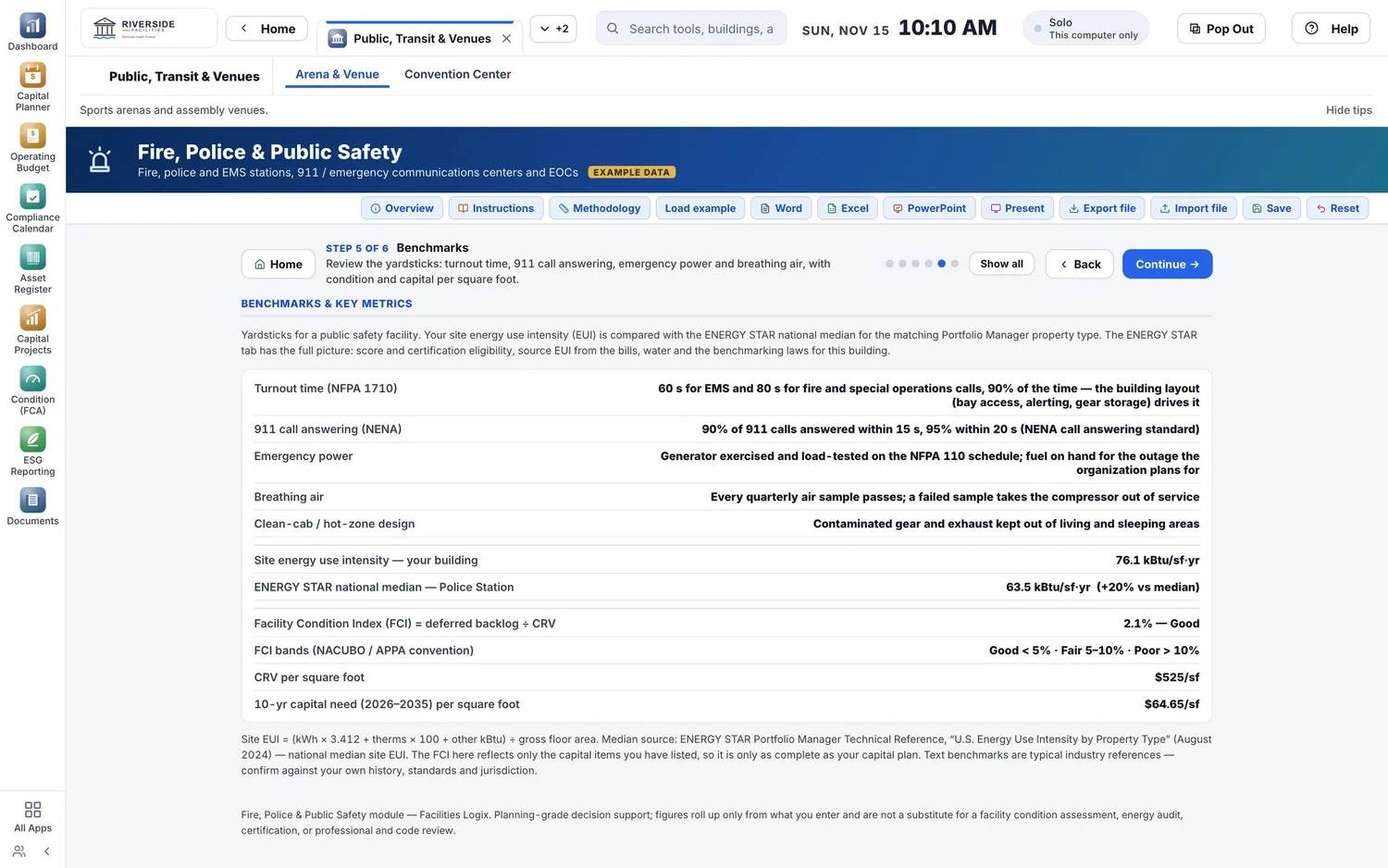
Benchmarks in Fire, Police & Public Safety: review the yardsticks: turnout time, 911 call answering, emergency power and breathing air, with condition and capital per square foot.
Transit
Rail and bus stations and transit hubs, plus ferry terminals, rail yards and marinas.
Learn More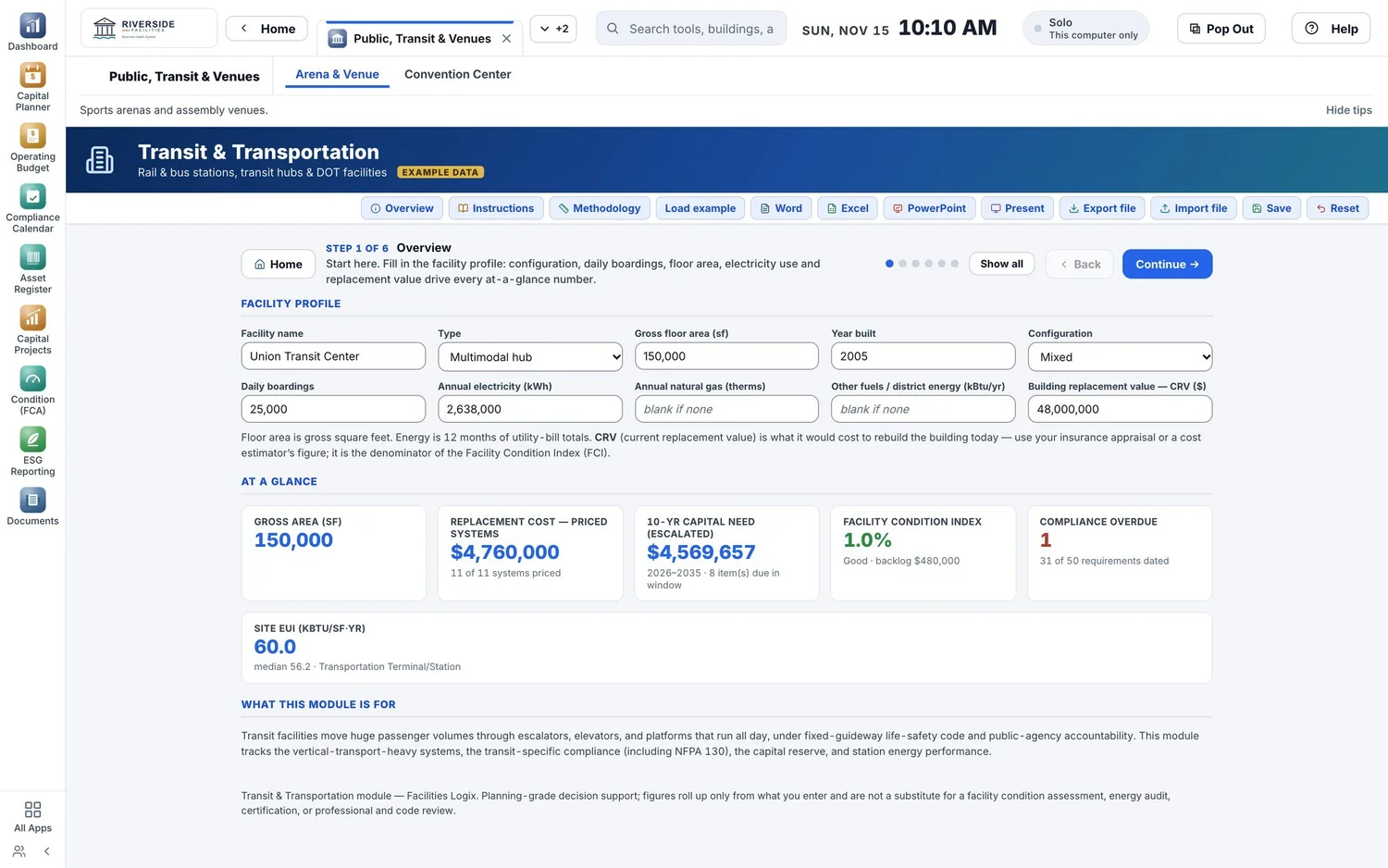
Overview in Transit & Transportation: start here. Fill in the facility profile: configuration, daily boardings, floor area, electricity use and replacement value drive every at-a-glance number.
Ships & Vessels
Ships kept like buildings: reserve fleets, training ships, cutters, dredges, tugs, barges and yard craft.
Learn More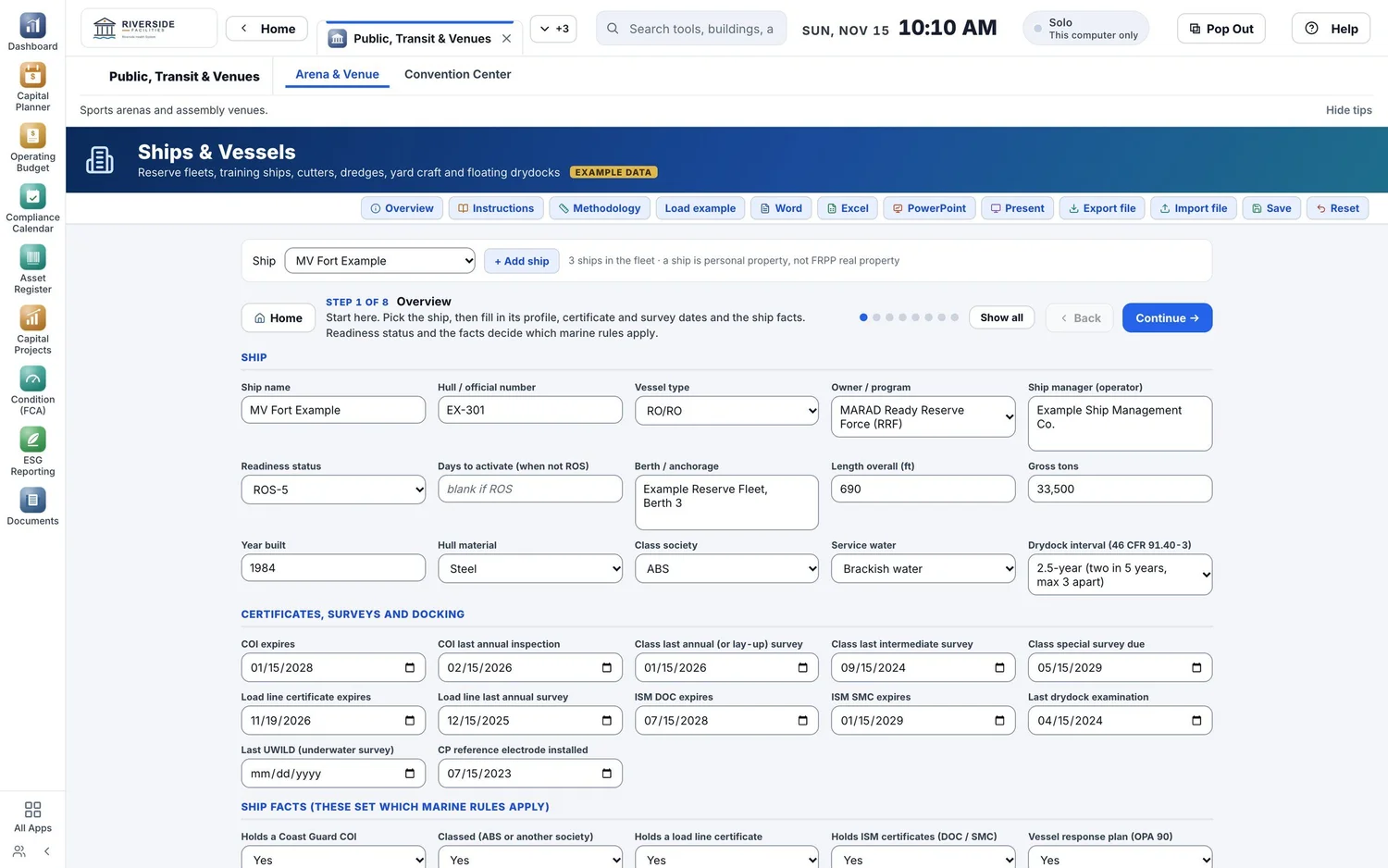
Overview in Ships & Vessels: start here. Pick the ship, then fill in its profile, certificate and survey dates and the ship facts. Readiness status and the facts decide which marine rules apply.
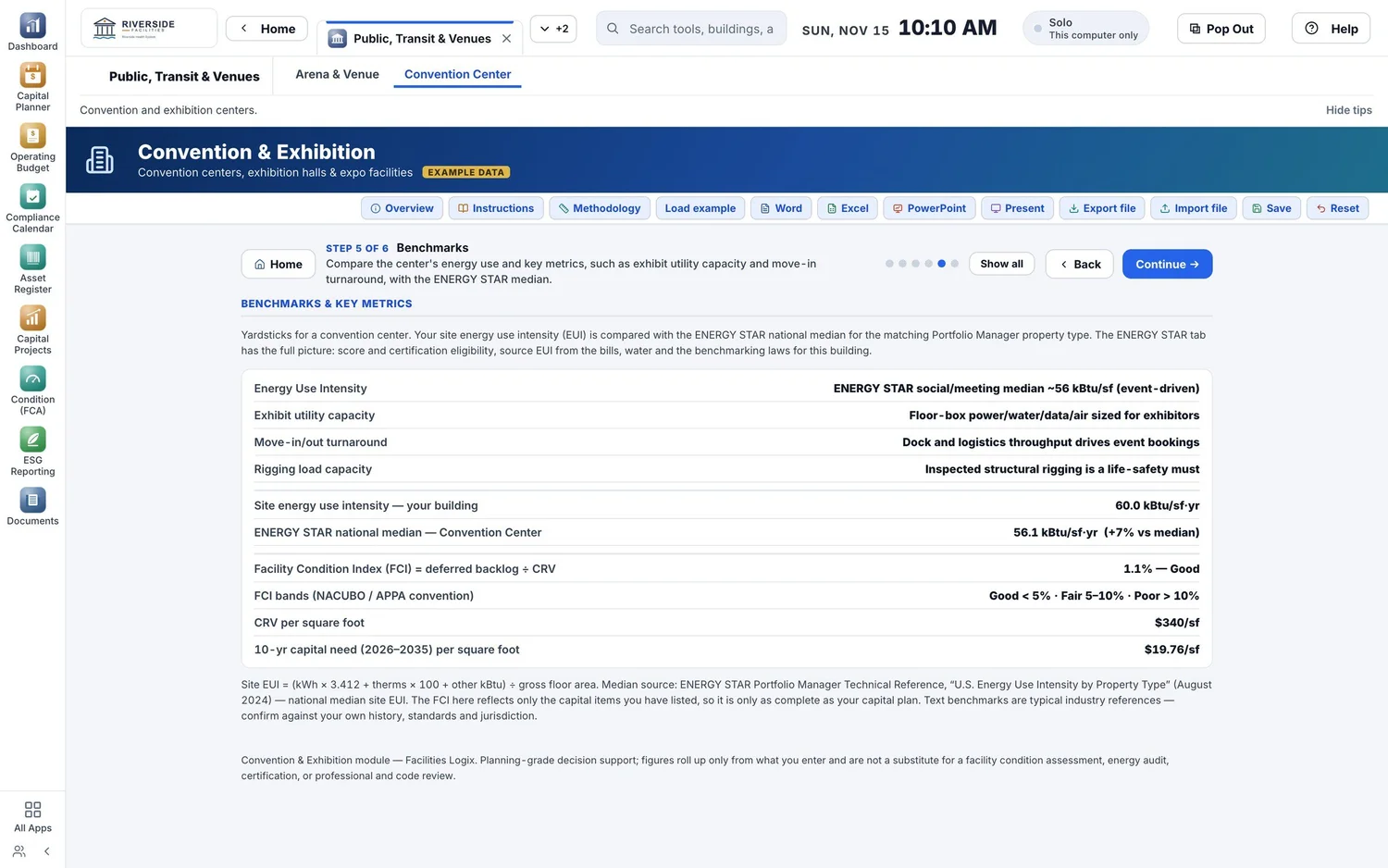
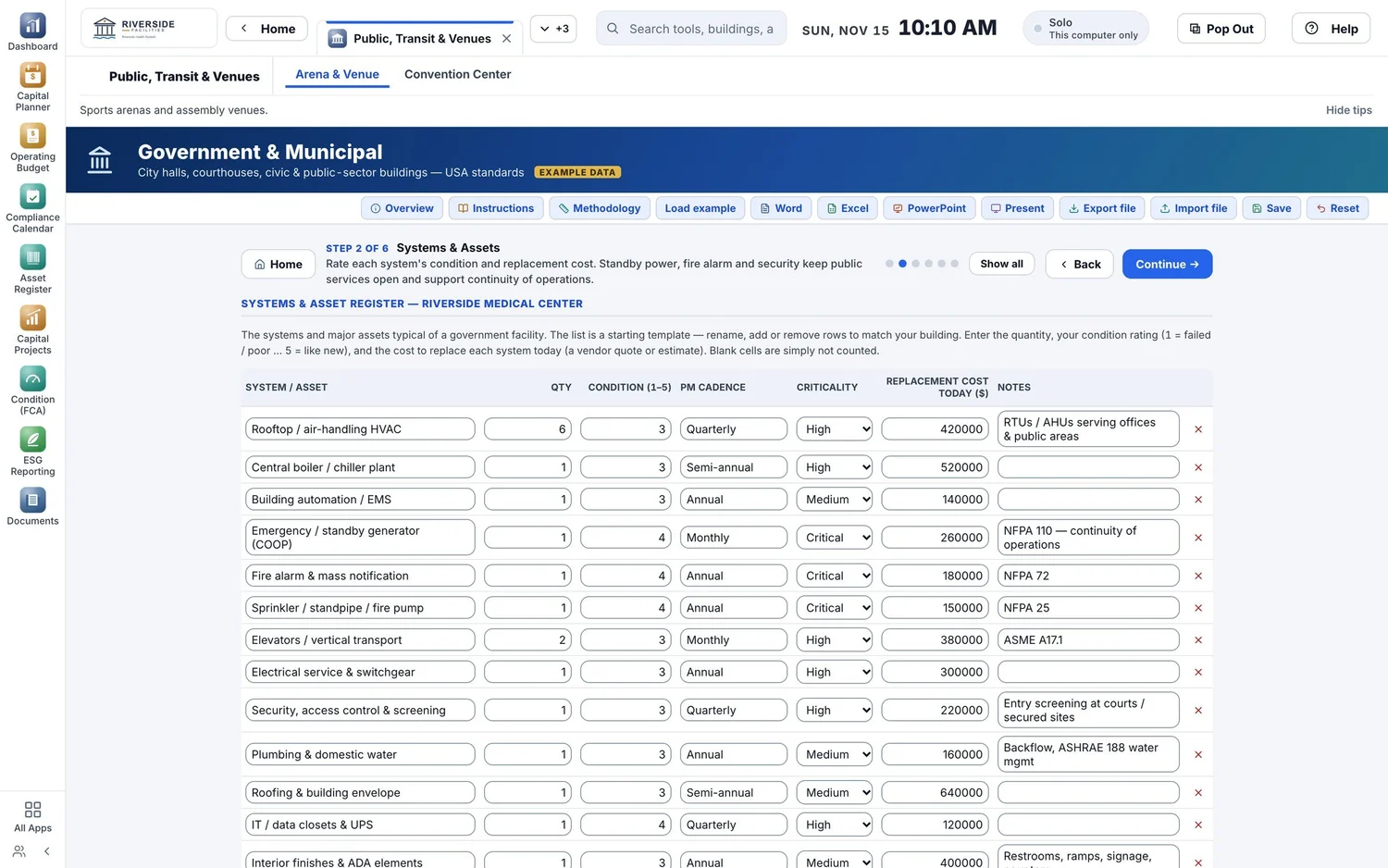
Benchmarks in Convention & Exhibition: compare the center's energy use and key metrics, such as exhibit utility capacity and move-in turnaround, with the ENERGY STAR median.
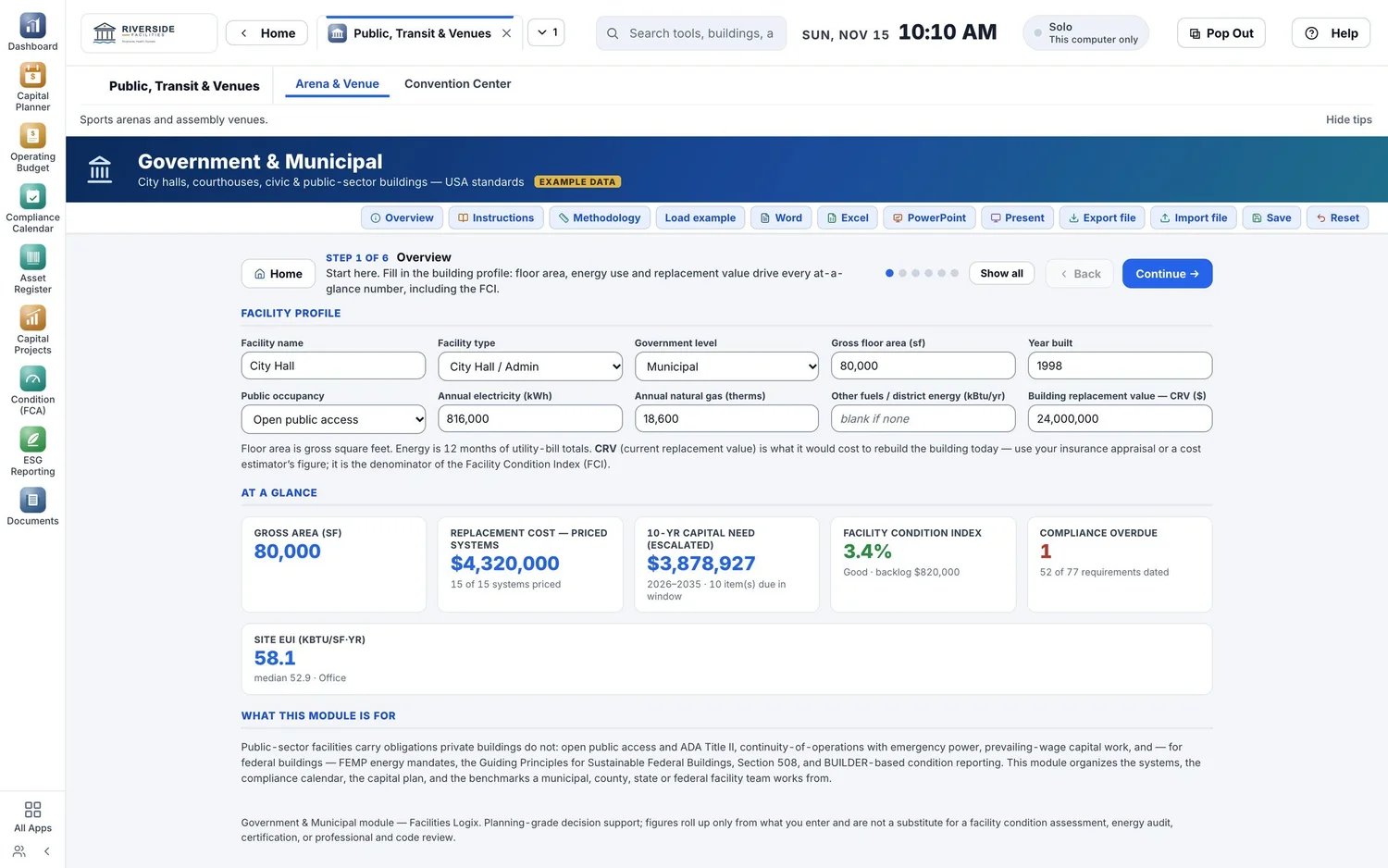
Public facilities range from city halls to ships, so each type opens its own playbook.
Buildings That Cannot Close
Courthouses
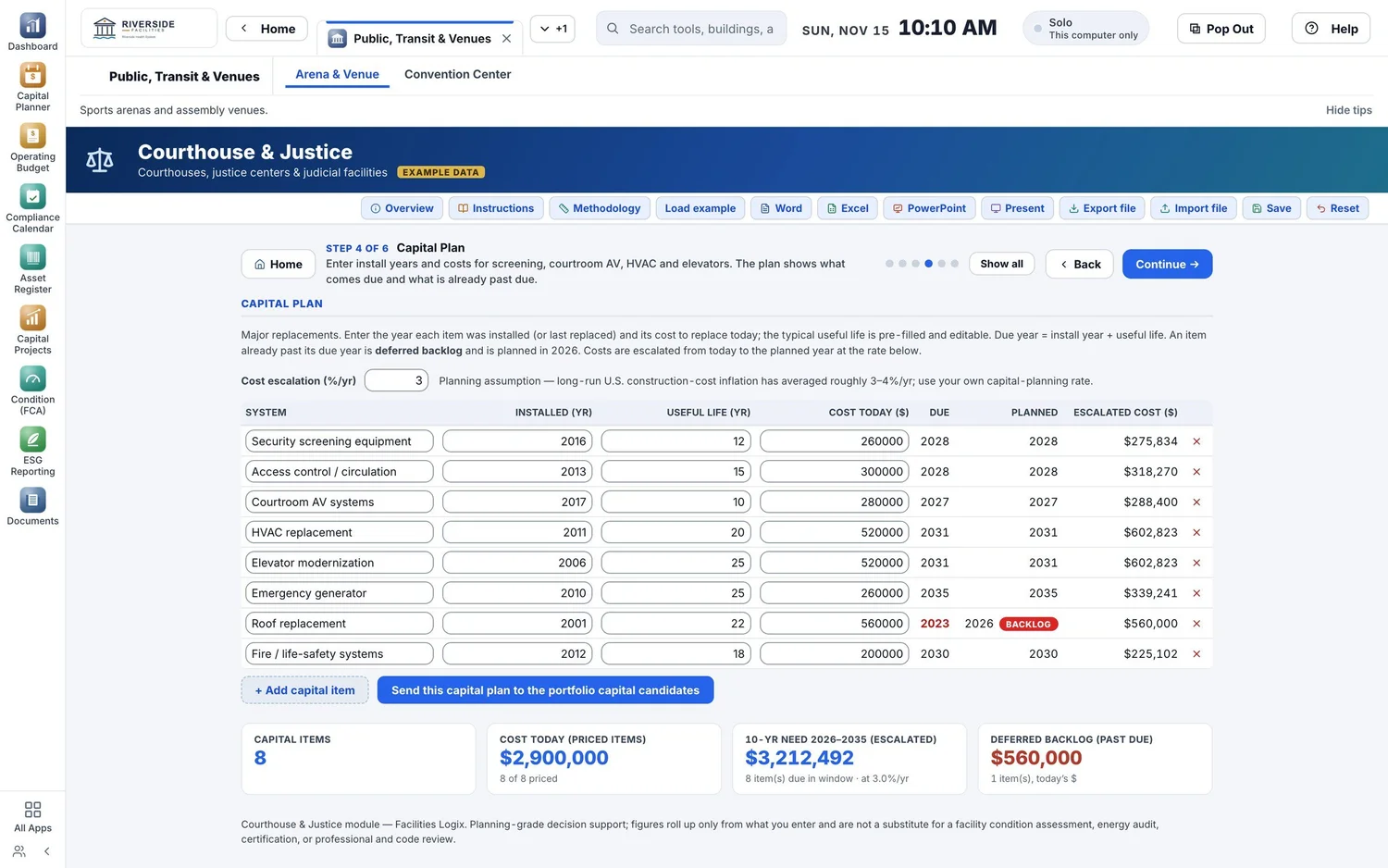
- Weapons screening, three-way secure circulation, holding cells and courtroom audiovisual systems
- The accessibility standard for public entities, applied to courtrooms and public areas
- A federal courthouse type that swaps in the federal design, security and accessibility rules in place of state and local ones
Correctional and Detention
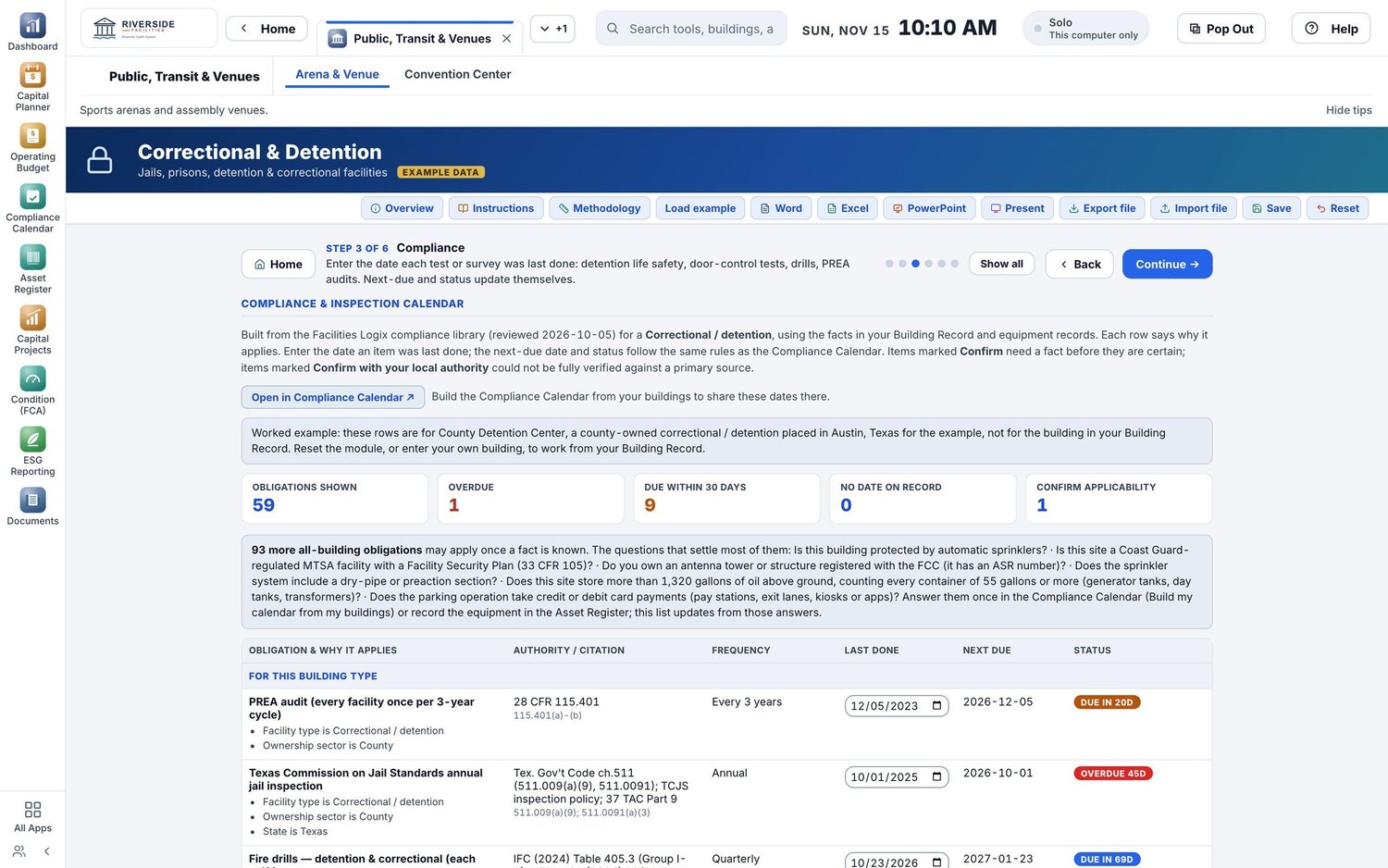
- Security-electronic door control and its maintenance
- Standby power for a facility that runs every hour of the year
- Detention life-safety requirements and round-the-clock building systems
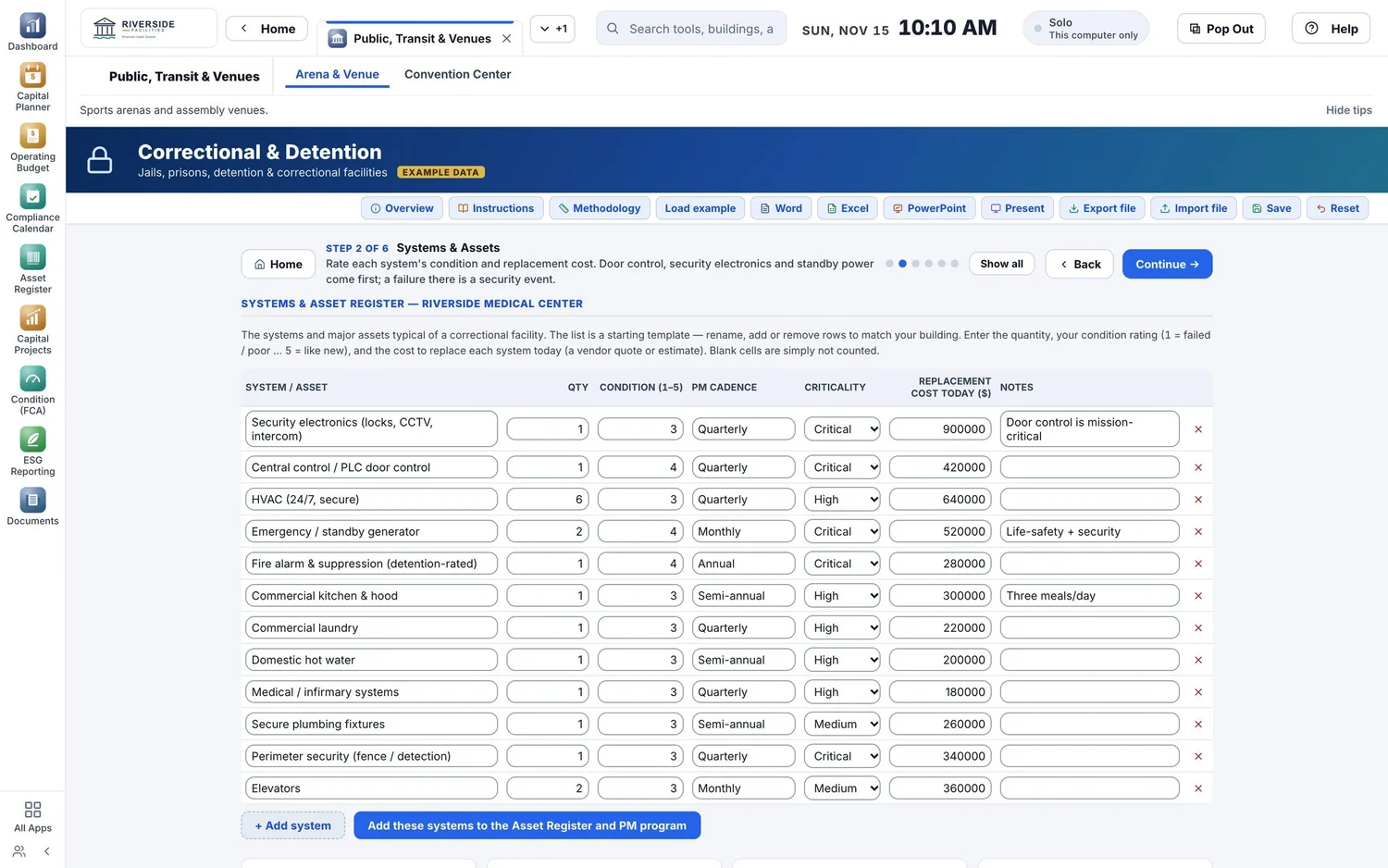
Systems & Assets in Correctional & Detention: rate each system's condition and replacement cost. Door control, security electronics and standby power come first; a failure there is a security event.
Fire, Police, EMS and 911
- A fire station's annual code inspection and monthly hazard inspection
- Breathing-air quality tests for the air compressor at least every quarter
- Protective gear cleaning at least twice a year and inspection every year; apparatus inspection, pump and aerial tests every year
- Apparatus-bay exhaust capture service, and indoor range lead monitoring every six months
- Power, cooling and fire protection tests for an emergency communications center
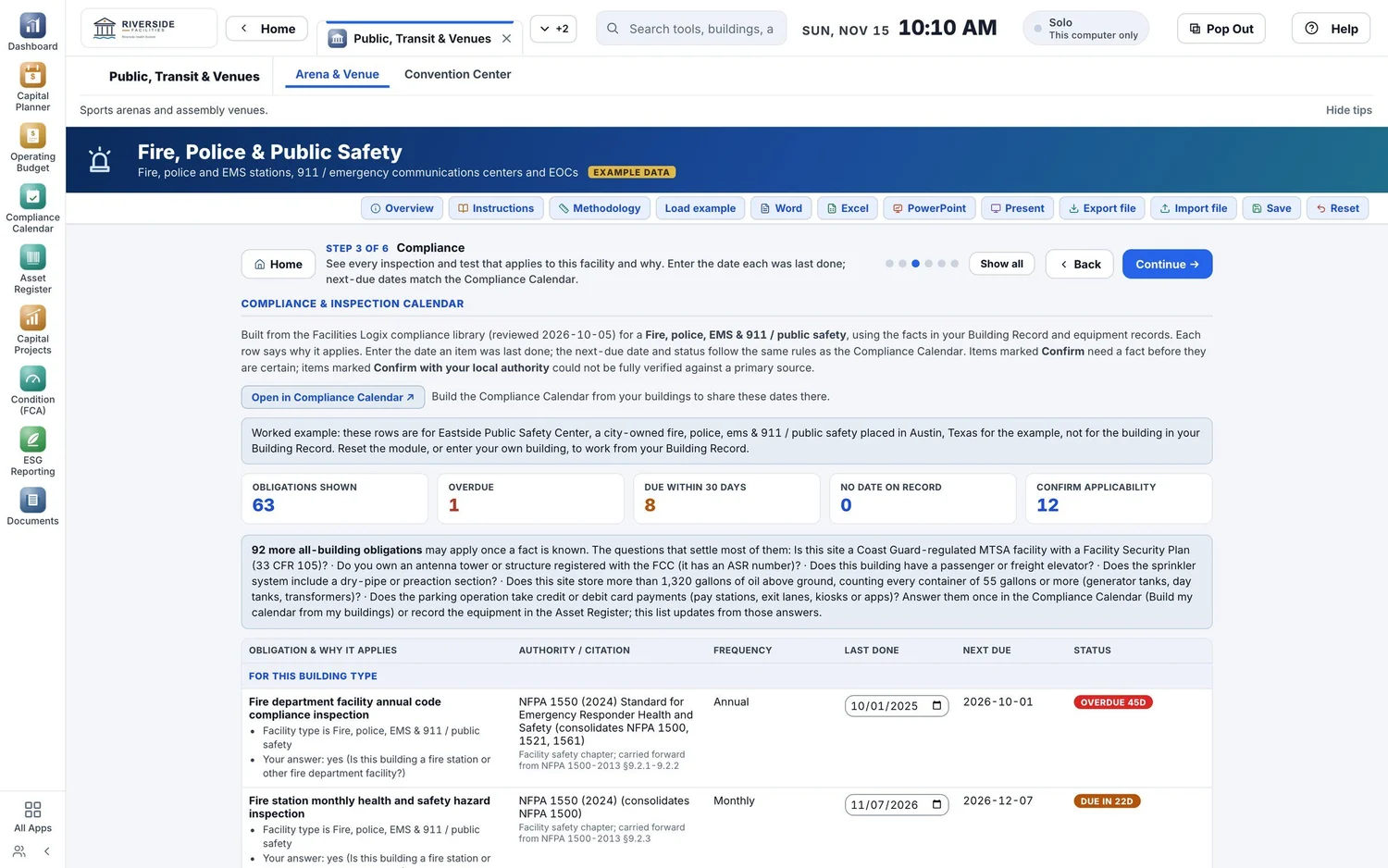
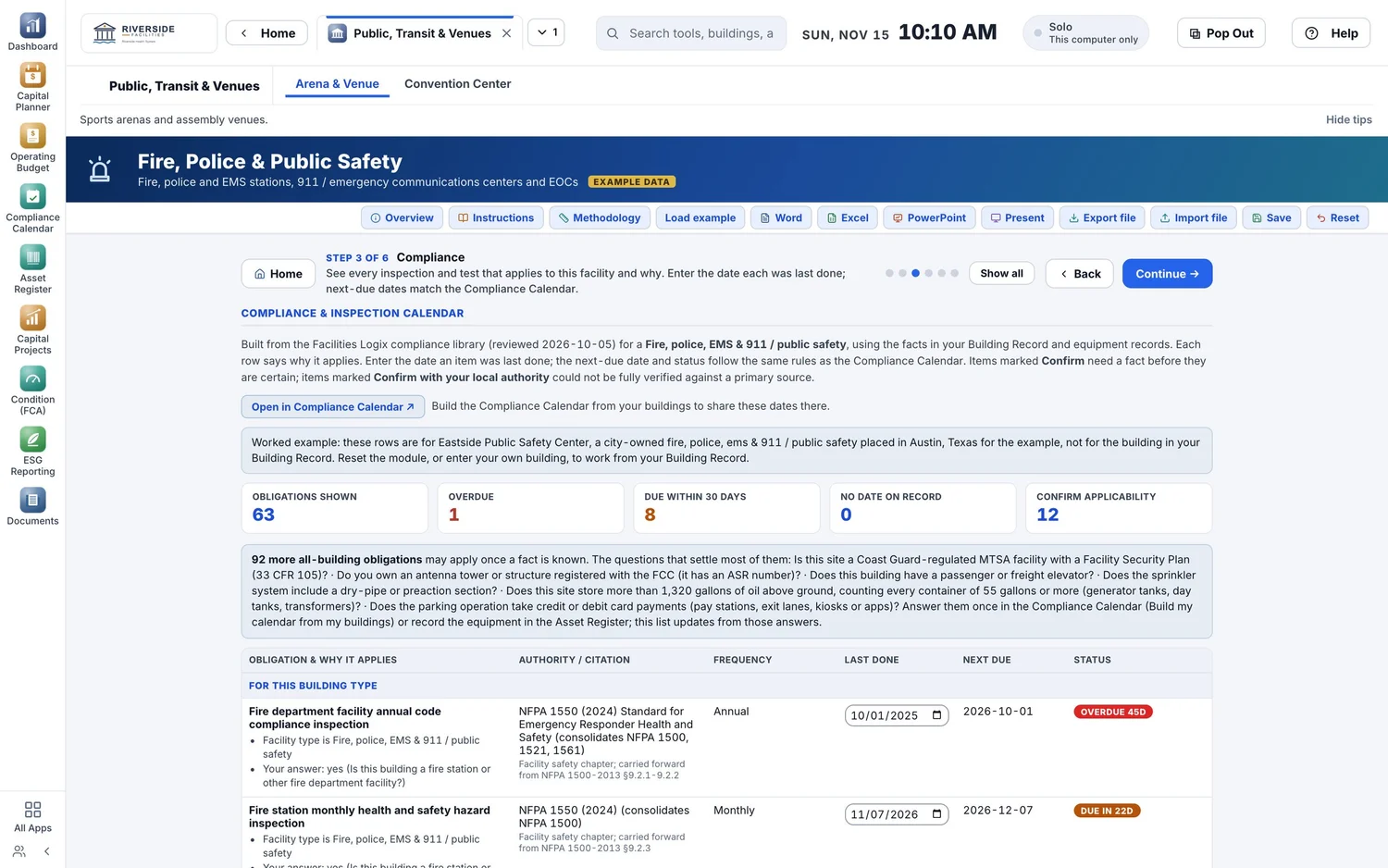
Compliance in Fire, Police & Public Safety: see every inspection and test that applies to this facility and why. Enter the date each was last done; next-due dates match the Compliance Calendar.
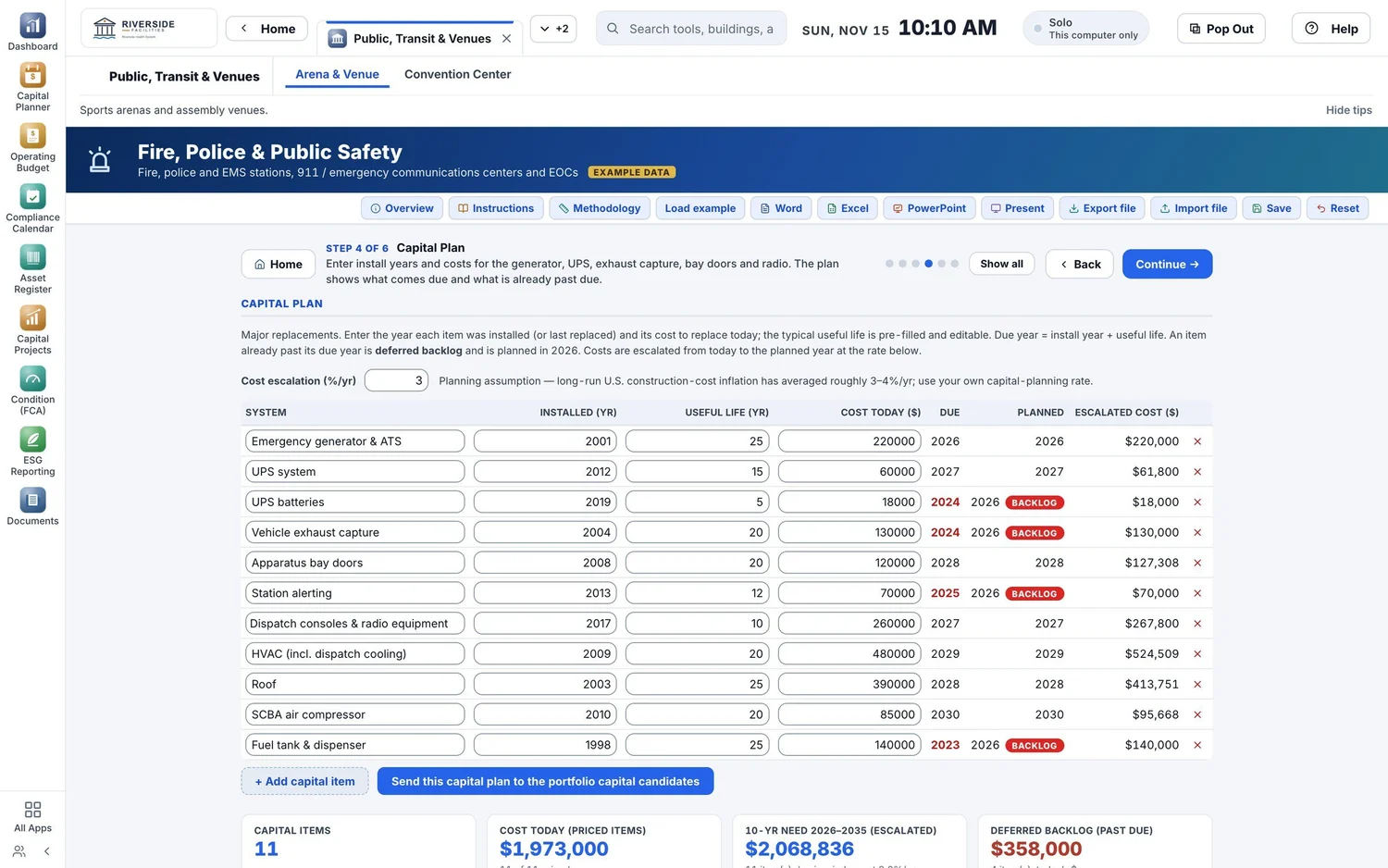
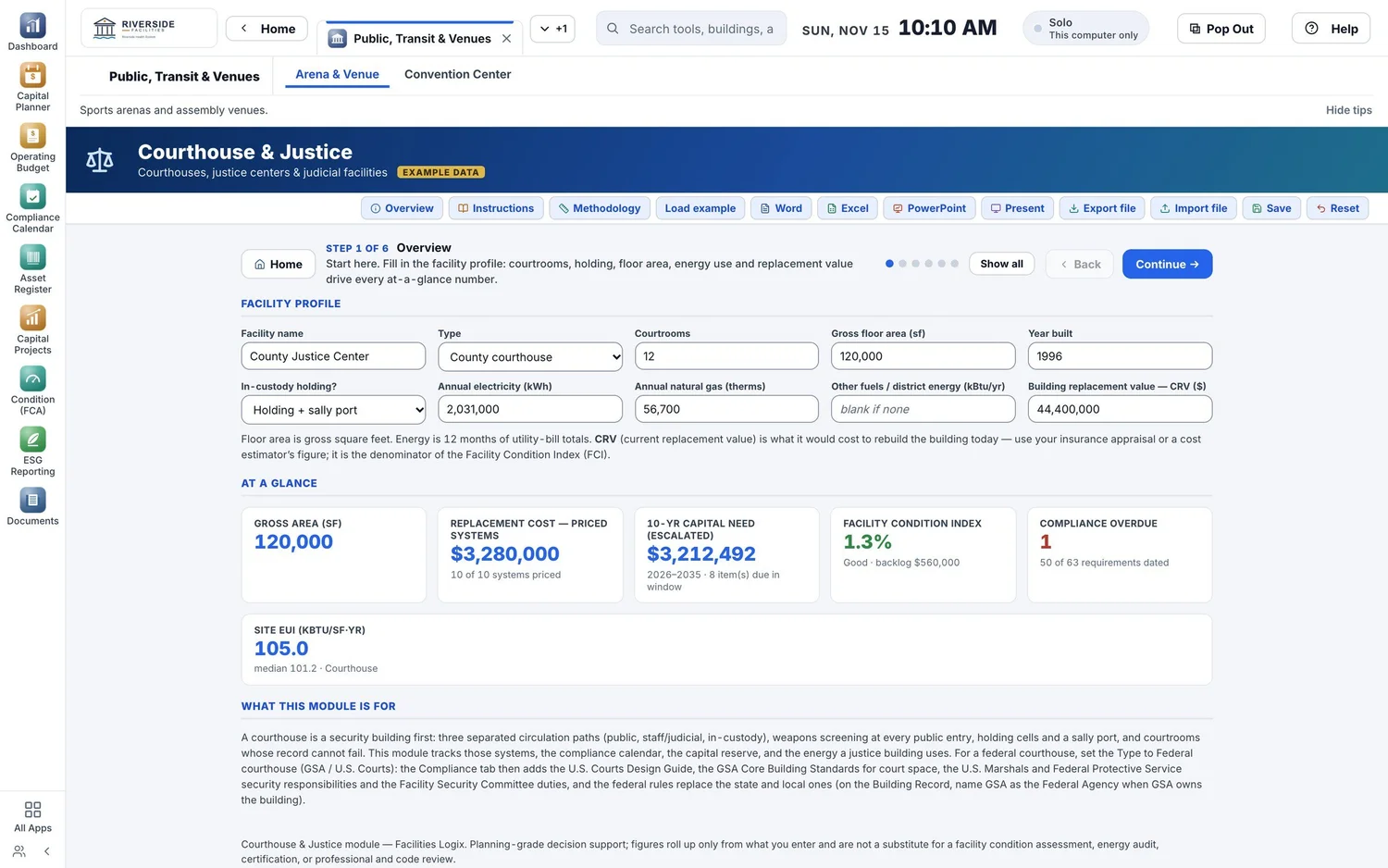
Installations of Every Type, with the Rules That Bind Each Agency
The Installation
- Pick the installation type: a general base or post, an air base, a naval station, a shipyard, a reserve fleet site, a port, a depot, a training center, a Reserve or Guard center, a Coast Guard station, a medical campus or a federal civilian campus
- The type pre-answers what the installation has, such as piers, dry docks, shore power or an airfield, and never overrides your own answer
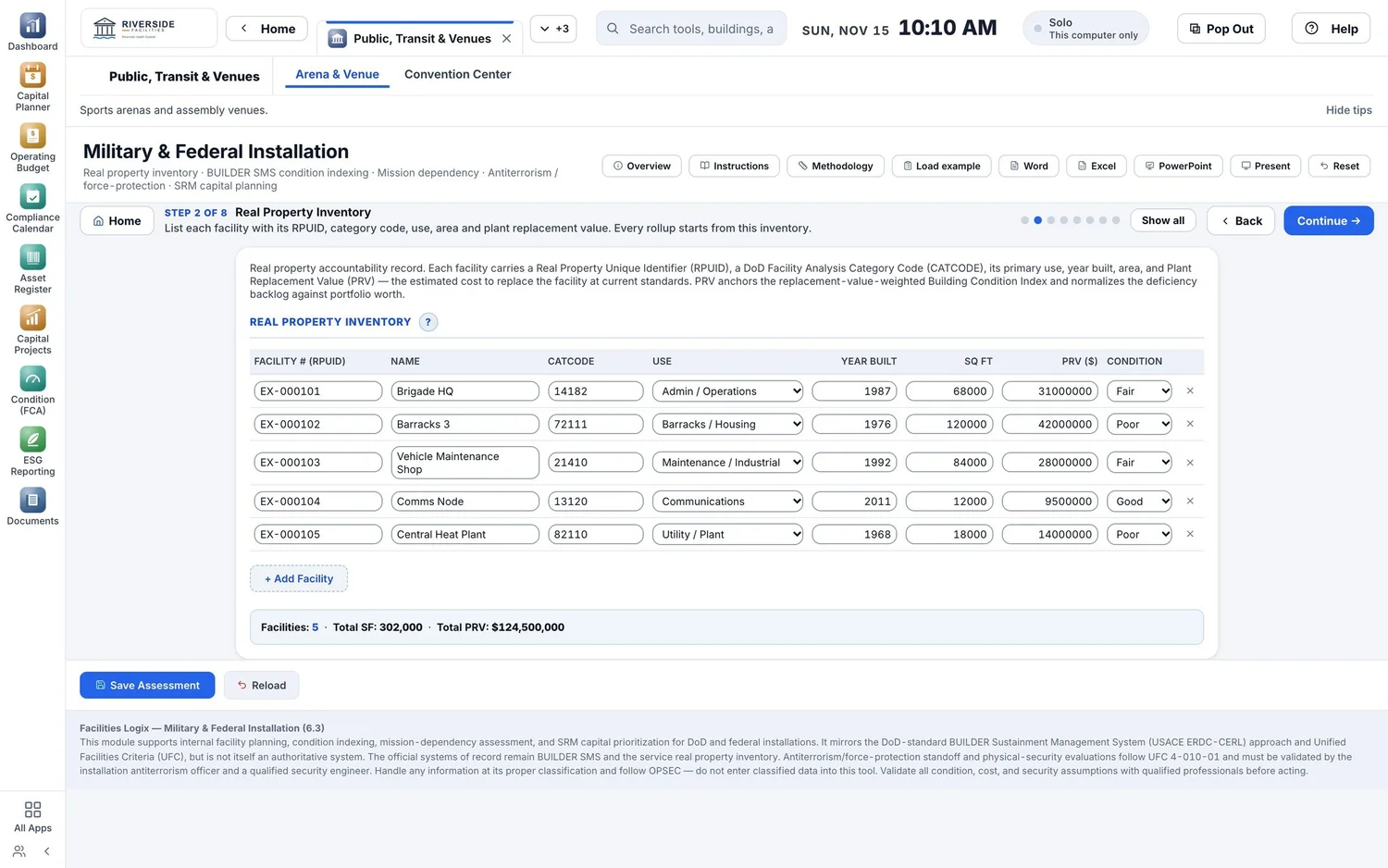
- Condition indexing, a real property inventory, mission dependency, security and capital for sustainment, restoration and modernization
- Sustainment rate, investment as a share of plant replacement value and a condition quality rating for each facility
Installation Programs
- Yes or no answers for hangars, ammunition storage, barracks, family housing, child development centers, dining facilities, ranges, bulk fuel, cathodic protection, control systems and more
- The answers decide which rows appear: explosives safety, control-system authorizations, energy resilience, environmental reviews, waterfront and dry dock inspections, shore power and military airfields
- Coast Guard shore facility rules and National Guard rows for state-held and federal property
- Design criteria listed when a project is planned
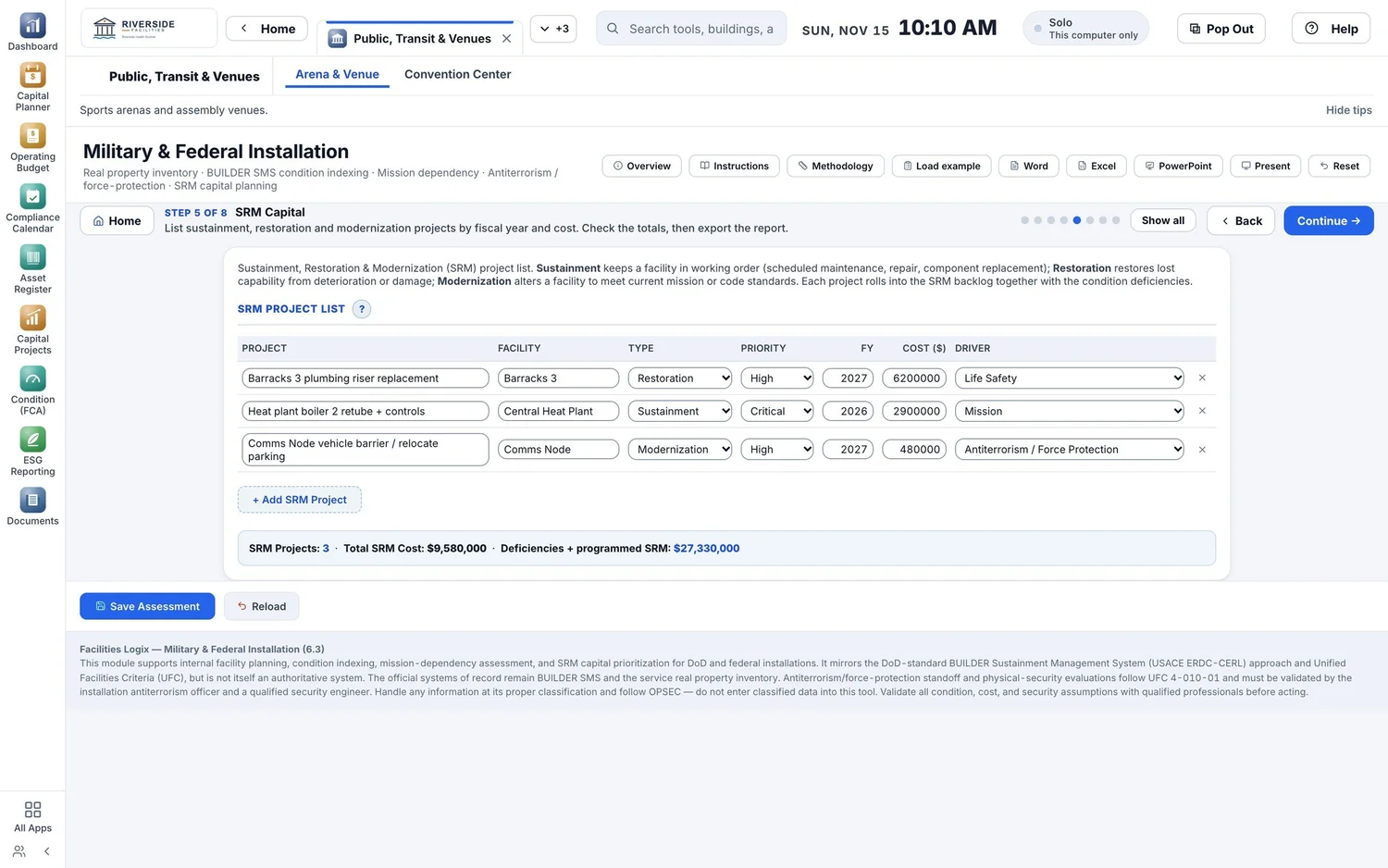
SRM Capital in Military & Federal Installation: list sustainment, restoration and modernization projects by fiscal year and cost. Check the totals, then export the report.
Federal Real Property
- The Federal Real Property Profile fields for each federal building, shown only when the data dictionary's rule applies
- Still Needed Before Reporting lists every blank or rejected value, and a data sheet exports every federal building in dictionary order
- The energy evaluation tracker for covered facilities and the Guiding Principles for sustainable federal buildings
- Federal purchasing, lease accounting and space-utilization checks for federal office space
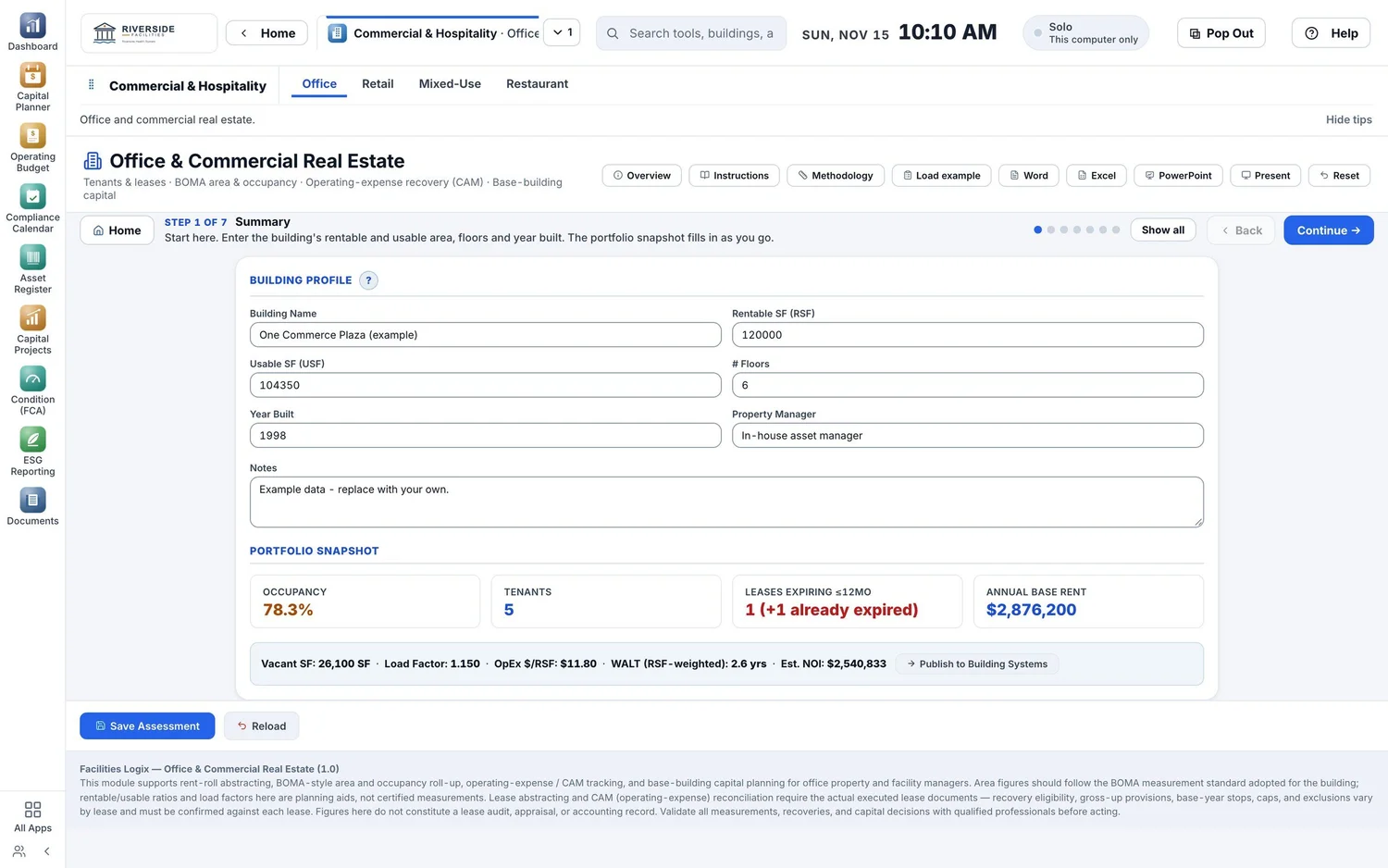
Summary in Office & Commercial Real Estate: start here. Enter the building's rentable and usable area, floors and year built. The portfolio snapshot fills in as you go.
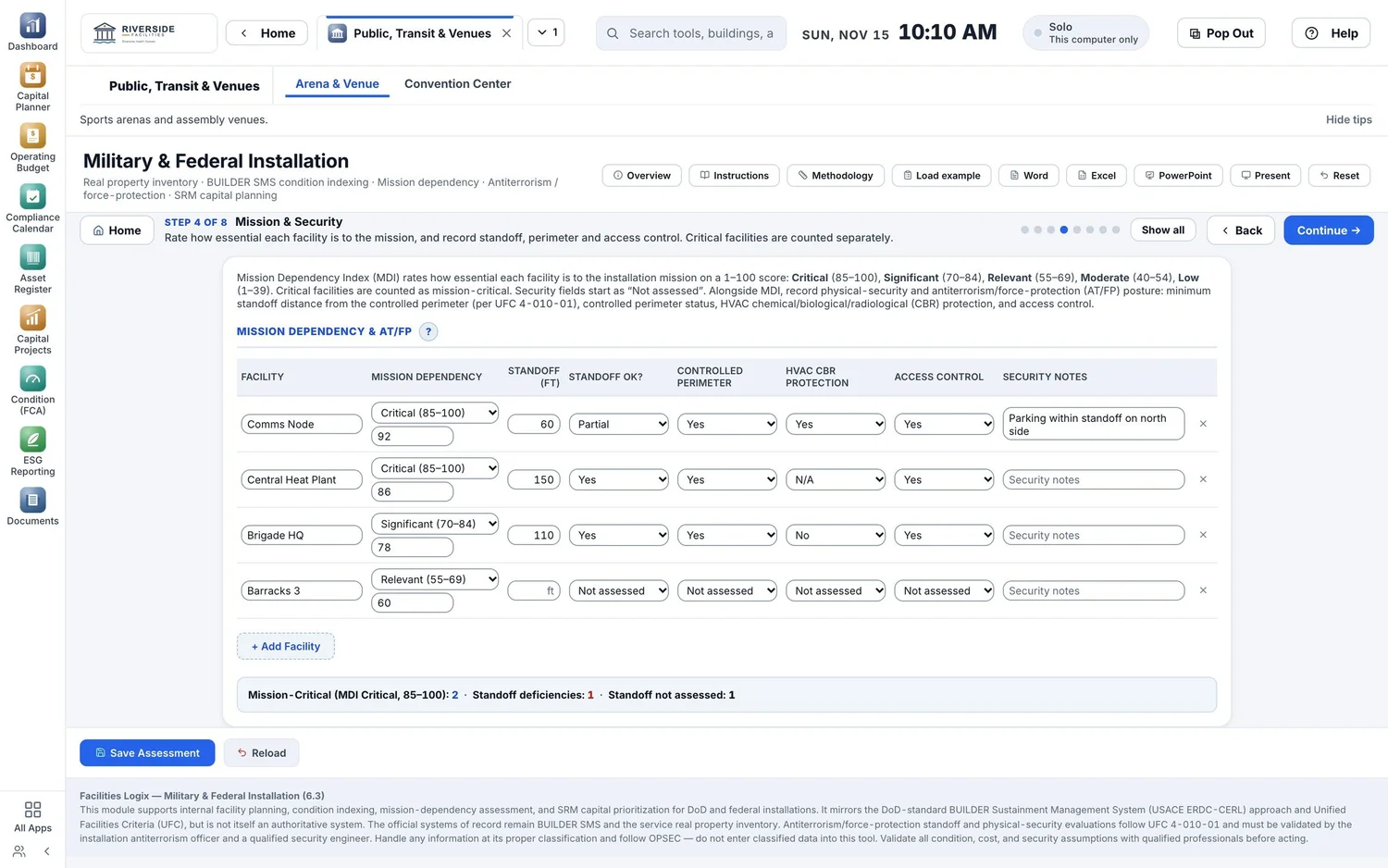
Installations of every type carry different missions, so mission and security needs are recorded for each.
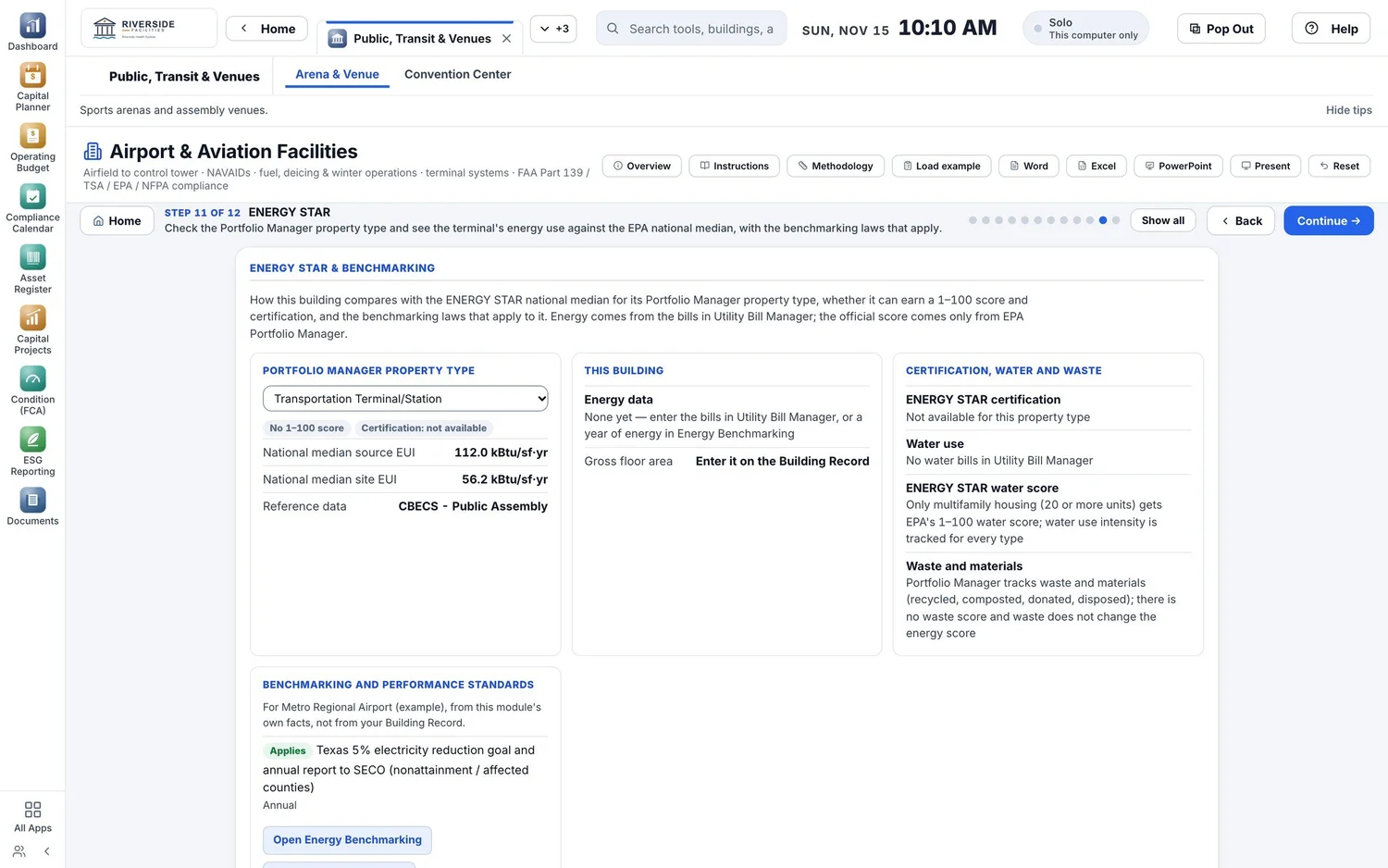
From the Airfield to the Control Tower, in Twelve Steps
Airfield and Tower
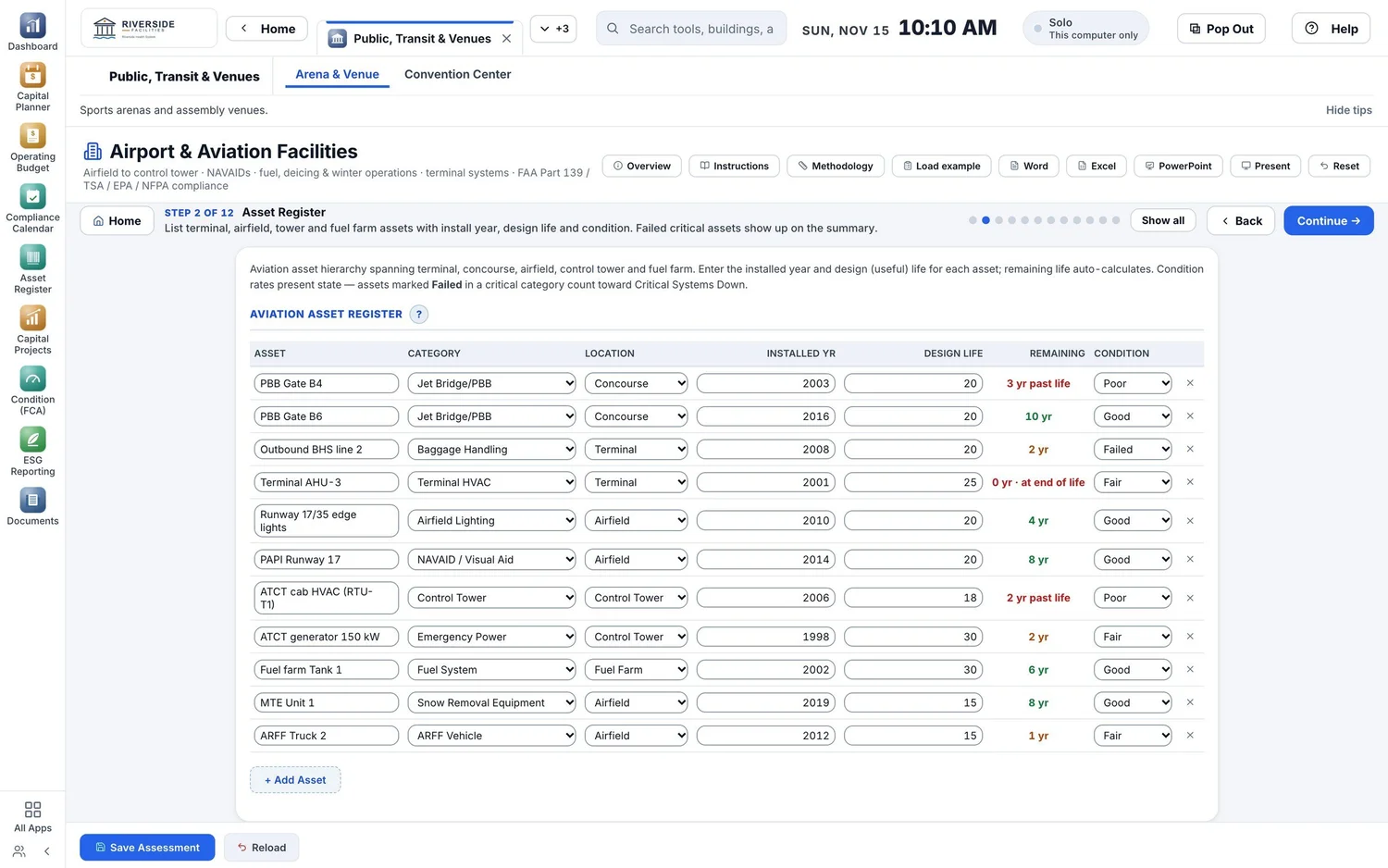
- The airport profile and the facts that decide which obligations apply: certification class, firefighting index, tower type, security program, snow and ice, fueling, deicing and grants
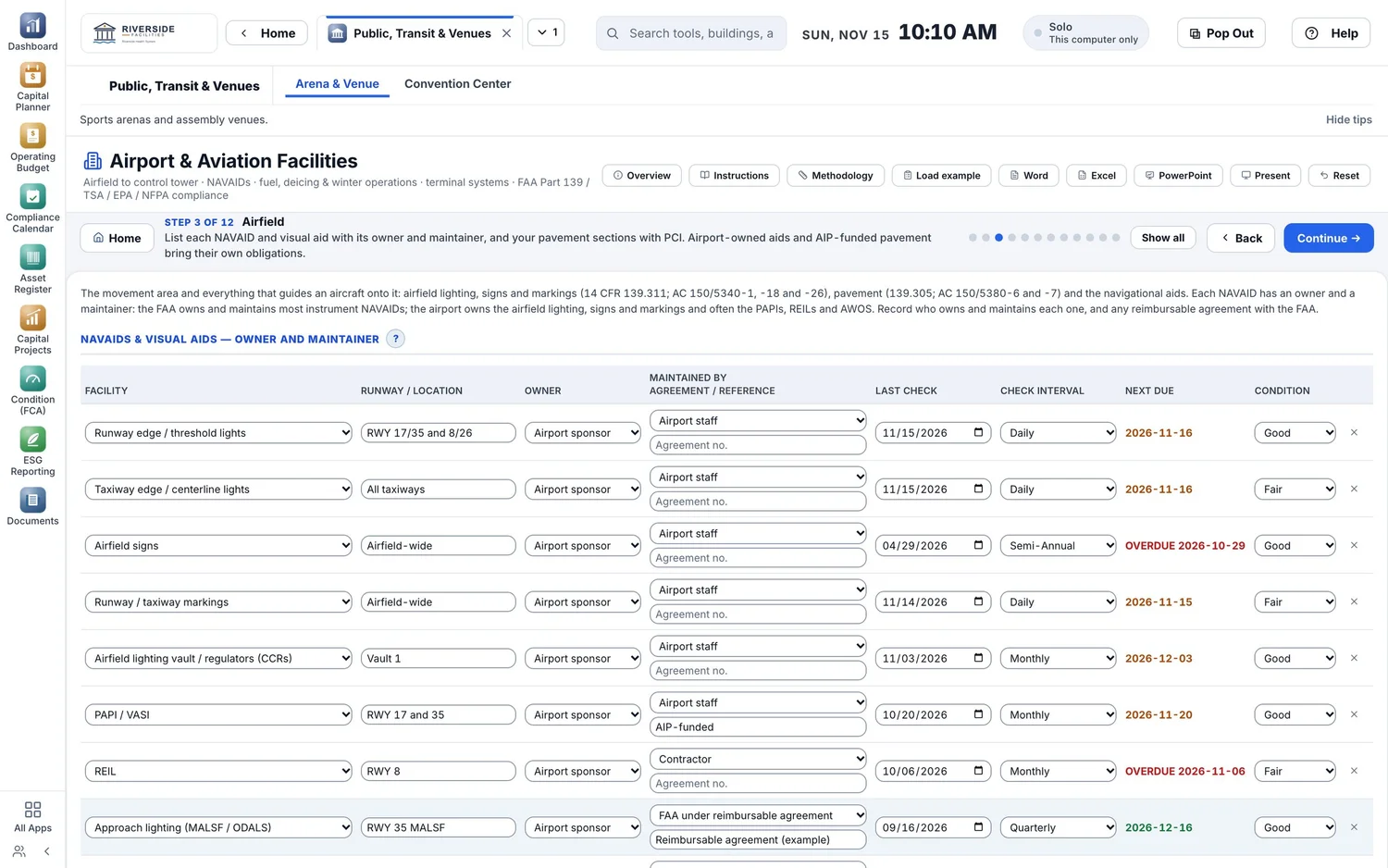
- Every navigational and visual aid with the party that holds it, its maintainer and its check interval, and pavement sections with their condition index
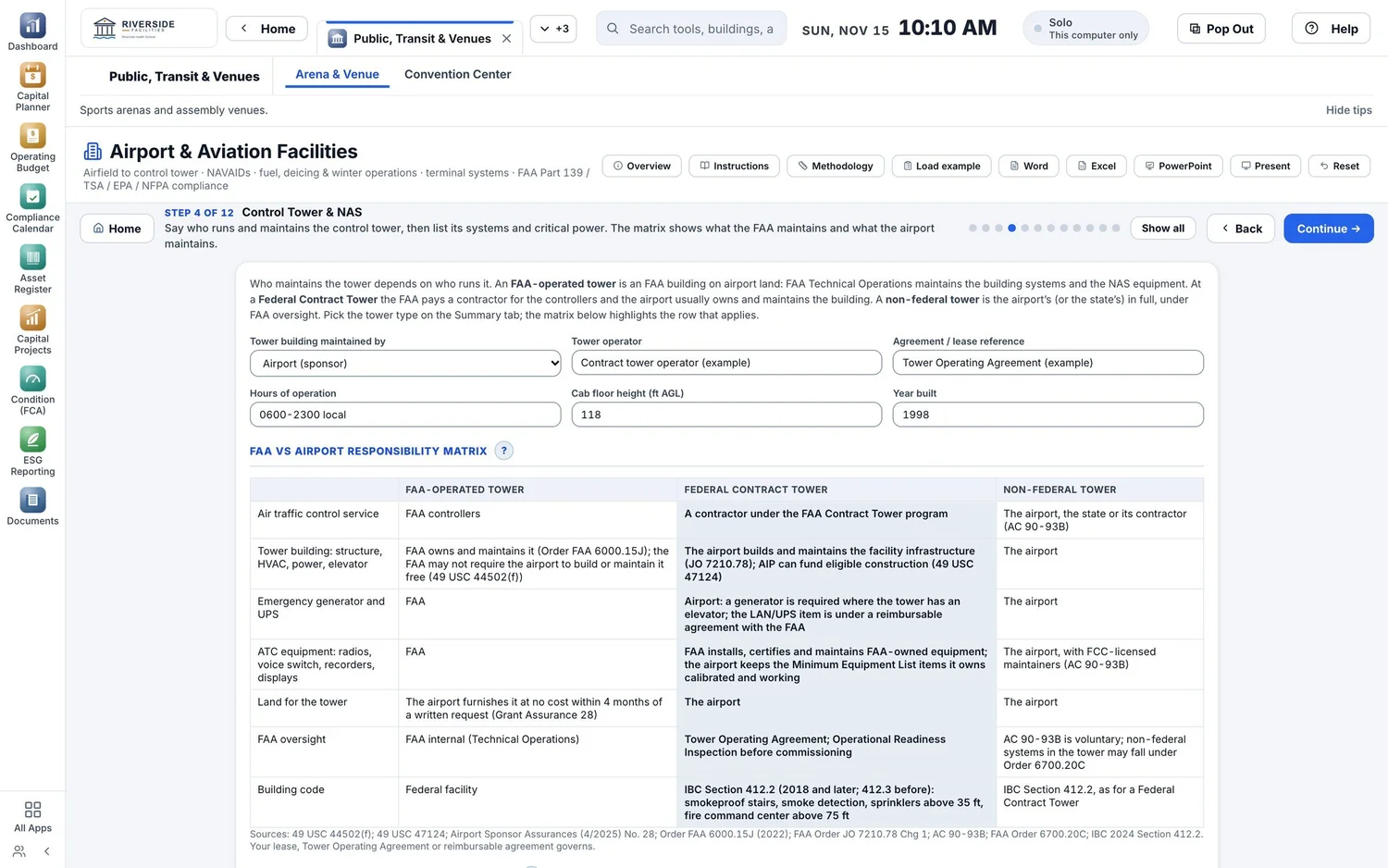
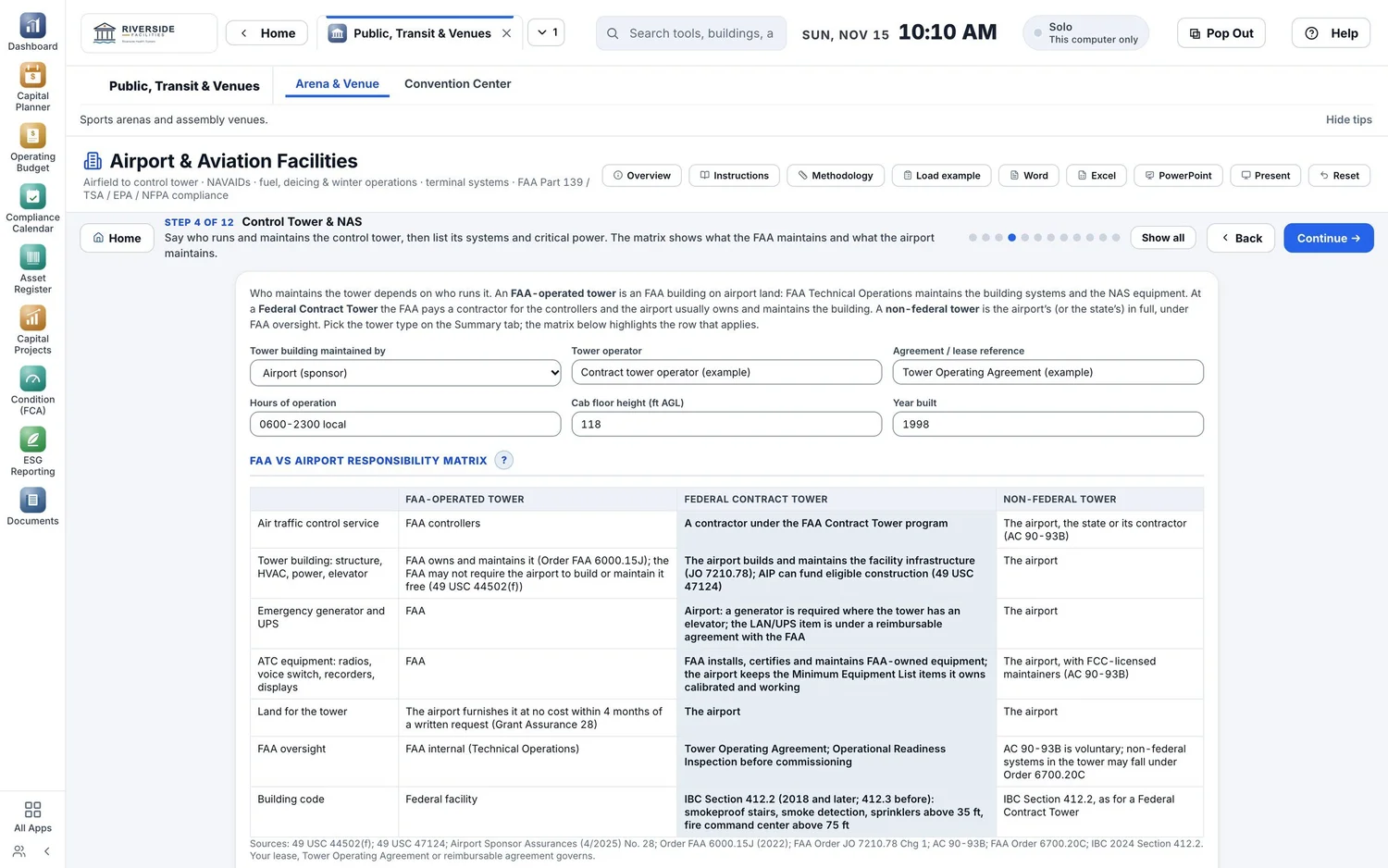
- The control tower's systems and critical power, with a responsibility matrix for federally operated, contract and non-federal towers
- A tower can be recorded as its own building so it carries only the tower's obligations
Operations
- Fuel and deicing: fueling agents with their inspections and training, tanks, hydrant piping and refuelers, and deicing fluid use
- Winter operations: the snow and ice control plan and snow removal equipment readiness
- Terminal systems: people movers, elevators, escalators, boarding bridges, ground power, preconditioned air, baggage and screening equipment
- Safety and emergency: the self-inspection schedule, safety management dates, airfield construction and the foreign-object log
- Environmental and funding: grants, the stormwater permit, the layout plan and noise mapping
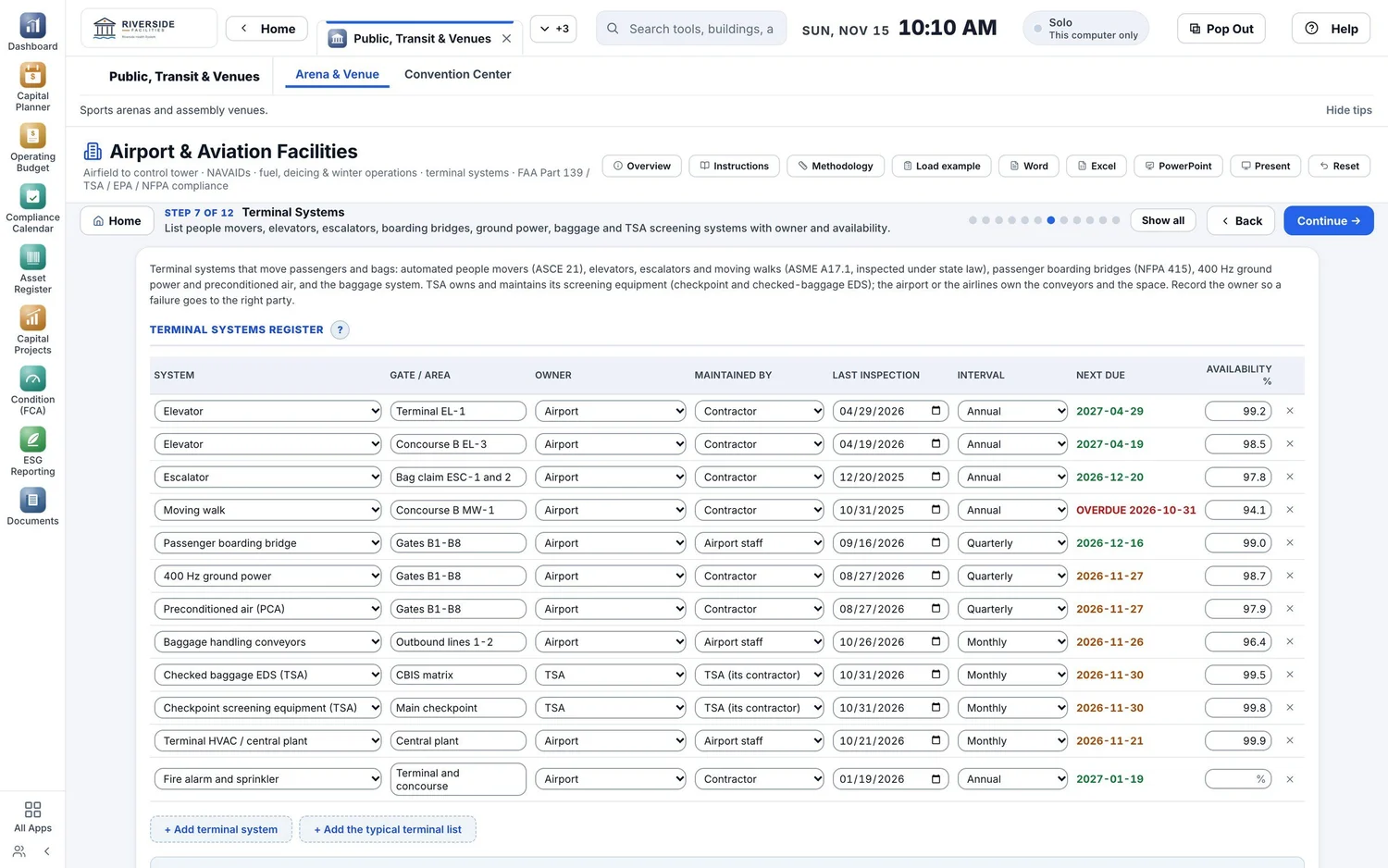
Terminal Systems in Airport & Aviation Facilities: list people movers, elevators, escalators, boarding bridges, ground power, baggage and TSA screening systems with owner and availability.
A Ship Has Spaces Instead of Floors, and Uses the Same Work Orders
The Ship as a Building
- The ship profile: hull number, vessel type, program, readiness status, berth, certificates and survey dates
- Systems and assets from propulsion and steering gear to dehumidifiers, cathodic protection, fire main and lifesaving, each with its PM cadence
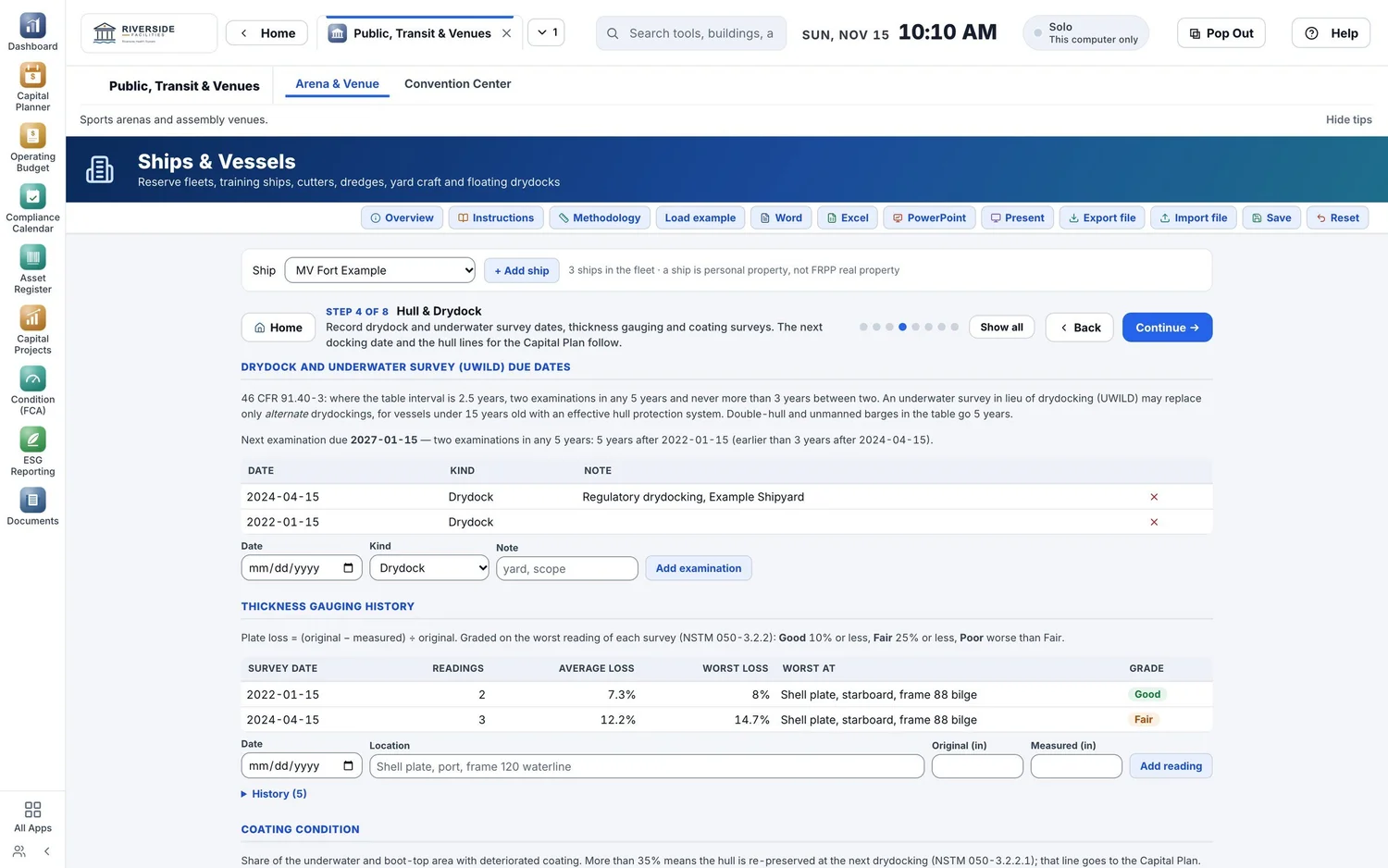
- Hull and drydock: drydock and underwater survey dates with the next one due, thickness gauging and coating surveys, with the drydocking in the capital plan
- Compliance: the marine rules that apply to this ship and why; rules written for buildings are not applied to a ship
Lay-Up and Readiness
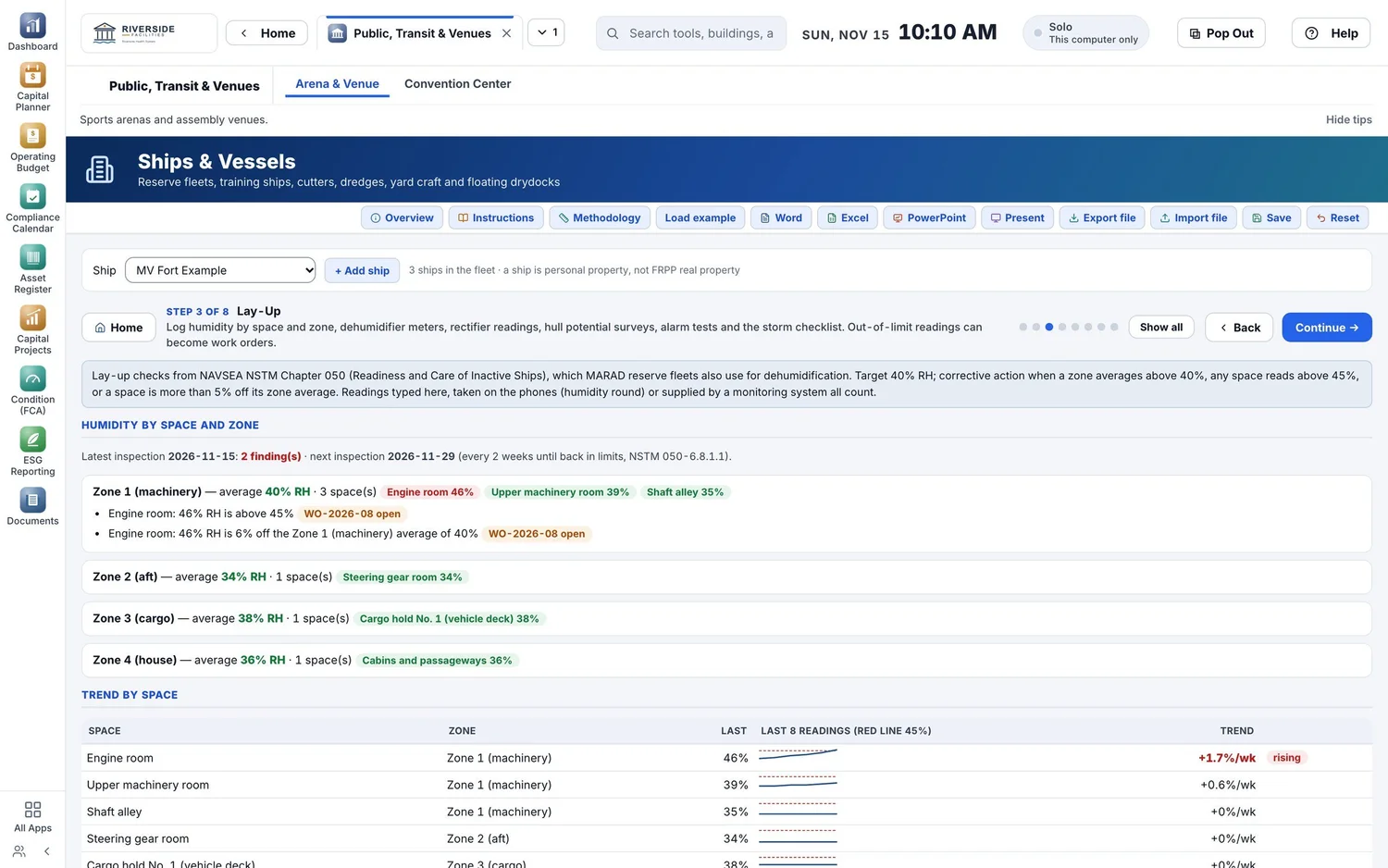
- Humidity by space and zone with findings and a trend line, and a phone humidity round with a QR label for each space
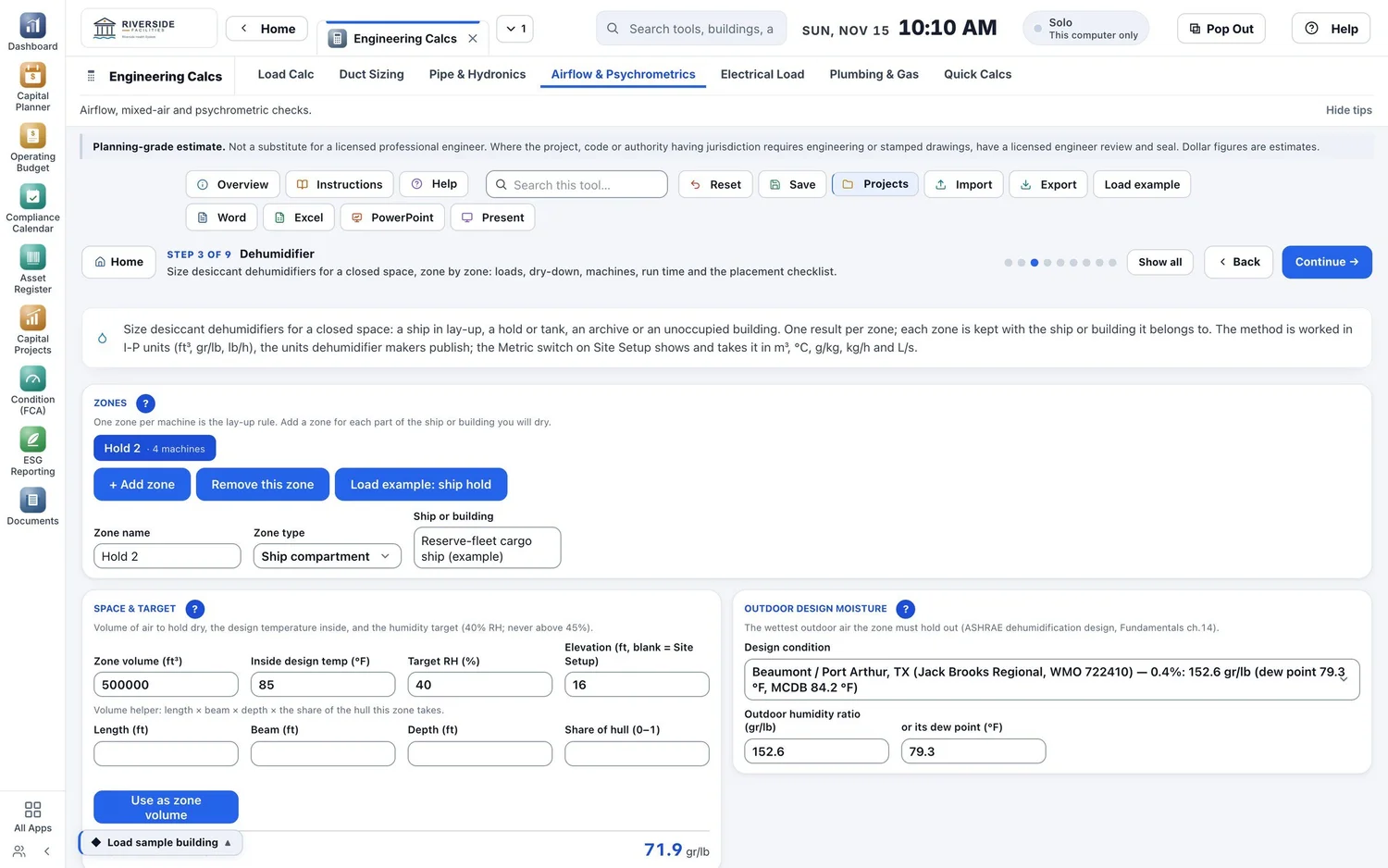
- Dehumidifier run time and sizing by zone, cathodic protection logs, fire and flooding alarm tests and a mooring and storm checklist
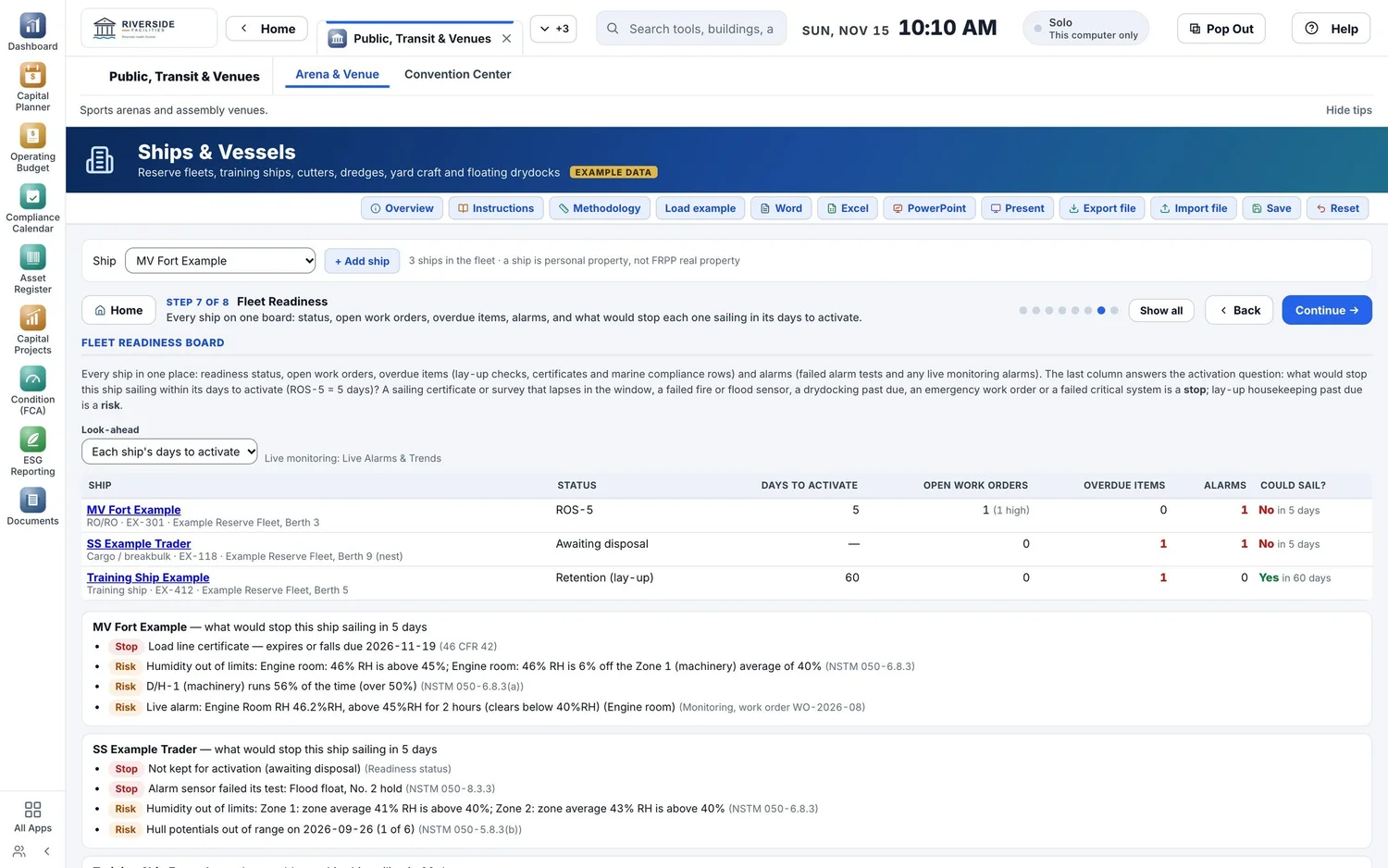
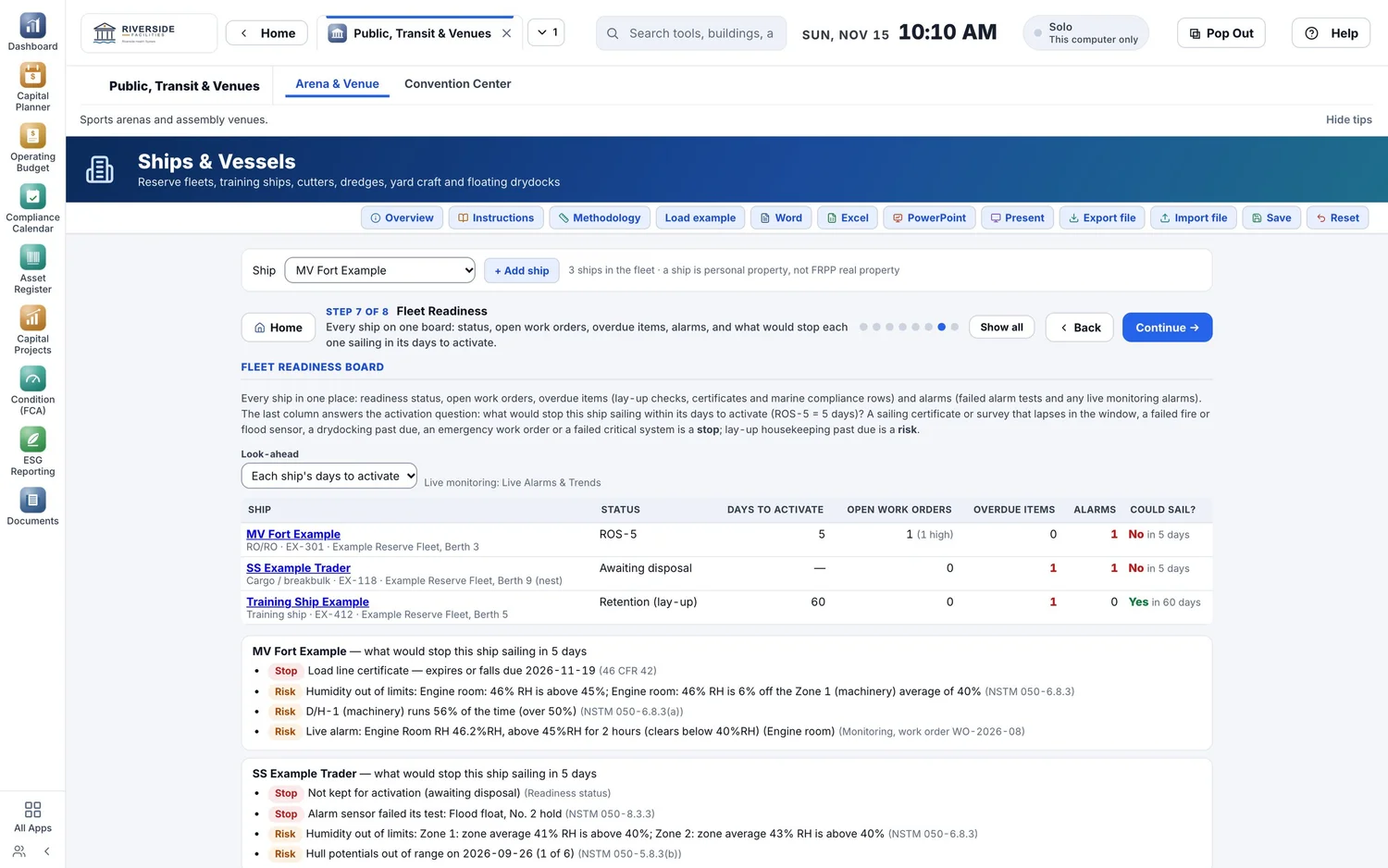
- Fleet Readiness: every ship on one board with status, days to activate, open work and alarms, and whether it could sail within its window
- Disposal: surveys, hull cleaning, tow preparation and recycling, each with a status and date
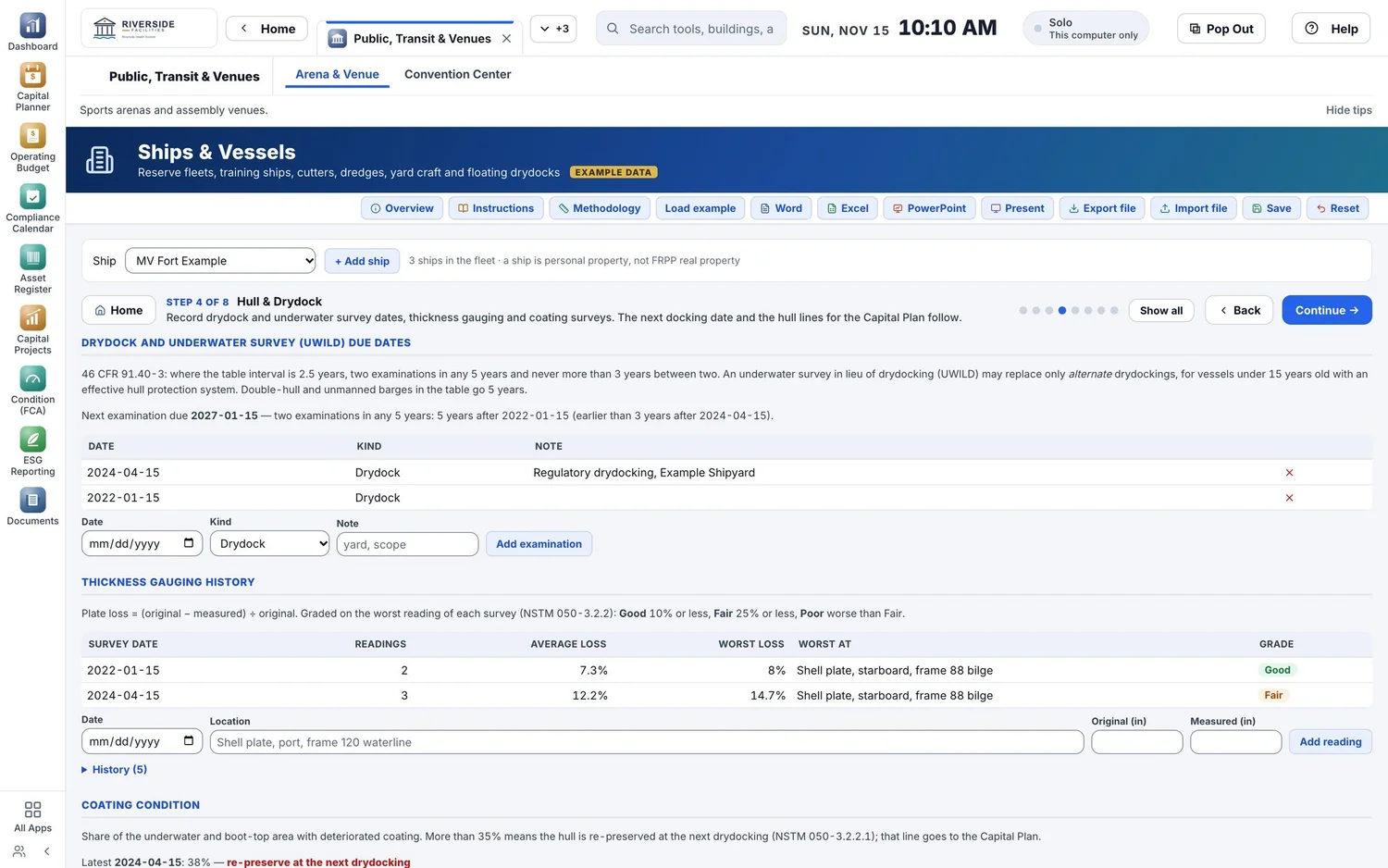
Hull & Drydock in Ships & Vessels: record drydock and underwater survey dates, thickness gauging and coating surveys. The next docking date and the hull lines for the Capital Plan follow.
Moving and Gathering Large Numbers of People
Transit
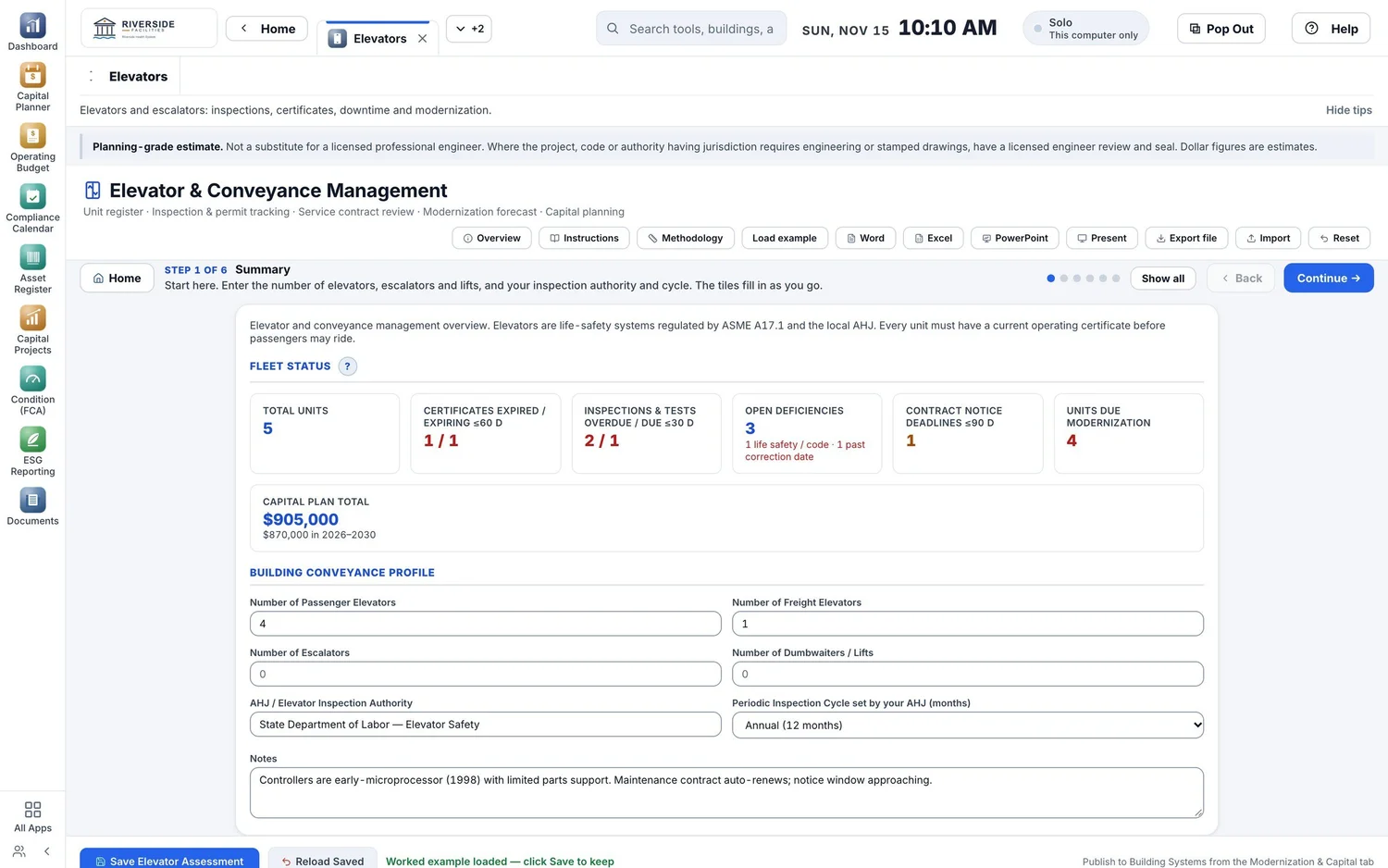
Heavy-duty escalators and elevators, platform and emergency ventilation, fixed-guideway life safety and passenger systems.
Learn MoreArenas and Stadiums
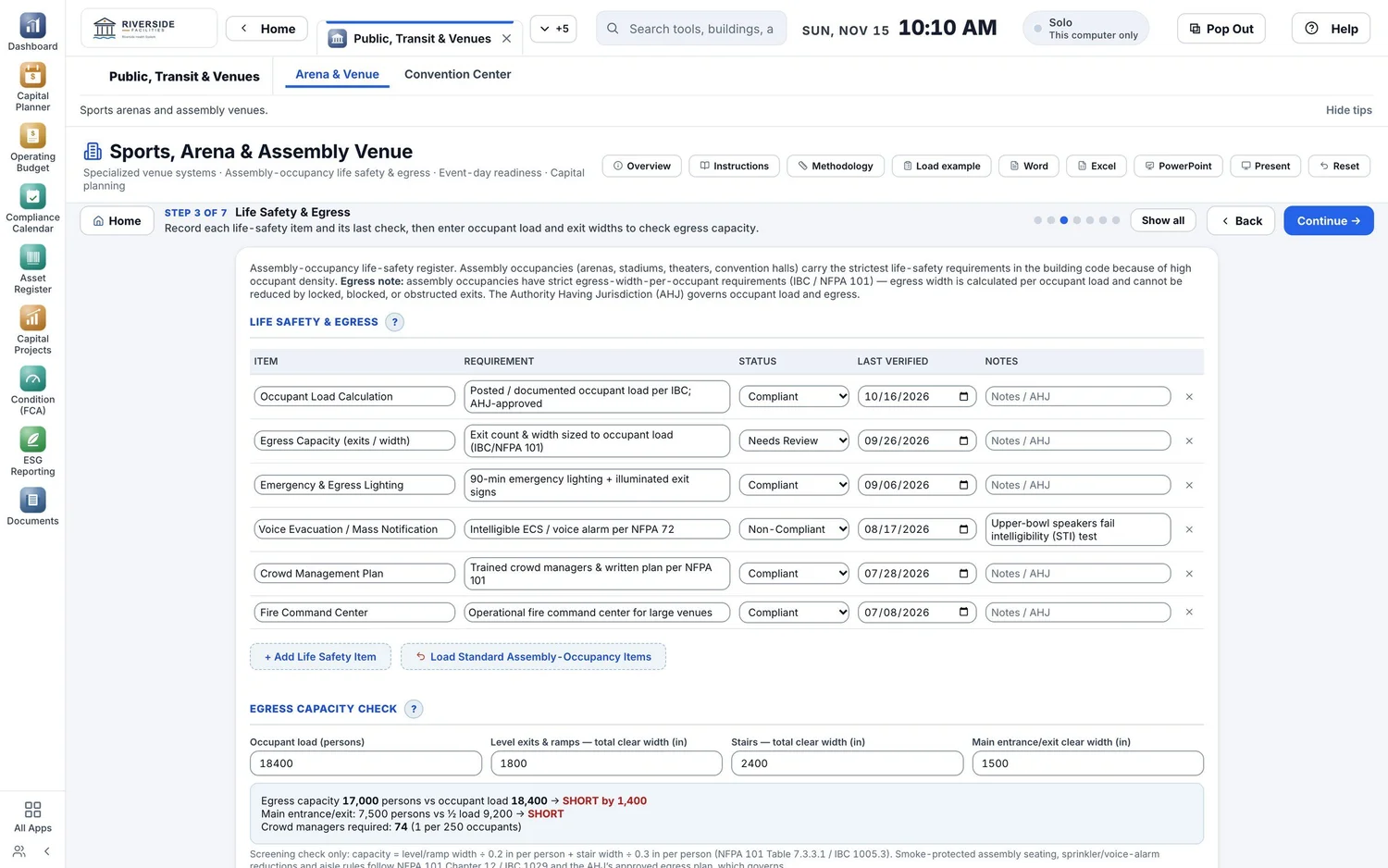
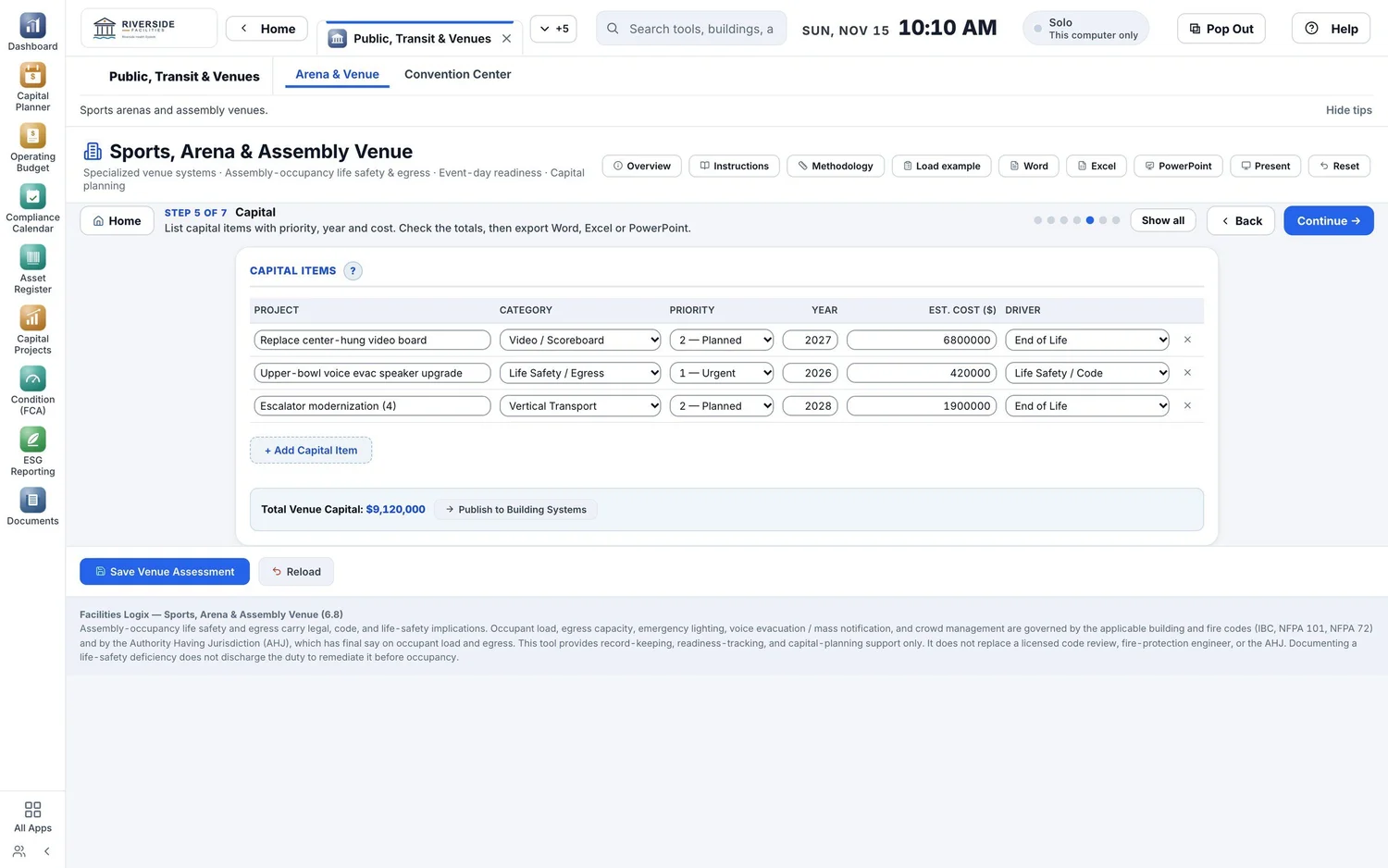
Venue systems, assembly-occupancy life safety and egress, and per-event readiness.
Learn More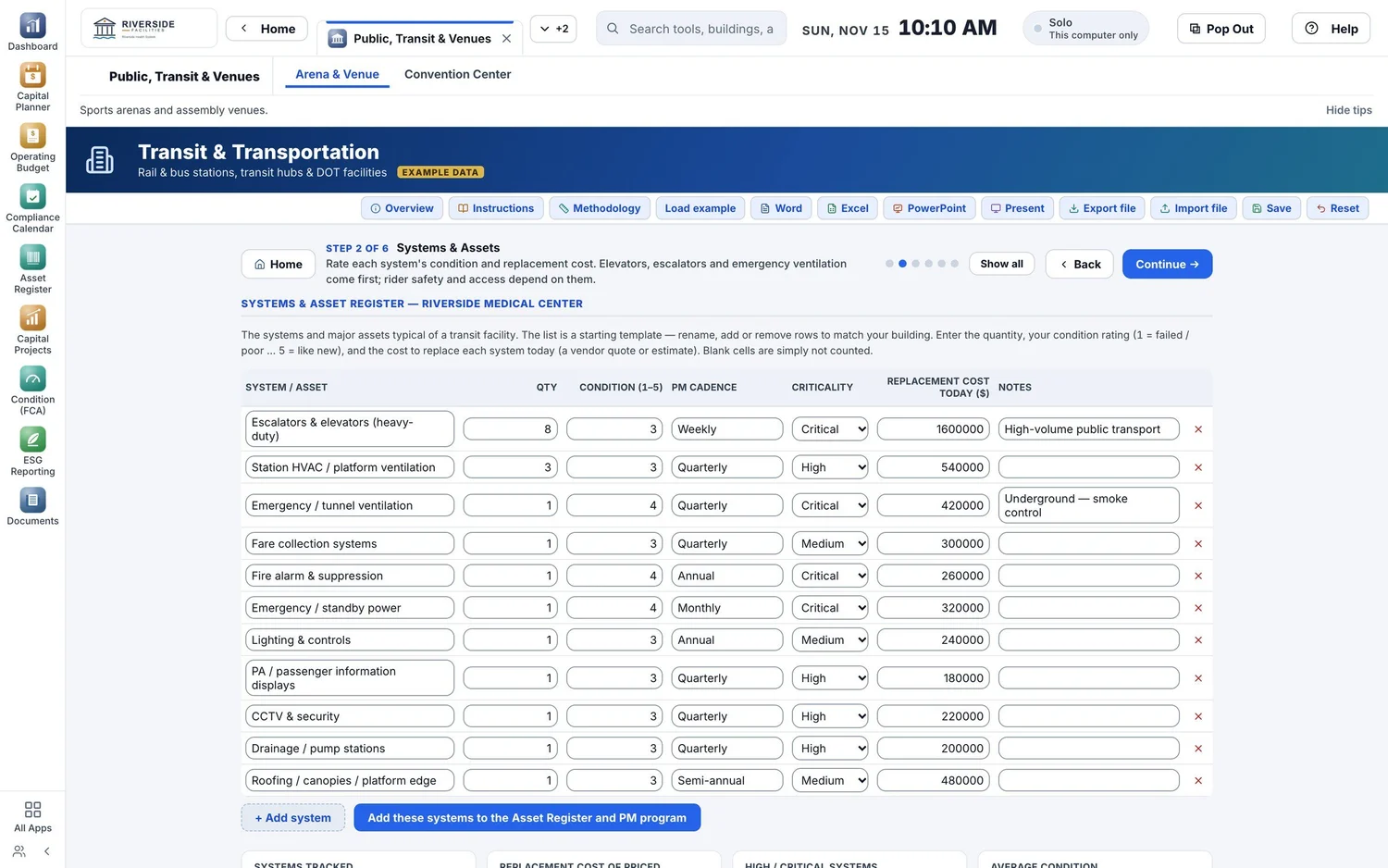
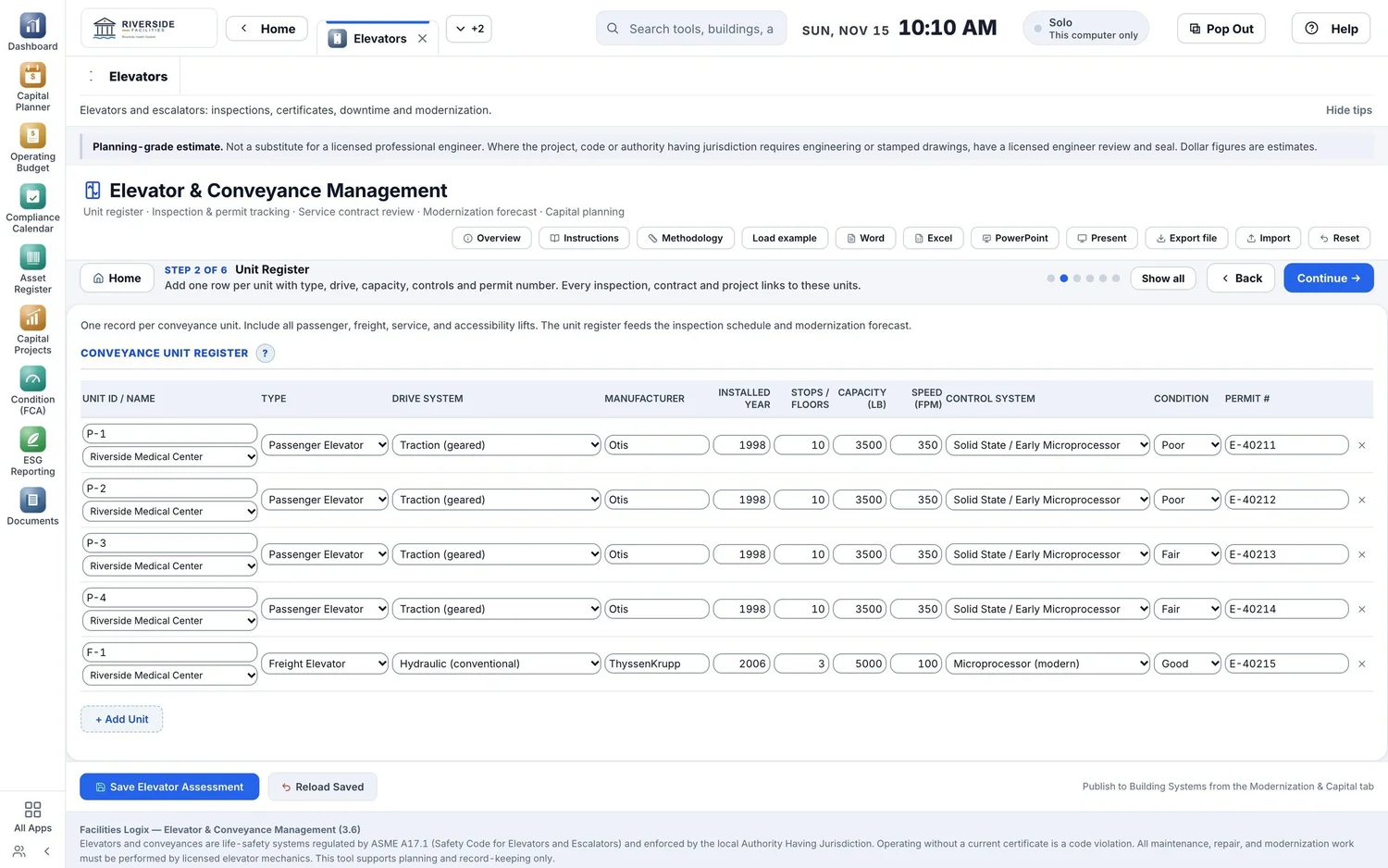
Systems & Assets in Transit & Transportation: rate each system's condition and replacement cost. Elevators, escalators and emergency ventilation come first; rider safety and access depend on them.
Convention Centers
Large-span HVAC, exhibit floor-box utilities, rigging loads, catering and large-assembly life safety.
Learn MoreParking and EV Charging
Structures and lots that serve public facilities have their own playbook, and EV charging is tracked as an operated asset.
Learn More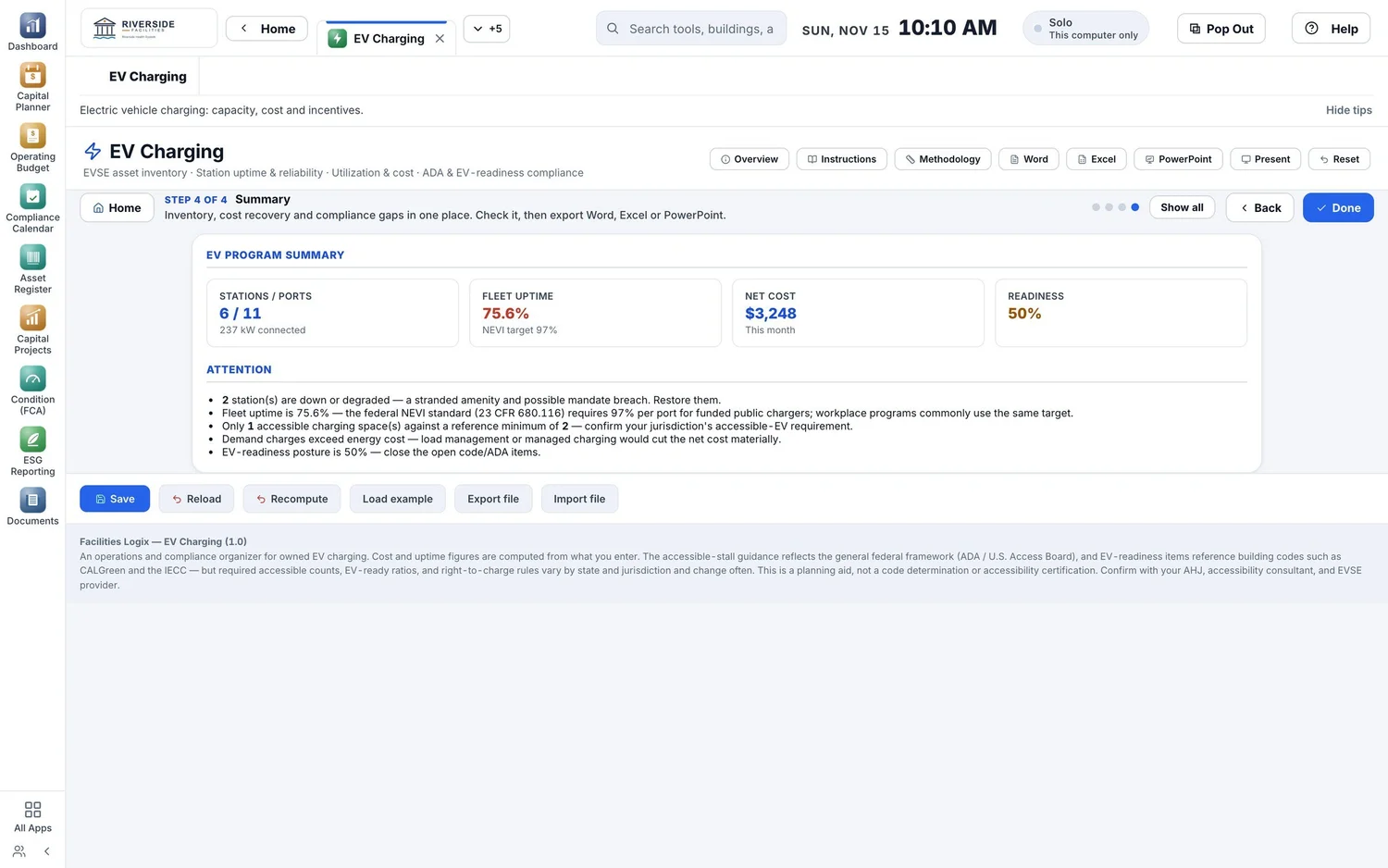
Summary in EV Charging: inventory, cost recovery and compliance gaps in one place. Check it, then export Word, Excel or PowerPoint.
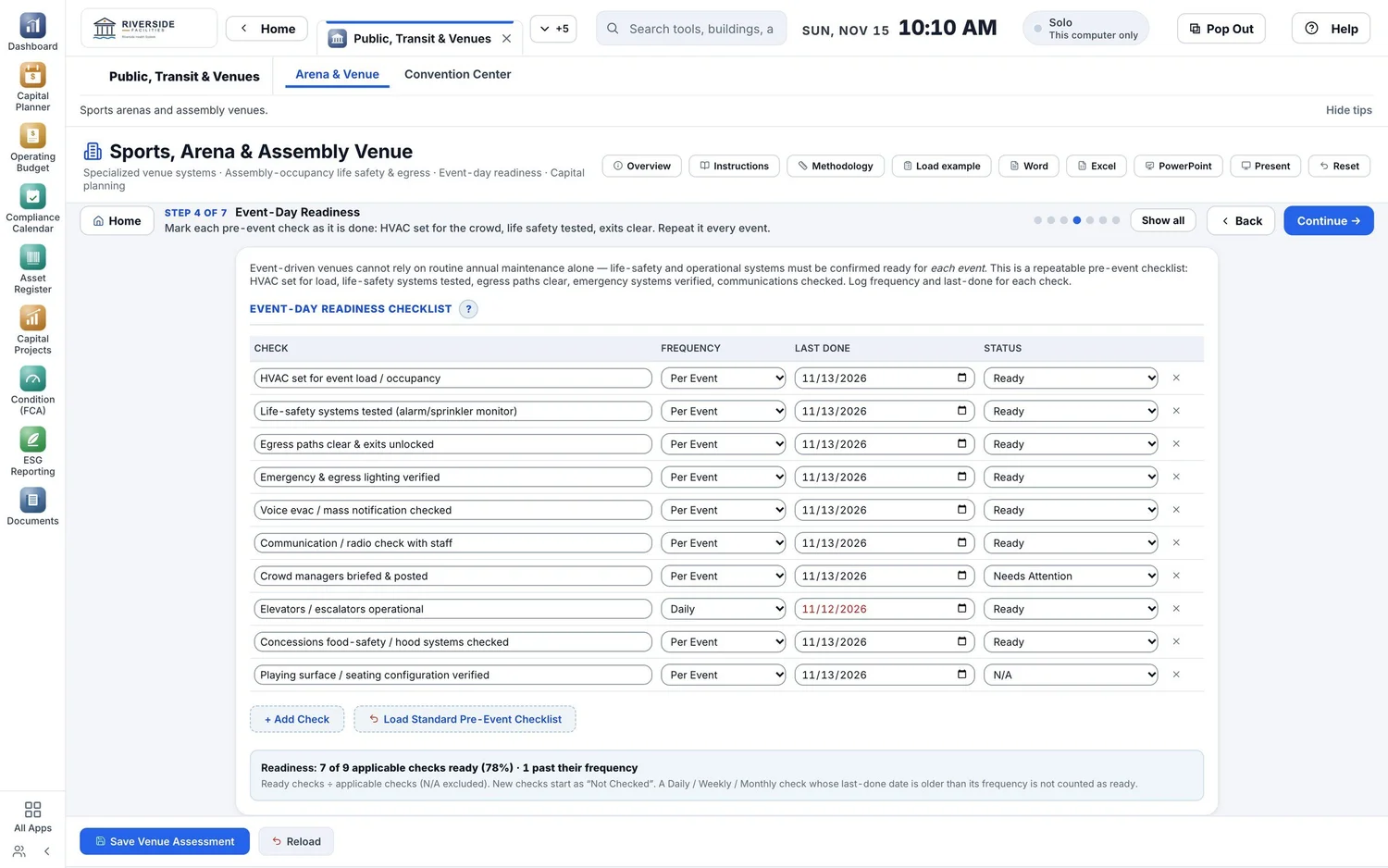
Event-Day Readiness in Sports, Arena & Assembly Venue: mark each pre-event check as it is done: HVAC set for the crowd, life safety tested, exits clear. Repeat it every event.
Applied from Each Building Record
Purchasing
Federal agency rules, federal grant rules and the Texas thresholds are built in; other states are set from your own rules. Each purchase order shows the method it needs.
Learn MoreAccessibility
The standard for public entities, the Texas standards in Texas and the federal standards for federal buildings, applied automatically.
Learn More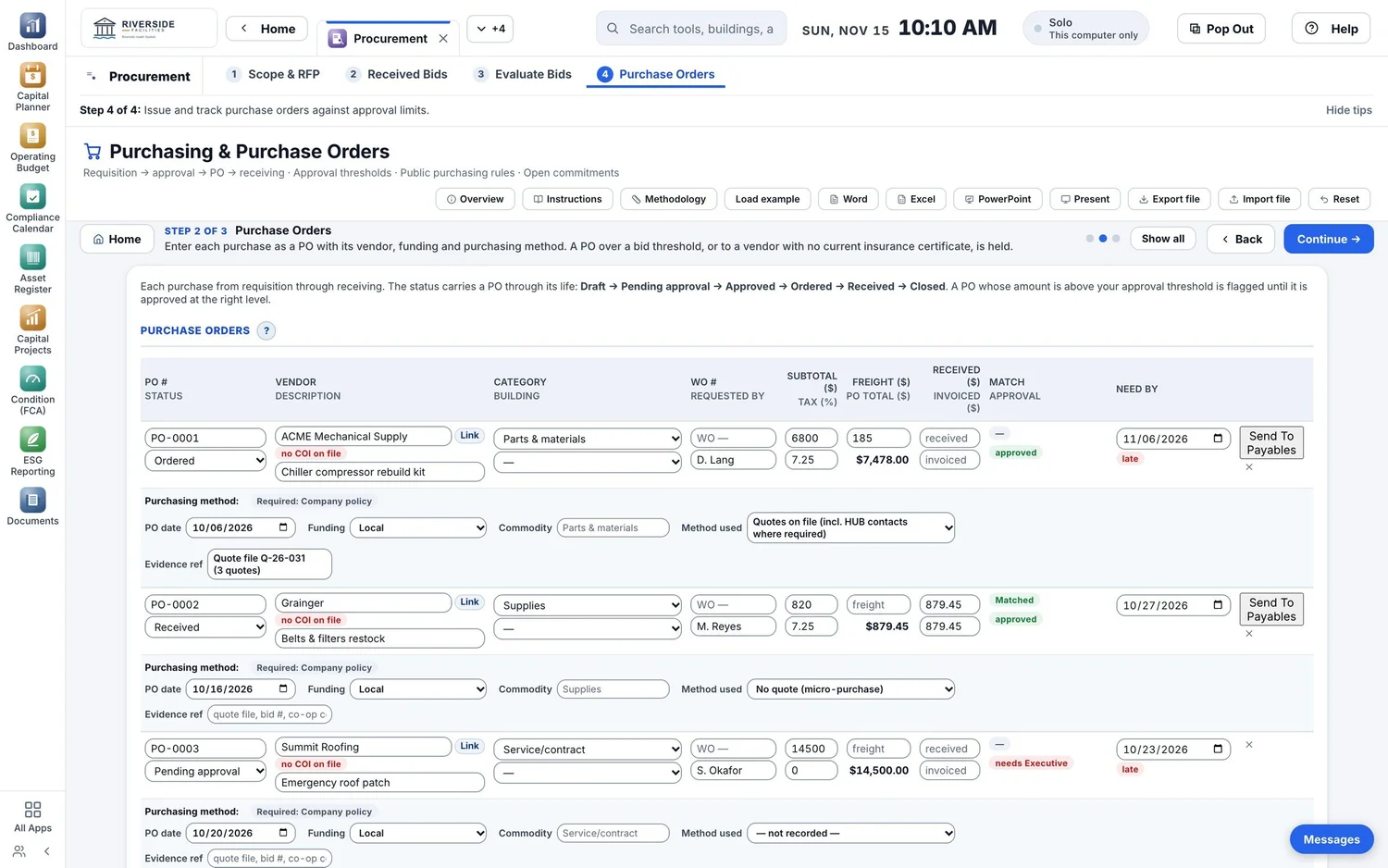
Purchase Orders in Purchasing & Purchase Orders: enter each purchase as a PO with its vendor, funding and purchasing method. A PO over a bid threshold, or to a vendor with no current insurance certificate, is held.
Accounting
Lease accounting under the government or federal standard, and the modified approach for infrastructure networks.
Learn MoreWorkplace Safety
The workplace safety rules that follow from who holds the building, noted on its record.
Learn More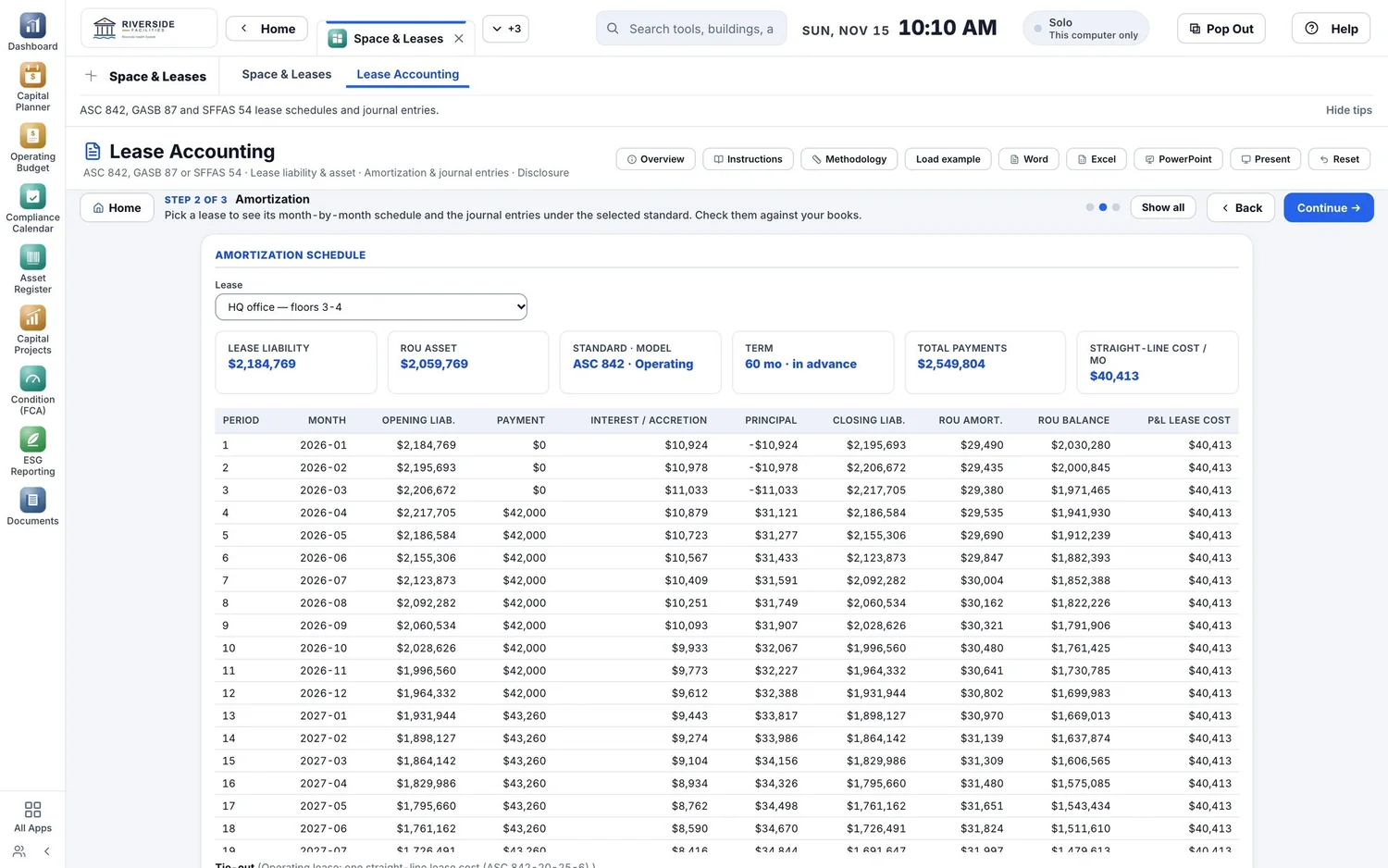
Amortization in Lease Accounting (ASC 842, GASB 87, SFFAS 54): pick a lease to see its month-by-month schedule and the journal entries under the selected standard. Check them against your books.
Federal Funds
Federal money adds prevailing wage, domestic-content and grant purchasing rules to any organization; project flags turn them on.
Learn MoreConfirm, Never Guess
Where the law turns on a fact the record does not show, the row says Confirm and names the fact that would settle it.
Learn MoreShow Less
A wrong guess about a rule can mean a missed obligation or money spent on one that never applied. Where the record is silent, the row asks.
- A blank fact is never guessed
- Don't Know keeps the rows marked Confirm Applicability
- Library entries not confirmed from a primary source say Confirm With Your Local Authority
- An entry past its review date shows Library Entry Review Due
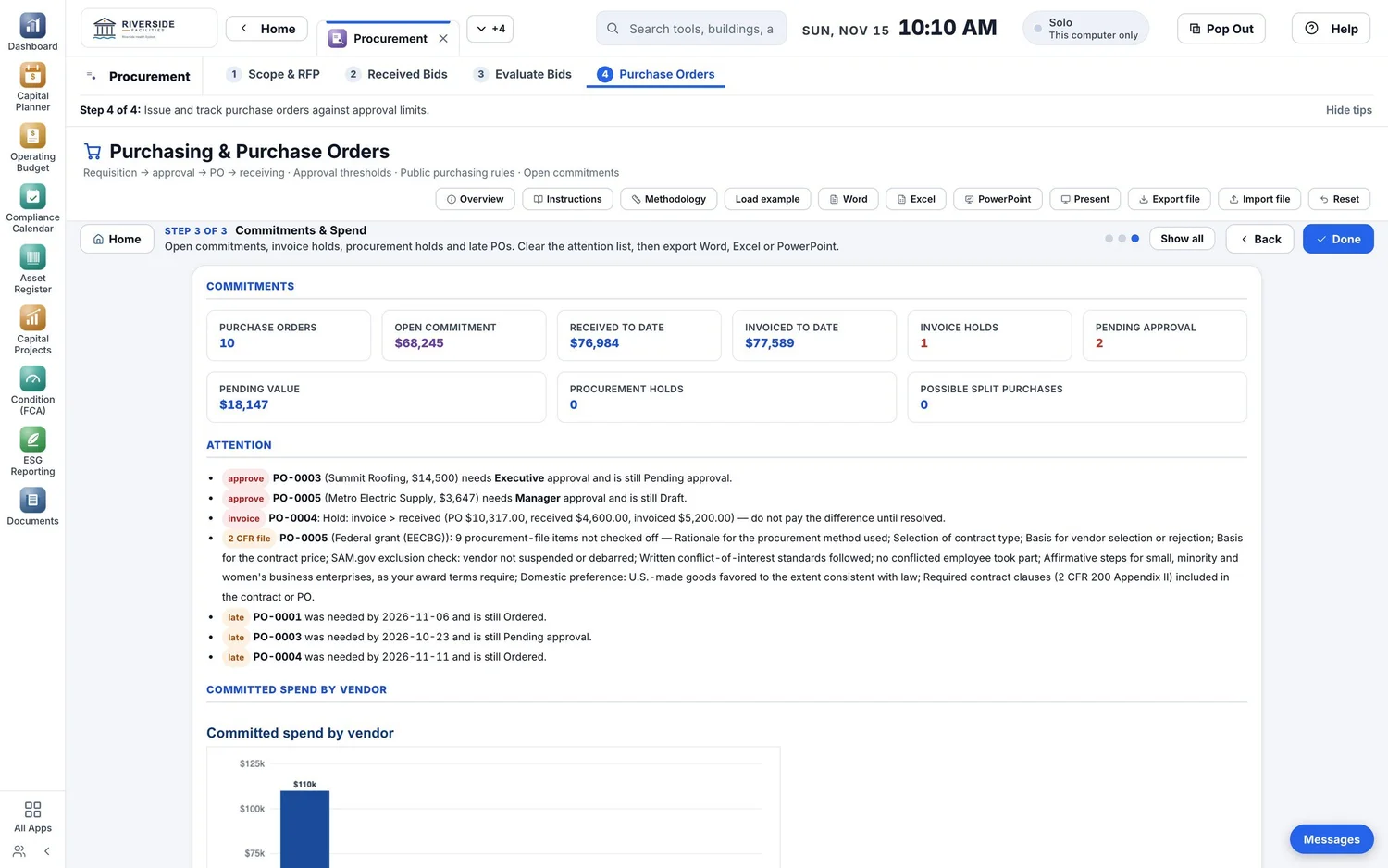
Commitments & Spend in Purchasing & Purchase Orders: open commitments, invoice holds, procurement holds and late POs. Clear the attention list, then export Word, Excel or PowerPoint.
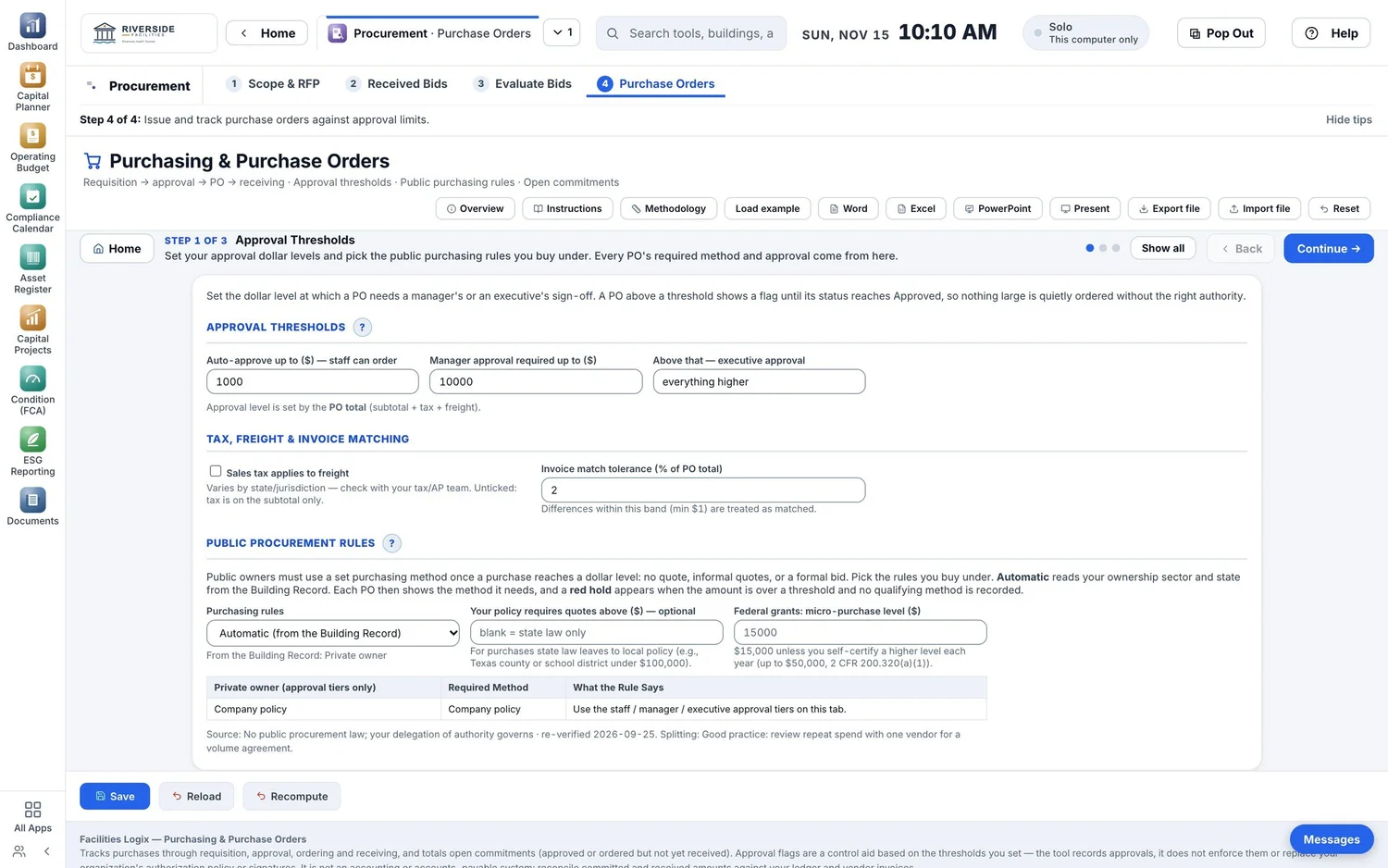
Public purchasing rules differ by agency, so each purchase order shows the method it needs.
Frequently Asked Questions
Should classified information be entered?
Does Facilities Logix report to federal systems for us?
Can a secure site use Customer-Owned Cloud mode?
Are ships treated as real property?
Be First When Facilities Logix Opens
Stop chasing building records across spreadsheets and binders. Join the list and we will tell you the day downloads open, with setup guides ready.
Launching early 2027 for Facilities Logix. Nothing to buy today, and no sales calls.
