


Leases, Stores and Shared Systems, Measured by the Property.
Launching Early 2027 · Join the Early-Access List
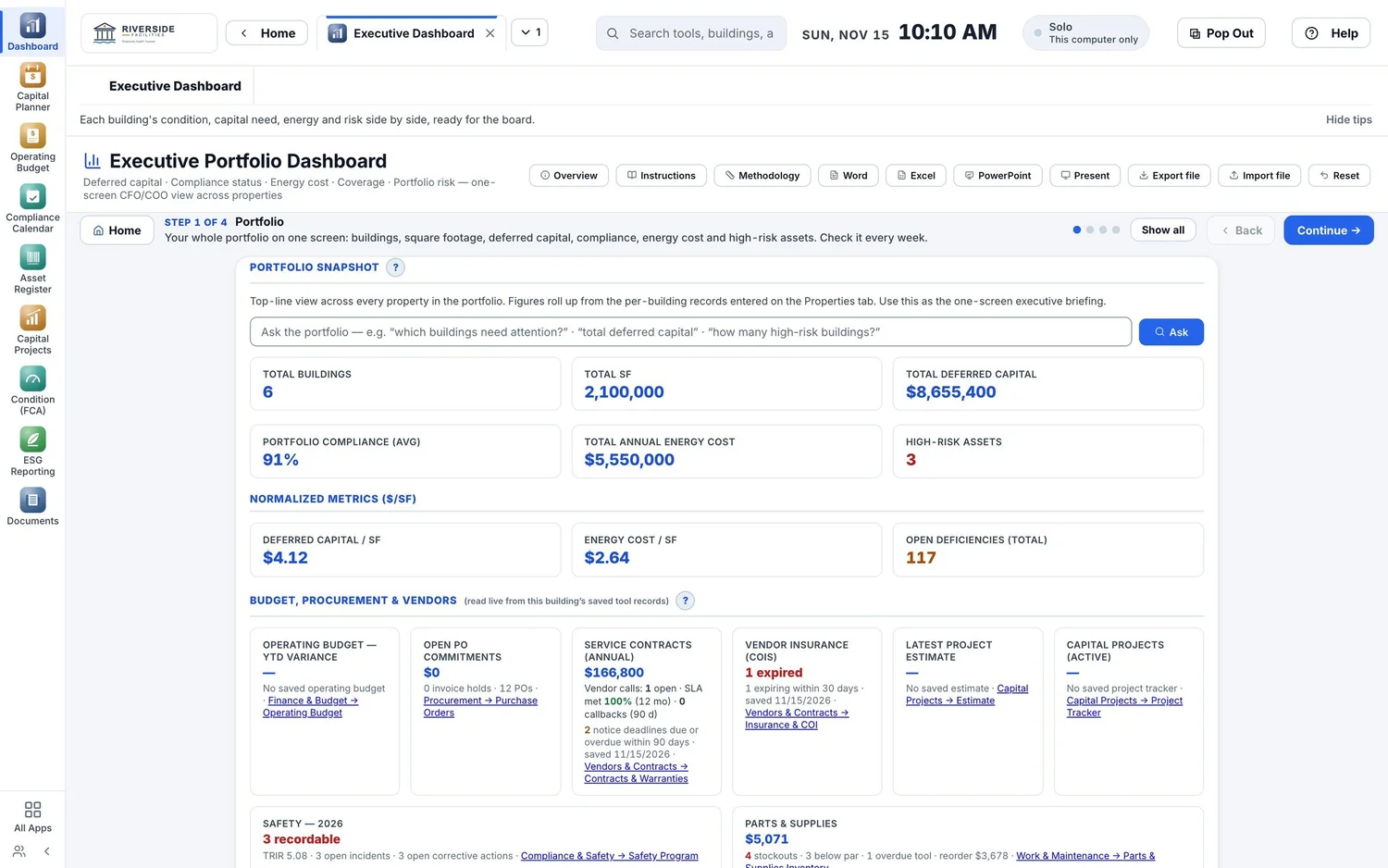
A cluster of lease expiries, an aging refrigeration rack or an unplanned roof can swing net operating income before anyone sees it coming. Facilities Logix has three playbooks here. Office and commercial real estate covers the rent roll, BOMA-style area and occupancy, operating-expense recovery and base-building capital. Retail and grocery covers a store portfolio, its refrigeration and refrigerant transition, rooftop unit life and a per-store capital rollup. Mixed-use covers residential, retail, office and hospitality on shared systems. Each has a Compliance tab with the obligations that apply to the building.
Refrigerants, Drills, Garages and the Building's Own Systems
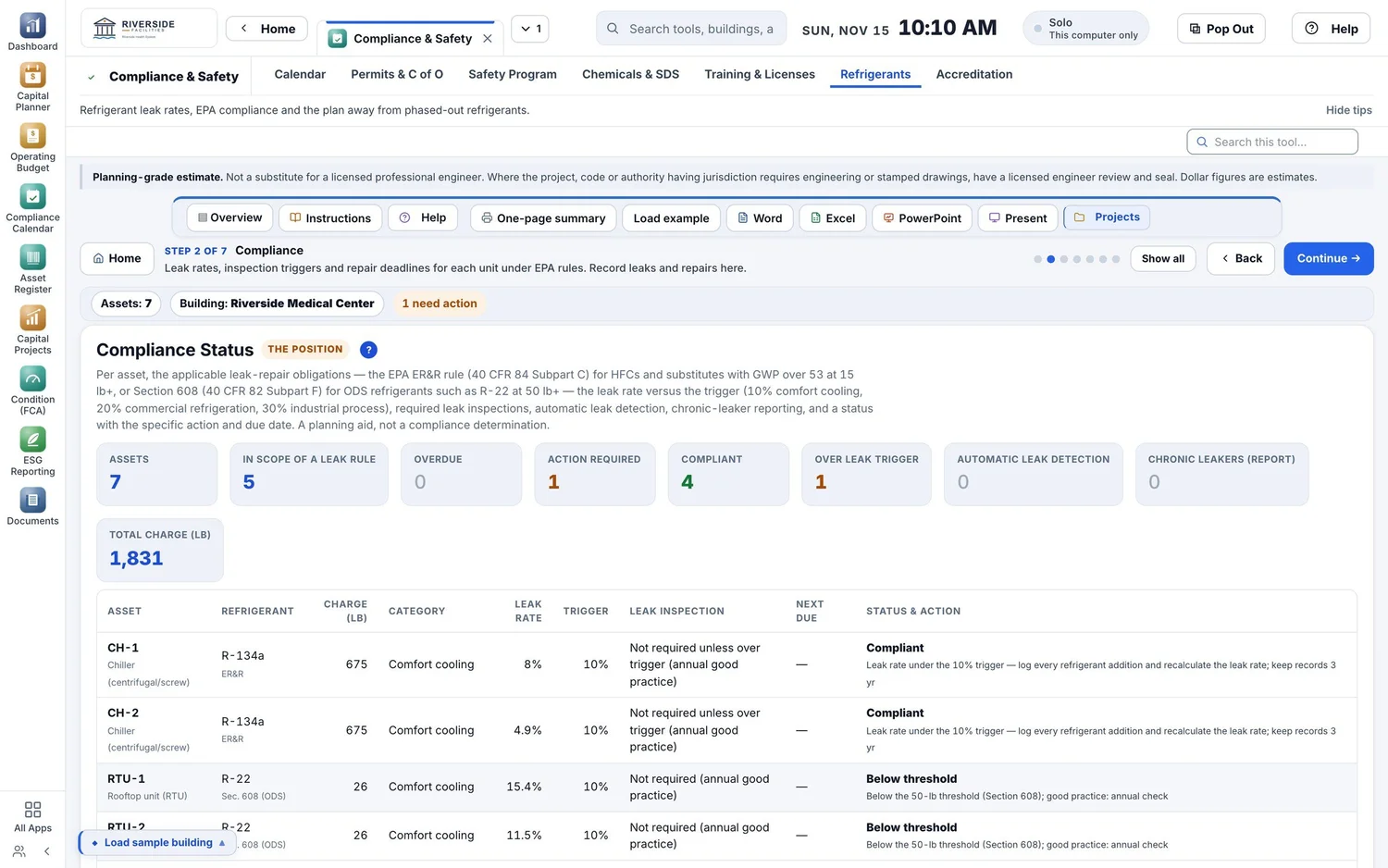
Every Compliance tab lists the obligations that apply to the building from the compliance library, with citation, frequency, last done and next due, and the same dates as the Compliance Calendar. Equipment rows come from what the building's records show.
Grocery and Retail Refrigeration (EPA, Clean Air Act Section 608 and the AIM Act)
- Systems with a full charge of 1,500 lb or more of an HFC: automatic leak detection audited and calibrated every year, records kept 3 years (40 CFR 84)
- HFC systems of 15 lb or more: leak rate worked out at each refrigerant addition and repaired within 30 days when over the threshold, from January 1, 2026
- The retail playbook flags R-404A systems and systems 15 years or older, and explains the EPA GWP limits for new retail-food refrigeration systems; existing systems may keep running and be serviced
Food Sales and Storage in Stores
- Retail food permit and health inspection, at least every 6 months under the FDA Food Code model unless a risk-based schedule allows longer, where the store prepares food
- High-piled combustible storage permit over 500 square feet (IFC Chapter 32)
- Storage rack inspection, marked Confirm
- Permits for tents and temporary structures over 400 square feet, per event
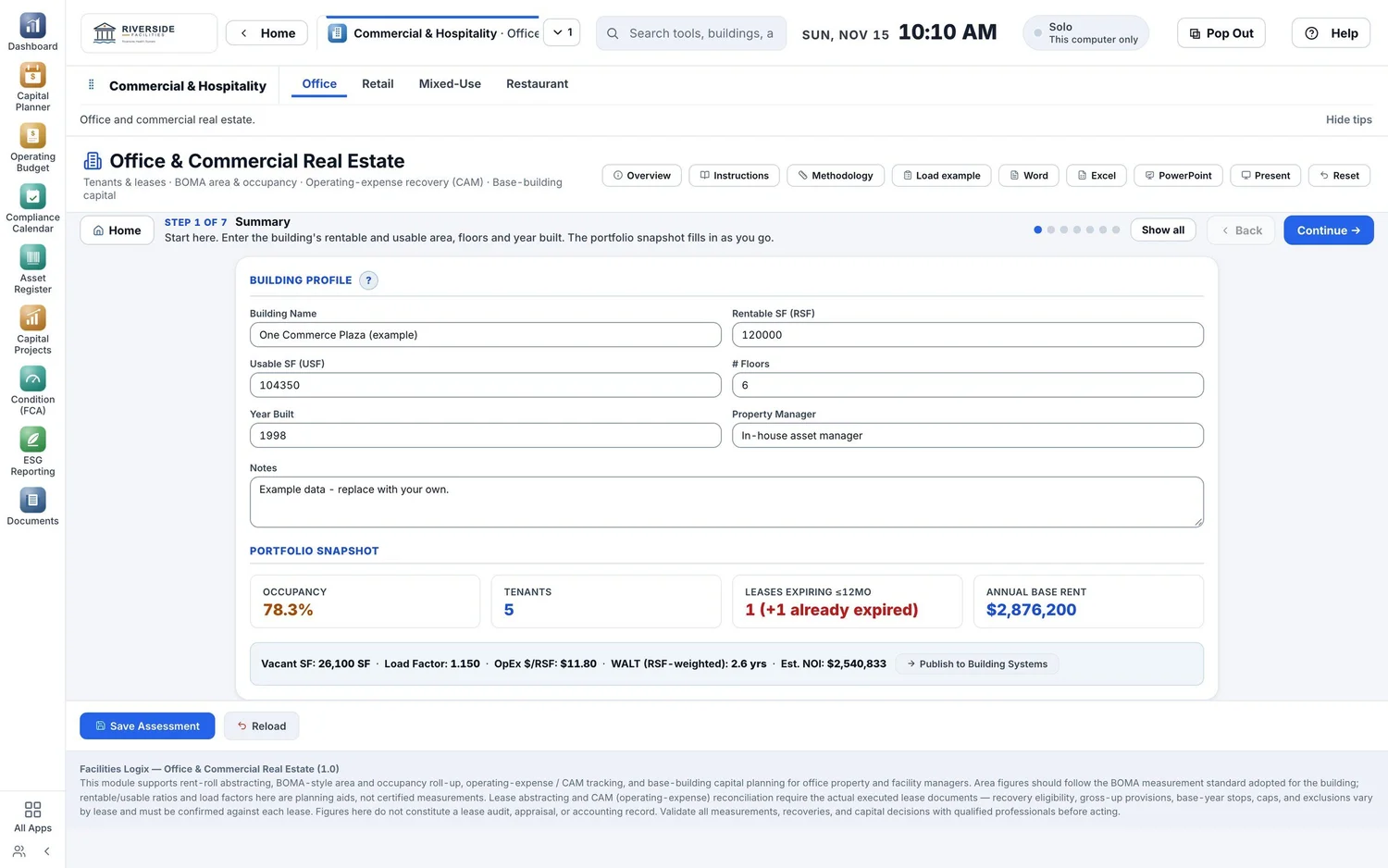
Summary in Office & Commercial Real Estate: start here. Enter the building's rentable and usable area, floors and year built. The portfolio snapshot fills in as you go.
Office Egress Drills (IFC and NFPA 101)
- An annual employee drill for business buildings with 500 or more occupants or more than 100 above or below the level of exit discharge
- High-rise buildings: an annual drill with all occupants
Accessibility (ADA Title III)
- Readily achievable barrier removal in public accommodations, a continuing obligation with an annual review
- Accessible parking space counts, striping and signage, marked Confirm
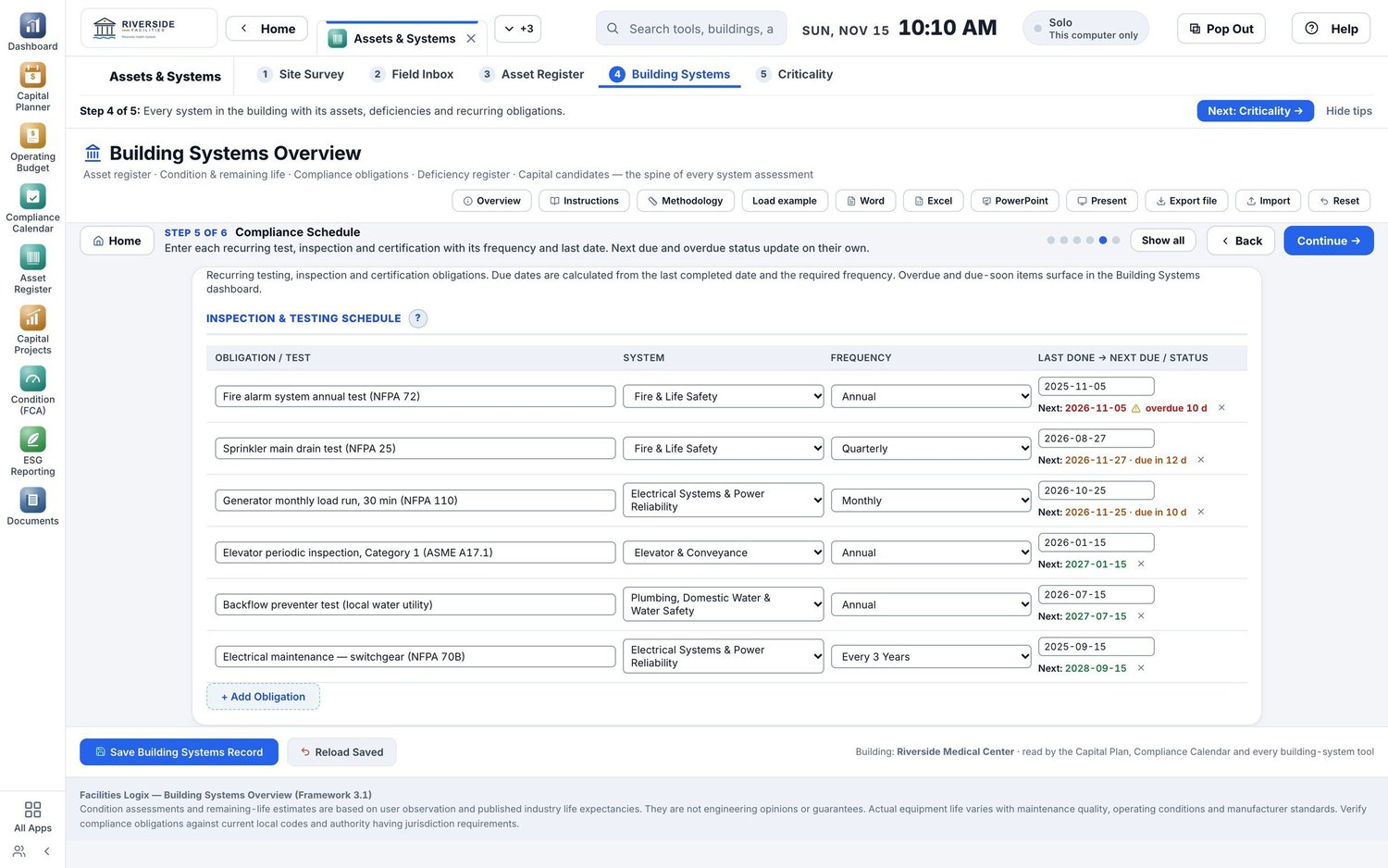
Compliance Schedule in Building Systems Overview: enter each recurring test, inspection and certification with its frequency and last date. Next due and overdue status update on their own.
Garages and Decks
- Parking-structure rows where the property has a garage: New York City Local Law 126 condition assessments and annual observations, the ACI annual walk-through, Fort Lee assessments, and, for mixed-use condominium and cooperative buildings in Florida, the milestone inspection
- Federally funded EV chargers: over 97 percent port uptime and quarterly data (23 CFR 680)
The Building's Own Systems
- Fire alarm (NFPA 72), sprinklers and standpipes (NFPA 25), extinguishers (NFPA 10), emergency lighting (NFPA 101), elevators and escalators (ASME A17.1), boilers (ASME CSD-1), backflow assemblies and the Legionella water management program (ASHRAE 188), each at its own interval
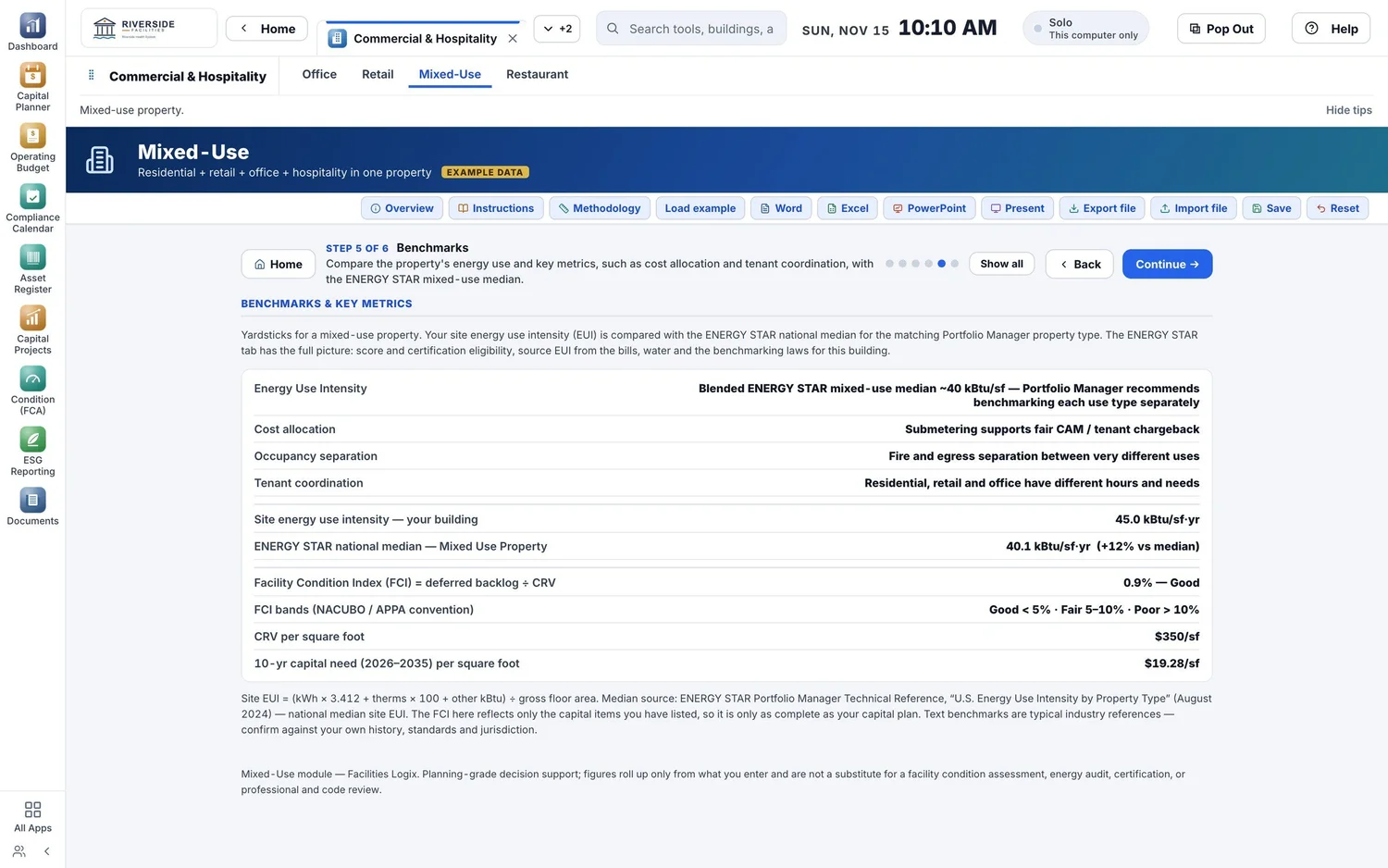
Benchmarks in Mixed-Use: compare the property's energy use and key metrics, such as cost allocation and tenant coordination, with the ENERGY STAR mixed-use median.
Benchmarking and Performance Standards
- The ENERGY STAR tab lists the benchmarking and building performance standard laws from the library that apply to the building, or that depend on a missing state, city, sector or floor area
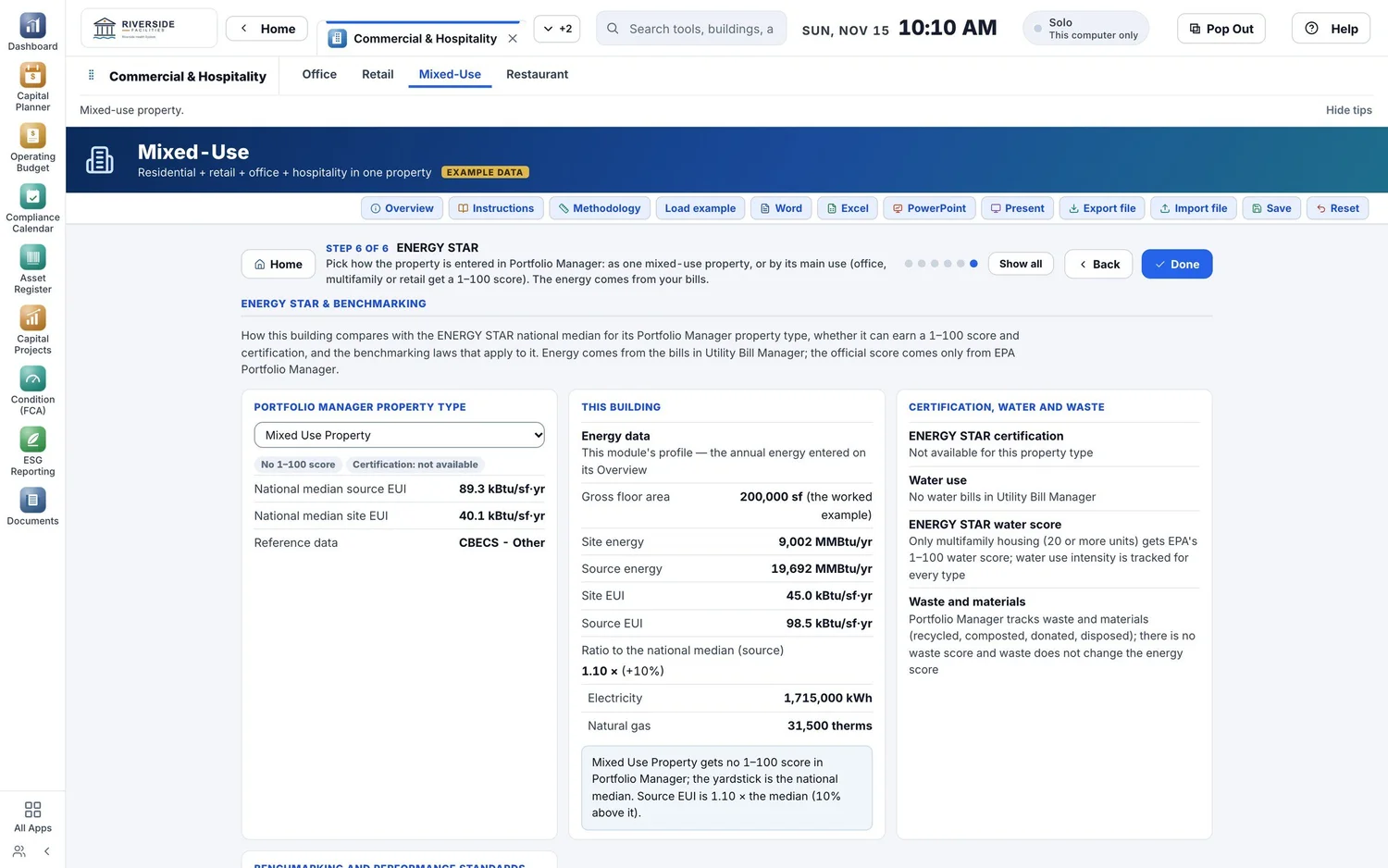
ENERGY STAR in Mixed-Use: pick how the property is entered in Portfolio Manager: as one mixed-use property, or by its main use (office, multifamily or retail get a 1–100 score). The energy comes from your bills.
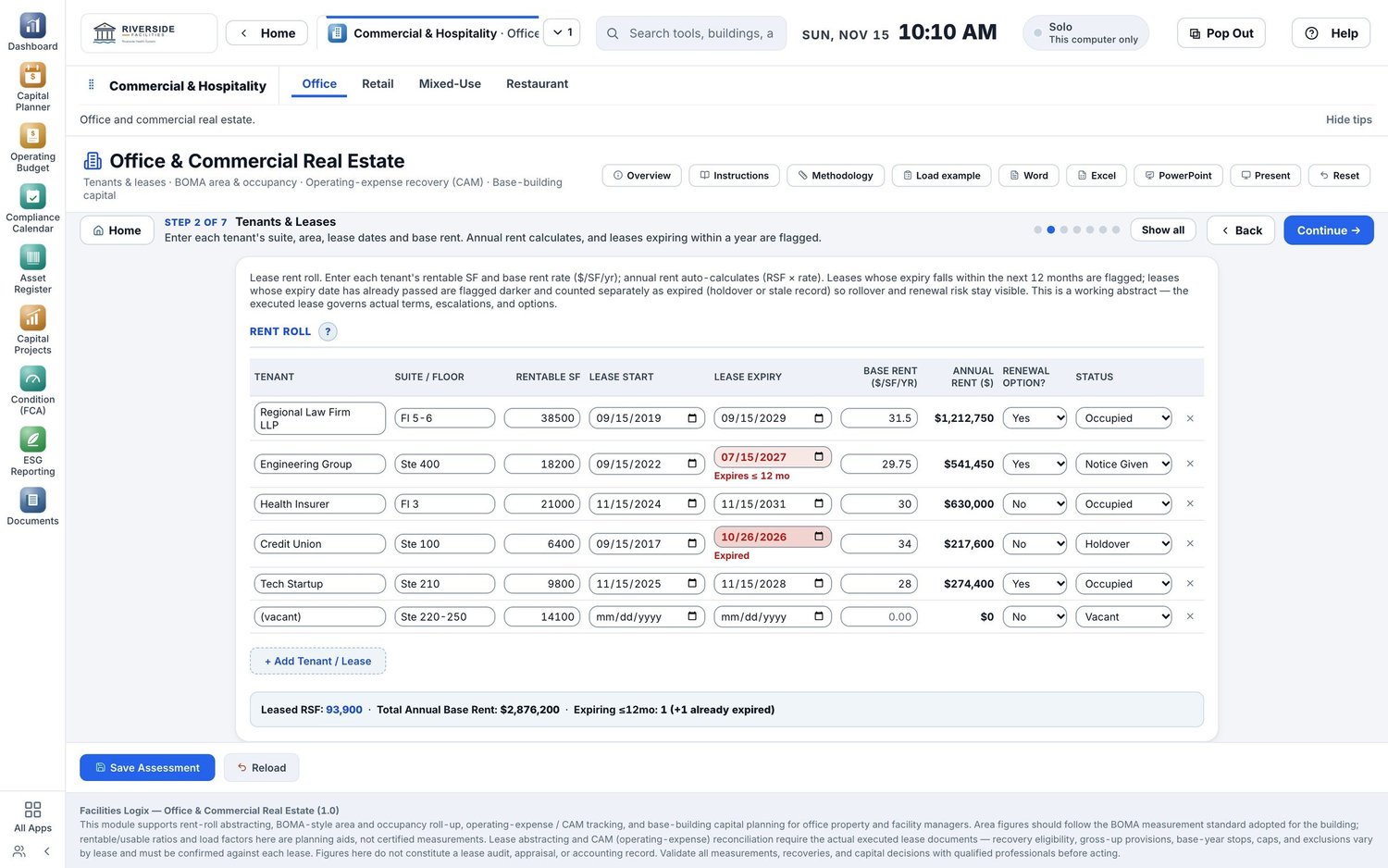
Tenants & Leases in Office & Commercial Real Estate: enter each tenant's suite, area, lease dates and base rent. Annual rent calculates, and leases expiring within a year are flagged.
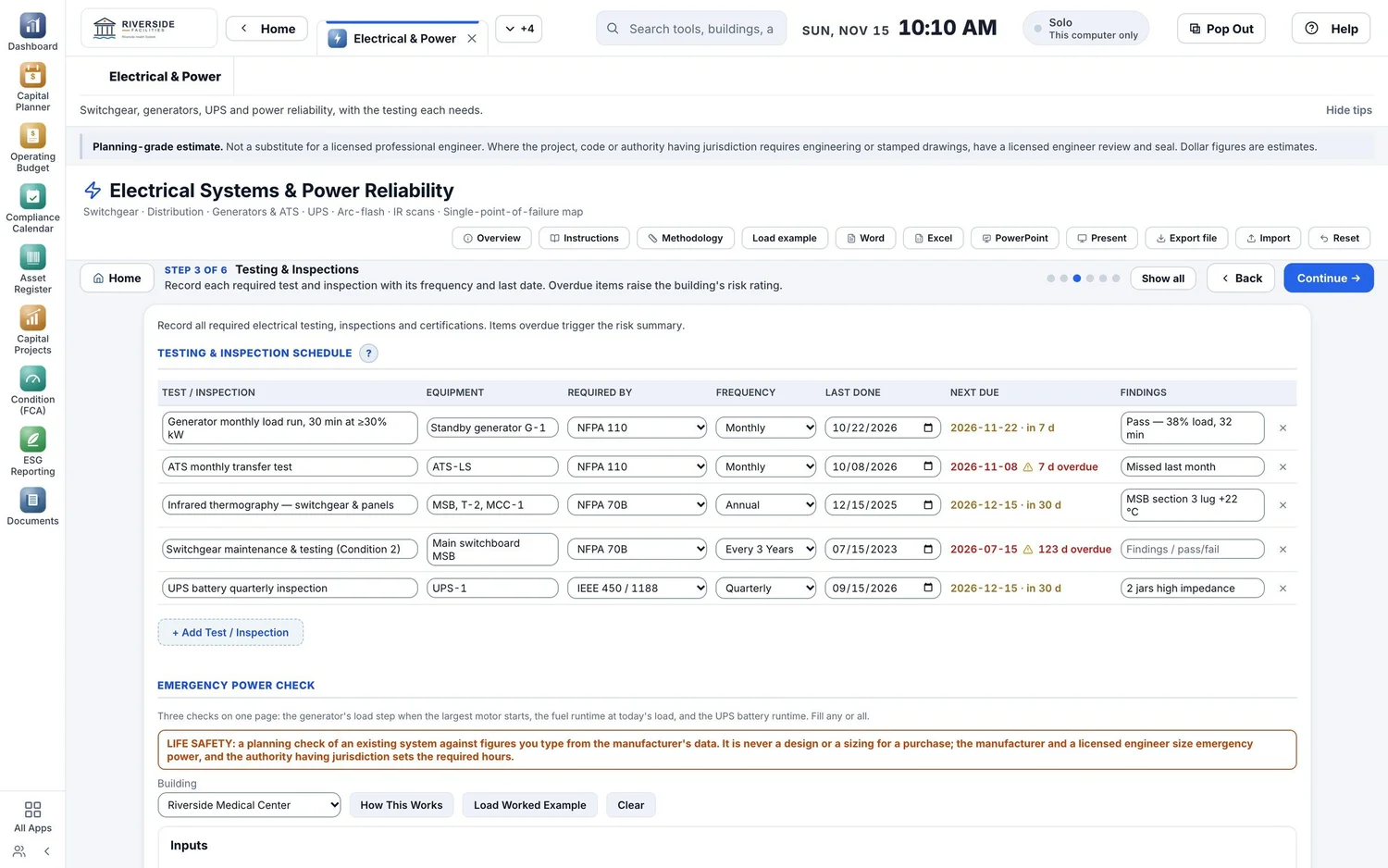
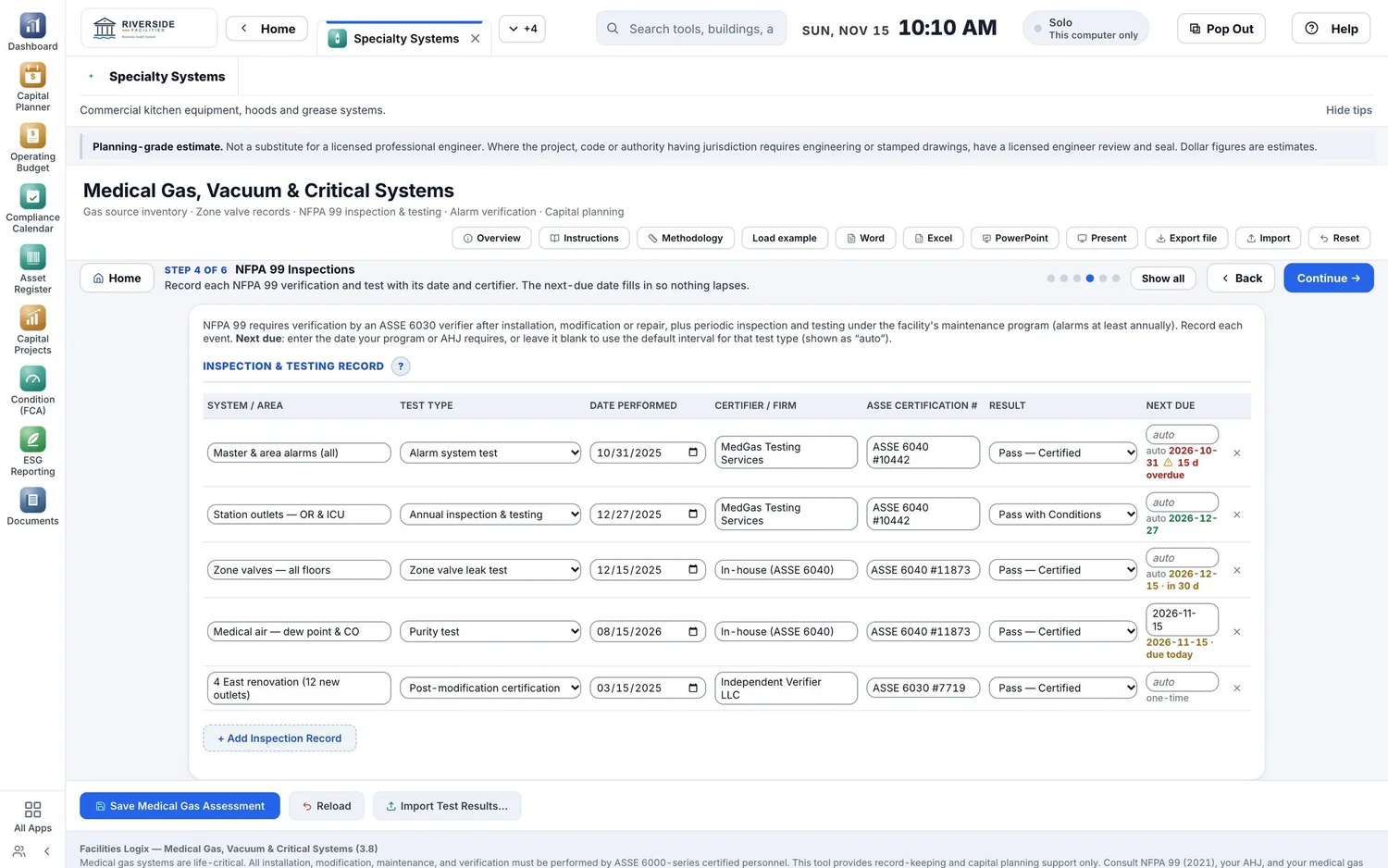
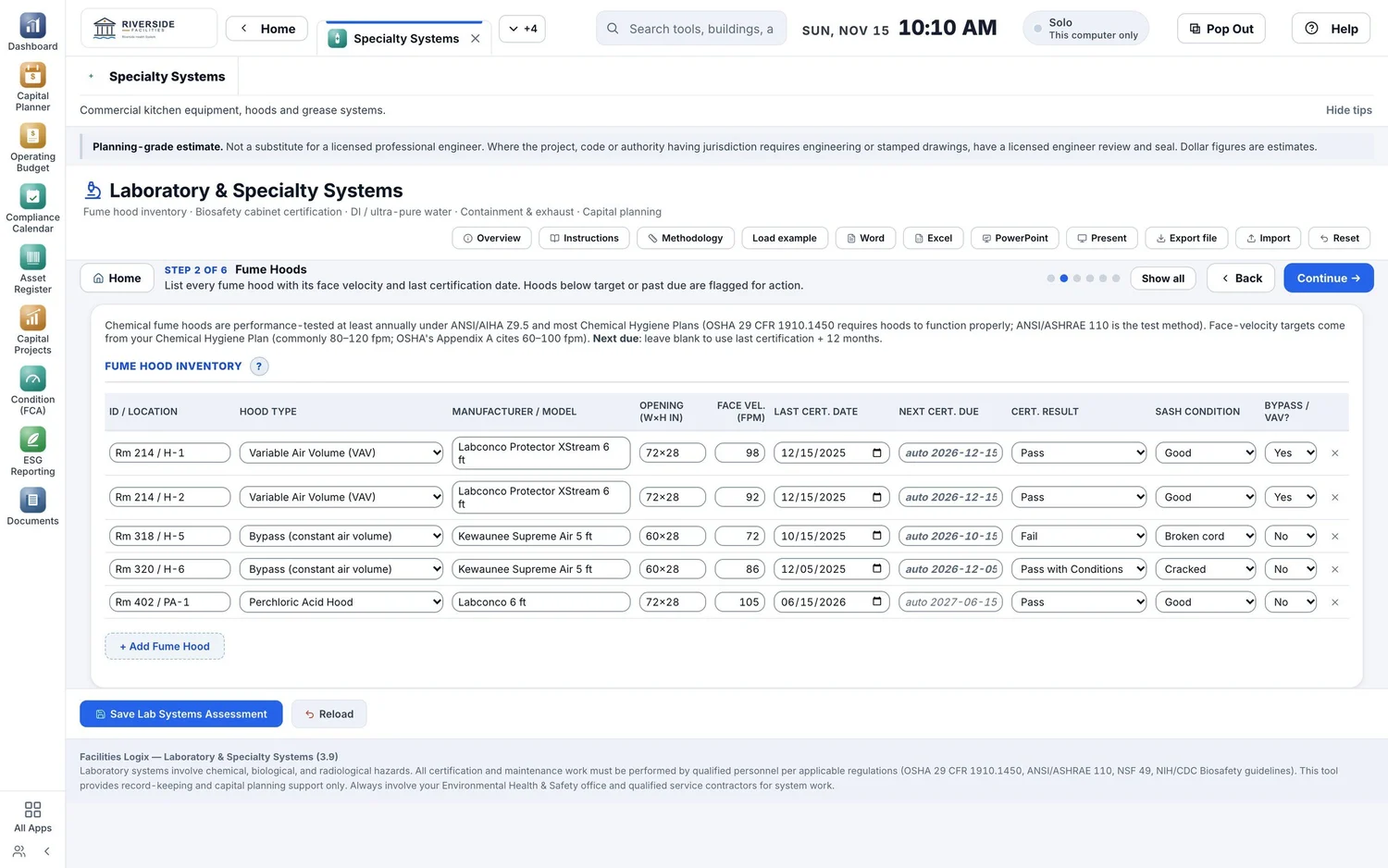
Three Playbooks for Three Ways of Earning Rent
Office and Commercial Real Estate
- Building profile: rentable and usable square feet, floors, year built, property manager
- Rent roll: tenant, suite or floor, rentable square feet, lease start and expiry, base rent per square foot, annual rent, renewal option and status
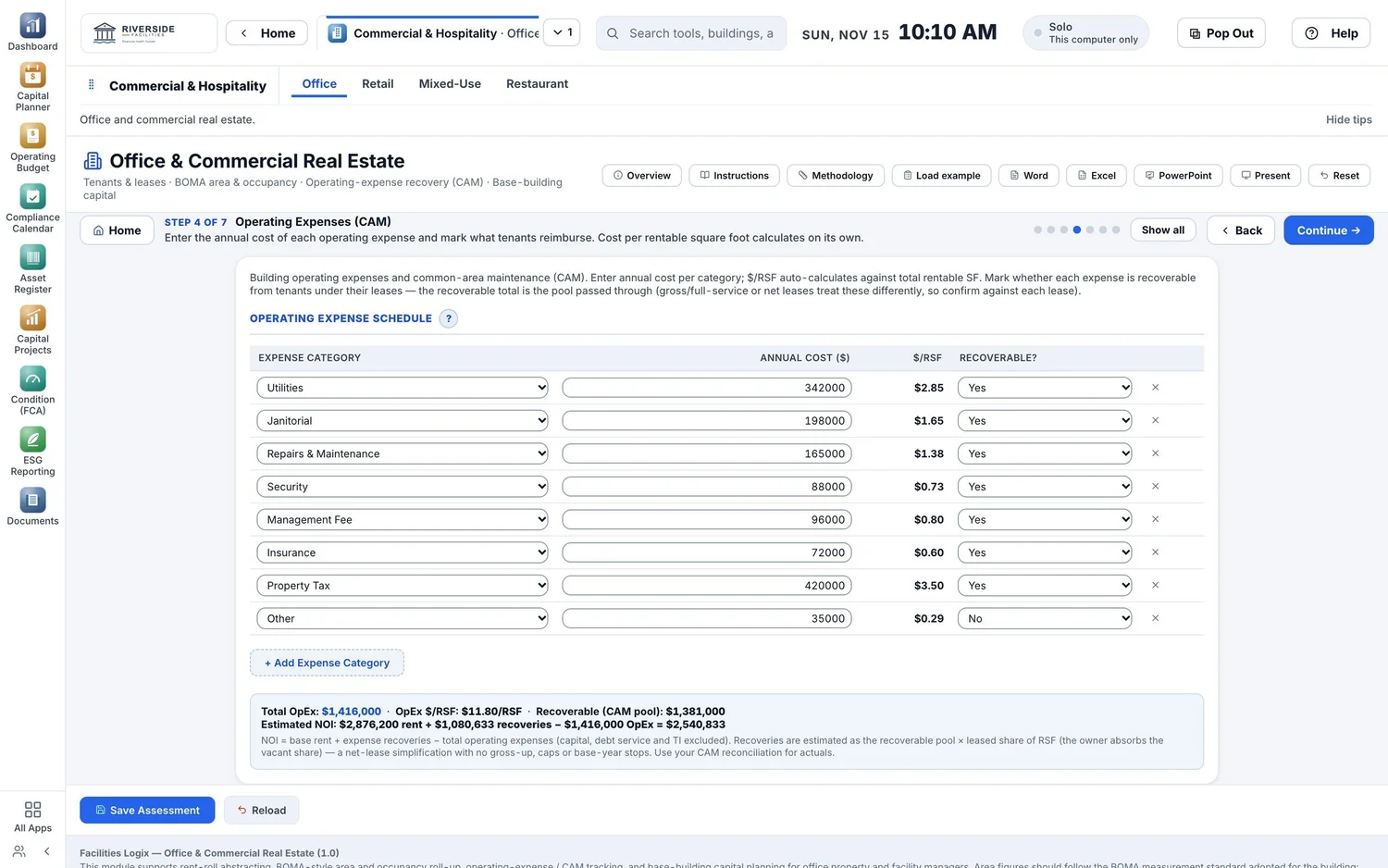
- Operating expense schedule by category with annual cost, cost per rentable square foot and whether each is recoverable
- Base-building capital: roof, HVAC plant, elevators, electrical and envelope, kept separate from tenant improvements
Retail and Grocery Portfolio
- Chain profile: banner, primary format (grocery, big-box, convenience, specialty, restaurant or pharmacy), store count and portfolio area
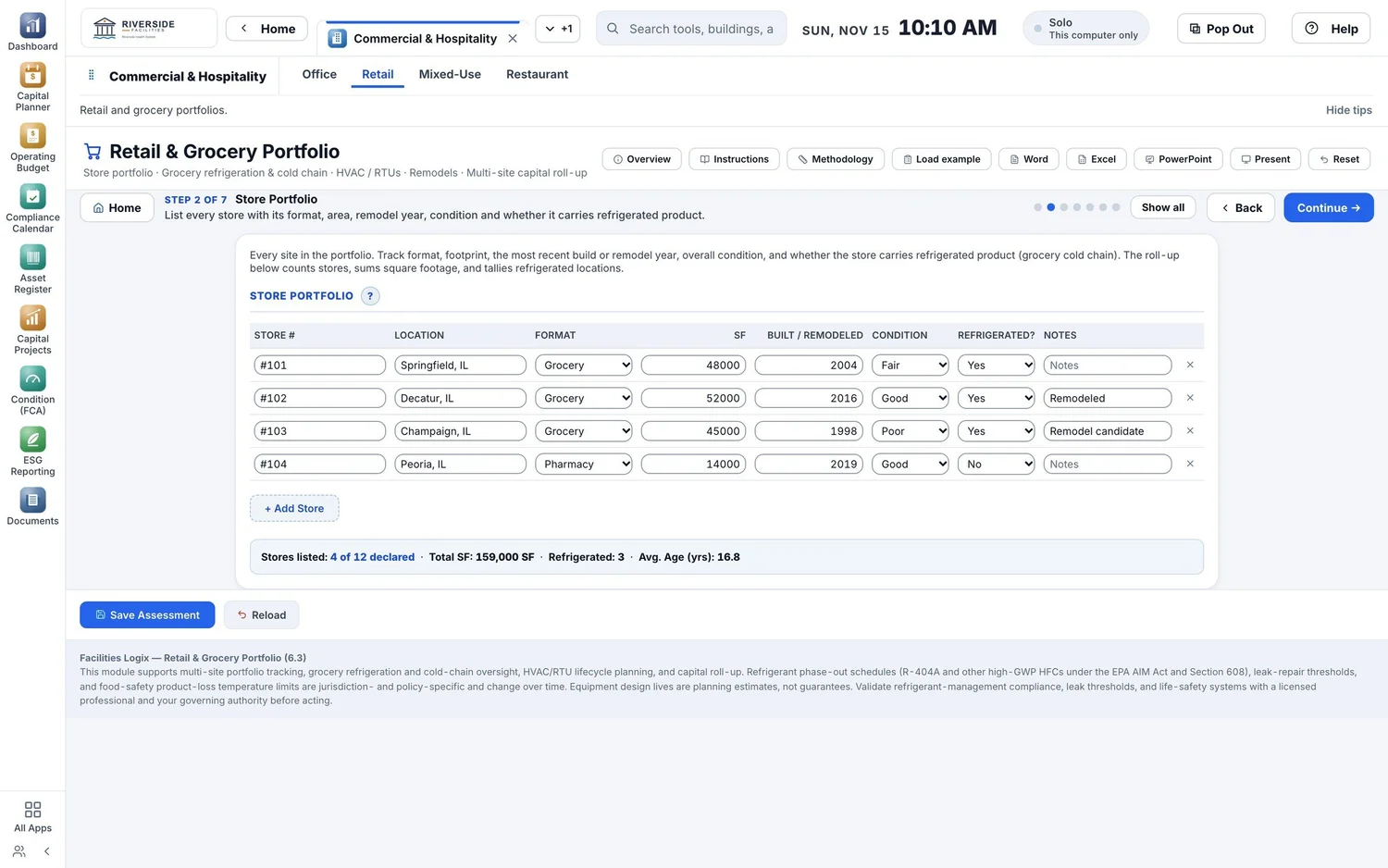
- Every store: number, location, format, area, built or remodeled year, condition, and whether it carries refrigerated product
- Refrigeration: low and medium-temperature racks, walk-in coolers and freezers, display cases and ice machines, with refrigerant (R-448A, R-449A, R-407A, R-404A, R-290 or CO2), install year, setpoint, condition and last PM
- Building systems: rooftop units, lighting, automatic doors, fire and parking, with design life and remaining life
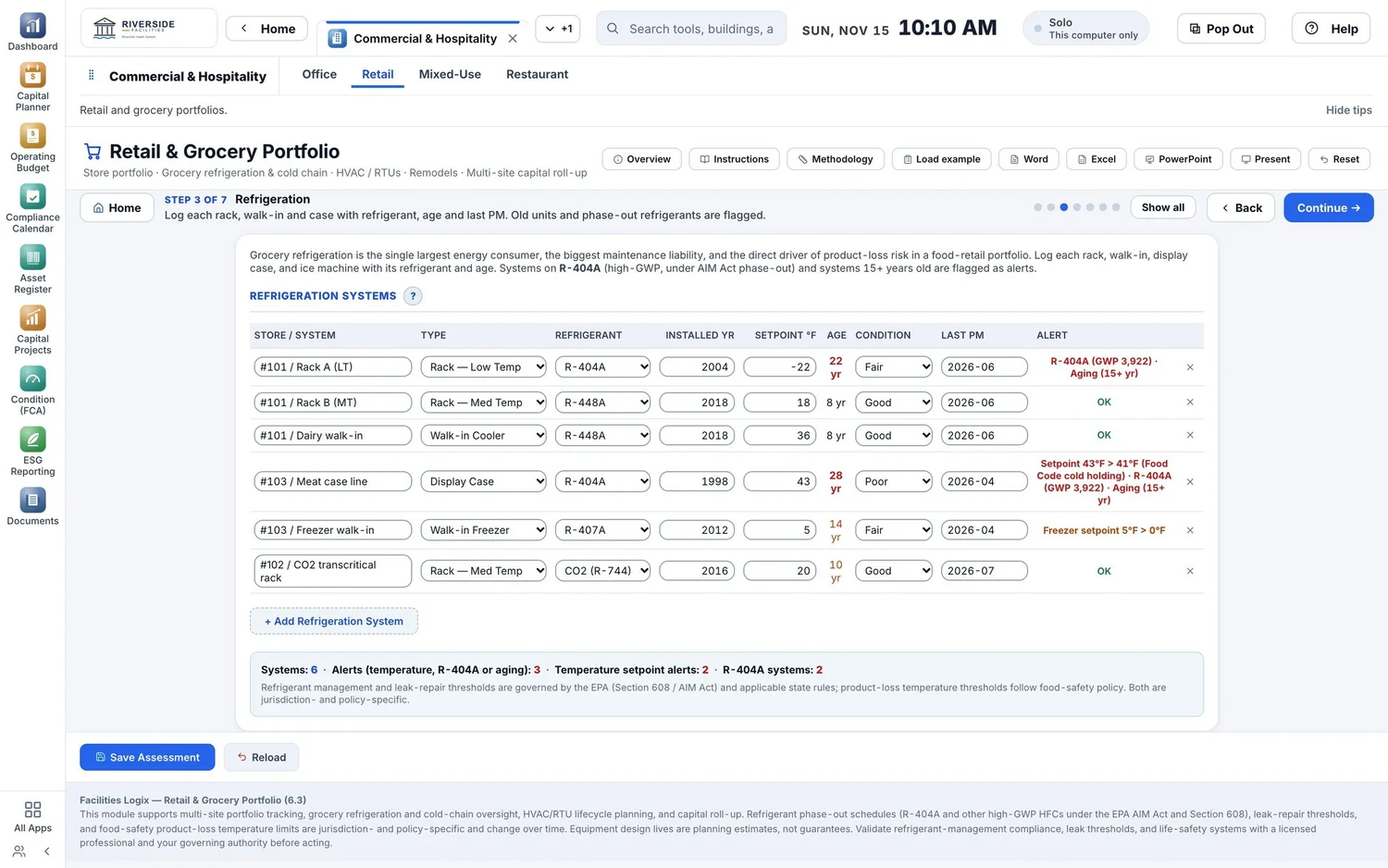
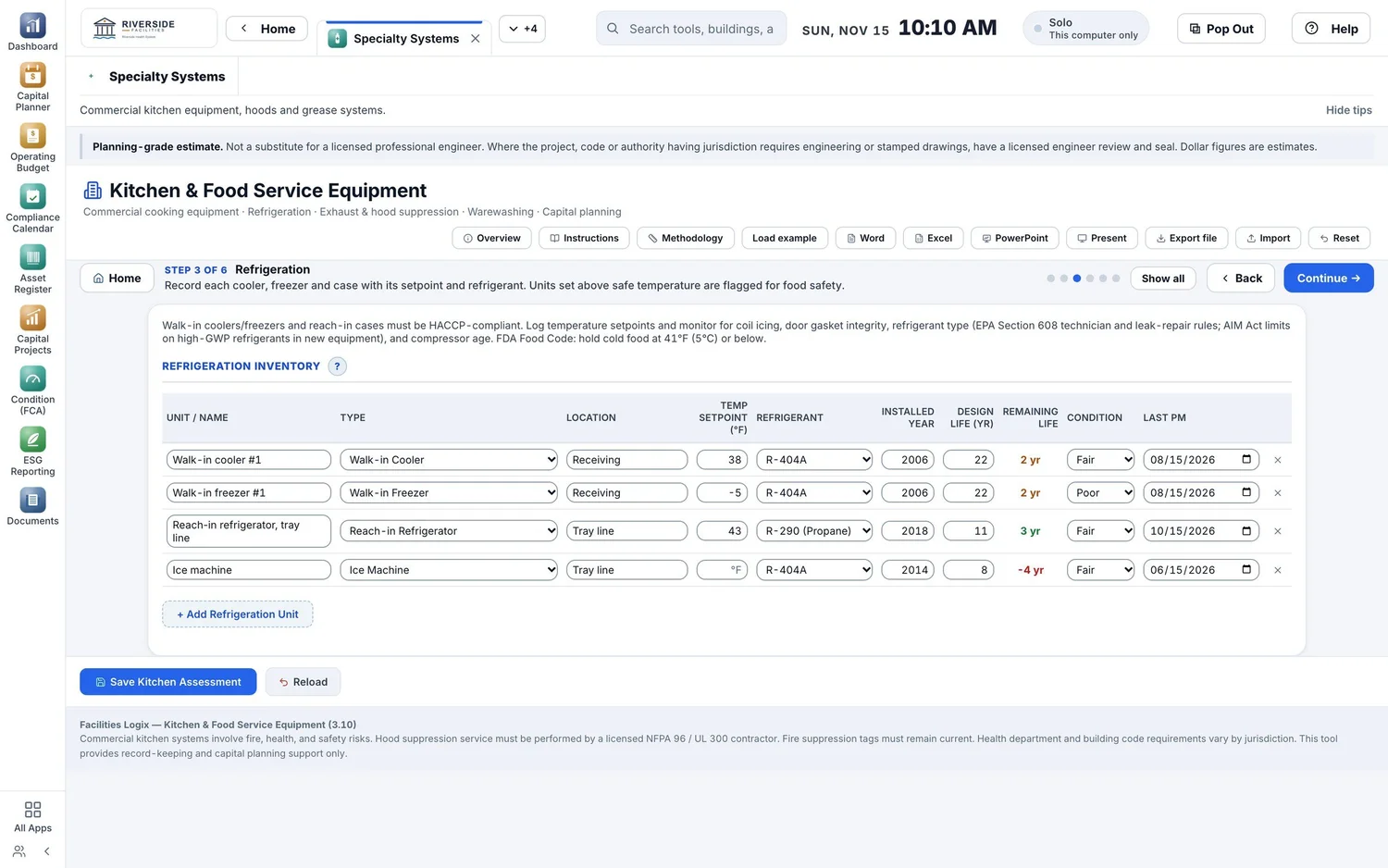
Refrigeration in Retail & Grocery Portfolio: log each rack, walk-in and case with refrigerant, age and last PM. Old units and phase-out refrigerants are flagged.
Mixed-Use
- Primary mix: residential and retail, office and retail, all three, hotel and residential, or live-work
- Shared central HVAC and tenant systems (quarterly), multiple elevator banks (monthly), domestic water (every six months), mixed-occupancy fire alarm and sprinklers (annual), standby generator (monthly), cooling tower and central plant (every six months, with Legionella management), parking and access (quarterly), shared loading and trash (quarterly), submetering and cost allocation (annual), roofing (every six months)
Published to the Portfolio
- Publish to Building Systems sends base-building and store capital into Assets & Systems for the portfolio roll-up
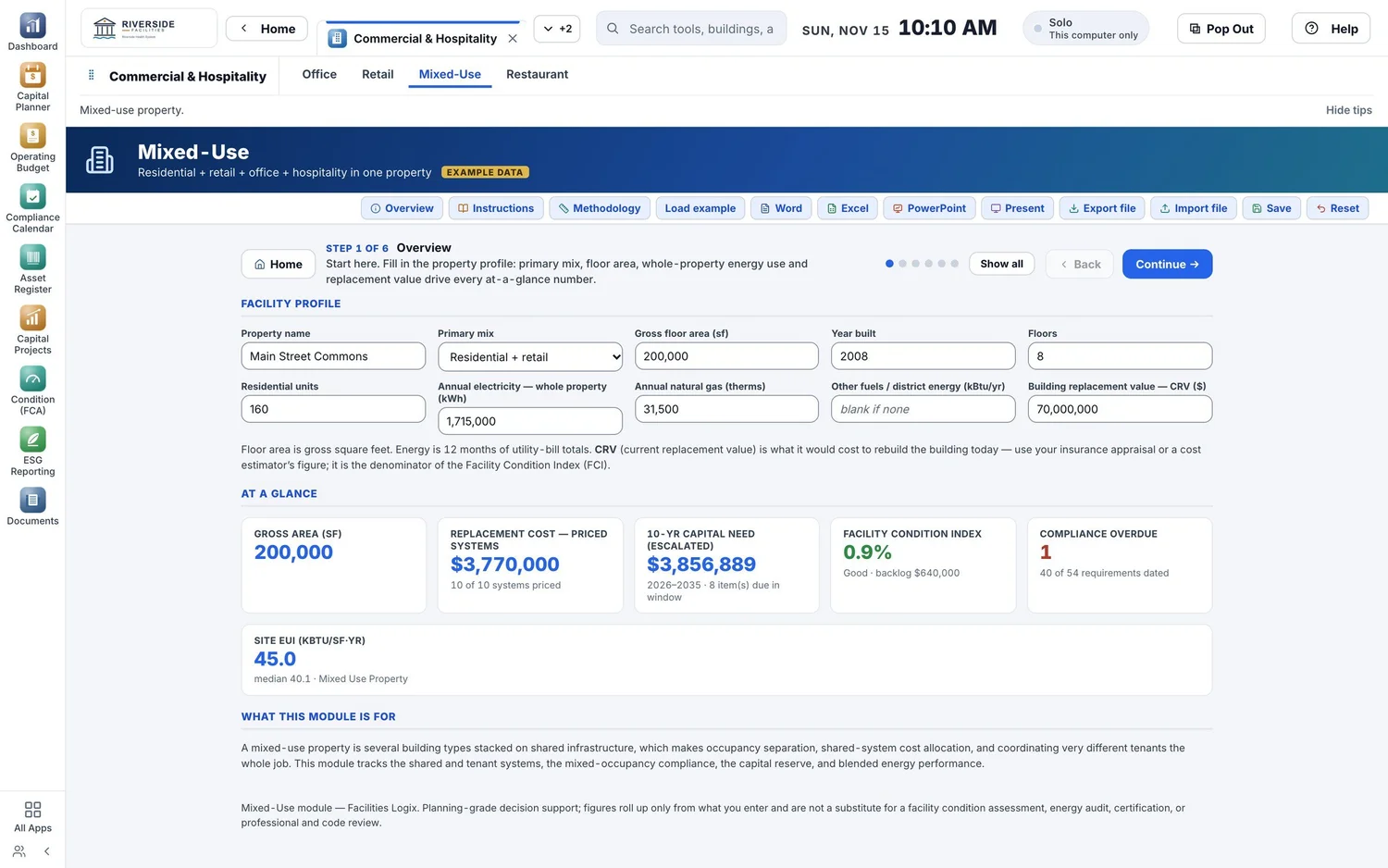
Overview in Mixed-Use: start here. Fill in the property profile: primary mix, floor area, whole-property energy use and replacement value drive every at-a-glance number.
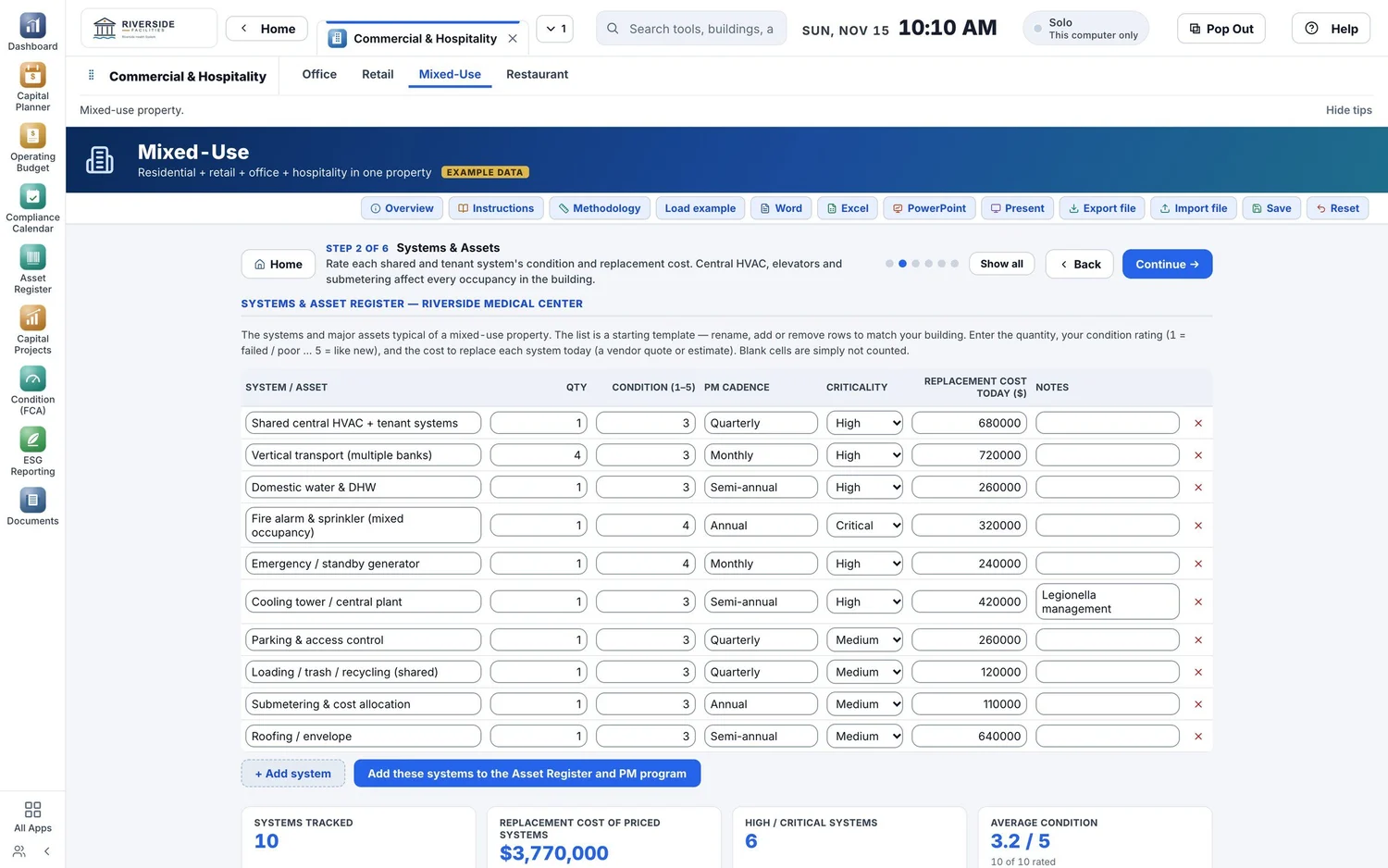
Mixed-use buildings carry systems for several kinds of tenants, so each one starts with its own list.
Flags That Find the Next Problem
Lease Rollover
- Leases expiring within 12 months flagged; leases already past expiry flagged darker and counted as expired (holdover or a stale record)
Refrigeration Alerts
- Walk-in coolers and display cases set above 41 °F (FDA Food Code cold holding) flagged; walk-in freezers above 0 °F warned
- Systems on R-404A and systems 15 years or older flagged
- Racks are not temperature-checked, because their setpoint is suction temperature, not product temperature
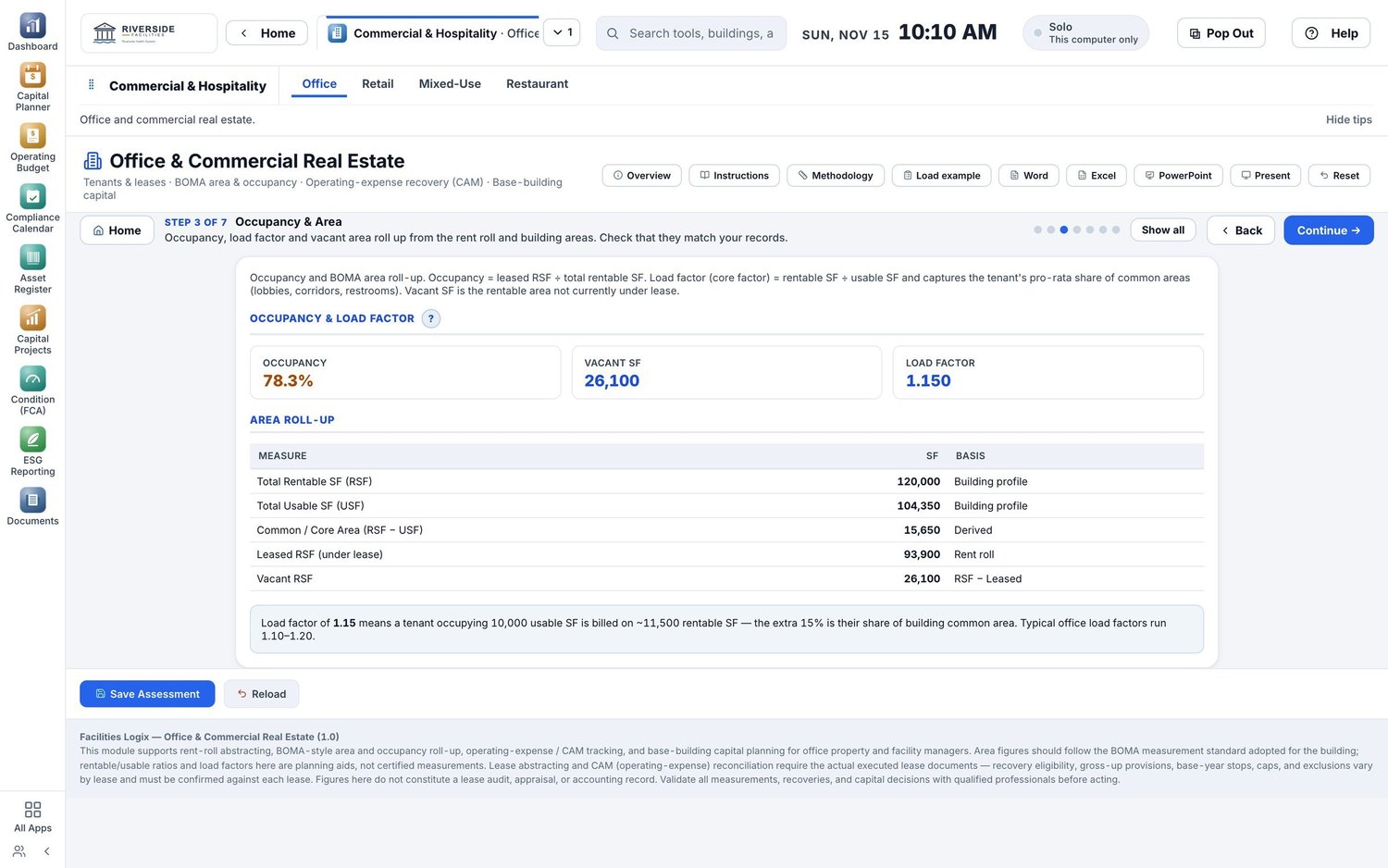
Occupancy & Area in Office & Commercial Real Estate: occupancy, load factor and vacant area roll up from the rent roll and building areas. Check that they match your records.
Rooftop Unit Life
- Remaining life = install year + design life - current year, with about 15 years the common planning life for packaged rooftop units
- Units past their life counted for the replacement program
Live Monitoring
- Air handler, rooftop unit, chiller, boiler, cooling tower, walk-in cooler and meter templates with starting limits you set; an out-of-limit reading becomes a numbered work order
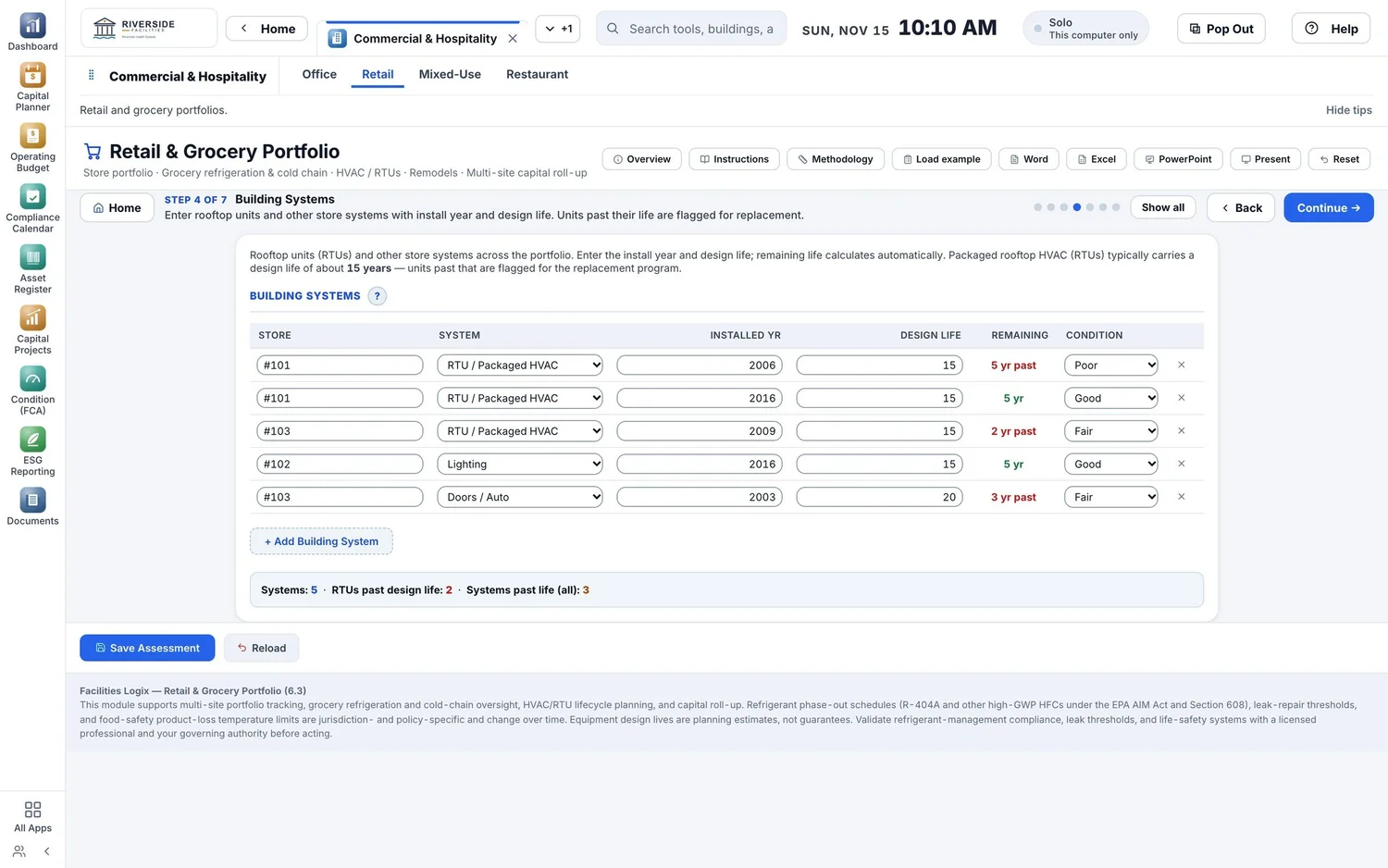
Building Systems in Retail & Grocery Portfolio: enter rooftop units and other store systems with install year and design life. Units past their life are flagged for replacement.
Ready for the Asset Review and the Lender
Portfolio Snapshots
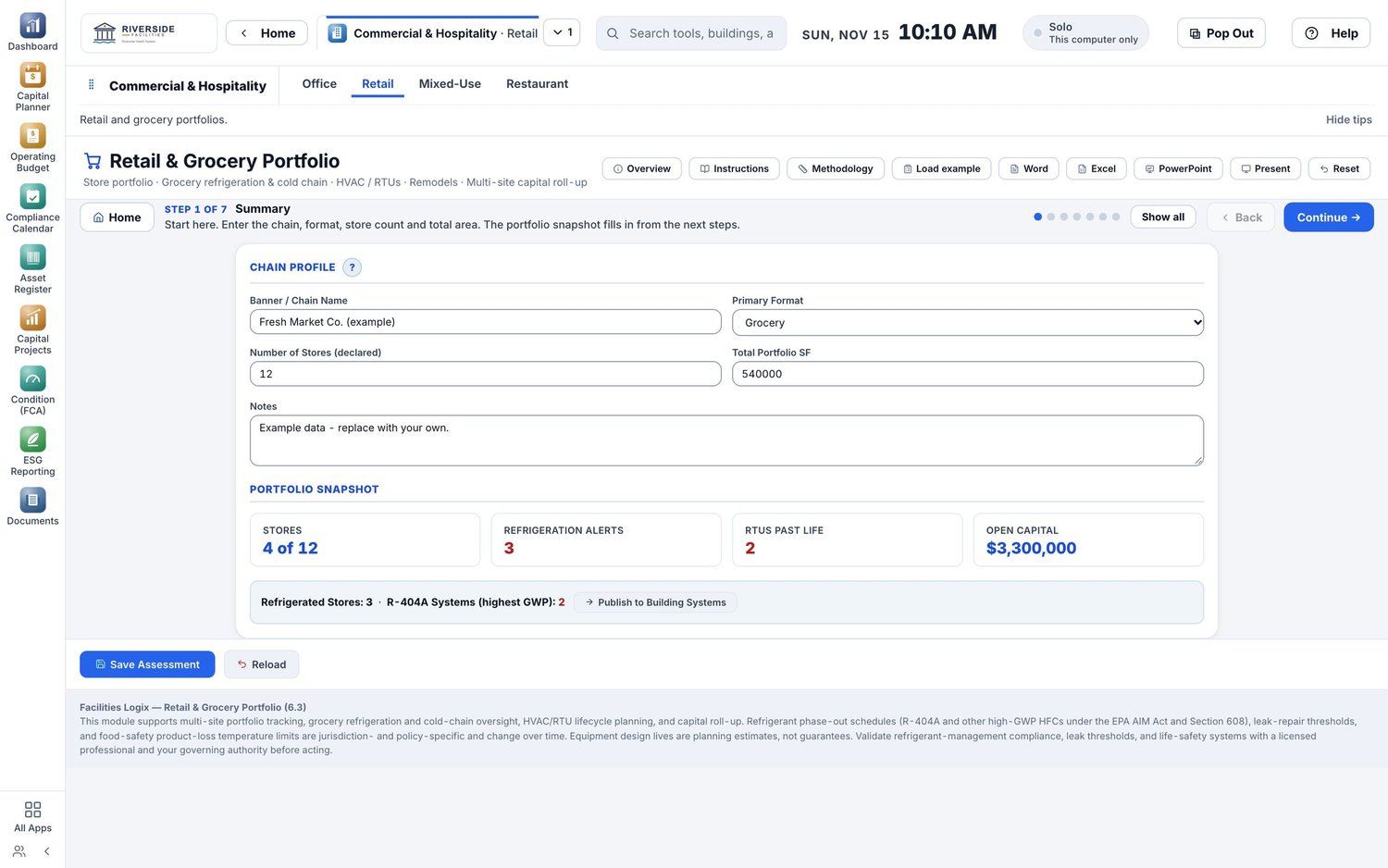
Office: occupancy, tenants, leases expiring within 12 months, annual base rent and vacant area. Retail: stores, refrigeration alerts, rooftop units past life and open capital.
Learn MoreShow Less
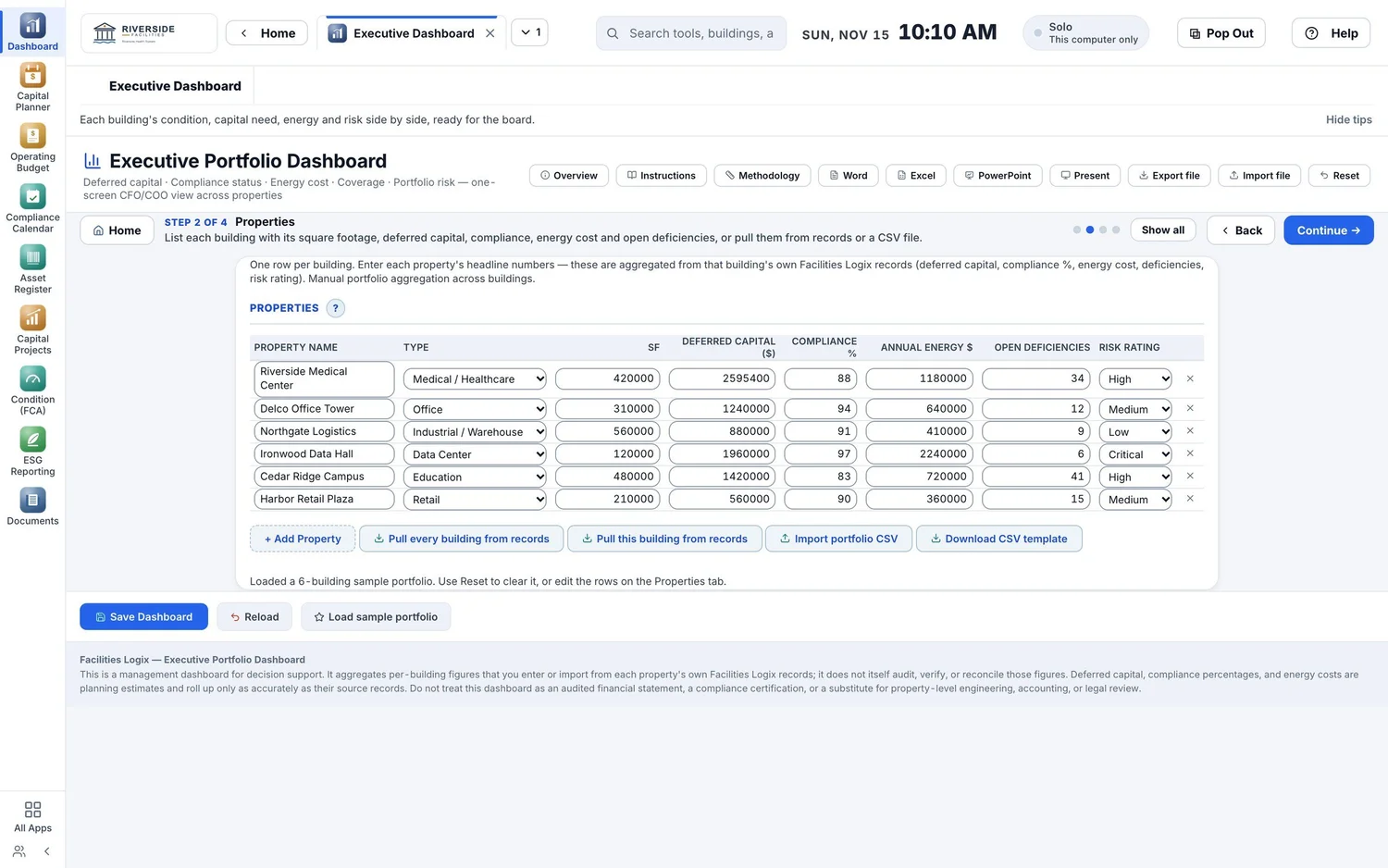
Rent at risk is the first number an owner needs. The snapshot shows it before a lease quietly expires.
- Office briefing opens with the leases to resolve, their area and annual rent
- WALT: weighted average lease term by rentable area
- Estimated NOI build-up: rent plus recoveries minus operating expenses
- Retail briefing: fix warm cases now, fund rooftop units past life, plan R-404A transition
Per-Store Capital Rollup
Rooftop unit replacement, refrigerant transition, remodels and LED upgrades totaled by store, so you see where capital concentrates.
Learn MoreShow Less
Capital goes further when it goes to the stores with the oldest rooftop units and riskiest refrigeration first, not spread evenly.
- A capital-by-store chart names the store with the largest share of the program
- Refrigeration systems charted by refrigerant, highest GWP first
- Rooftop units past their 15-year planning life counted for replacement
- Publish sends refrigeration and rooftop assets with the capital program to Building Systems
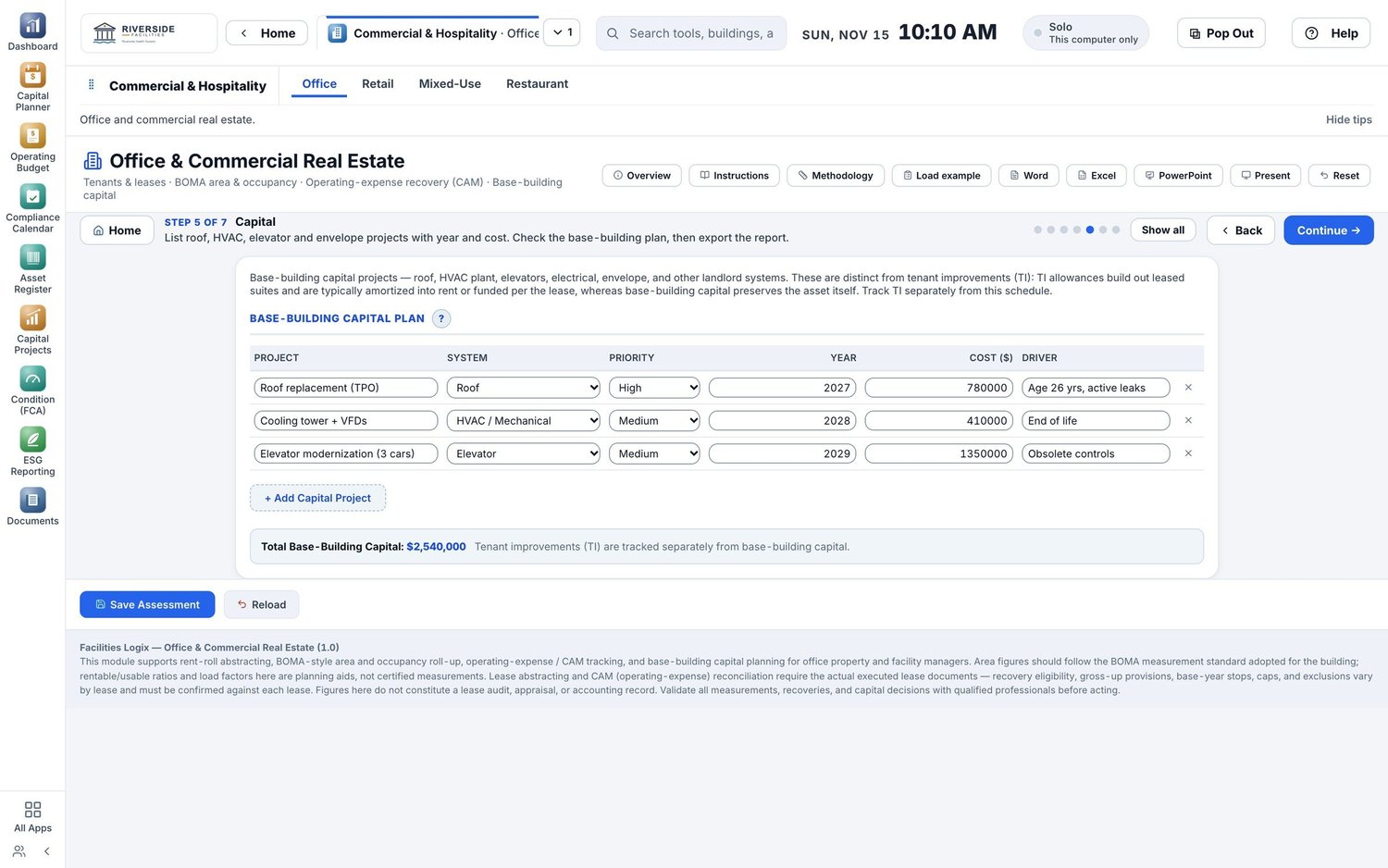
Capital in Office & Commercial Real Estate: list roof, HVAC, elevator and envelope projects with year and cost. Check the base-building plan, then export the report.
ENERGY STAR Tab
Offices get a 1-100 score and can earn ENERGY STAR certification. Retail stores, supermarkets and supercenters get a 1-100 score; malls compare with the national median. Mixed-use properties compare with a blended median of about 40 kBtu per square foot, and Portfolio Manager recommends benchmarking each use separately.
Learn MoreShow Less
Where benchmarking and performance laws apply, a high energy intensity can mean fines; a certified office can market the label.
- Medians, kBtu per square foot site: office 52.9, retail store 51.4, supermarket 196.0
- Strip malls 103.5 and enclosed malls 65.7
- Certification: score 75 or higher on 12 months, verified by a PE or RA, applied for within 120 days
- Benchmarking and performance-standard laws that apply, with projected fines
Word, Excel, PowerPoint and Present
Each playbook exports to Word, Excel and PowerPoint, or shows full screen with Present, and the Compliance tab adds its own report rows.
Learn MoreShow Less
Lenders and owners act on documented numbers. Each export carries the figures behind the asset's income and its capital.
- Office: lease expiry schedule by year, NOI build-up and expenses by category
- Retail: refrigerants by GWP and capital by store
- Mixed-use: Facility Condition Index, 10-year escalated capital need and compliance status
- Exports from a worked example carry a SAMPLE watermark
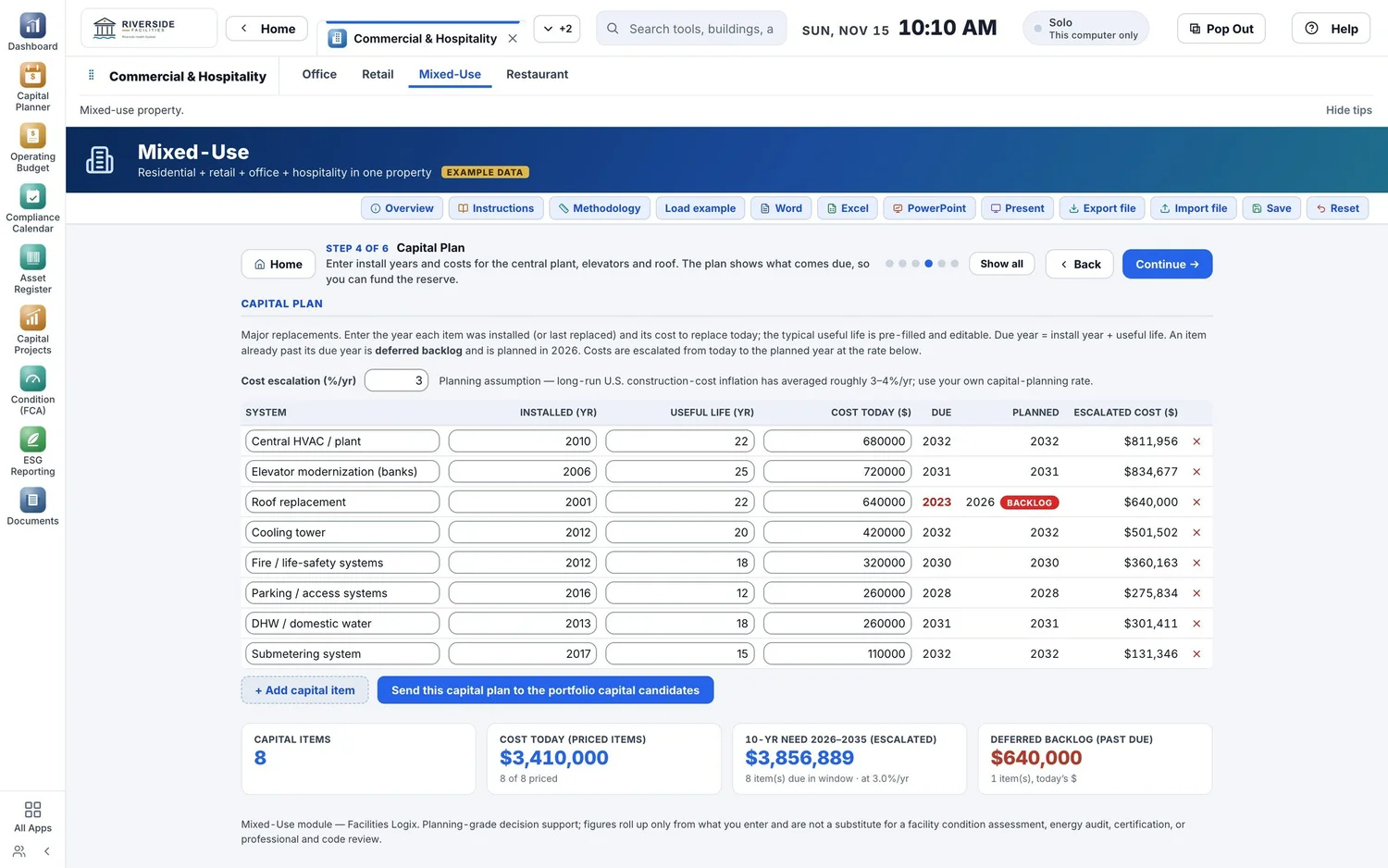
Capital Plan in Mixed-Use: enter install years and costs for the central plant, elevators and roof. The plan shows what comes due, so you can fund the reserve.
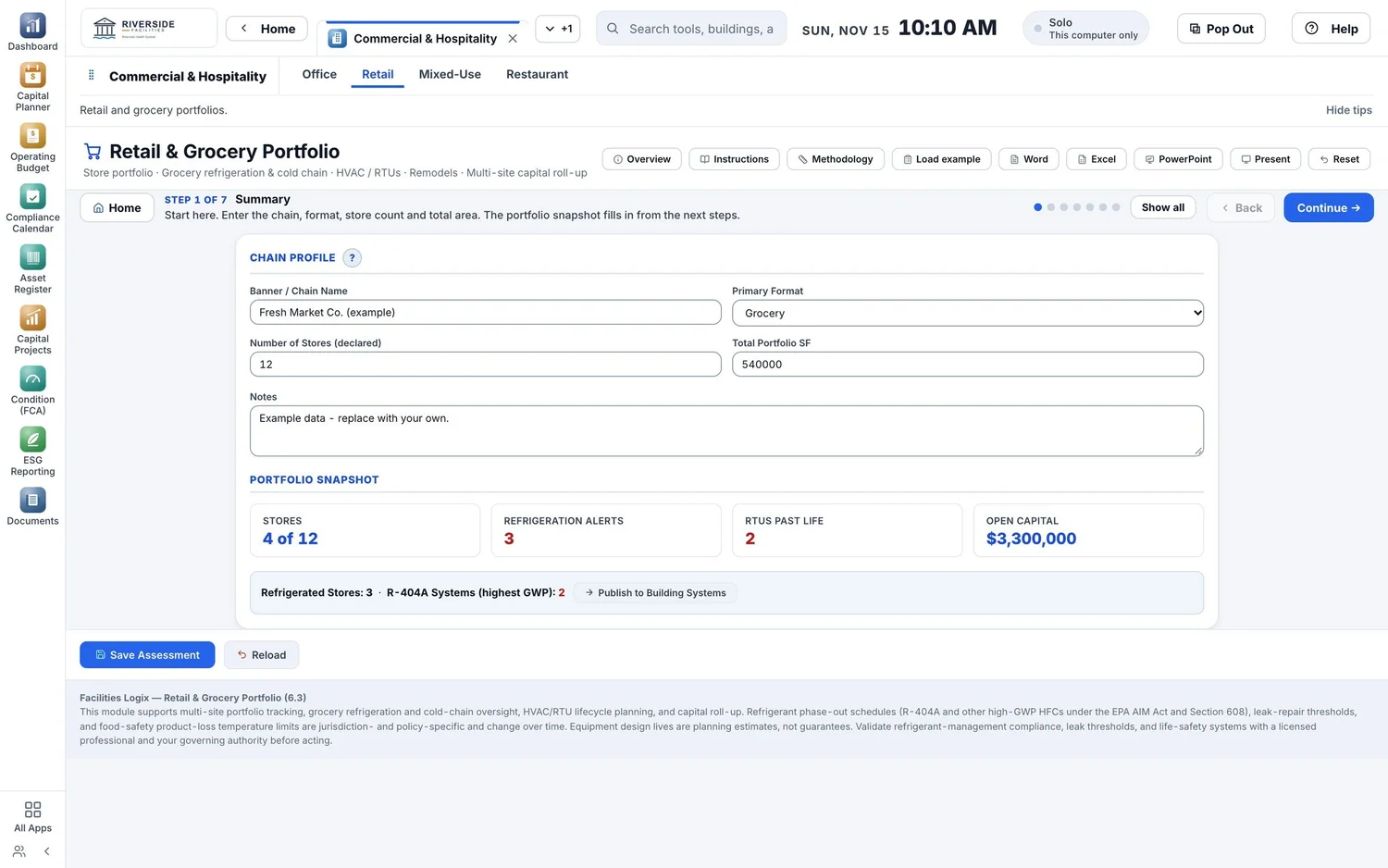
Summary in Retail & Grocery Portfolio: start here. Enter the chain, format, store count and total area. The portfolio snapshot fills in from the next steps.
The Formulas Behind Net Operating Income
Office
- Occupancy = leased rentable square feet ÷ total rentable square feet
- Load factor = rentable ÷ usable square feet, with 1.10-1.20 typical for offices
- Annual rent = rentable square feet × base rent rate
- Operating expense per rentable square foot and the recoverable pool
- Estimated NOI = base rent + recoveries (recoverable pool × leased share) - operating expenses, a net-lease simplification; your CAM reconciliation gives actuals
Retail
- Store count, total area and refrigerated stores
- Refrigeration alerts and rooftop units past life
- Capital per store
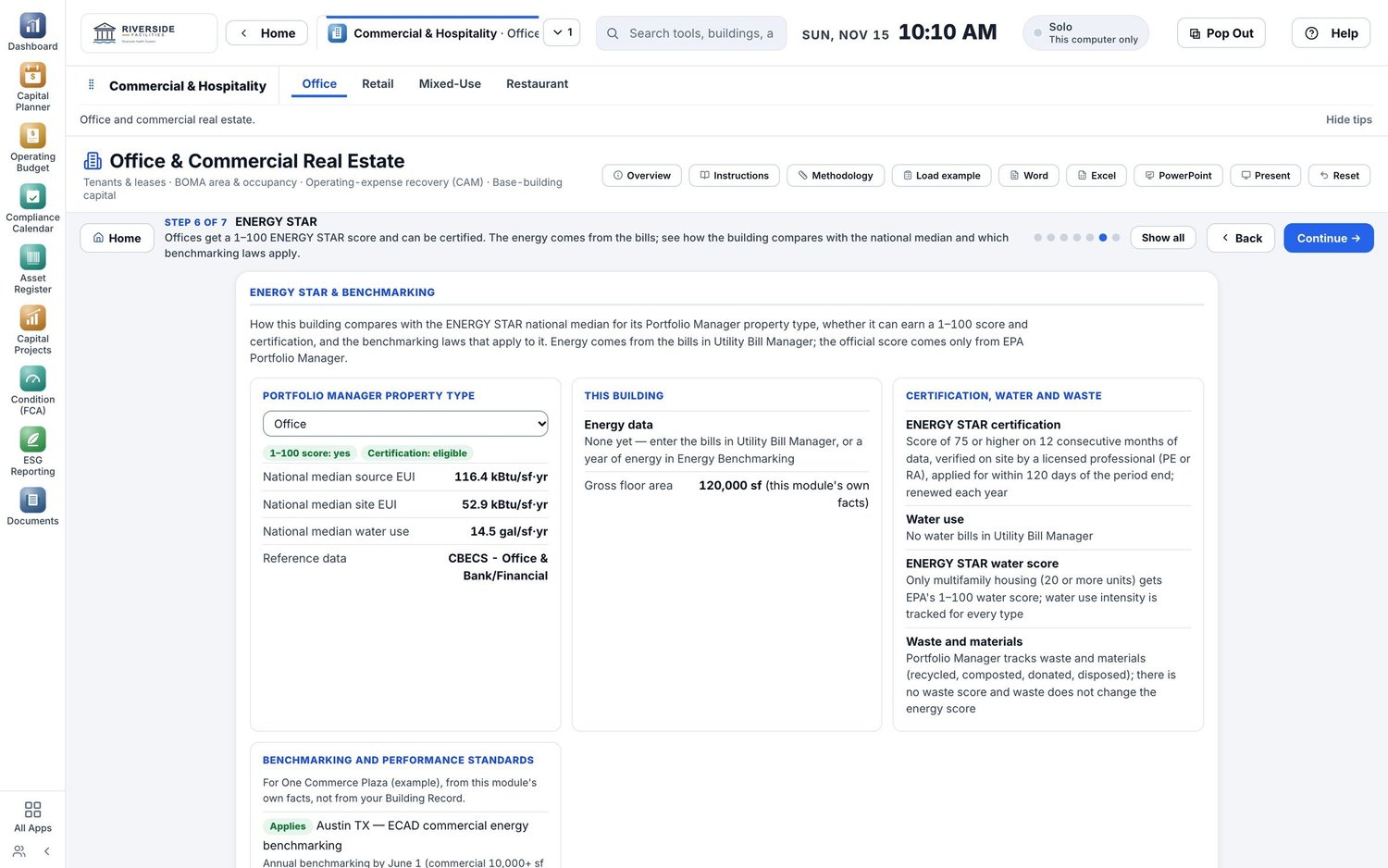
ENERGY STAR in Office & Commercial Real Estate: offices get a 1–100 ENERGY STAR score and can be certified. The energy comes from the bills; see how the building compares with the national median and which benchmarking laws apply.
Mixed-Use
- Blended energy intensity against the mixed-use median
- Submetering for fair cost allocation and tenant chargeback
- Fire and egress separation between very different uses
- Coordination of residential, retail and office hours and needs
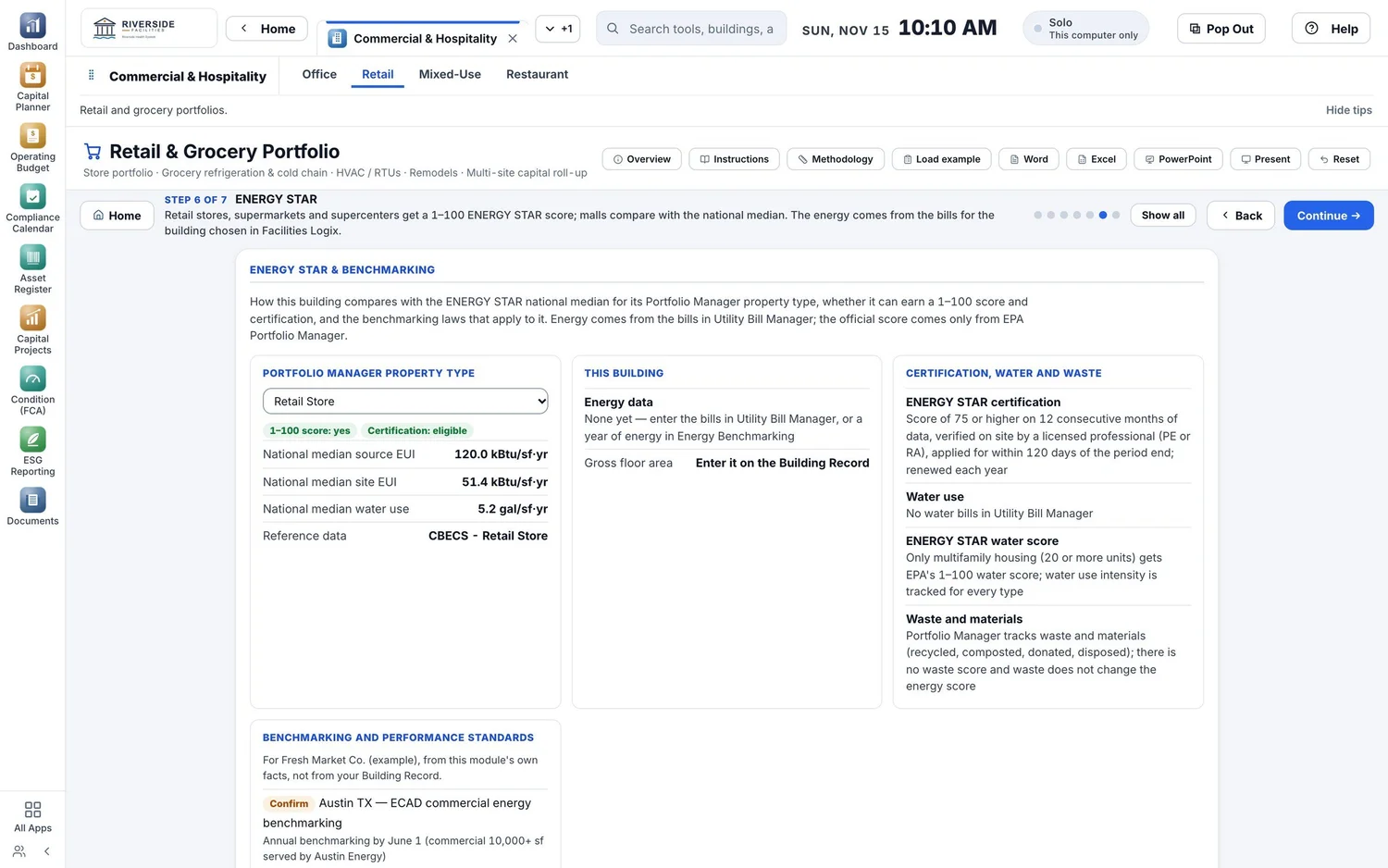
ENERGY STAR in Retail & Grocery Portfolio: retail stores, supermarkets and supercenters get a 1–100 ENERGY STAR score; malls compare with the national median. The energy comes from the bills for the building chosen in Facilities Logix.
Protect Income with Good Records
Rollover Seen Early
A cluster of expiries within a year can swing occupancy and cash flow; the rent roll flags it automatically.
Learn MoreRefrigeration Risk by Store
Old systems and phase-down refrigerants show store by store, so the transition and replacement plan is built from the fleet, not one store at a time.
Learn MoreShow Less
A failed walk-in destroys product, and refrigerant leaks bring EPA repair duties. Seeing both store by store targets maintenance money.
- GWP shown per refrigerant: R-404A 3,922, R-407A 2,107, R-448A 1,387, R-449A 1,397
- New retail-food systems from 2025-2027 must use refrigerants under GWP 150 or 300, by type
- Leak detection rows say when to mark N/A: pre-2017, ammonia, CO2 or R-22
- The briefing counts systems still on R-404A and those on natural refrigerants
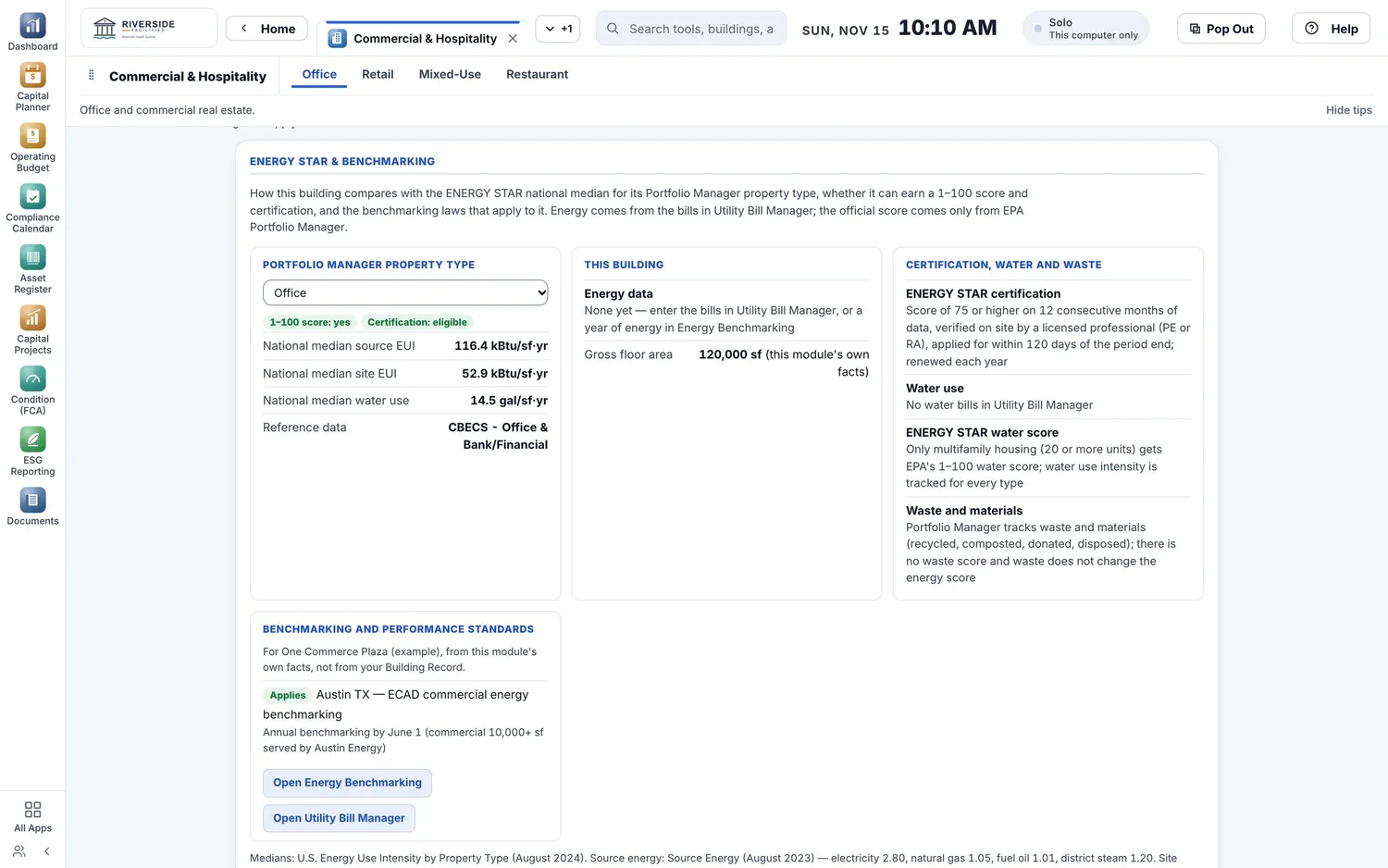
ENERGY STAR in Office & Commercial Real Estate: offices get a 1–100 ENERGY STAR score and can be certified. The energy comes from the bills; see how the building compares with the national median and which benchmarking laws apply.
Shared Costs Allocated Fairly
Submetering and an expense schedule marked recoverable or not keep recoveries defensible.
Learn MoreInspections Without Gaps
Leak detection audits, drills, garage inspections and life-safety tests carry their own dates across every property.
Learn MoreShow Less
A lapsed record can draw a fine or an insurance question. Dates and proof are kept for every property in one place.
- Fire alarm and sprinkler rows stay current through grace: quarterly 4 months, annual 15
- Each row can link the responsible vendor and its service contract
- Evidence records hold the document, date, expiry, signer and file
- Rows waiting on a missing fact list the question to answer once
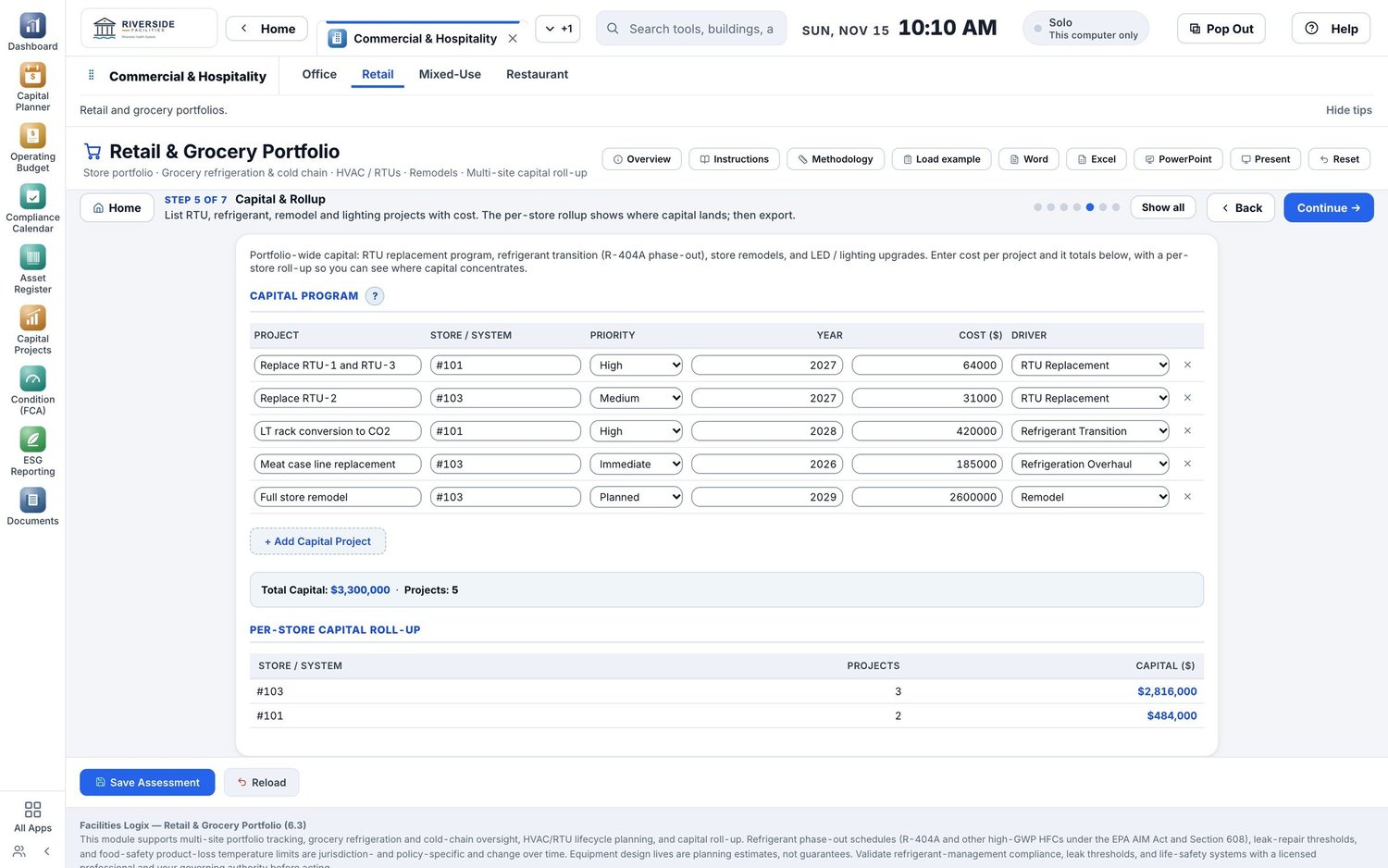
Capital & Rollup in Retail & Grocery Portfolio: list RTU, refrigerant, remodel and lighting projects with cost. The per-store rollup shows where capital lands; then export.
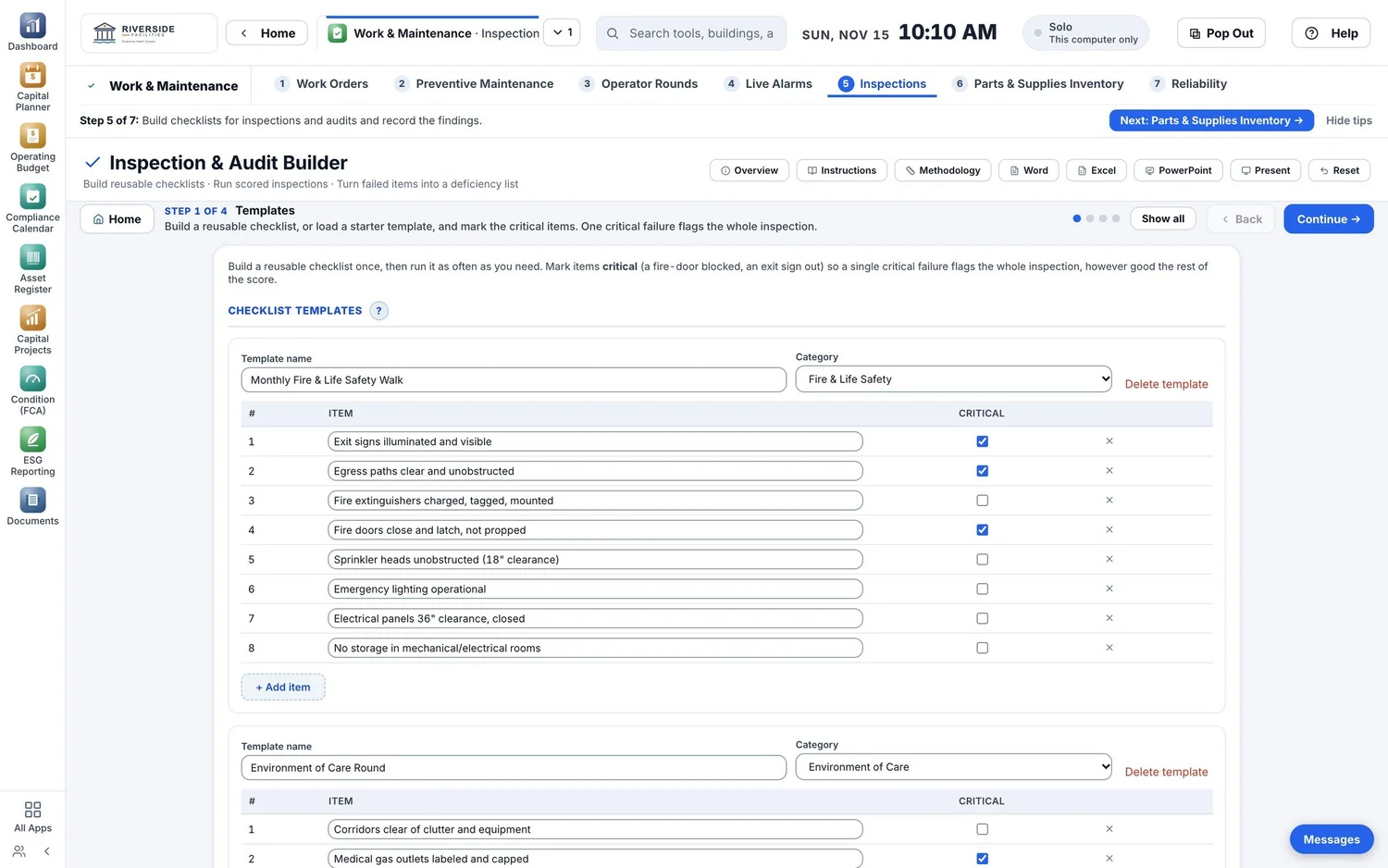
Templates in Inspection & Audit Builder: build a reusable checklist, or load a starter template, and mark the critical items. One critical failure flags the whole inspection.
Frequently Asked Questions
Does the office playbook replace our CAM reconciliation or lease abstract?
Does it tell us which refrigerant to use in a new store?
How should a mixed-use building be benchmarked?
Are the BOMA area figures official measurements?
Be First When Facilities Logix Opens
Stop chasing building records across spreadsheets and binders. Join the list and we will tell you the day downloads open, with setup guides ready.
Launching early 2027 for Facilities Logix. Nothing to buy today, and no sales calls.
