


The Process, the Permit and the Plant, on One Calendar.
Launching Early 2027 · Join the Early-Access List
A treatment plant is a process first and a building second: pumps, blowers, clarifiers, filters, disinfection, solids handling and the controls that run them, under permits that set limits and reporting deadlines. Facilities Logix's water and wastewater playbook covers drinking-water and wastewater treatment plants, water reclamation, pump and lift stations, storage tank sites and combined utility campuses. It tracks the process and building systems, the federal reports and recertifications with their due dates, the capital plan and the plant's energy, where aeration and pumping use most of it.
Federal Deadlines, Each with Its Own Due Date
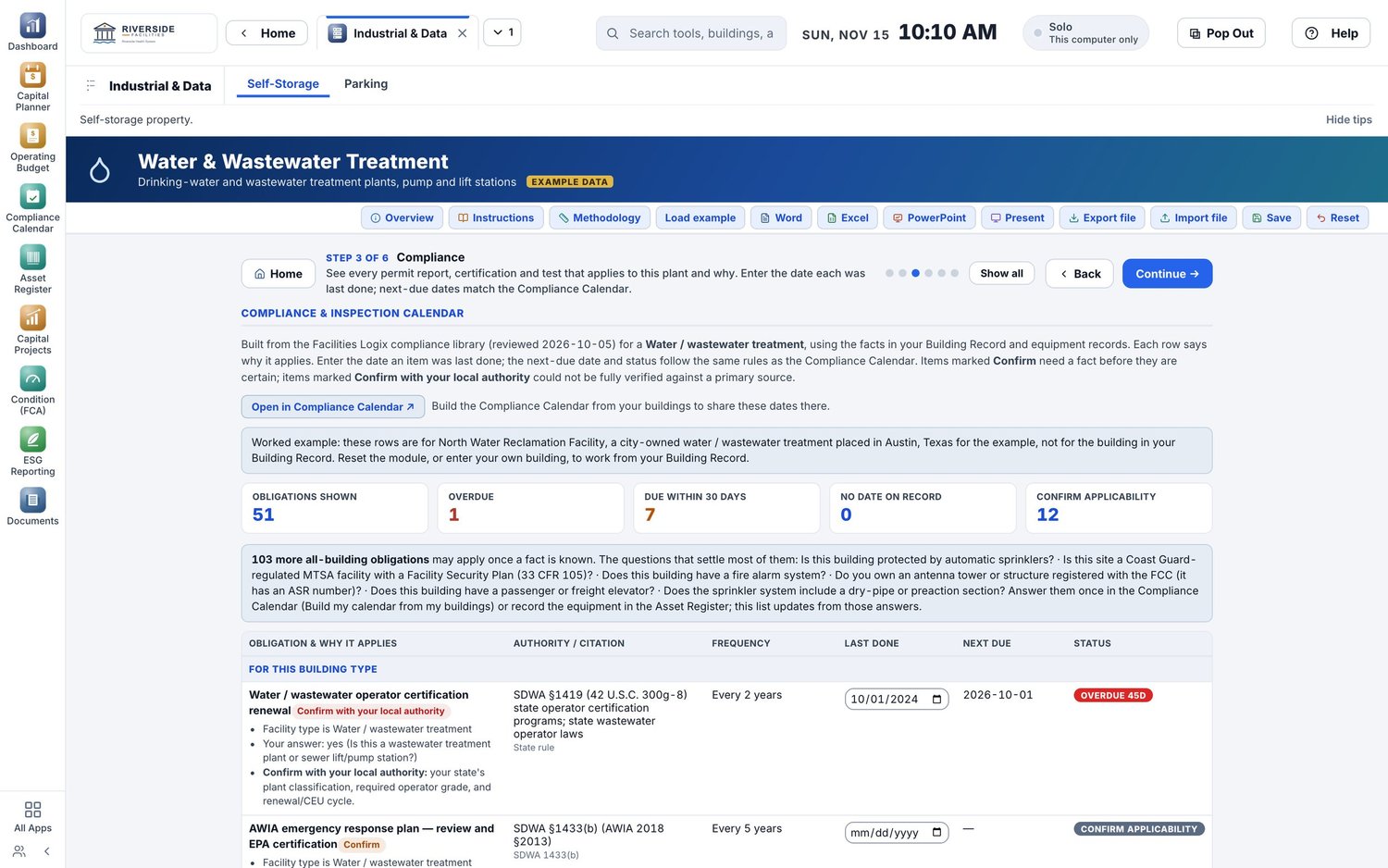
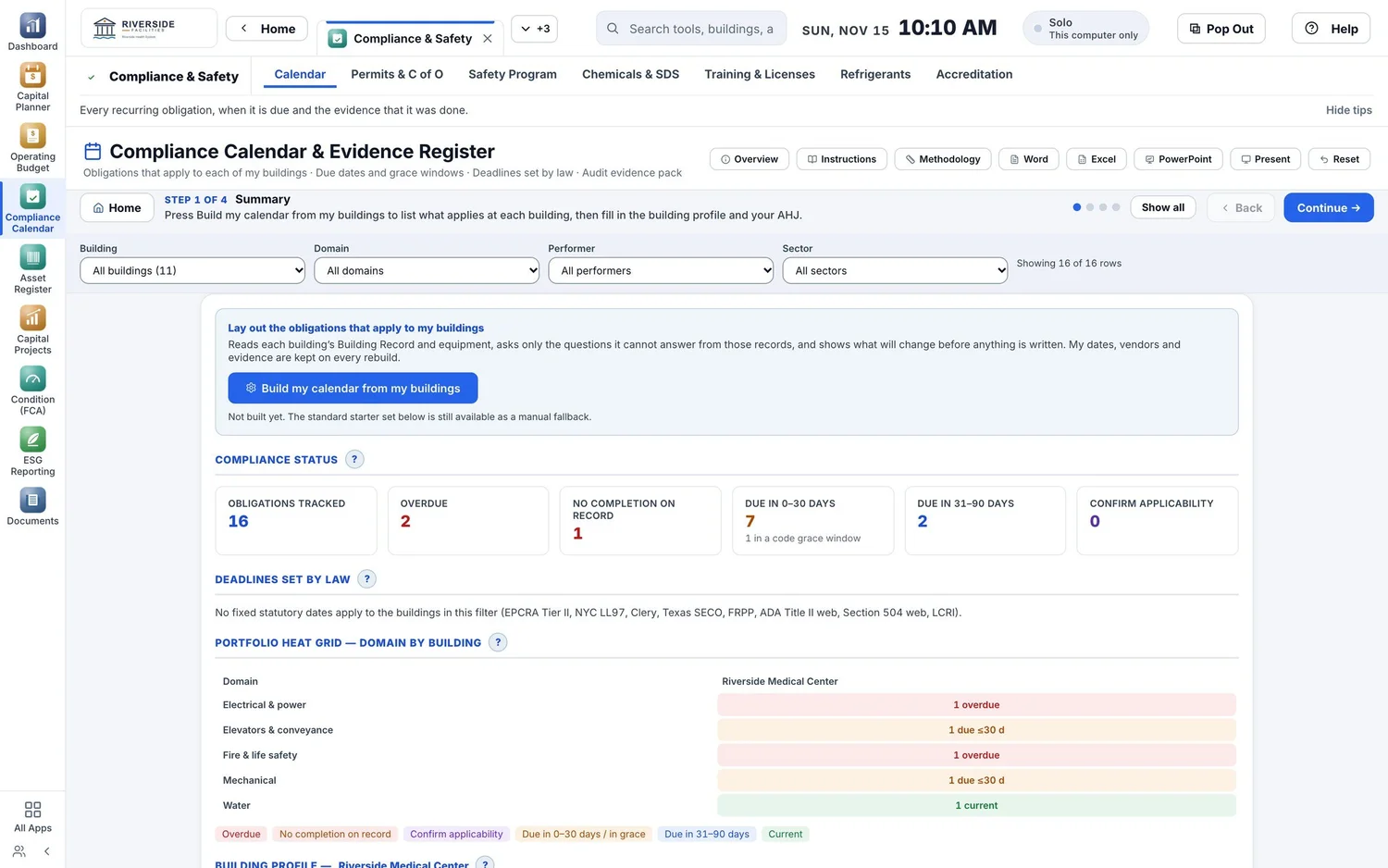
The Compliance tab carries the obligations that apply to your plant from the compliance library, with citation, frequency and next due date, and the same dates as the Compliance Calendar. Plant type, population served and permit facts decide which rows appear.
America's Water Infrastructure Act (Safe Drinking Water Act Section 1433)
- Risk and resilience assessment reviewed, with its certification sent to the Environmental Protection Agency (EPA), at least every 5 years, for community water systems serving more than 3,300 people, including cybersecurity
- The current cycle by size: 100,000 or more by March 31, 2025; 50,000-99,999 by December 31, 2025; 3,301-49,999 by June 30, 2026
- Emergency response plan reviewed and its certification sent within 6 months after the risk and resilience assessment, at least every 5 years, coordinated with the local emergency planning committee
Drinking Water Sanitary Survey (40 CFR 142.16)
- The state's survey of each community water system at least every 3 years, every 5 years for non-community systems
- Your team provides the records and access, then corrects significant deficiencies on the state's schedule
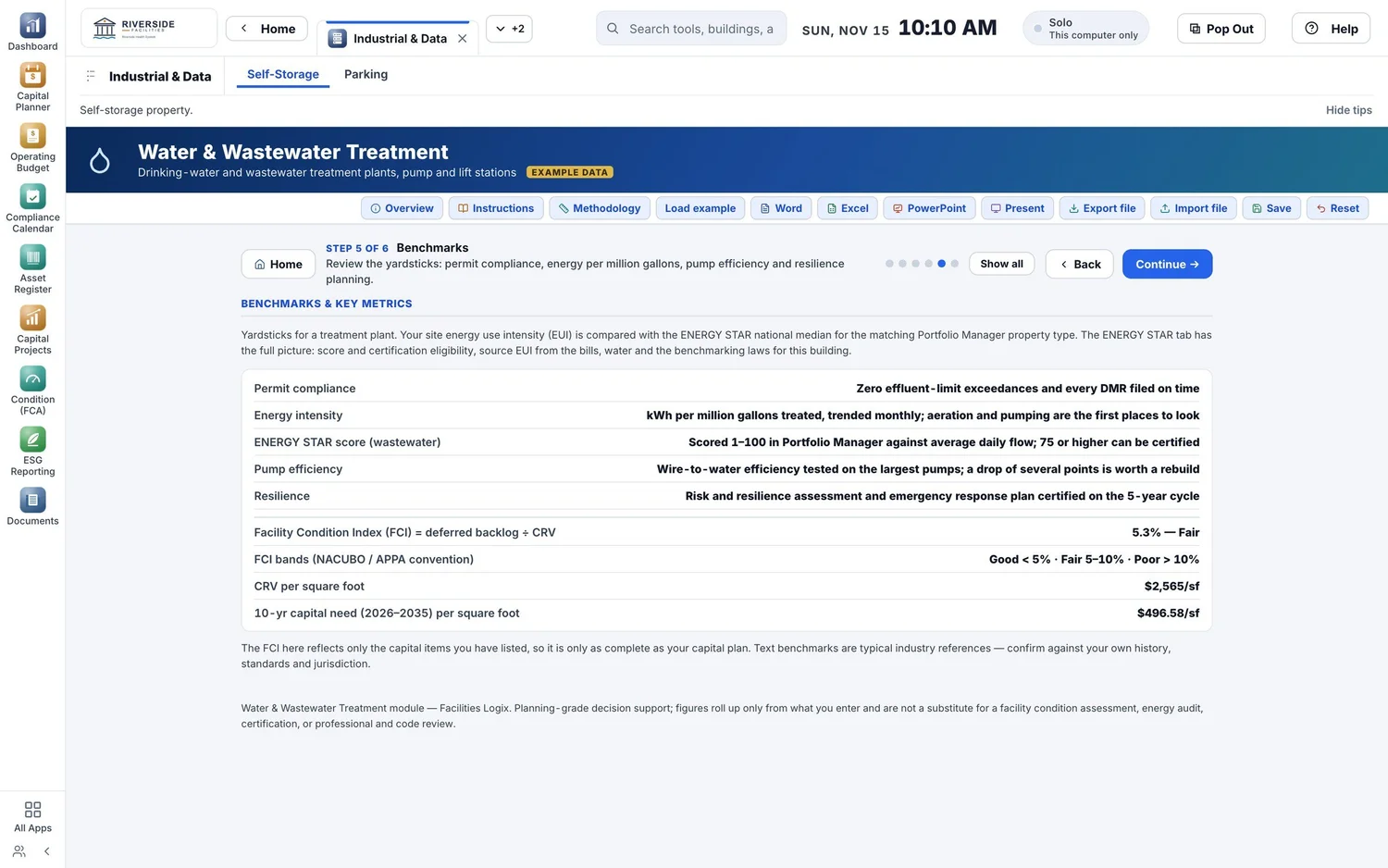
Benchmarks in Water & Wastewater Treatment: review the yardsticks: permit compliance, energy per million gallons, pump efficiency and resilience planning.
Drinking Water Monitoring and Notices (40 CFR 141)
- Lead service line inventory updated every year, with lead and galvanized-requiring-replacement lines replaced by 2037
- Revised Total Coliform Rule sampling at the frequency set by system size and source
- The Consumer Confidence Report delivered by July 1 each year, with a copy and certification to the state within 10 days
NPDES Permits (40 CFR 122)
- Discharge monitoring reports at the interval in your permit, monthly for most treatment plants, filed electronically
- Any noncompliance that may endanger health or the environment, including bypasses and sanitary sewer overflows, reported orally within 24 hours and in writing within 5 days
- The permit renewal application at least 180 days before the current permit expires
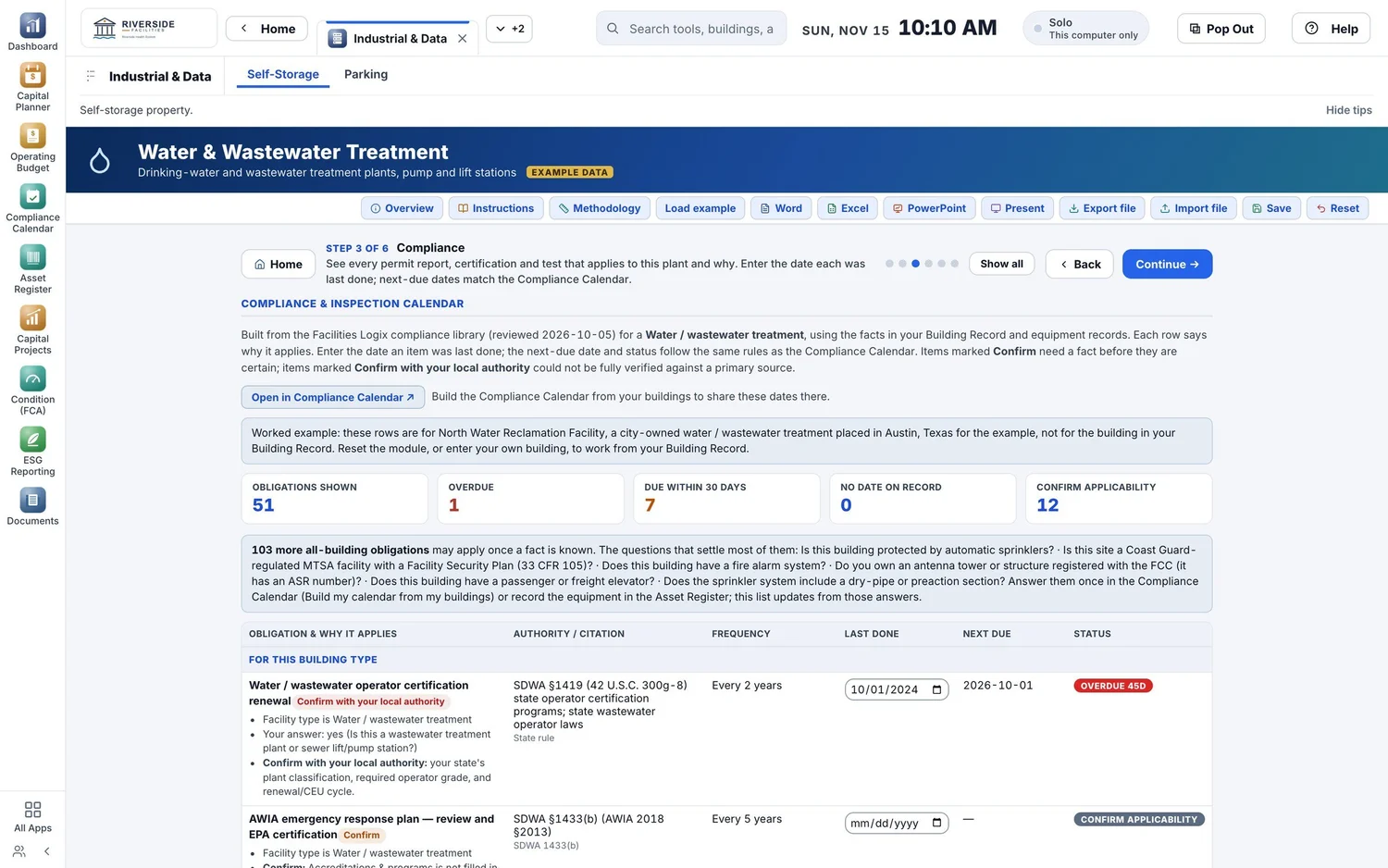
Compliance in Water & Wastewater Treatment: see every permit report, certification and test that applies to this plant and why. Enter the date each was last done; next-due dates match the Compliance Calendar.
Biosolids, Pretreatment and Lab Quality
- The sewage sludge (biosolids) annual report due February 19, for Class I sludge facilities and plants with a design flow of 1 MGD or more or serving 10,000 or more people (40 CFR 503.18)
- The pretreatment program annual report for plants with an approved program (40 CFR 403.12(i))
- The DMR-QA laboratory proficiency study each year for major permittees, with the states that hold waivers left out
Chlorine and the Risk Management Program (40 CFR 68)
- Compliance audit at least every 3 years and plan resubmission at least every 5 years
- An emergency notification exercise each calendar year
- A tabletop exercise at least every 3 years and a field exercise at least every 10 years
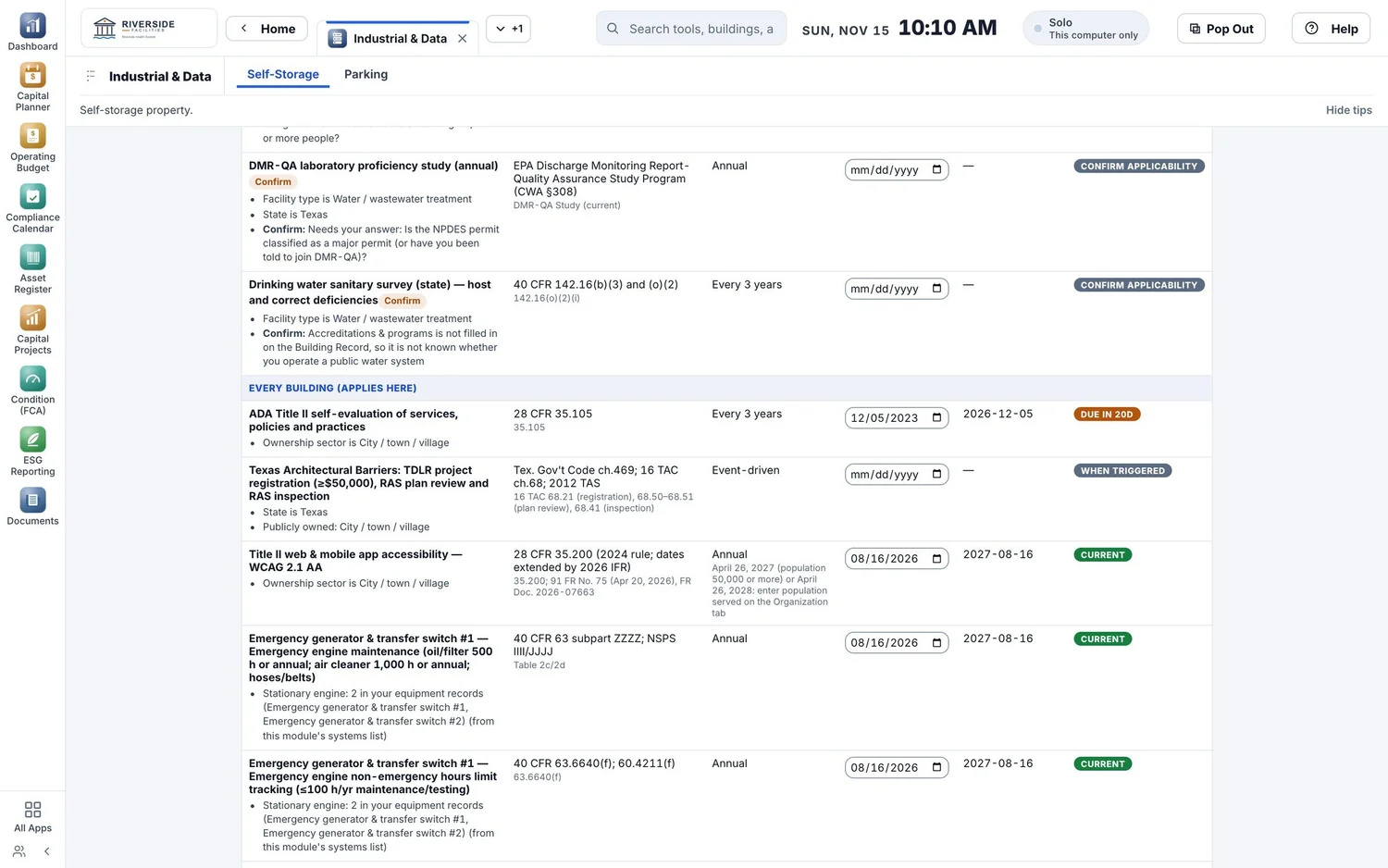
Compliance in Water & Wastewater Treatment: see every permit report, certification and test that applies to this plant and why. Enter the date each was last done; next-due dates match the Compliance Calendar.
Operators and Workers
- Operator certificates kept current at the plant's classification on your state's renewal cycle; this row is marked Confirm with your local authority
- Permit-required confined space program reviewed using the canceled permits (29 CFR 1910.146)
- Gas detection, emergency generators and their tests, as the library lists for this plant type
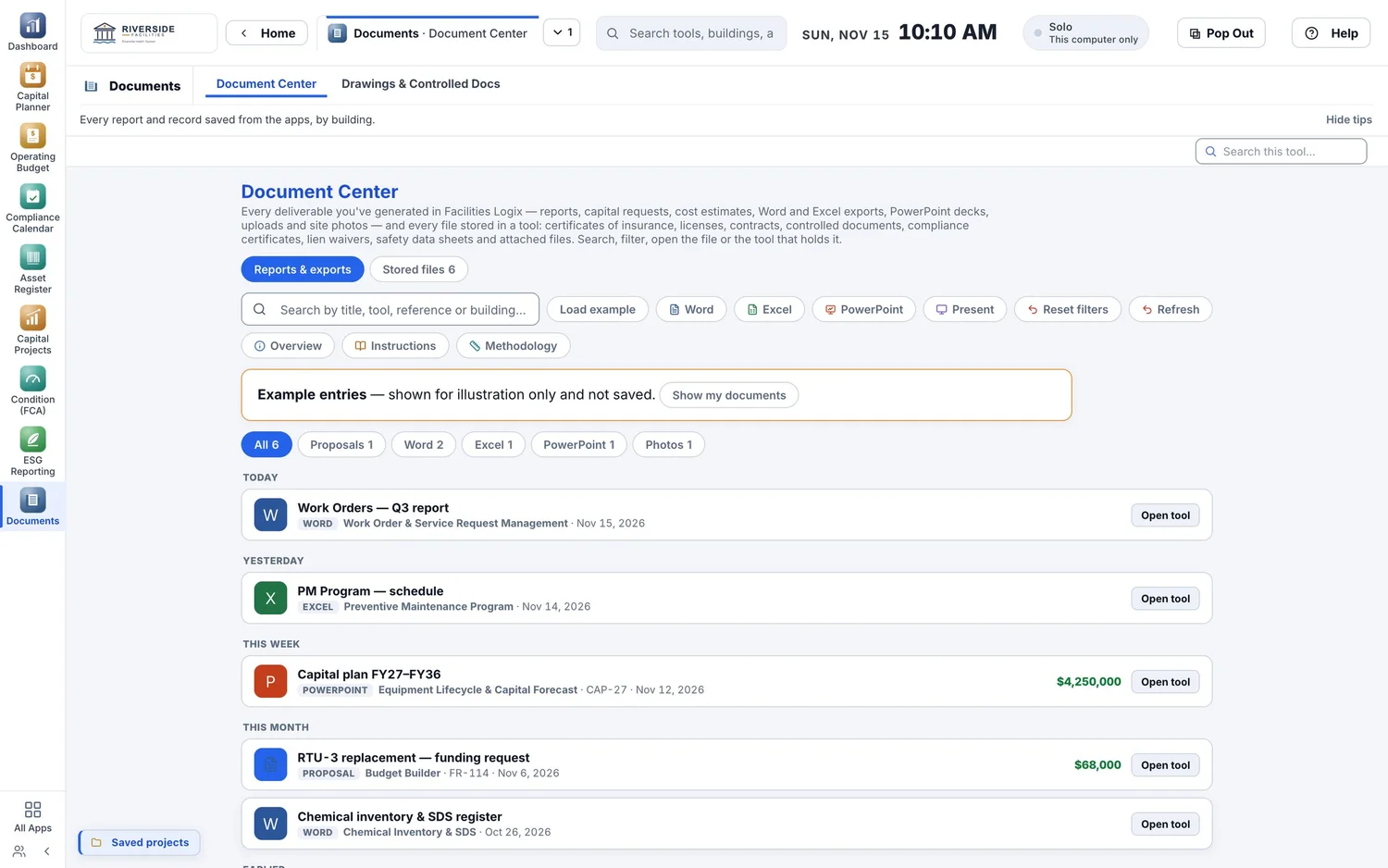
Every report the program makes is kept in one Document Center, grouped by building.
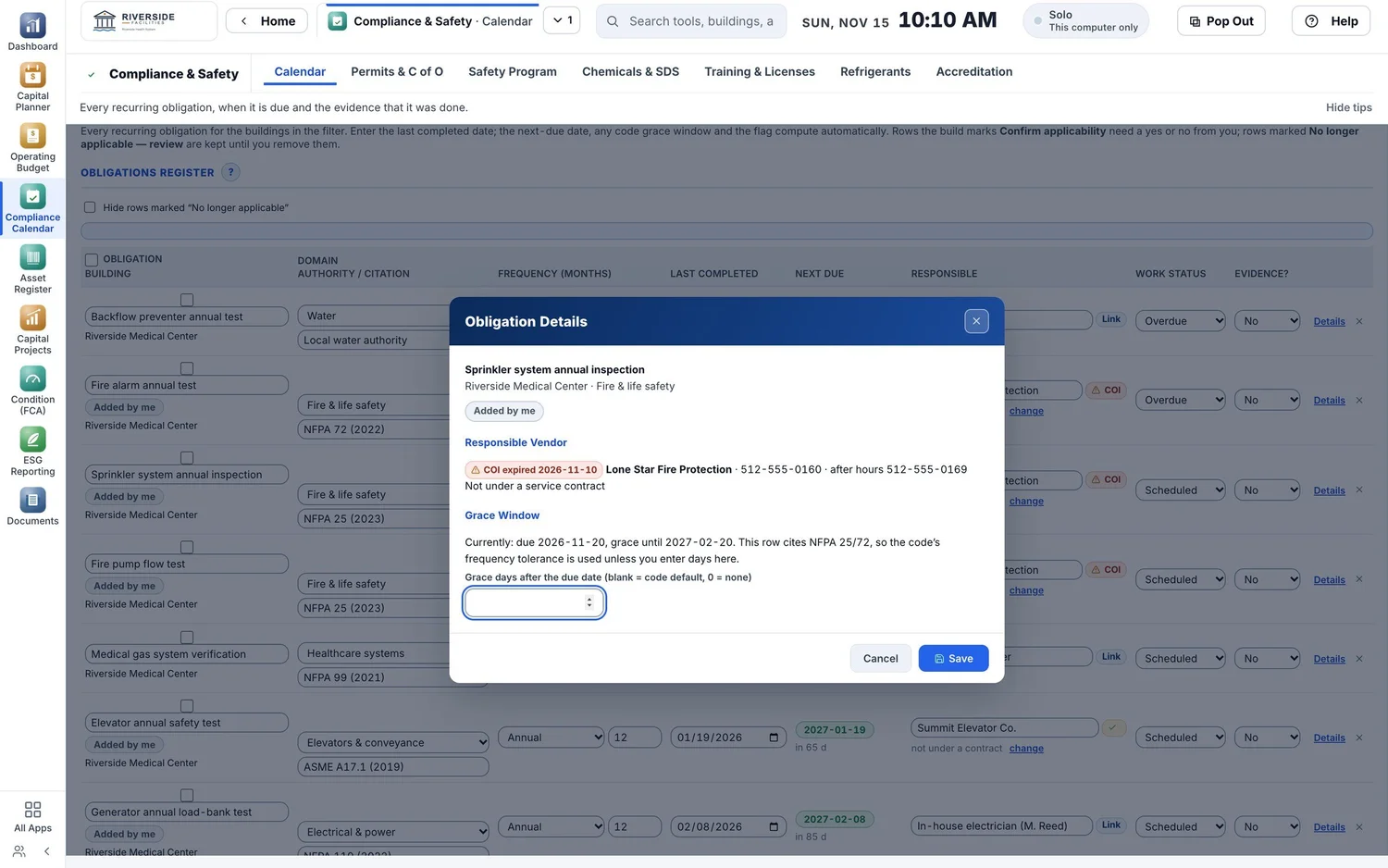
Treatment plants answer to federal deadlines, so each obligation explains why it applies and its source.
Seventeen Process and Plant Systems to Start
Six Kinds of Site
Wastewater treatment plant, drinking water treatment plant, water reclamation or reuse, pump or lift station, storage tank or reservoir site, or combined utility campus. The type is passed to the Compliance tab, so a drinking-water plant and a wastewater plant get their own rows.
Learn MoreShow Less
The plant type decides which obligations and energy yardstick apply, so staff time goes only to the reports that plant really owes.
- Wastewater plants and reclamation are benchmarked as Wastewater Treatment Plant
- Drinking-water plants as Drinking Water Treatment & Distribution
- Pump stations, tank sites and campuses as Other - Utility
- Treatment plants of either kind get the operator certification row
Plant Profile
Plant or station name, design flow and average daily flow in MGD, population served, gross building area, year built, and a year of electricity and natural gas.
Learn MoreShow Less
Flow and population served decide the yardsticks and federal deadlines a plant is measured by, so getting them right avoids chasing the wrong obligations.
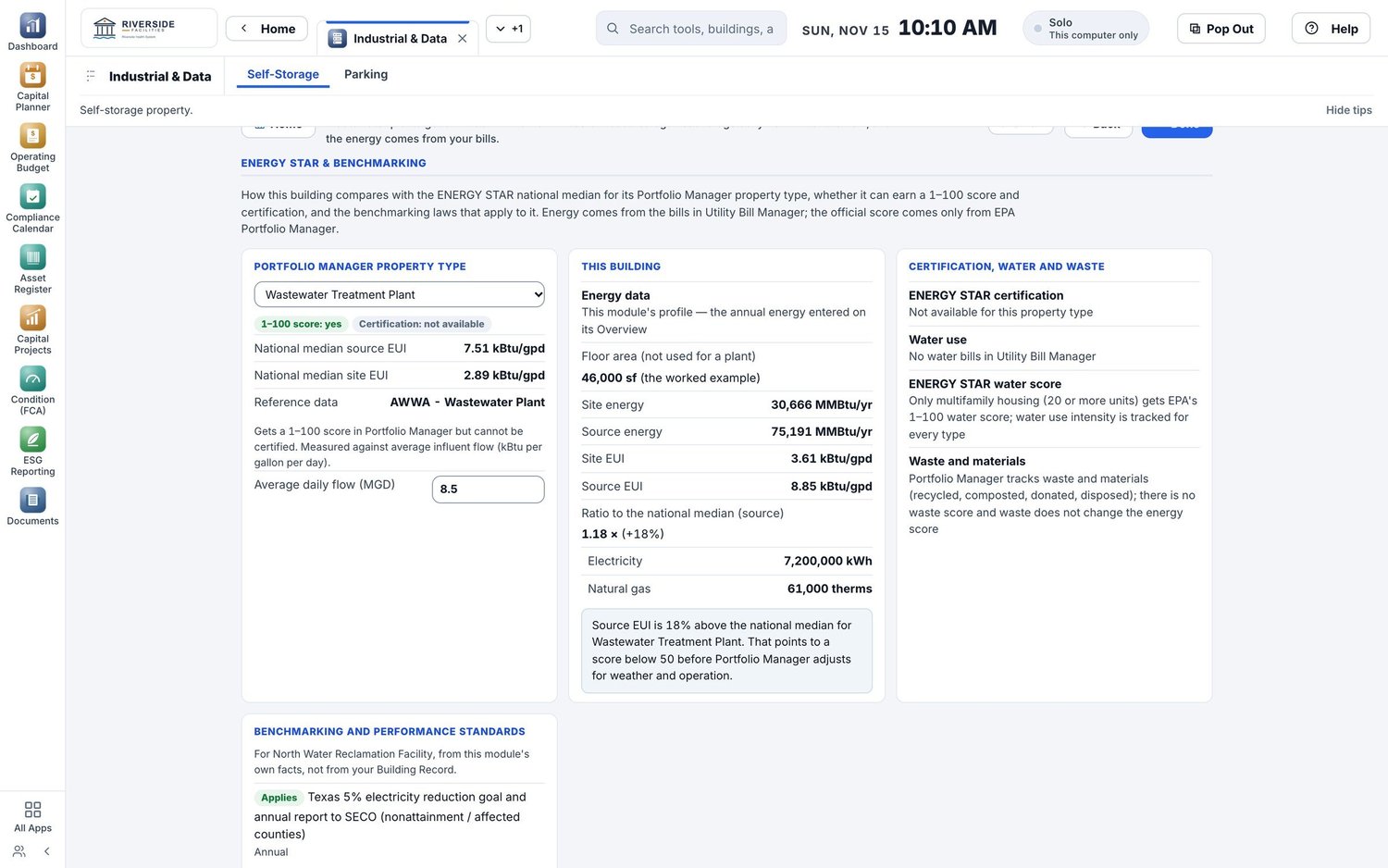
- EPA compares wastewater plants with a national median of 7.51 kBtu per gallon per day, source energy
- Drinking-water plants are compared with 5.9 kBtu per gallon per day
- A replacement value from an insurance appraisal enables the Facility Condition Index
- Load example fills a sample reclamation facility to show the method
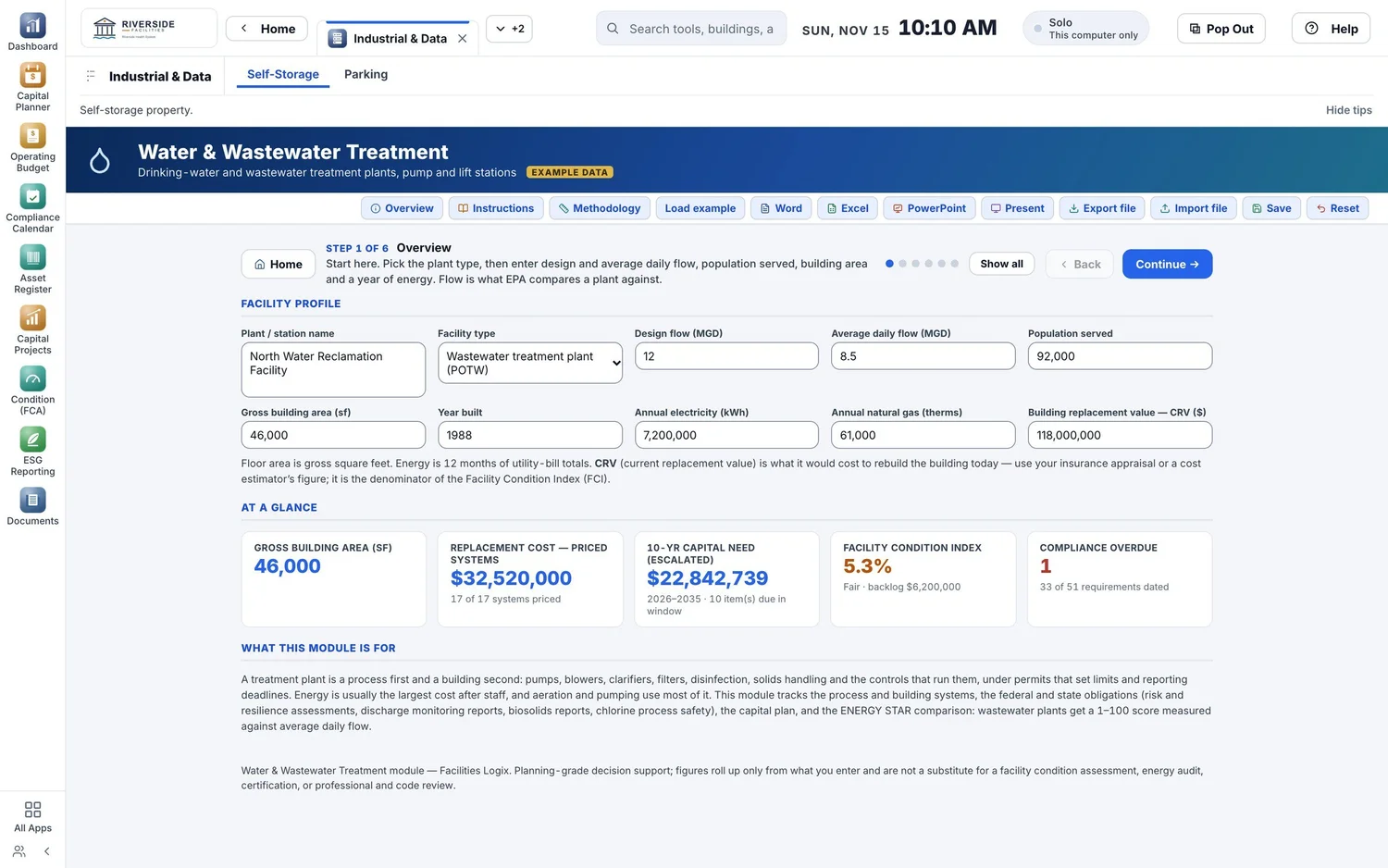
Overview in Water & Wastewater Treatment: start here. Pick the plant type, then enter design and average daily flow, population served, building area and a year of energy. Flow is what EPA compares a plant against.
Liquid Treatment
Influent and raw water pumps (monthly), screening and grit removal (weekly), primary clarifiers and drives (monthly), aeration blowers and diffusers (monthly), secondary clarifiers with RAS and WAS pumps (monthly), media or membrane filters (monthly).
Learn MoreShow Less
Pumps and blowers are where a plant spends most of its energy and capital, so keeping them maintained protects both the budget and the permit.
- Influent pumps and aeration blowers start rated Critical; the rest High
- Aeration is noted as the largest energy user in most wastewater plants
- One step adds each system to the Asset Register and a PM task per interval
- Pressing it again never makes a second copy and keeps your edits
Disinfection and Chemicals
Chlorine, hypochlorite or UV disinfection (weekly), chemical feed and storage (weekly), and gas detection for hydrogen sulfide, chlorine and methane (quarterly).
Learn MoreShow Less
Disinfection failures and gas releases risk permit violations, injuries and fines. These systems start rated Critical, so they lead the maintenance and capital lists.
- Disinfection and gas detection start as Critical; chemical feed as High
- Chlorine above its threshold brings the Risk Management Program rows
- The rows include a yearly emergency notification exercise
- Each system row can carry its replacement cost for the capital plan
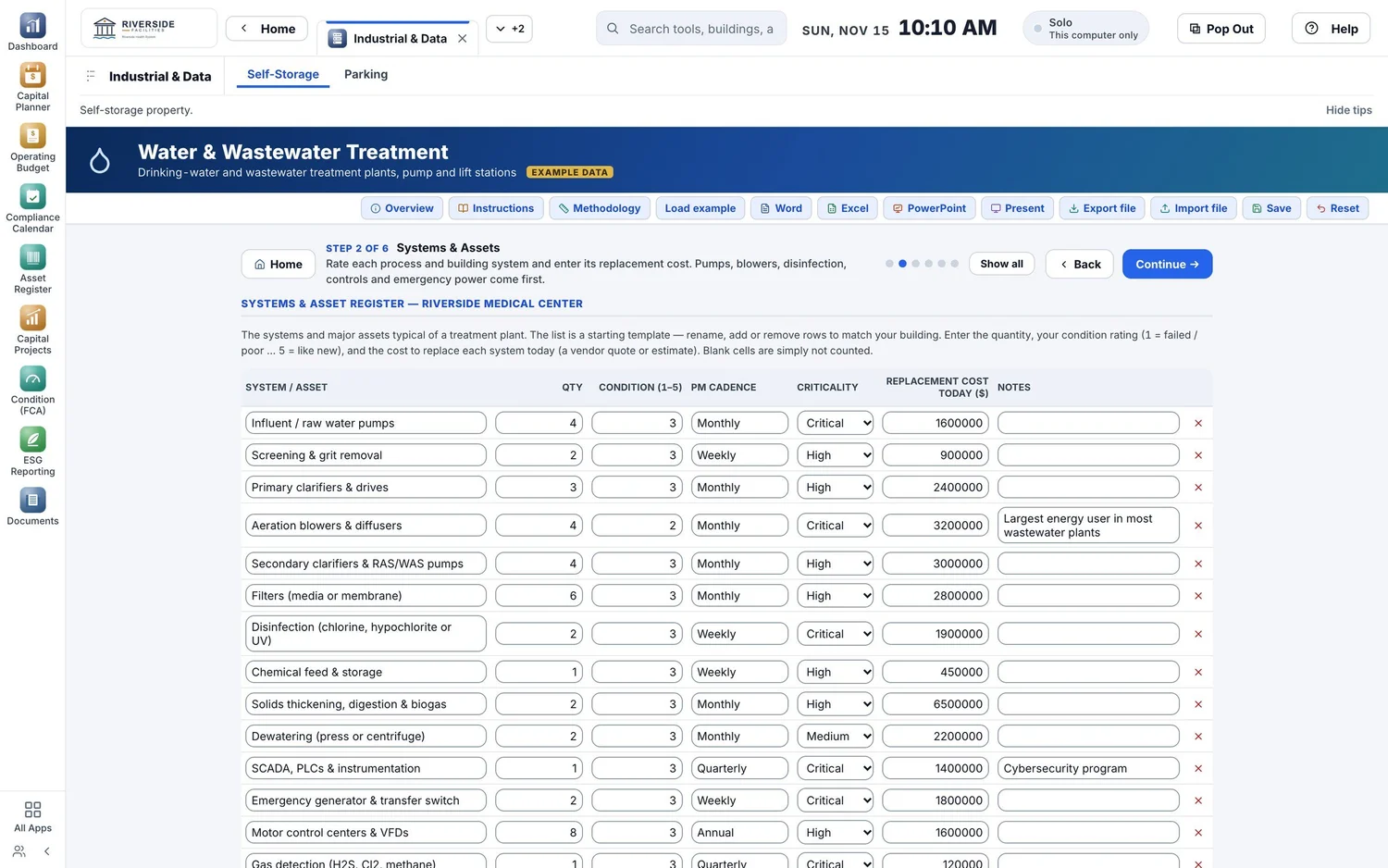
Systems & Assets in Water & Wastewater Treatment: rate each process and building system and enter its replacement cost. Pumps, blowers, disinfection, controls and emergency power come first.
Solids and Odor
Thickening, digestion and biogas (monthly), dewatering presses or centrifuges (monthly), and odor control (monthly).
Learn MoreShow Less
Digesters and dewatering are among a plant's largest capital items, so planning them early avoids a budget shock.
- Anaerobic digesters carry a 40-year planning life; dewatering equipment 20
- Due year = install year + life, with cost escalated to that year
- Items already past due count as deferred backlog
- Plants that report biosolids get the February 19 annual report row
Power, Controls and the Lab
SCADA, PLCs and instrumentation (quarterly, with a cybersecurity program), emergency generator and transfer switch (weekly), motor control centers and VFDs (annual), the compliance lab (quarterly), clearwell and storage tanks (annual).
Learn MoreShow Less
Controls and backup power keep the plant in permit during an outage or cyberattack, and failures here are the costliest. They start rated Critical.
- SCADA and PLCs carry a 12-year planning life
- The emergency generator and motor control centers carry 25 years
- The checklist starts with a monthly generator exercise row
- Major permittees get the yearly lab proficiency study (DMR-QA)
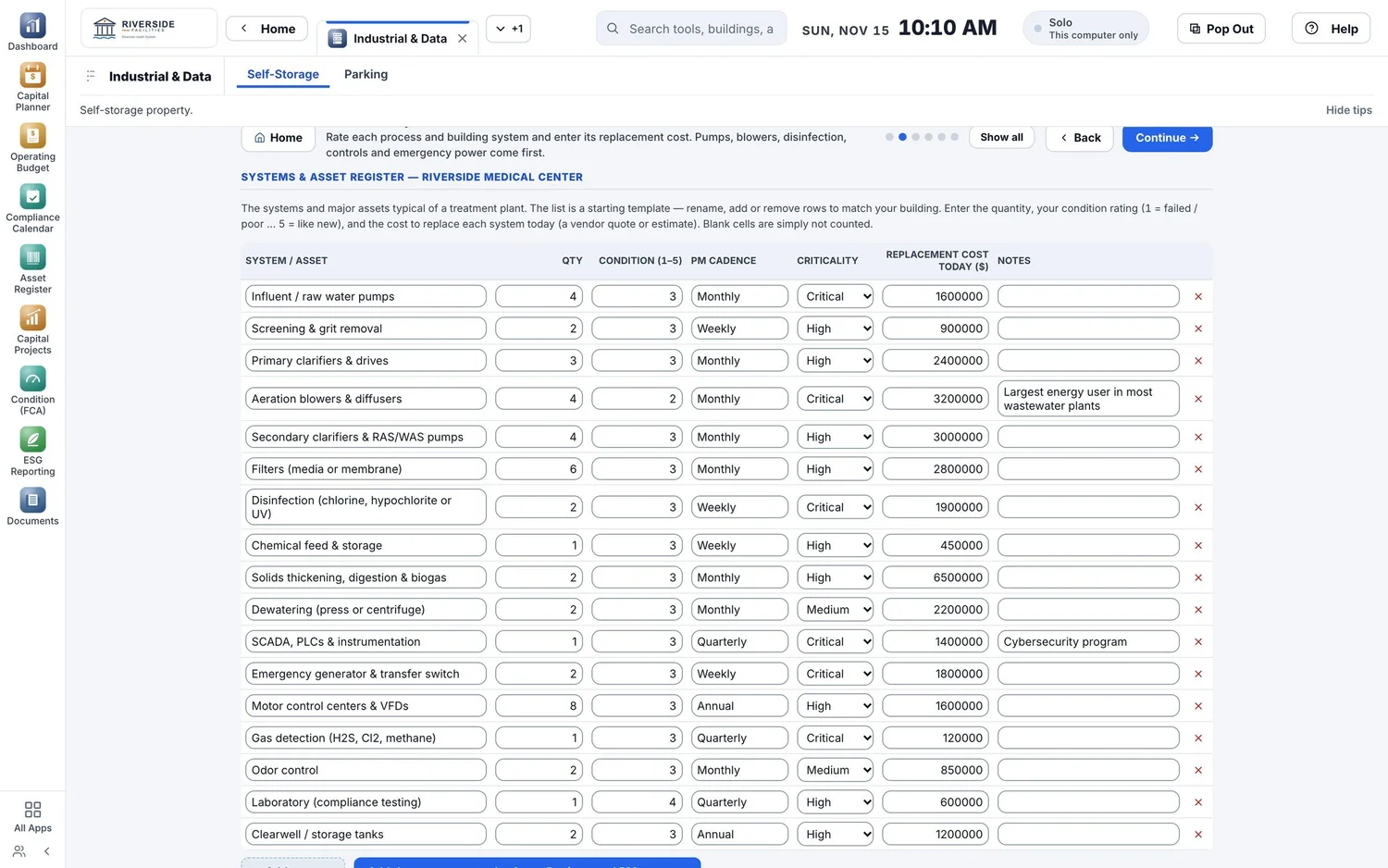
Systems & Assets in Water & Wastewater Treatment: rate each process and building system and enter its replacement cost. Pumps, blowers, disinfection, controls and emergency power come first.
A Starting List, Not a Rule
Every system row and PM cadence is a starting point your team renames, adds to or removes, then rates for condition and replacement cost.
Learn MoreShow Less
No plant is like another, and invented figures lead to bad budgets. The template supplies only the list; your numbers drive every total.
- Quantities, condition, costs and install years start blank
- Totals count only what is entered and say how much is missing
- Average condition is worked out from rated systems only
- Export file saves a backup copy; Import file restores it
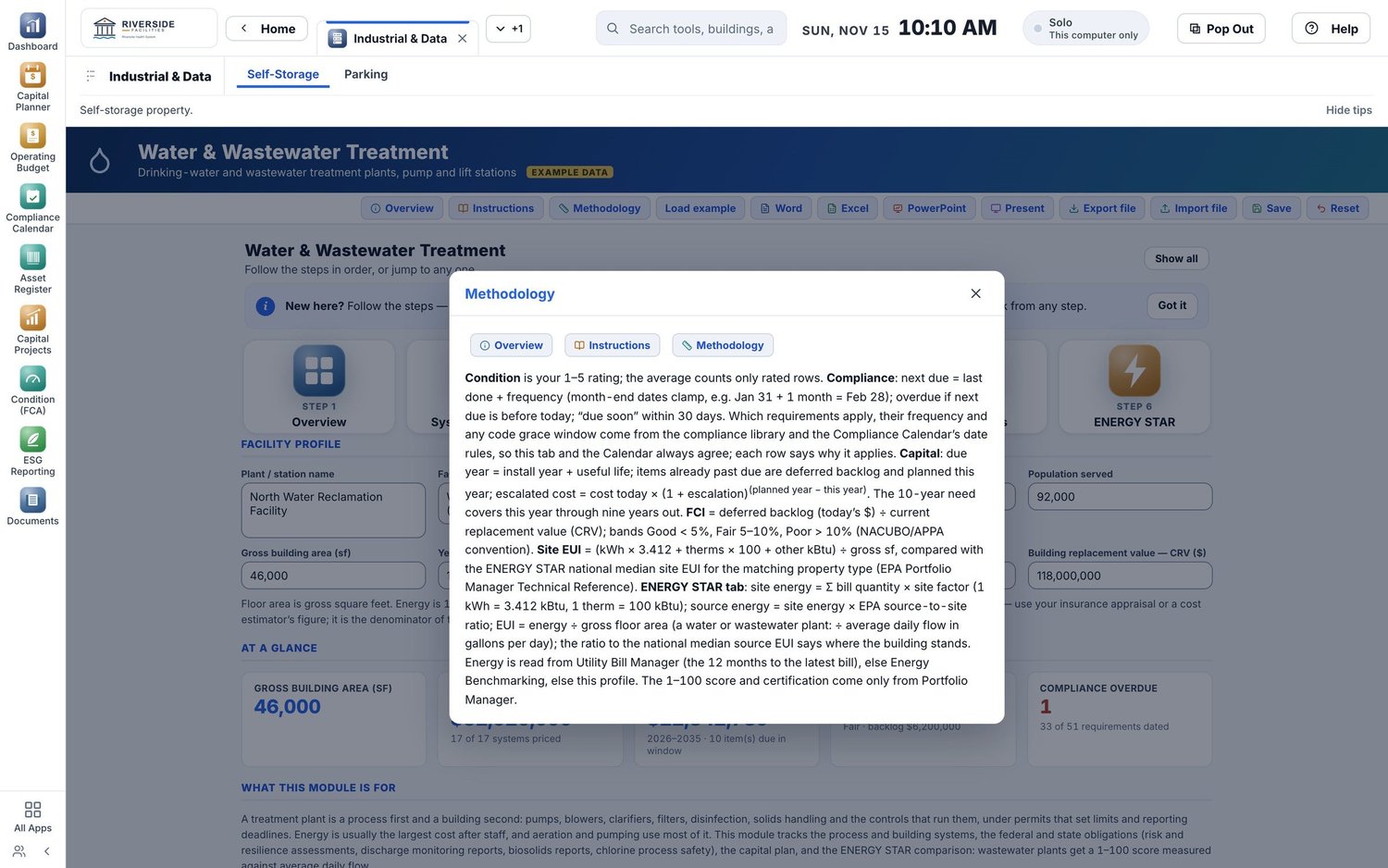
Methodology in Water & Wastewater Treatment: the formulas and standards behind every number.
Rounds Your Operators Already Run, with Dates Kept
From the Systems List
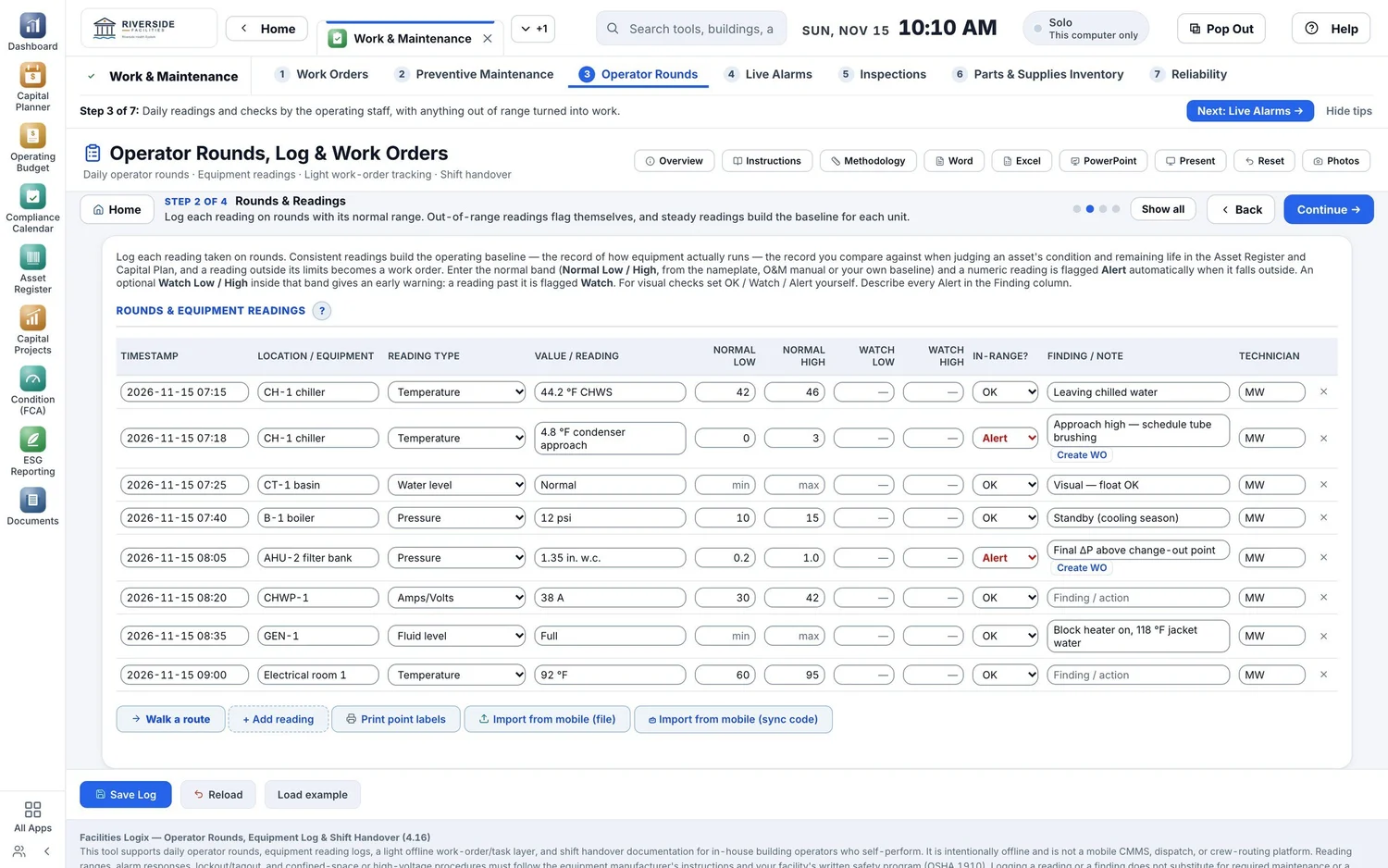
- Weekly checks of screening, disinfection, chemical feed and the generator
- Monthly work on pumps, clarifiers, blowers, filters, solids and odor control
- Quarterly SCADA, gas detection and lab work; annual motor control center and tank work
Live Monitoring
- Pump, drive, generator, transfer switch and meter templates with starting limits you set
- An alarm or a reading out of limits becomes a numbered work order on the right asset, with the readings and a trend chart attached
- Facilities Logix only listens and reads; it never commands a controller
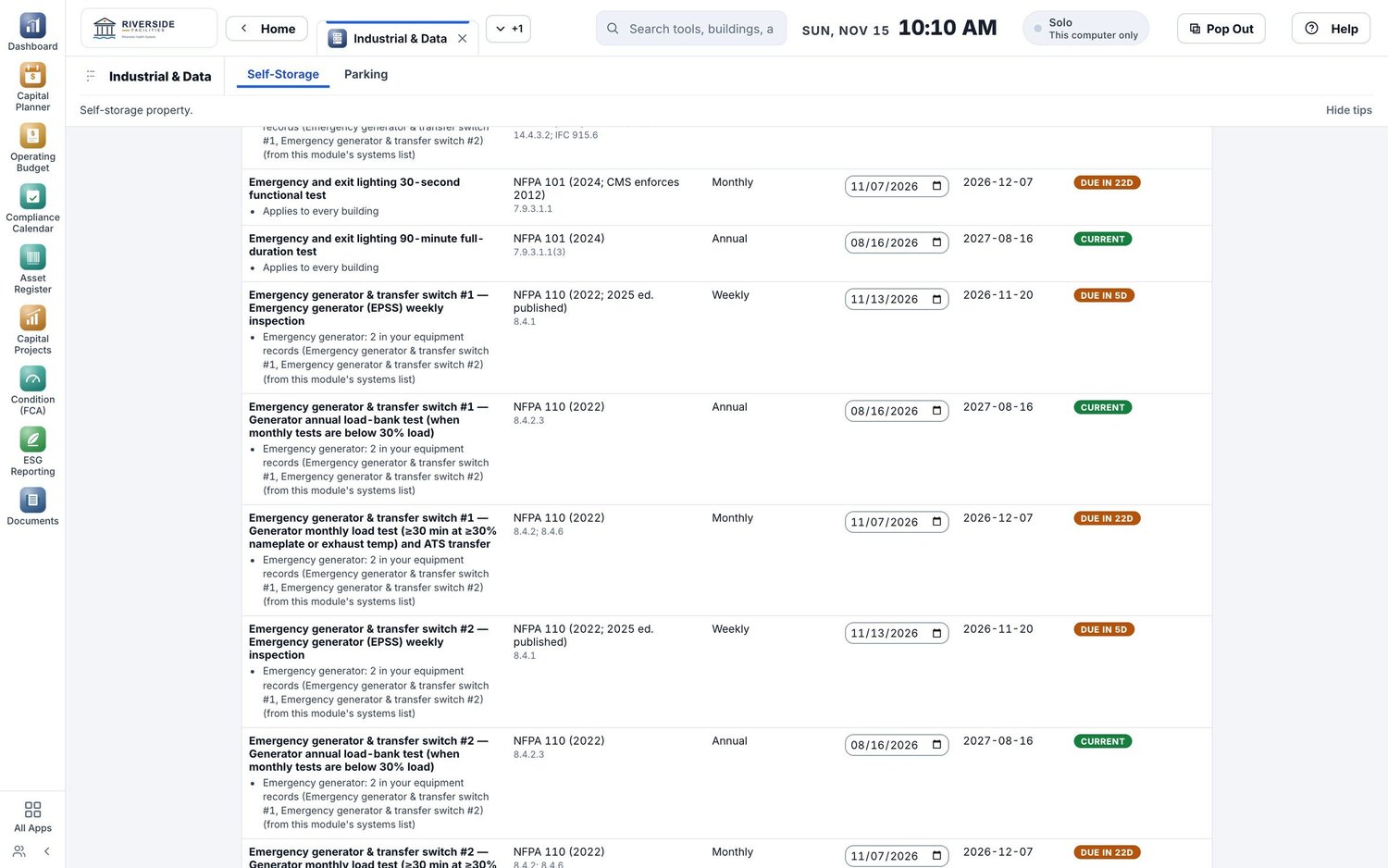
Compliance in Water & Wastewater Treatment: see every permit report, certification and test that applies to this plant and why. Enter the date each was last done; next-due dates match the Compliance Calendar.
Lead Service Lines
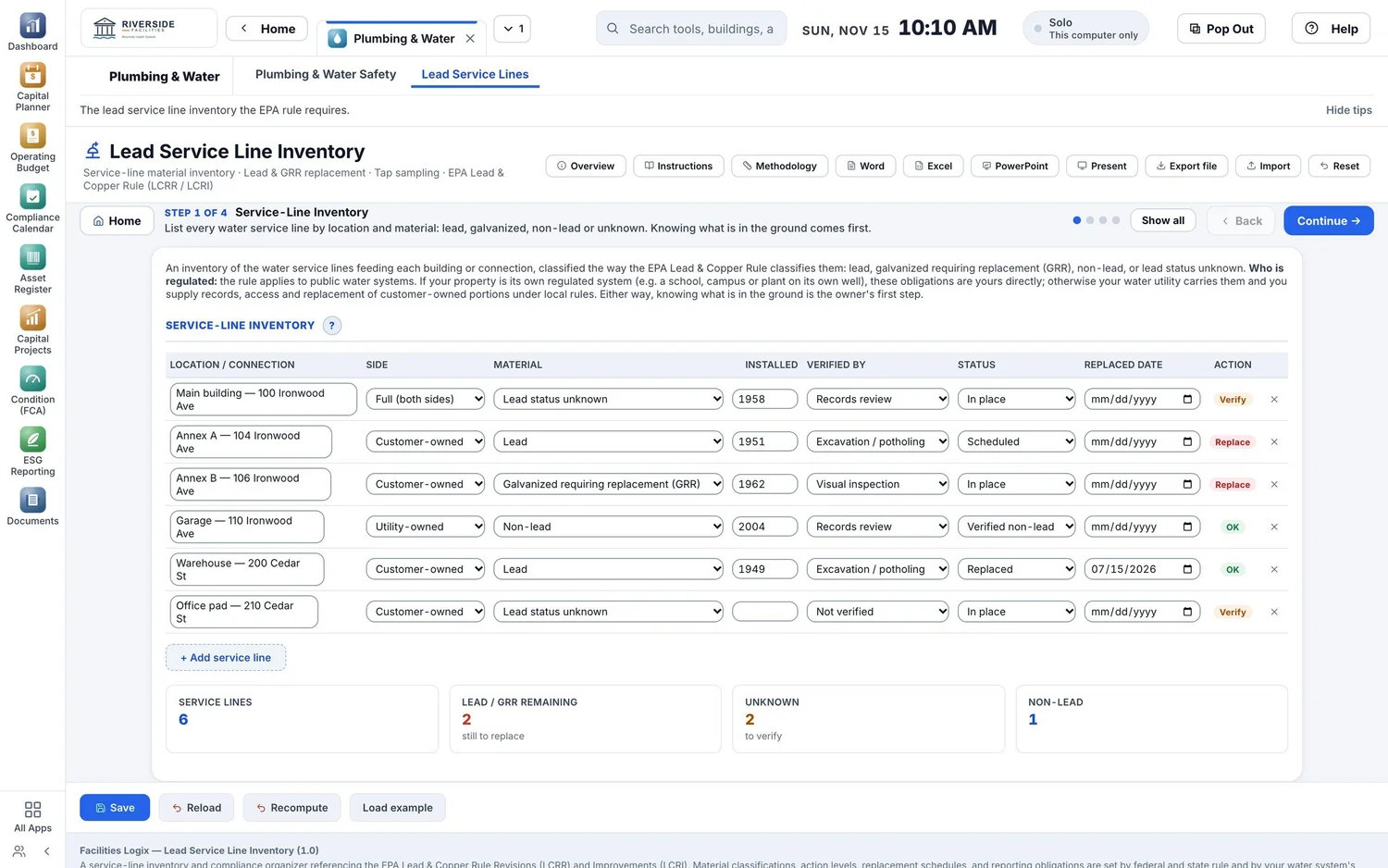
- The Lead Service Line Inventory tool keeps each service line's material (lead, galvanized requiring replacement or unknown), replacement progress and tap sampling against the 10 ppb action level
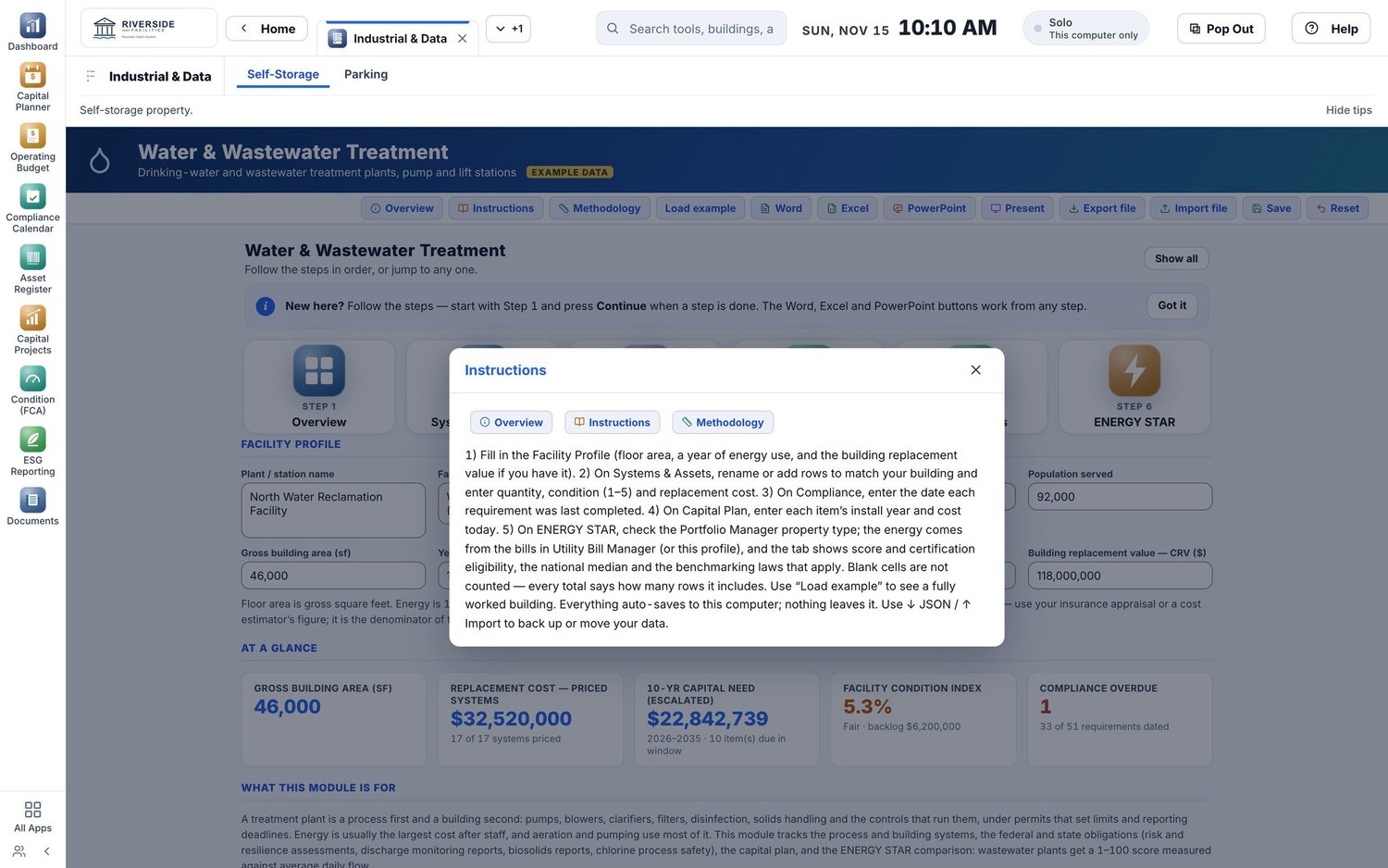
Instructions in Water & Wastewater Treatment: how to work through it, step by step.
Ready for the State Survey and the Permit Writer
Compliance Tab
Every obligation that applies, why it applies, its citation, frequency, last done, next due and status, shared with the Compliance Calendar and its Word and Excel reports.
Learn MoreCapital Plan
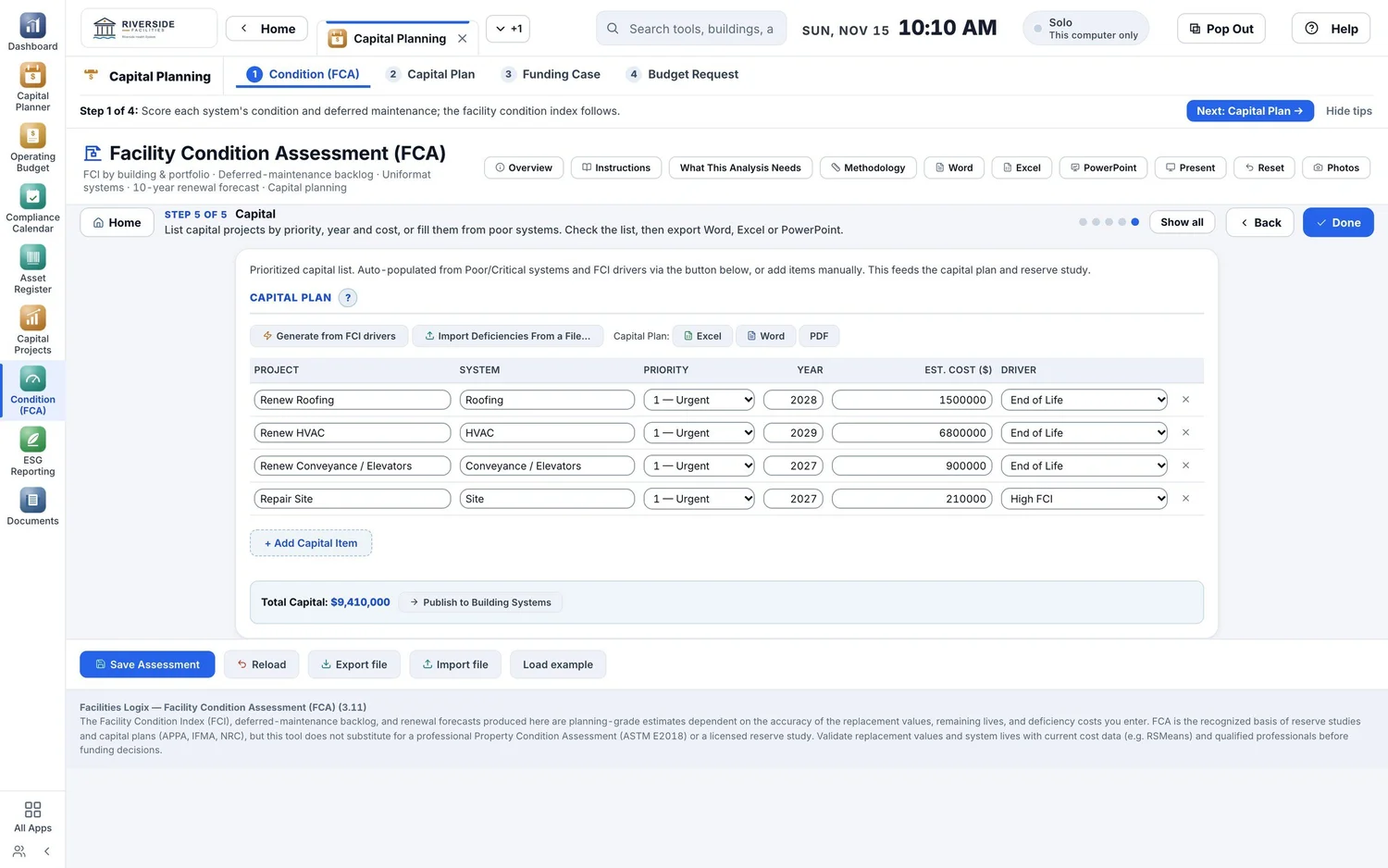
Aeration blowers, influent and high-service pumps, SCADA and PLCs, the emergency generator, UV disinfection, membranes and filter media, motor control centers, clarifier drives, anaerobic digesters and dewatering equipment, each with its due year and escalated cost.
Learn More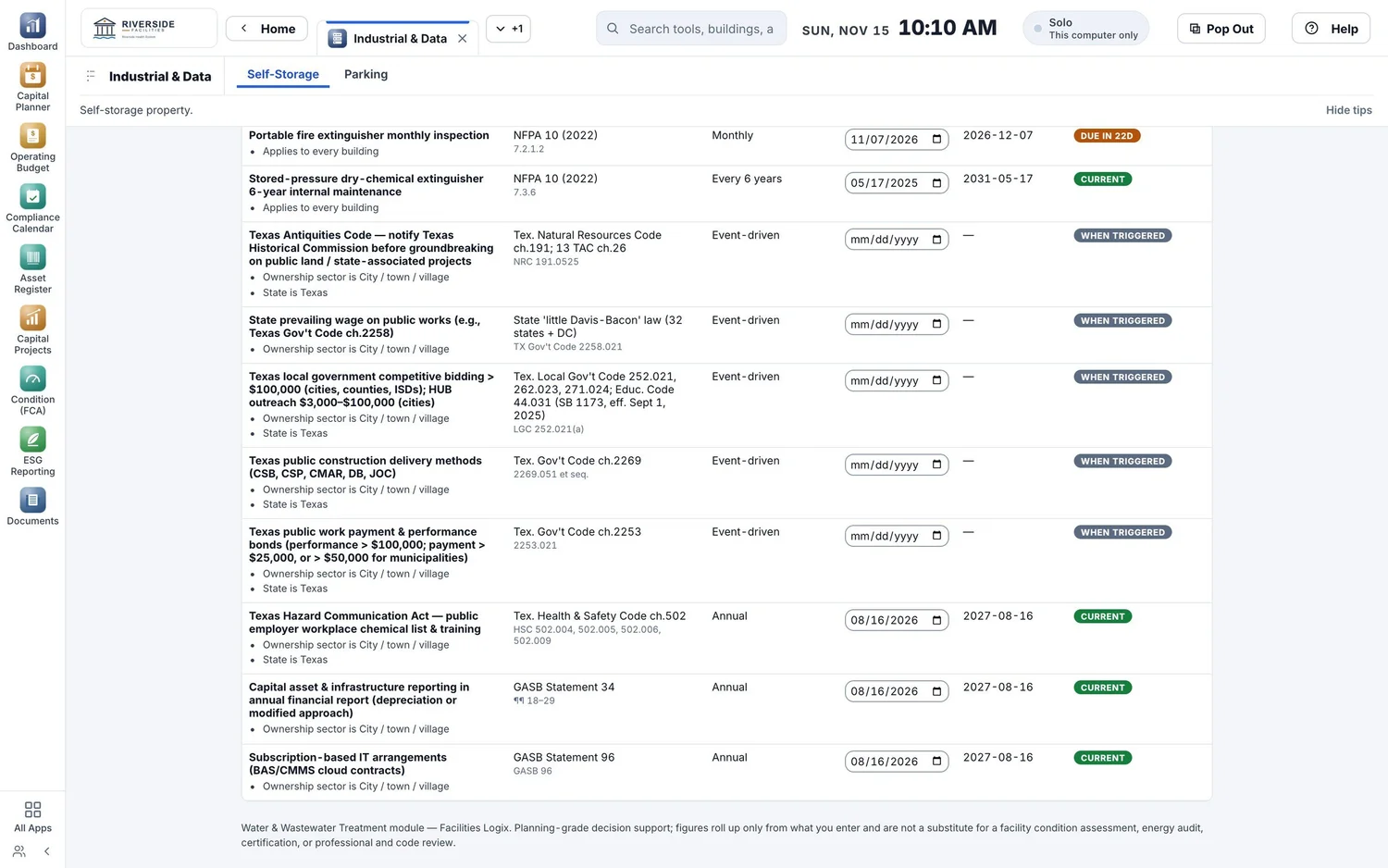
Compliance in Water & Wastewater Treatment: see every permit report, certification and test that applies to this plant and why. Enter the date each was last done; next-due dates match the Compliance Calendar.
ENERGY STAR Tab
Wastewater plants get a 1-100 ENERGY STAR score measured against average daily flow, in kBtu per gallon per day. Drinking-water plants compare with their national median.
Learn MoreShow Less
Energy is usually a plant's largest cost after staff, so a yardstick shows how much there is to save. The tab measures energy against flow, the way EPA does.
- Source energy uses EPA's source-to-site ratios: electricity 2.80, natural gas 1.05
- Energy comes from Utility Bill Manager, the 12 months to the latest bill
- Pump stations and tank sites are benchmarked as Other - Utility, with no score
- Lists the benchmarking and performance-standard laws that apply
Word, Excel, PowerPoint and Present
The playbook exports to Word, Excel and PowerPoint, or shows full screen with Present for a board or council meeting.
Learn MoreShow Less
A board or council funds what it can see. The report turns the plant's own records into a capital and compliance briefing without hours of formatting.
- A chart of capital need by year for ten years, with cost escalation
- Deferred backlog by system, largest first
- The Facility Condition Index against replacement value
- Compliance obligations and overdue items added as sections
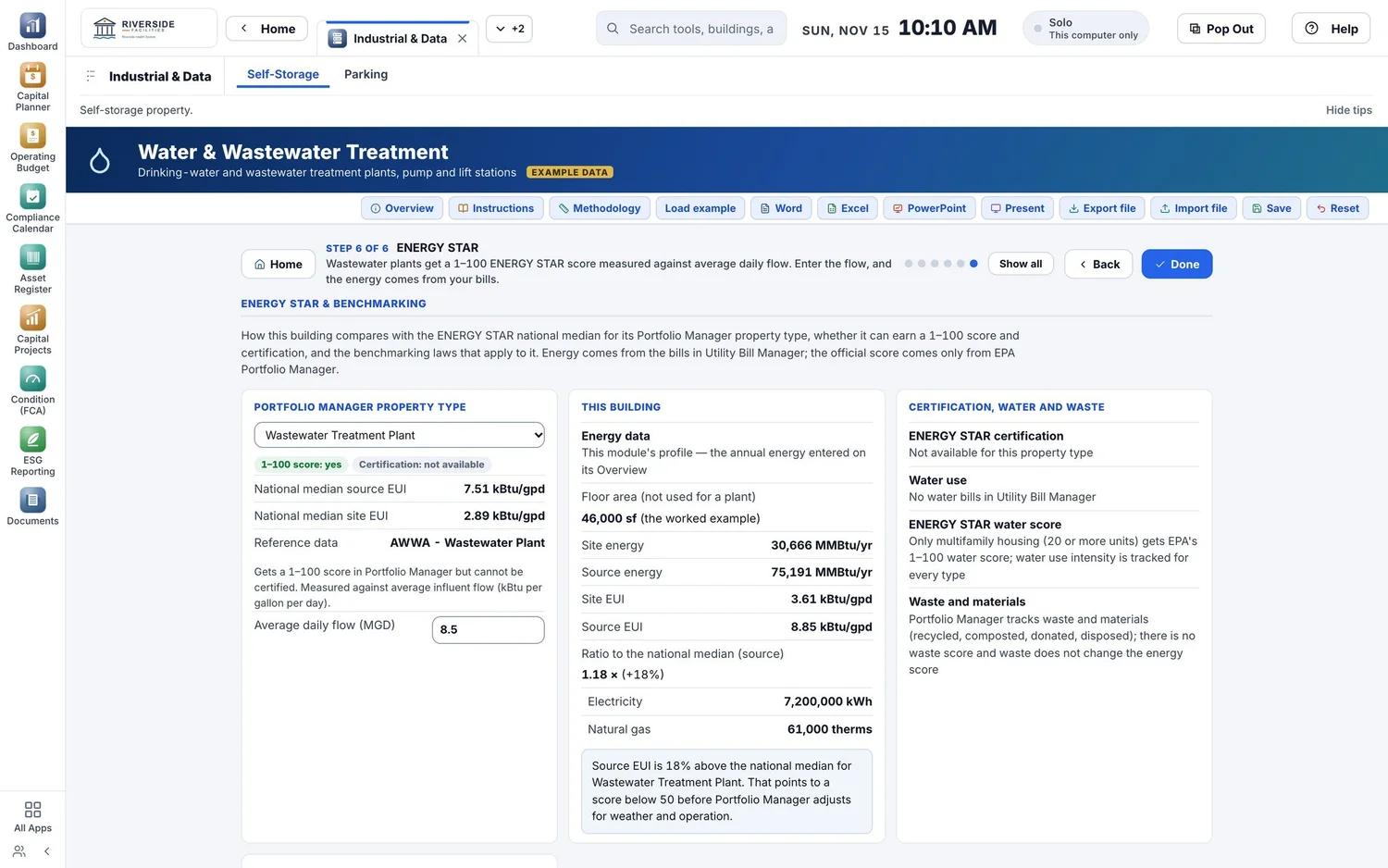
ENERGY STAR in Water & Wastewater Treatment: wastewater plants get a 1–100 ENERGY STAR score measured against average daily flow. Enter the flow, and the energy comes from your bills.
Benchmarks Written for Treatment Plants
Benchmarks in the Playbook
- Permit compliance: zero effluent-limit exceedances and every discharge monitoring report filed on time
- Energy intensity: kWh per million gallons treated, trended monthly, with aeration and pumping the first places to look
- Pump efficiency: wire-to-water efficiency tested on the largest pumps, where a drop of several points is worth a rebuild
- Resilience: the risk and resilience assessment and emergency response plan certifications sent on the 5-year cycle
- The ENERGY STAR score for wastewater, against average daily flow
Condition and Capital
- Average condition of rated systems on a 1-5 scale
- Deferred backlog and the Facility Condition Index against replacement value
- The 10-year capital need, escalated
ENERGY STAR in Water & Wastewater Treatment: wastewater plants get a 1–100 ENERGY STAR score measured against average daily flow. Enter the flow, and the energy comes from your bills.
Fewer Surprises at Report Time
Dates in One Place
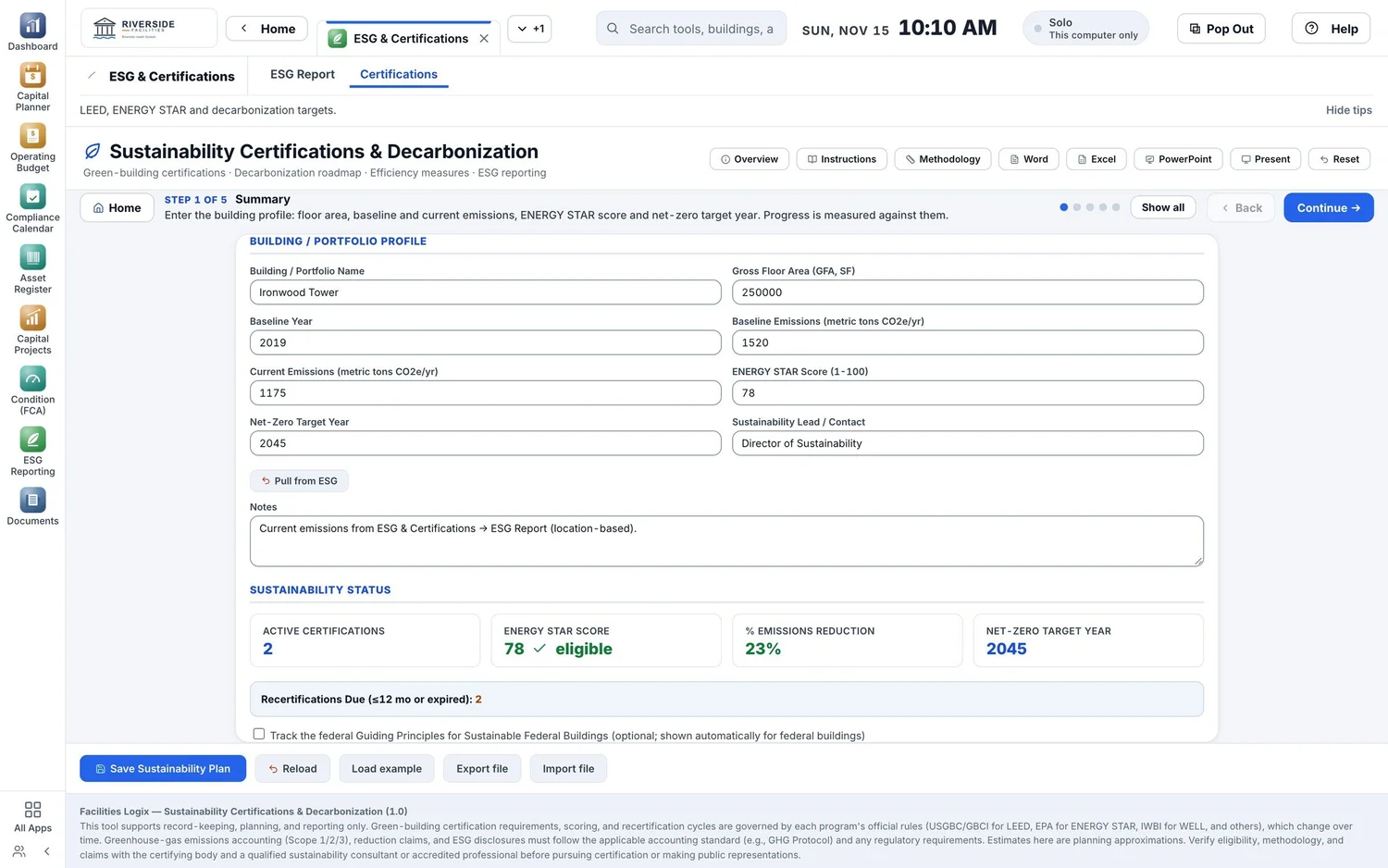
Five-year recertifications, annual reports, monthly discharge reports and exercises sit on one calendar instead of in separate binders and reminders.
Learn MoreShow Less
Missed deadlines bring violations and fines, and separate binders take staff time to keep current. Each date is entered once and kept in step everywhere.
- Next due = last done + frequency, with month-end dates handled
- A date entered here is written back to the Compliance Calendar
- Each row says why it applies to this plant
- Due soon means within 30 days, the Calendar's window
Findings Avoided
A survey or permit finding often starts with a missed date. Seeing what is due and overdue across every plant keeps those dates from slipping.
Learn MoreShow Less
A finding can mean a fine or a consent order, and most start as a slipped date. Showing what is due early gives your team time to act.
- Rows show overdue, due soon or current
- Rows that hinge on a fact not yet recorded are shown as needing confirmation
- Operator certification rows note what to confirm with your state
- The compliance report counts the overdue items
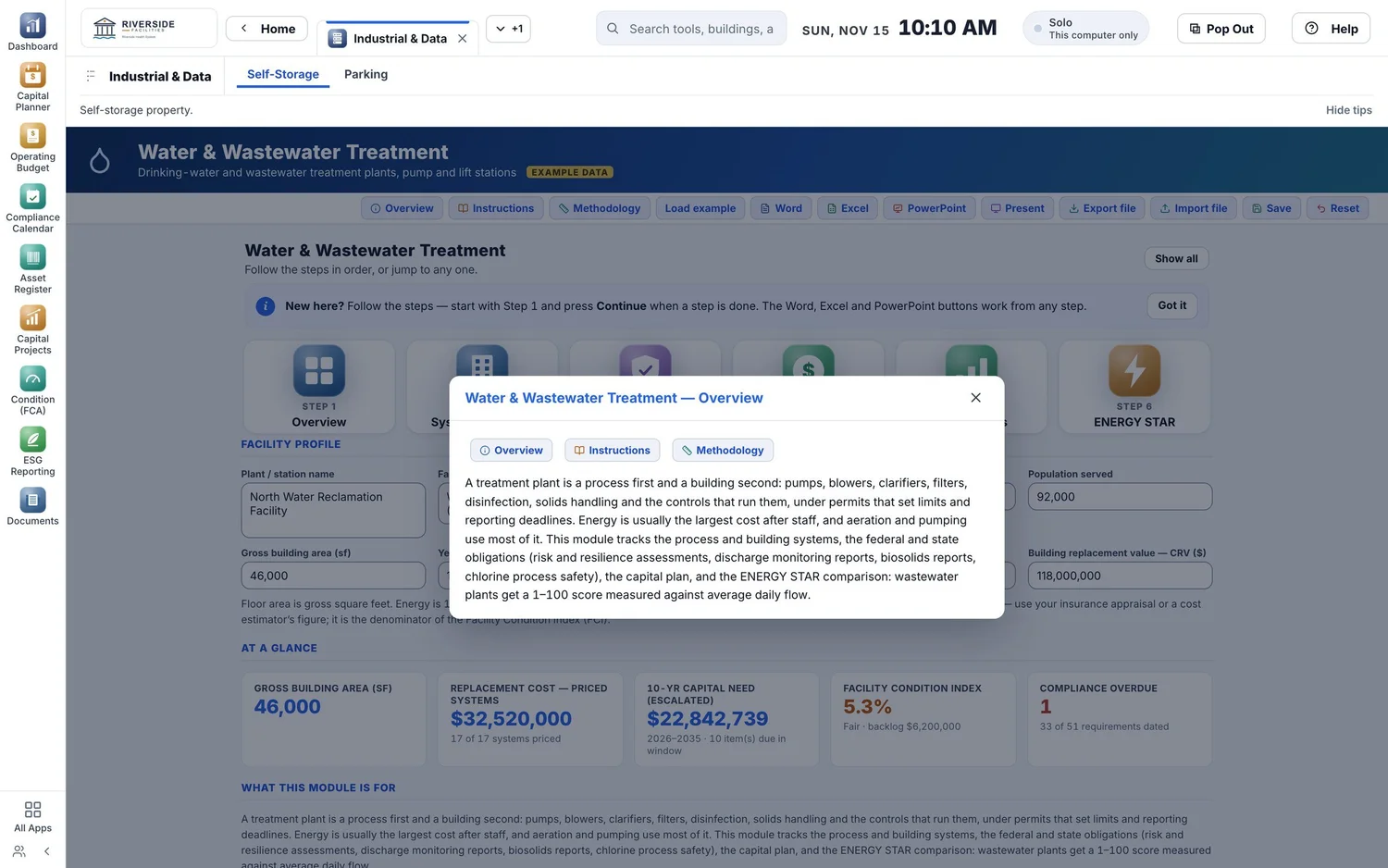
Overview in Water & Wastewater Treatment: its scope, why it matters and who uses it.
Energy Where It Counts
Tracking kWh per million gallons points your team at aeration and pumping, where most plant energy goes.
Learn MoreShow Less
Energy is usually a plant's largest cost after staff, and aeration and pumping use most of it, so that is where savings are largest.
- The profile keeps a year of electricity and the average daily flow
- Pump efficiency is tracked wire-to-water on the largest pumps
- A drop of several points is shown as worth a rebuild
- ENERGY STAR measures the plant against its flow, not its floor area
A Capital Case from Your Own Records
Condition, age and replacement cost for blowers, pumps and controls give leadership a capital plan built from the plant's own data.
Learn MoreShow Less
Spending capital on the right equipment first matters when rates and budgets are public. The plan ranks needs by year and cost from the plant's own records.
- Cost is escalated to the year each item falls due, at your escalation rate
- The 10-year need covers this year through nine years out
- Facility Condition Index bands: good below 5 percent, fair 5-10, poor above 10
- Send to portfolio capital puts dated, priced items on the portfolio list
Frequently Asked Questions
Does Facilities Logix file our discharge monitoring reports or EPA certifications?
Do pump and lift stations get their own record?
Why is the operator certification row marked Confirm?
Can a wastewater plant get an ENERGY STAR score?
Be First When Facilities Logix Opens
Stop chasing building records across spreadsheets and binders. Join the list and we will tell you the day downloads open, with setup guides ready.
Launching early 2027 for Facilities Logix. Nothing to buy today, and no sales calls.
